Category Archives: Technology

Drought: How Las Vegas Conserves So Much Water

As severe drought in the West forces states to make drastic water cuts, Las Vegas offers a road map to making the most out of every drop of water. Since 2002, Southern Nevada has cut its Colorado River water use by 26% while its population has grown by 750,000.

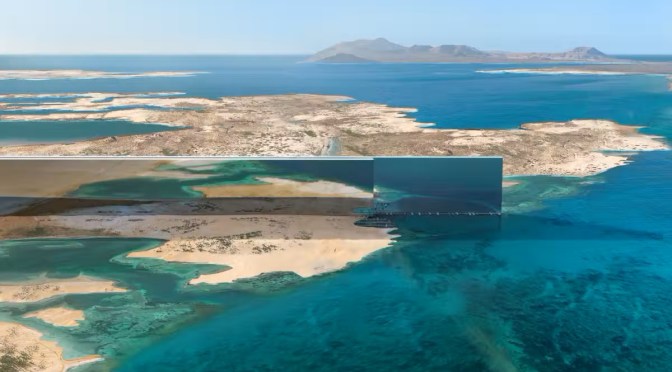
Analysis: Saudi Arabia’s Hyper-Planned “Line City”

The Line is a proposed smart linear city in Saudi Arabia in Neom, Tabuk, currently under construction, which is designed to have no cars, streets or carbon emissions.

 The Line is being described as a one-building vertical city outfitted with exterior mirrors, big enough to house 9 million people — along with everything they need, from parks and waterfalls to flying taxis and robot maids. There are even plans to include an artificial moon for residents to gaze upon.

With its proposed width of only 656 feet, The Line will rely primarily on its height to encompass its residents and a host of modern trappings, such as a high-speed rail to connect sections of the 106-mile city. Saudi Arabian officials claim The Line will be otherwise devoid of roads, cars or emissions and will be powered strictly by clean energy (although details have not been released). Here are a few of most notable proposed features of The Line:

  • vertically layered homes, offices, public parks and public schools.
  • year-round climate control of all indoor and outdoor spaces.
  • high-speed rail that will transport residents from end-to-end in 20 minutes.
  • a five-minute walk to all amenities.
  • accessibility to parks and natural elements within a two-minute walk.

Technology: Designing & Building Smarter Cities

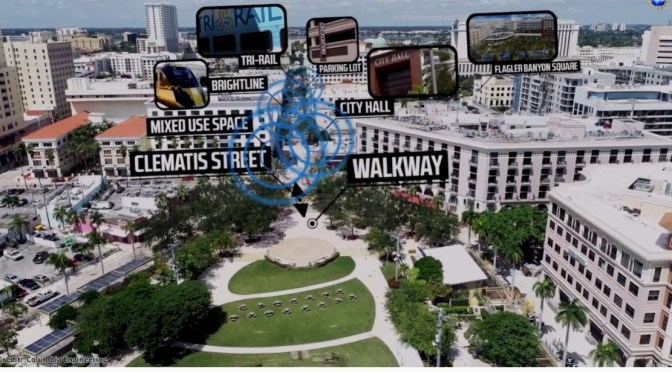
How are you connected on the street where you live, the street where you do business, the street you share with neighbors? But how could a smarter street improve your life?

Video timeline: 00:00 Building Smarter Cities 00:14 Next Evolution 00:36 ERC Partners

Could technology help guide disabled pedestrians, eliminate traffic bottlenecks, enhance trash collection and pest control, improve emergency services, protect people from environmental and health threats. “Smart Streetscapes,” a new National Science Foundation Engineering Research Center, aims to create livable, safe, and inclusive communities. Learn more on NSF’s “The Discovery Files.”

World Economic Forum: Top Stories (Oct 7, 2022)

World Economic Forum top stories of the week: 0:15 – The World’s First flying 3D printer 01:32 – Your outer circle of friends is more important for your career than you think 02:47 – How high interest rates lower inflation 04:47 – This Swedish start up has developed an electric passenger plane

Phoenix: How America’s Hottest City Cools Itself

Phoenix, Arizona is coming up with innovative ways to beat the heat.

Phoenix, the capital of Arizona, is accustomed to a hot desert climate, but day and night temperatures have been rising due to global heating and the city’s unchecked development, which has created a sprawling urban heat island.

Scorching temperatures have made summers increasingly perilous for the city’s 1.4 million people, with mortality and morbidity rates creeping up over the past two decades, but 2020 was a gamechanger when heat related deaths jumped by about 60%.

Future Of Automobiles: ‘Lightyear 0 Solar Car’

“I think most electric vehicles will have a solar roof in the future,” he told Dezeen. “It’s a topic that all big car manufacturers are working on.”

Integrated solar panels could help electric cars rival their fossil-fuel counterparts by making them less reliant on charging points and potentially free to run, says Lightyear‘s Emanuele Cornagliotti in this interview as part of our Solar Revolution series.

Lightyear 0’s in-wheel motor technology sets new industry standards and offers greater control on tricky terrains. Not only is our drivetrain in pole position for the highest efficiency, but it also reduces the number of rotating components, meaning much lower maintenance!

Image

Website

Energy: Nuclear Start-Ups Address Safety Issues (WSJ)

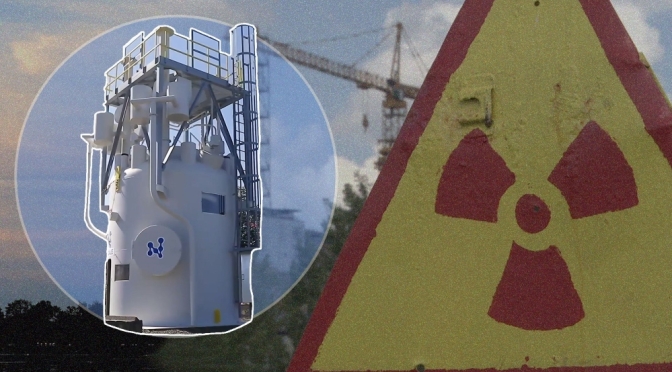
Nuclear projects are getting a boost of investment as countries try to tackle an energy crisis sparked by the Ukraine war, while also pursuing emissions targets. WSJ looks at how start-ups say their alternative designs can help solve past issues.

World Economic Forum: “Top Stories Of The Week”

Top Stories of the Week (September 30, 2022) include:

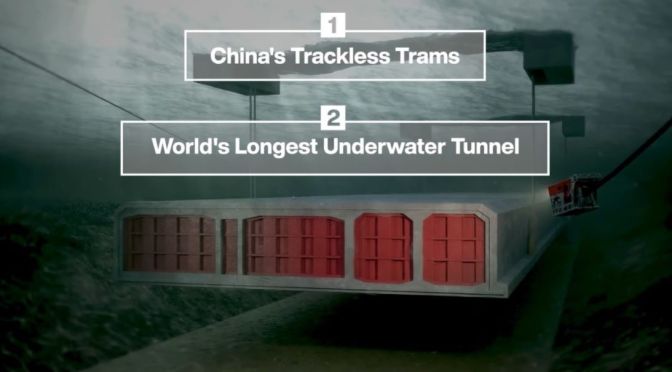
0.15 – China’s trackless trams 01:39 – Germany and Denmark are building the world’s longest undersea tunnel 03:12 Students in the Netherlands have built an electric car that captures carbon 04:09 This tower turns sunlight and air into clean jet fuel

Technology: How Amazon Dominates Smart Homes

Amazon ships more U.S. smart home devices than any other company and says Alexa is now compatible with 140,000 devices, far beyond the Echo and Fire TV. But privacy advocates are concerned by all the data these devices collect, and are calling on the Federal Trade Commission to block Amazon’s latest smart home expansion.

Chapters: 1:41 First to market 4:27 Acquiring iRobot 7:41 How it uses the data 9:45 Privacy concerns 11:33 Ambient home of the future

After acquiring video doorbell maker Ring in 2018 and mesh WiFi system Eero a year later, Amazon’s now looking to buy Roomba smart vacuum maker iRobot. In a rare move, the FTC is asking for more information before approving the $1.7 billion deal. Ahead of Amazon’s annual smart home event, we talked to Amazon’s VP of privacy to find out what really happens to all the data collected by its devices – and sat down with the head of smart home to hear the strategy behind Amazon’s race to dominate the internet of things.

Urban Planning: Will The Cities Of The Future Float?

A new industry of floating infrastructure is emerging to help adapt to rising sea levels. There are two distinct approaches that are being put forth as possible solutions: retrofitting homes to be amphibious and building floating cities.

Amphibious homes can preserve the accessibility of the house and maintain the congenial front porch culture in places like Louisiana, said Elizabeth English, founder and director of The Buoyant Foundation Project. English’s design places a steel frame beneath a house, and then below that, in the crawl space, buoyancy elements. Her team then recommends adding elements to prevent lateral movement so the home will not float away while on the surface of floodwaters.

She estimated that a contractor could do such a retrofit for about $20 to $30 per square foot, but cautioned the Federal Emergency Management Agency currently discourages this type of building practice. Modern floating cities are the brainchild of architect Bjarke Ingels. He told CNBC he hopes his Oceanix City, which is currently slated to be built in the harbor near Busan,

South Korea, will be “a city that is the most resilient city you can imagine, but at the same time, the most enjoyable city that you can imagine.” “We really hope that it will be a successful project and we would like to replicate it in other parts of the world,” Maimunah Mohd Sharif, executive director of the United Nations Human Settlements Programme, told CNBC of the Oceanix development.

She said the world must look more into adaptation and hopes that the project can help mitigate or even solve the problem of sea-level rise. Would you live in a floating city or retrofit your home so it floats during floods? Watch the video above to learn more about what life could be like in these innovative climate change adaptations.