Top Stories of the Week (September 30, 2022) include:
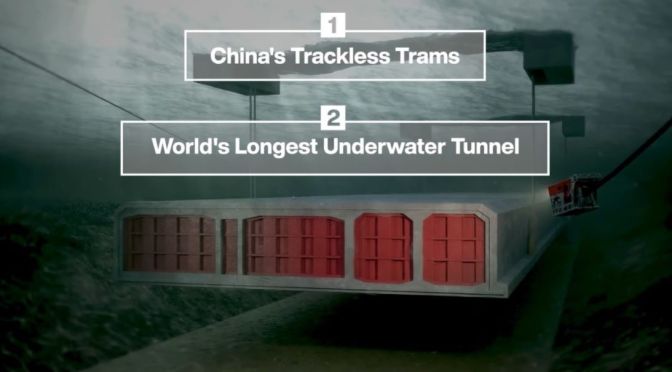
0.15 – China’s trackless trams 01:39 – Germany and Denmark are building the world’s longest undersea tunnel 03:12 Students in the Netherlands have built an electric car that captures carbon 04:09 This tower turns sunlight and air into clean jet fuel
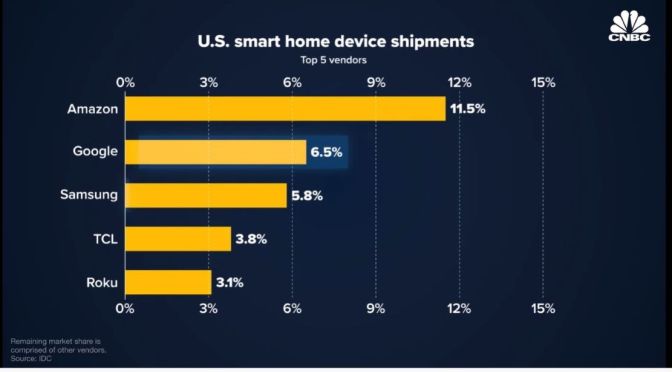
Amazon ships more U.S. smart home devices than any other company and says Alexa is now compatible with 140,000 devices, far beyond the Echo and Fire TV. But privacy advocates are concerned by all the data these devices collect, and are calling on the Federal Trade Commission to block Amazon’s latest smart home expansion.
Chapters:1:41 First to market 4:27 Acquiring iRobot 7:41 How it uses the data 9:45 Privacy concerns 11:33 Ambient home of the future
After acquiring video doorbell maker Ring in 2018 and mesh WiFi system Eero a year later, Amazon’s now looking to buy Roomba smart vacuum maker iRobot. In a rare move, the FTC is asking for more information before approving the $1.7 billion deal. Ahead of Amazon’s annual smart home event, we talked to Amazon’s VP of privacy to find out what really happens to all the data collected by its devices – and sat down with the head of smart home to hear the strategy behind Amazon’s race to dominate the internet of things.
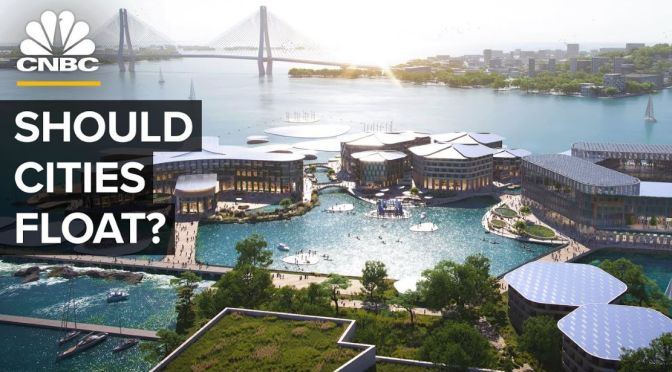
A new industry of floating infrastructure is emerging to help adapt to rising sea levels. There are two distinct approaches that are being put forth as possible solutions: retrofitting homes to be amphibious and building floating cities.
Amphibious homes can preserve the accessibility of the house and maintain the congenial front porch culture in places like Louisiana, said Elizabeth English, founder and director of The Buoyant Foundation Project. English’s design places a steel frame beneath a house, and then below that, in the crawl space, buoyancy elements. Her team then recommends adding elements to prevent lateral movement so the home will not float away while on the surface of floodwaters.
She estimated that a contractor could do such a retrofit for about $20 to $30 per square foot, but cautioned the Federal Emergency Management Agency currently discourages this type of building practice. Modern floating cities are the brainchild of architect Bjarke Ingels. He told CNBC he hopes his Oceanix City, which is currently slated to be built in the harbor near Busan,
South Korea, will be “a city that is the most resilient city you can imagine, but at the same time, the most enjoyable city that you can imagine.” “We really hope that it will be a successful project and we would like to replicate it in other parts of the world,” Maimunah Mohd Sharif, executive director of the United Nations Human Settlements Programme, told CNBC of the Oceanix development.
She said the world must look more into adaptation and hopes that the project can help mitigate or even solve the problem of sea-level rise. Would you live in a floating city or retrofit your home so it floats during floods? Watch the video above to learn more about what life could be like in these innovative climate change adaptations.
Top stories of the week of September 23, 2022 from the World Economic Forum:
Video timeline: 0:15 Could These Solar Panel Windows Be The Future Of Green Energy? – If deployed on a large scale, Ubiquitous Energy says the windows could transform solar capacity worldwide. 01:33 What Would A Post-Economic Growth World Look Like? – ‘What is the type of growth that the world needs? And what is the type of de-growth we need?’ asks Tariq Al-Olaimy, Social Entrepreneur and Global Shapers Alumni. 04:41 Clean energy jobs boom – Green energy jobs in wind and solar are more available than fossil fuel jobs for the first time 05:57 Is your smartphone making you less smart? – Not according to scientists
The western U.S. is experience a megadrought so severe, it is the driest two decades in at least 1,200 years. And no sector has felt the impact more than agriculture, which takes up about 70% of the world’s freshwater. With water resources becoming more scarce, several companies are working to improve irrigation efficiency and help sustain food production in a future where extreme climate may be more common.
Chapters: Ch. 1: 2:08 The West’s drought Ch. 2 4:48 Water in agriculture Ch. 3 8:02 Smarter irrigation Ch. 4 11:08 Indoor farming Ch. 5 13:11 Future technologies
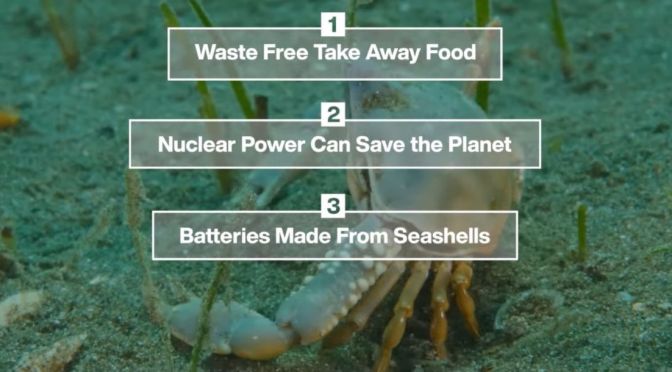
0.15 – These restaurants are making takeout sustainable: Just Salad, Loop, DeliverZero, and Burger King are cutting back on food containers and packaging. Here’s how. 01.38 – Nuclear Power is unpopular but could really save our planet: The IEA says the world’s nuclear power capacity must double by 2050 if we are to achieve net zero. 03:13 – The renewable battery made from crab and lobster shells: Scientists at the University of Maryland have shown the potential of the chemical chitin to make a biodegradable electrolyte. 04:10 – Handheld device lets you check for breast cancer at home: The device, called the Dotplot, has won the 2022 UK James Dyson Award.
The World Economic Forum is the International Organization for Public-Private Cooperation. The Forum engages the foremost political, business, cultural and other leaders of society to shape global, regional and industry agendas. We believe that progress happens by bringing together people from all walks of life who have the drive and the influence to make positive change.
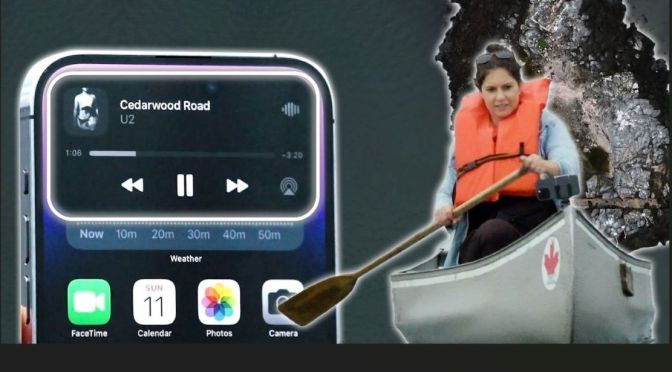
Apple’s iPhone 14 Pros have a new multitasking feature called the “dynamic island.” WSJ’s Joanna Stern went out to a real island to test the Pros’ new always-on screen cameras, including the new 48-megapixel main camera and the new action mode.
She also compares them to the more affordable iPhone 14. 0:00 Welcome to Joanna’s dynamic island 1:07 iPhone 14 screen size and tests: always-on and dynamic island 3:41 iPhone 14 camera specs and tests 4:58 iPhone 14 action mode tests 5:35 Emergency SOS and crash detection: the iPhone 14 features Joanna couldn’t test
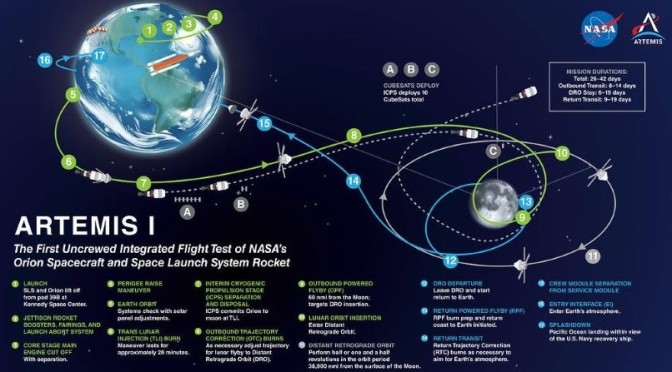
People are about to go back to the moon for the first time in 50 years. It isn’t just a race to get there, but a whole new era of lunar exploration and exploitation.
We will shortly see people walking on the moon again, mining precious resources and setting up lasting bases on the dusty, grey world. As NASA prepares to return to the moon, we take a look back at some of the key milestones in our history with our lunar neighbour.
A new electric flight school in Sweden is inspiring a future of emission-free aviation. Monocle takes to the sky, tries out the first fully electric plane to be approved for use in Europe and hears how Skellefteå has become a hotbed of green start-ups.
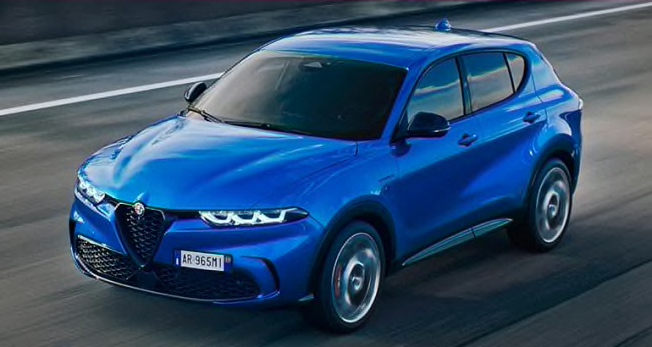
The Tonale rounds out the trio of cars in Alfa Romeo’s small, stylish lineup, bringing small-SUV utility and a plug-in hybrid electric vehicle (PHEV) powertrain into the fold. Both the PHEV and the more conventional turbocharged, 2.0-liter gasoline versions of the Tonale will be all-wheel drive, showcasing an interior and exterior aesthetic that will be familiar to Alfa aficionados.
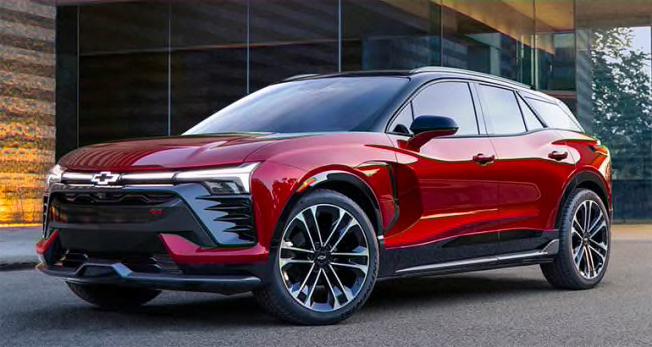
Chevrolet Blazer EV (2023)
The Blazer EV is based on GM’s Ultium platform that underpins the latest automaker’s electric models. This midsized SUV will meet the competition, notably the Ford Mustang Mach-E, Volkswagen ID.4, and Hyundai-Kia pair in terms of price, functionality, and range. It will be offered in several trims, initially starting with the 2LT trim for $47,595 with a 293-mile estimated range.
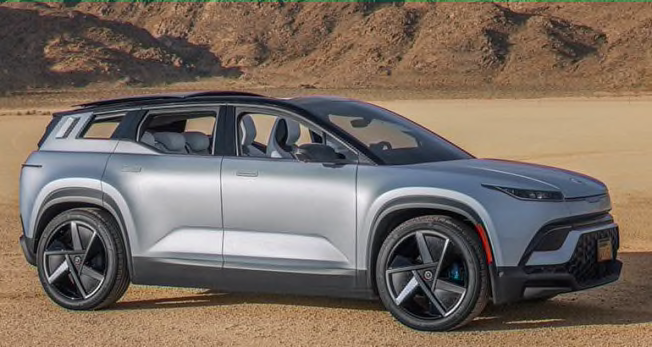
Fisker Ocean (2023)
The Fisker Ocean pure-electric SUV features a solar roof and a 17-inch center touchscreen that can be rotated 90 degrees for either a horizontal or vertical display layout. The interior, which features recycled materials throughout, seats five passengers.
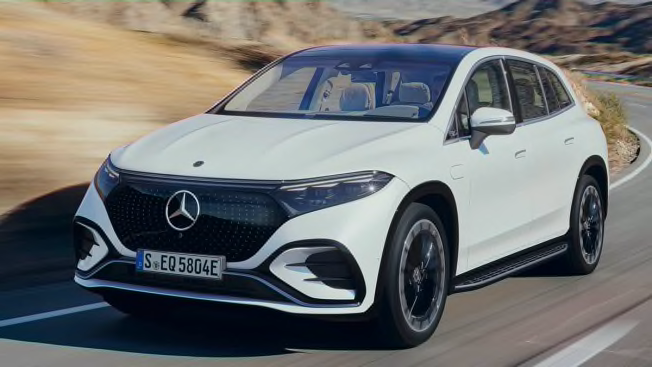
Mercedes-Benz EQS SUV (2023)
The EQS SUV takes all the opulence and engineering marvel long associated with the Mercedes-Benz EQS sedan and applies these concepts to a large, three-row electric SUV. It comes standard in a rear-drive, one-motor configuration, with the 4Matic upgrade granting it all-wheel and two motors.





 Boomers Daily