

From a New Yorker online article review:
 Beneath his smooth, genial, almost inhumanly productive and evasive surface, there were turbulent waters. His very name, for all its air of Ivy League ease, represents a burdened legacy. The Porters were his difficult, scapegrace father’s family; the Coles were his mother’s rich and ambitious Indiana family. He was a Porter by birth but, if his mother had anything to do with it, would be a Cole for life.
Certainly, Porter’s ghost could not ask for better care than he has been given in “The Letters of Cole Porter” (Yale), edited by Cliff Eisen, a professor of music history at King’s College London, and Dominic McHugh, a musicologist at the University of Sheffield (and the editor of Alan Jay Lerner’s letters). Laid out with a meticulous scholarly apparatus, as though this were the correspondence of Grover Cleveland, every turn in the songwriter’s story is deep-dived for exact chronology, and every name casually dropped by Porter gets a worried, explicatory footnote.

 De Beauvoir and Beckett despised each other – and lived essentially on the same street. While quite literally dodging one subject or the other, and sometimes hiding out in the backrooms of the great cafés of Paris, Bair learned that what works in terms of process for one biography rarely applies to the next. Her seven-year relationship with the domineering and difficult de Beauvoir required a radical change in approach, yielding another groundbreaking literary profile.






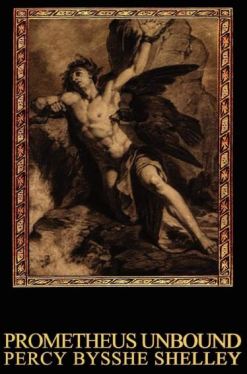 Prometheus Unbound is a four-act lyrical drama by Percy Bysshe Shelley, first published in 1820. It is concerned with the torments of the Greek mythological figure Prometheus, who defies the gods and gives fire to humanity, for which he is subjected to eternal punishment and suffering at the hands of Zeus. It is inspired by the classical Prometheia, a trilogy of plays attributed to Aeschylus. Shelley’s play concerns Prometheus’ release from captivity, but unlike Aeschylus’ version, there is no reconciliation between Prometheus and Jupiter (Zeus). Instead, Jupiter is abandoned by his supportive elements and falls from power, which allows Prometheus to be released.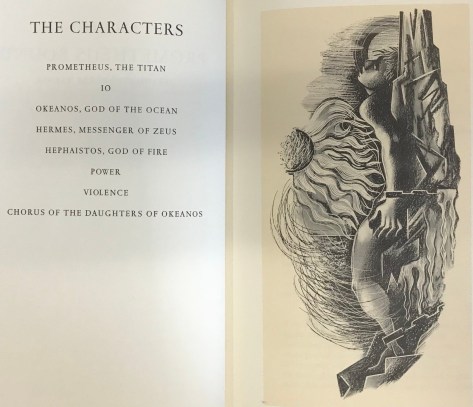

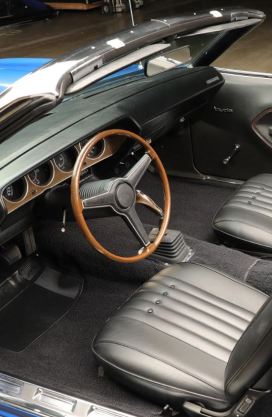 The Plymouth Barracuda is a two-door
  The redesign for the 1970 Barracuda removed all its previous commonality with the Valiant. The original fastback design was deleted from the line and the Barracuda now consisted of coupe and convertible models. The all-new model, styled by John E. Herlitz, was built on a shorter, wider version of Chrysler’s existing B platform, called the E-body. Sharing this platform was the newly launched Dodge Challenger; however no exterior sheet metal interchanged between the two cars, and the Challenger, at 110 inches (2,794 mm), had a wheelbase that was 2 inches (51 mm) longer than the Barracuda.

 Author Paul Zollo conducted a series of in-depth discussions with Tom about his career, with special focus on his songwriting. The conversations are reprinted here with little or no editorial comment and represent a unique perspective on Tom’s entire career. Originally published in 2005 (also by Omnibus Press), Tom’s wife Dana has fully approved this updated edition, which retains its foreword by Petty, adds additional interview material, an expanded introduction as well as additional photos from Petty’s last ever live performance. This is, perhaps, as close as you can get to an autobiography by the great man.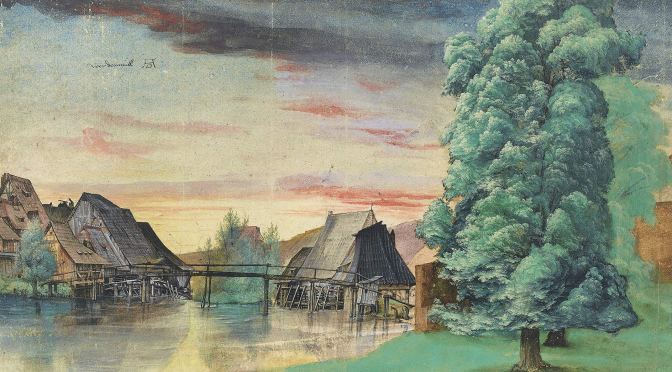
 This book showcases more than 100 of Dürer’s drawings including Hare, Self Portrait at the Age of 13, and Melencolia I, along with paintings and prints. Featuring scholarly essays and beautifully reproduced works, this book shows the reader not only how important Dürer’s drawings are to his own oeuvre, but also how he helped drawing become an appreciated medium in its own right.
 Boomers Daily