
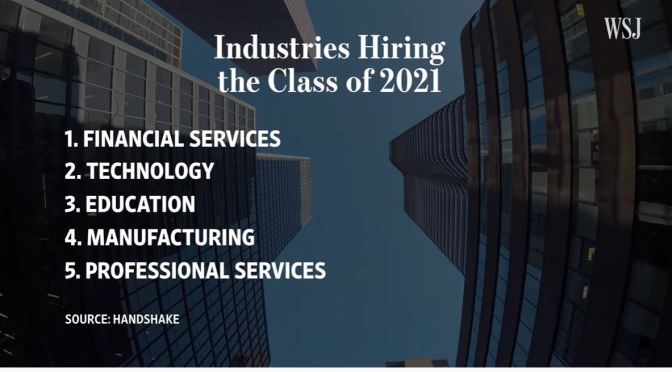
The labor market is red-hot again after more than a year on ice. The class of 2021 college graduates are looking at a new jobs landscape, but the competition is fierce. What should new grads expect from the job market and the job hunting process? Photo: Hoang ‘Leon’ Nguyen/The Republican via AP
Category Archives: Reviews
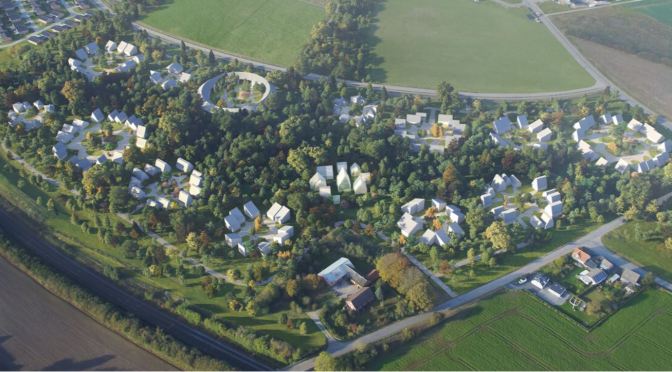
Green Housing: ‘Nature Village’ – Denmark (Video)
Copenhagen-based studio EFFEKT has presented plans for a residential development that forms part of its contribution to the upcoming venice architecture biennale. titled ‘naturbyen’, a name that translates as ‘nature village’, the project will see a field in denmark transformed into a completely new forest-neighborhood district comprising more than 200 homes. the development seeks to demonstrate how sustainable housing development can be combined with ambitious afforestation, increased biodiversity, and circular resource thinking. ‘as humanity is facing its greatest challenge ever with the imminent threat of climate change, habitat loss and depletion of natural resources — not to mention the ongoing pandemic — we need to rethink the way we live together on this planet. not only as humans, but across all species and ecosystems,’ EFFEKT tells designboom, discussing how the project responds to the biennale’s theme — ‘how will we live together?’. Responding to denmark’s goal of covering 20% of its landmass with forest by 2100, EFFEKT developed the project in collaboration with the town of middelfart. the site, currently an agricultural field, will be densely planted with a mix of native tree seedlings — an approach based on interviews and insight from industry experts, anders busse nielsen and björn wiström. ‘with a project like ‘naturbyen’ we try to address the growing need for more housing while also restoring natural habitats in close proximity to our cities, increasing biodiversity and through afforestation sequester carbon over time,’ EFFEKT explains.

Photography Exhibition: Art Deco In Havana, Cuba By Michael Eastman
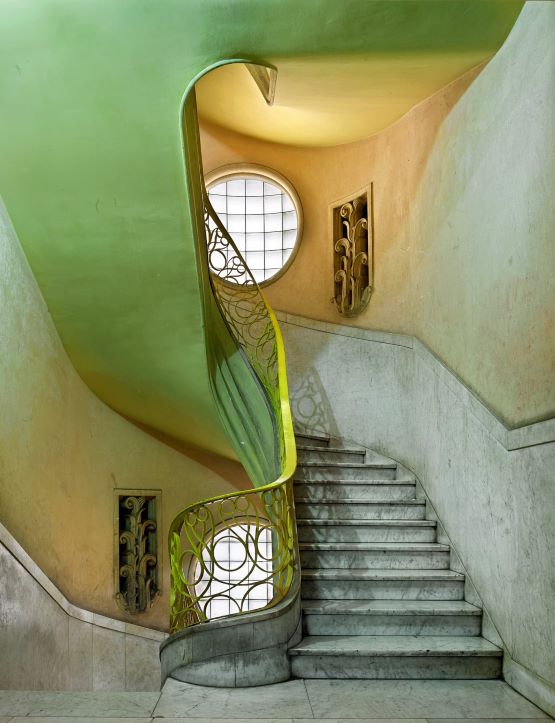
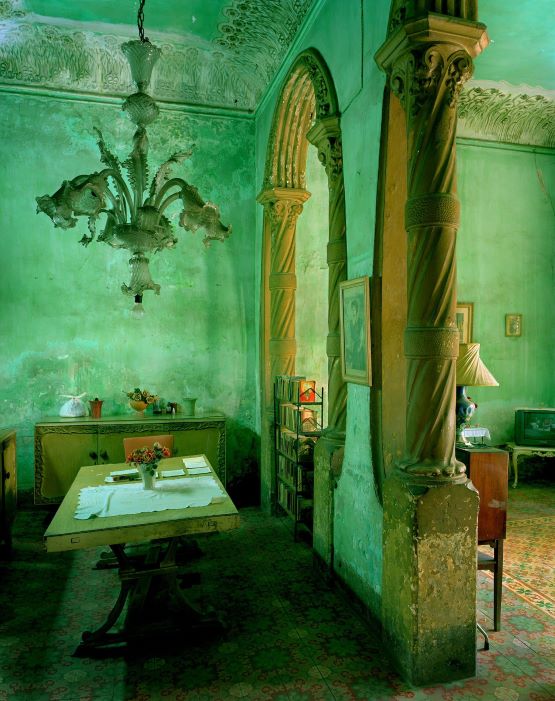
Cuba, a place known for it’s unique mix of cultural and artistic influences along with it’s diverse architecture, repeatedly drew Eastman to work there throughout the years. Eastman’s lavish monumental photographs of the opulent colonial and Art Deco architecture of Havana impart on the viewer magnificently decorated rooms bathed in romantic Baroque light.



MAY 10 — JULY 31, 2021
Seemingly caught in the rift of time and bearing the resulting mark making, these decadent and warm inviting spaces seemingly take on the role of storyteller, serving witness to a time now passed.
For five decades, Michael Eastman has explored the interiors and facades in diverse geographical locations producing photographs unified by their visual precision, monumentality, and painterly use of color. Eastman’s affection for the vernacular is reflected in the resultant photographs, rich in narrative and embodied with an intrinsic sense of place and time.
Born in 1947 in St. Louis, Missouri, Eastman studied at the University of Wisconsin. He is the recipient of the National Endowment for the Arts Grant, National Addy Award, and a Paris Photo BMW Finalist Prize. His images have appeared in Time, Life, Art in America, New York Times, and American Photographer. Eastman’s work is in numerous private and public collections, including The Metropolitan Museum of Art, NY; San Francisco Museum of Modern Art, CA; Art Institute of Chicago, IL; Los Angeles County Museum of Art, CA; High Museum of Art, Atlanta, GA; Saint Louis Art Museum, MO; and the International Center of Photography, NY. His publications include Havana (Prestel, 2011), Vanishing America (Rizzoli, 2008), and Horses (Knopf, 2003).
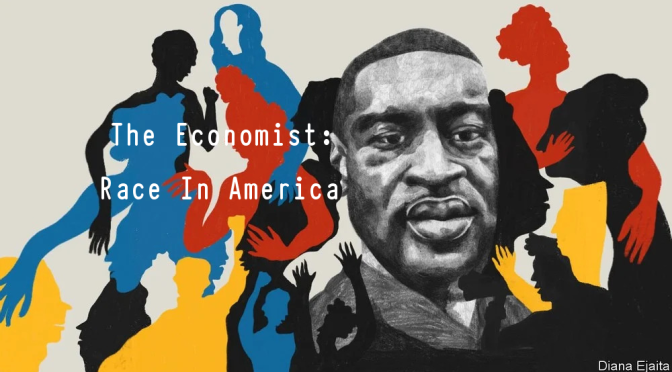
Analysis: Race In America, Green Investment Boom, Nato Soldiers’ Phones
A selection of three essential articles read aloud from the latest issue of The Economist. This week: race in America, the green investment boom (10:00), and why NATO increasingly sees its soldiers’ phones as a liability (21:50).

Vaccine Passports: Legal & Medical Issues Are Raised
The CDC says fully vaccinated Americans can resume many normal activities but should people have to prove they have gotten those shots? Brook Silva-Braga reports on the pros and cons of so-called “vaccine passports” and the medical and legal issues raised.
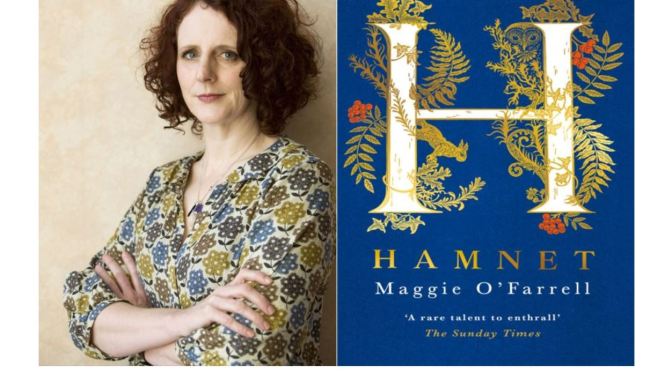
Shakespeare: ‘Hamnet’ Author Maggie O’Farrell
Maggie O’Farrell’s “Hamnet,” one of last year’s most widely acclaimed novels, imagines the life of William Shakespeare, his wife, Anne (or Agnes) Hathaway, and the couple’s son Hamnet, who died at 11 years old in 1596.
On this week’s podcast, O’Farrell says she always planned for the novel to have the ensemble cast it does, but that her deepest inspiration was to capture a sense of the young boy at its center.
“The engine behind the book for me was always the fact that I think Hamnet has been overlooked and underwritten by history,” she says. “I think he’s been consigned to a literary footnote. And I believe, quite strongly, that without him — without his tragically short life — we wouldn’t have the play ‘Hamlet.’ We probably wouldn’t have ‘Twelfth Night.’ As an audience, we are enormously in debt to him.”

Political Analysis: The U.S.-China Tussle Over Taiwan
Taiwan has long been a U.S.-China flashpoint, but its tech and military capabilities have come into sharper focus under the Biden administration. WSJ travels to three places on the island to explain how both superpowers could determine Taiwan’s future. Photo: Wally Santana/AP
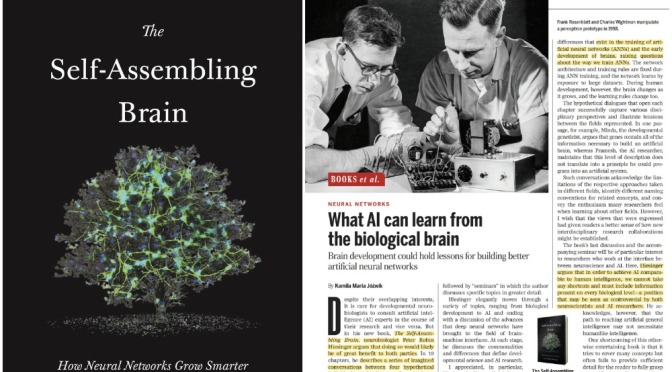
Book Reviews: ‘The Self-Assembling Brain’ – The Future Benefits For AI


As Peter Robin Hiesinger argues, “the information problem” underlies both fields, motivating the questions driving forward the frontiers of research. How does genetic information unfold during the years-long process of human brain development―and is there a quicker path to creating human-level artificial intelligence? Is the biological brain just messy hardware, which scientists can improve upon by running learning algorithms on computers? Can AI bypass the evolutionary programming of “grown” networks? Through a series of fictional discussions between researchers across disciplines, complemented by in-depth seminars, Hiesinger explores these tightly linked questions, highlighting the challenges facing scientists, their different disciplinary perspectives and approaches, as well as the common ground shared by those interested in the development of biological brains and AI systems. In the end, Hiesinger contends that the information content of biological and artificial neural networks must unfold in an algorithmic process requiring time and energy. There is no genome and no blueprint that depicts the final product. The self-assembling brain knows no shortcuts.
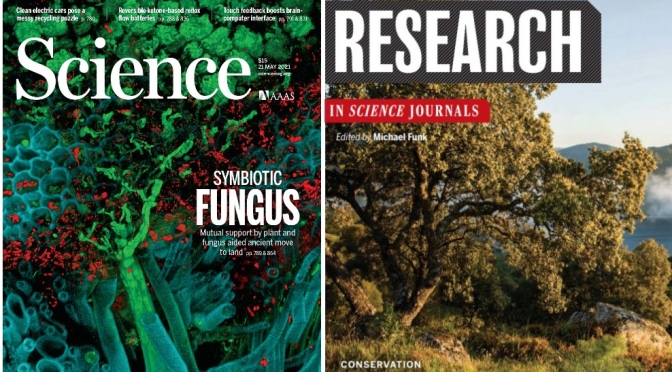
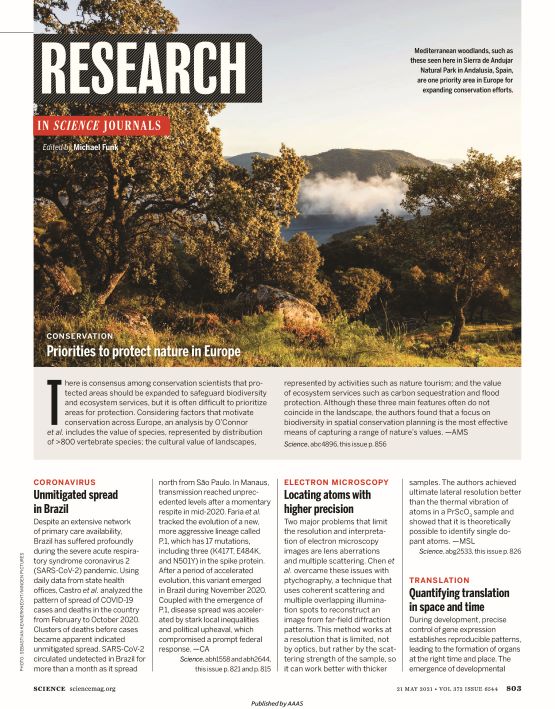
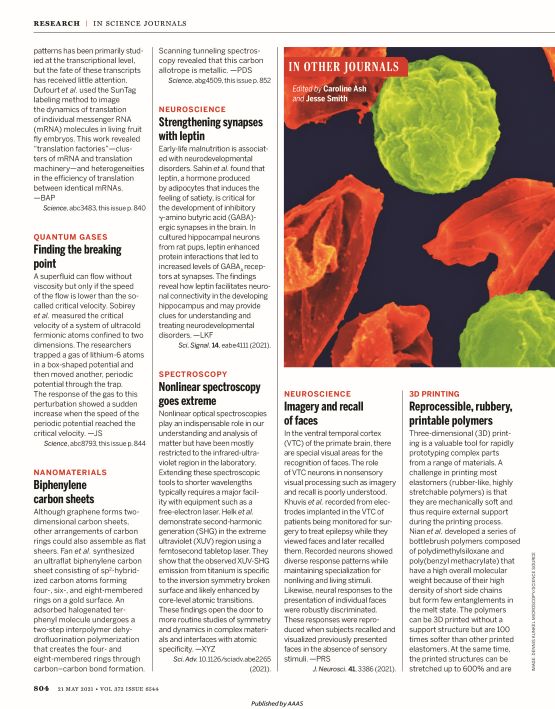
TOP JOURNALS: RESEARCH HIGHLIGHTS FROM SCIENCE MAGAZINE (MAY 21, 2021)

Analysis: The Future Of Driverless Vehicles (WSJ)
While Tesla and others already offer assisted-driving features, startups Waymo, Cruise, TuSimple and Aurora are betting their autonomous vehicles will make driving a thing of the past. WSJ asked them about safety and other challenges they face. Photo composite: George Downs
 Boomers Daily