Many Americans who advocate it have little interest in religion and an aversion to American culture as it currently exists. What really defines the movement?
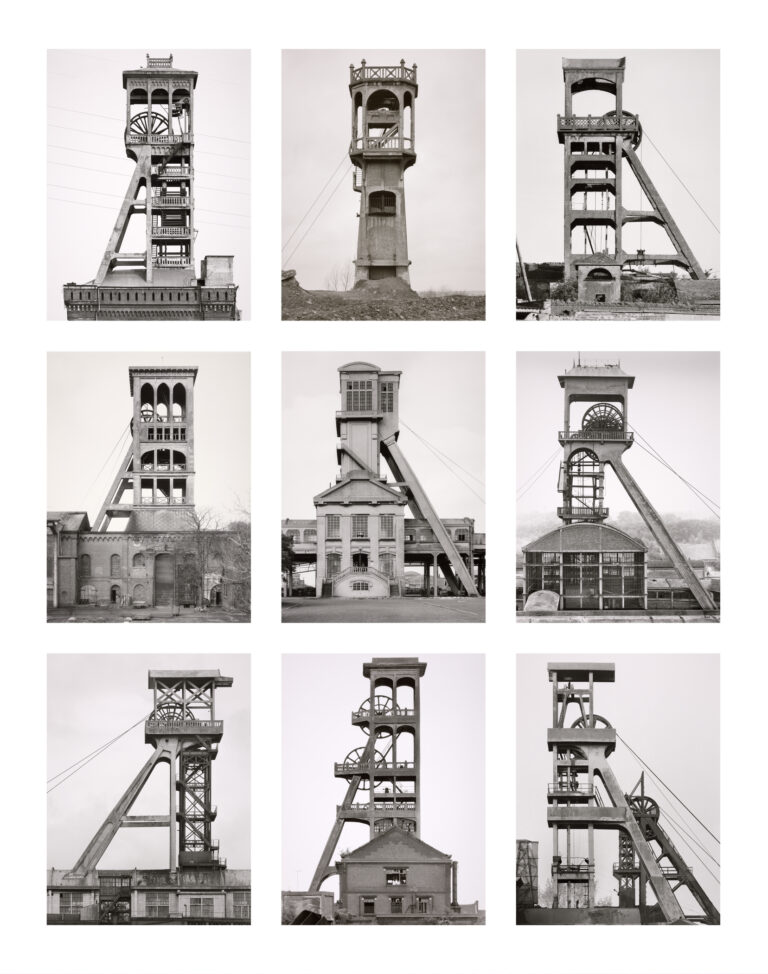
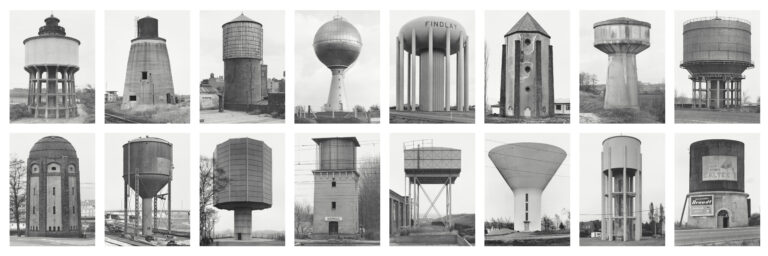
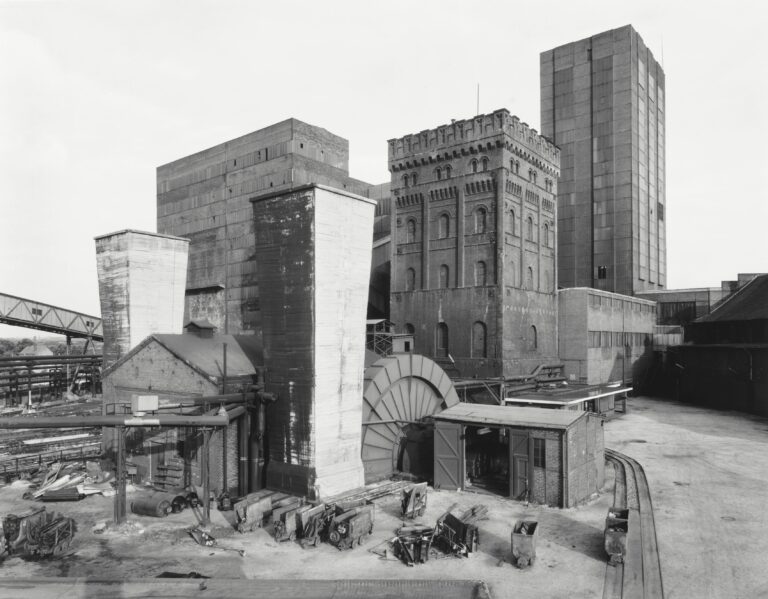
CBS Sunday Morning (March 26, 2023) – To photographers Bernd and Hilla Becher, the rapidly vanishing industrial architecture of Western Europe and North America were works of art. The German couple’s documentary images of transmission towers, gas tanks, blast furnaces and smokestacks – structures that signified the end of an industrial era – are being celebrated in a comprehensive retrospective now at the San Francisco Museum of Modern Art. Lee Cowan offers us a tour.
The renowned German artists Bernd and Hilla Becher (1931–2007; 1934–2015) changed the course of late twentieth-century photography. Working as a rare artist couple, they focused on a single subject: the disappearing industrial architecture of Western Europe and North America that fueled the modern era.
Their seemingly objective style recalled nineteenth- and early twentieth-century precedents but also resonated with the serial approach of contemporary Minimalism and Conceptual art. Equally significant, it challenged the perceived gap between documentary and fine art photography.
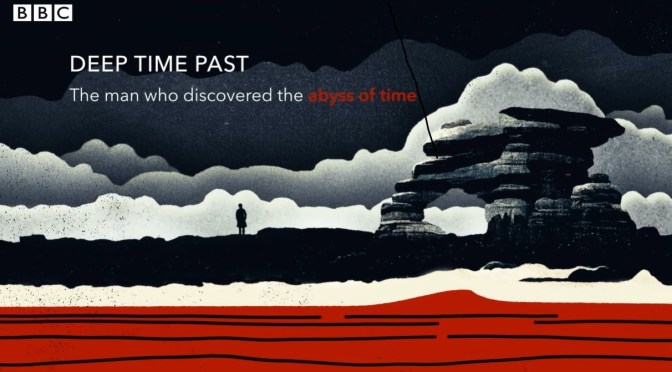
BBC News (March 26, 2023) – In the 1700s, geologist James Hutton discovered a rock formation in Scotland that transformed how we think about time. Through studying the rocky headland of Siccar Point, Hutton identified the existence of ‘deep time’ – proving that Earth is millions, not thousands, of years old.
James Hutton (1726–1797), a Scottish farmer and naturalist, is known as the founder of modern geology. He was a great observer of the world around him. More importantly, he made carefully reasoned geological arguments. Hutton came to believe that the Earth was perpetually being formed; for example, molten material is forced up into mountains, eroded, and then eroded sediments are washed away.
He recognized that the history of the Earth could be determined by understanding how processes such as erosion and sedimentation work in the present day. His ideas and approach to studying the Earth established geology as a proper science.
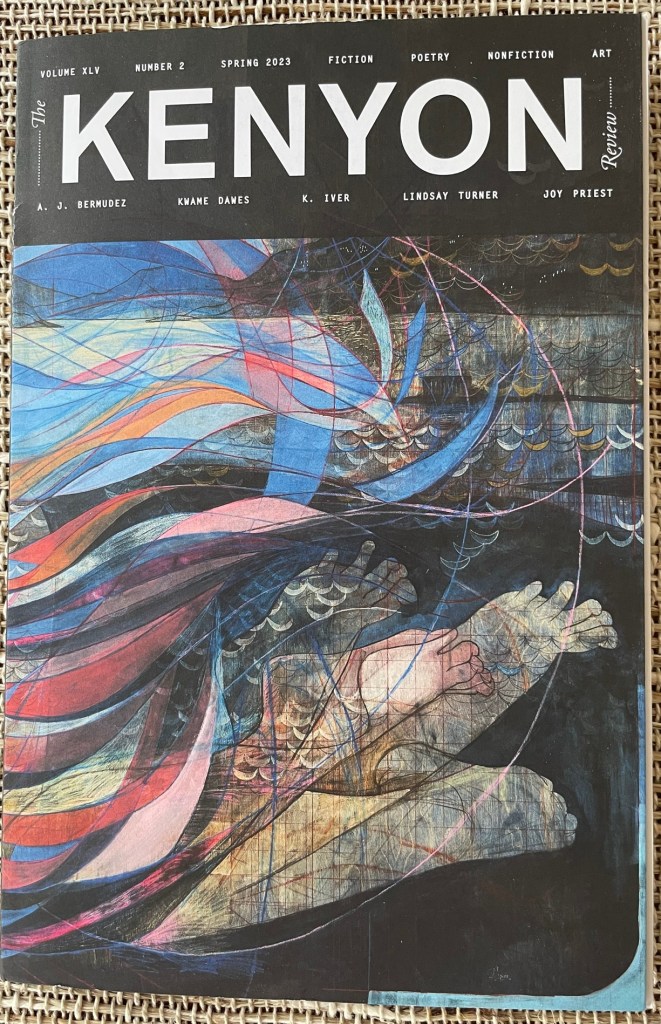
Kenyon Review – Spring 2023 issue includes a folio of literature in translation guest edited by award-winning translators Jennifer Croft, Anton Hur, and Jeremy Tiang. The issue also includes poetry by Kwame Dawes, Timothy Donnelly, K. Iver, and Danusha Lameris; fiction by Sam J. Miller, Michael Tod Powers, J. T. Sutlive, and Lindsay Turner; nonfiction by A. J. Bermudez; and the winner of the 2022 Short Fiction Contest, judged by Karen Russell. The cover art is by Pamela Phatsimo Sunstrum.
“A Field Guide to the Bear-Men of Leningrad” : a rare non-speculative thing from me, about boyhood & masculinity & human monstrosity in 1930s Russi… https://instagr.am/p/CqDkW1jsCI5/
World Economic Forum (March 25, 2023) – This week’s top stories of the week include:
0:15 NASA launches space based pollution monitor – It’s called TEMPO, which stands for Tropospheric Emissions: Monitoring of Pollution. Built by Ball Aerospace, TEMPO will measure levels of major air pollutants every hour from a geostationary orbit 22,000 miles above the equator. It will monitor a huge region of North America from Canada’s oil sands in northern Alberta to below Mexico City at a resolution of up to 4 square miles. Air pollution poses a major threat to human and planetary health as 99% of the global population breathes air that exceeds WHO health guidelines. Air pollution carries a total economic cost of more than $8 trillion. Therefore, monitoring it is critical to understanding its impacts. Though TEMPO is due to launch in April 2023, watch to learn more about how it will monitor air pollution from space.
1:58 8 best countries for working women – The Economist ranked 29 OECD nations according to the role and influence of women in the workplace. Iceland scores well on numerous factors. From low childcare costs to education attainment for women to female representation at senior levels. At the current rate, it will take 132 years to close the global gender gap How does your country support women at work?
3:23 What is the polycrisis? – Today we are once again beset by seemingly unconnected crises. Such as the war in Ukraine, the climate crisis and the aftermath of COVID-19. “So economics, politics, geopolitics and then the natural environment blowing back at us – and those 4 things, they don’t reduce to a single common denominator. They don’t reduce to a single factor. And that’s why I think the polycrisis term has a real utility descriptively as much as anything else, because it’s kind of hand-waving, of course, it’s kind of arm waving. It’s going, look, there’s a lot of stuff happening here all at once. And that precisely is what we’re trying to wrap our minds around.”
6:54 Are Chatbots going to take our jobs? – “I get this question asked 10 times a week, which is that, look, is conversational AI going to take away jobs? And my consistent answer is no. And the best analogy I will give to you is banks and ATMs. So prior to the technology of ATMs, the most common reason why people would walk into a bank would be to take out money. So imagine there’s no ATMs and 90% of the reason why somebody goes inside the bank is to say, I need to take out some cash, I need to take out some money. As a result, you know, you and I don’t even remember these days, but banks used to be crowded. There used to be long lines and so on. Here comes the ATM, which automates really what should be a very simple task.”
_____________________________________________
The World Economic Forum is the International Organization for Public-Private Cooperation. The Forum engages the foremost political, business, cultural and other leaders of society to shape global, regional and industry agendas. We believe that progress happens by bringing together people from all walks of life who have the drive and the influence to make positive change.
Architectural Digest (March 24, 2023) – Michael Wyetzner of Michielli + Wyetzner Architects returns to AD, this time breaking down five of the most common skyscraper styles dotting the New York City skyline. From set back ‘wedding cakes’ to the supertall buildings of the future, Michael gives expert insight on the different skyscraper styles that coalesce into one unforgettable view.
While retirement planning is a decadeslong endeavor, the way you handle your final decade before leaving the workforce will have a critical impact on how ready you’ll be when that day finally arrives.
“It hits about 10 years out—this train is coming to me,” says Danielle Byrd Thompson, a financial professional at Equitable Advisors in Washington, D.C. “It’s like a time clock is starting.”
With fat yields and more safety than common stock, preferred shares can be lifeboats for investors navigating banking’s stormy seas. Why bigger is better for small investors.
Margaret Atwood’s new book is “Old Babes in the Wood.”Credit…Arden Wray for The New York Times
Her new story collection, “Old Babes in the Wood,” offers elegiac scenes from a marriage plus a grab bag of curious fables.
There are authors we turn to because they can uncannily predict our future; there are authors we need for their skillful diagnosis of our present; and there are authors we love because they can explain our past. And then there are the outliers: those who gift us with timelines other than the one we’re stuck in, realities far from home. If anyone has proved, over the course of a long and wildly diverse career, that she can be all four, it’s Margaret Atwood.
Michael Lesy’s book of historical photographs and found text offers a singular portrait of American life.
Michael Lesy’s 1973 book “Wisconsin Death Trip” is an American oddity, a cult classic for a reason. In a way that few documentary texts do, it makes us leave the baggage of modernity at the trailhead. It forces us back into the inconceivably long nights in rural and small-town America before the widespread use of electricity, before radio, before antibiotics for dying children and antidepressants for anxiety bordering on mania, when events could make a family feel that some nocturnal beast had chalked its door.
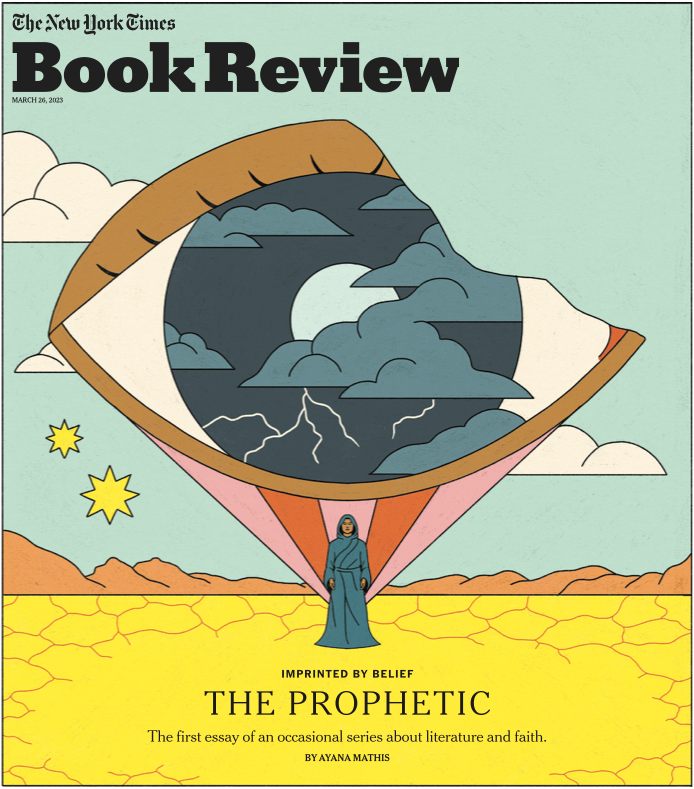
The first installment of an essay series on American literature and faith.
I am a child of the church. In an early memory, I am 6 years old, half-asleep in the back of my grandparents’ station wagon on the way home from a revival…
News, Views and Reviews For The Intellectually Curious








 CBS Sunday Morning (March 26, 2023) – To photographers Bernd and Hilla Becher, the rapidly vanishing industrial architecture of Western Europe and North America were works of art. The German couple’s documentary images of transmission towers, gas tanks, blast furnaces and smokestacks – structures that signified the end of an industrial era – are being celebrated in a comprehensive retrospective now at the San Francisco Museum of Modern Art. Lee Cowan offers us a tour.





















 Boomers Daily