Category Archives: Profiles

Video Profiles: 60-Year Old Canadian Designer Bruce Mau – “Beauty Of Books”

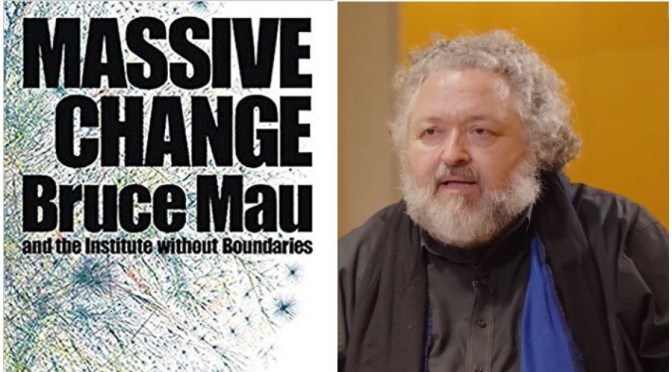
Meet the influential Canadian “design guru”, Bruce Mau, in this short video. Mau, who is the author of quintessential publications on architecture and design, shares his thoughts on how we can bring the book into the technological environment without losing its beauty and richness.

“I think it’s such a brilliant technology that if it didn’t exist today – if somehow we got to the present through technology and computers before the book – we would have to invent the book,” Maus says of the discussion surrounding the alleged ‘death of the book’. The book, he continues, is such a brilliant technology, that no computer can match: “It never crashes, it sequences narrative, which is one of the most important things we need to do to understand the world.”

Massive Change Bruce Mau

Mau shares how he is working on a technology platform for books because he realized that “when we moved the book from the physical book to the digital book, we left behind the beauty of the book. We left behind the culture of the book and the experience of the book. We just took the text.” The true experience of the book, he feels, should be better incorporated into the technological environment, while adding the capacity and reach that technology offers.

Bruce Mau website

Bruce Mau (b. 1959) is a Canadian designer. Mau began as a graphic designer but has later extended his creative talent to the world of architecture, art, films, conceptual philosophy and eco-environmental design. From 1985-2010, Mau was the creative director of Bruce Mau Design (BMD), and in 2003 he founded the Institute Without Boundaries in collaboration with the School of Design. In 2010, he went on to co-found The Massive Change Network in Chicago. Mau is the recipient of prestigious awards including the Chrysler Award for Design Innovation in 1998, the American Institute of Graphic Arts Gold Medal in 2007, the Philadelphia Museum of Art’s Collab Design Excellence Award in 2015, and the Cooper Hewitt 2016 National Design Award for Design Mind – for his impact on design theory, design practice and public awareness. In 1998, Mau designed a widely circulated 43 point manifest called ‘The Incomplete Manifesto for Growth’, which assists its users in forming and assessing their design process. Mau is also the author of iconic books such as ‘S, M, L, XL’ (1995) with Rem Koolhaas: an architecture compendium that quickly became a requisite addition to the shelves of creatives. In June 2020, he will publish ‘MC24’, which features essays, observations, project documentation, and design work by Mau and other high-profile architects, designers, artists, scientists, environmentalists, and thinkers of our time.

Bruce Mau was interviewed by Marc-Christoph Wagner in connection with The World Around conference (https://theworldaround.com/) in New York City in January 2020.

Website

Video Profiles: “Remote, Subarctic Backdrops” Of Nova Scotia Architect Omar Gandhi (NY Times)

Omar Gandhi Nova Scotia Architect
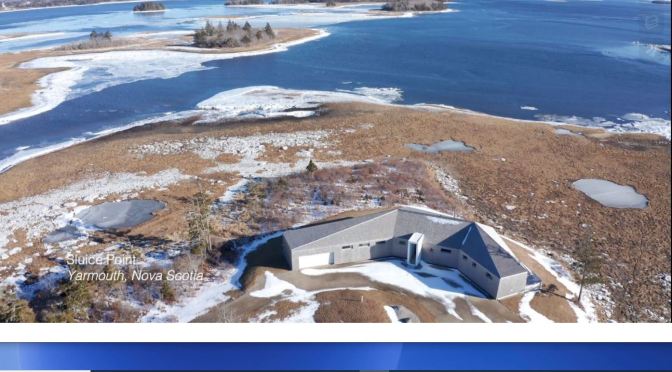
Nova Scotia Architect Omar Gandhi

Though Gandhi’s projects are dramatically different in form, such consideration of their remote, subarctic backdrop connects them to one another — they “look like they could only be in Nova Scotia,” he says.

EVERY FEW DAYS, the Canadian architect Omar Gandhi migrates between Toronto, his hometown, and Halifax, the capital of Nova Scotia, where he opened his eponymous firm in 2010. A year and a half ago, Gandhi added New Haven to his weekly peregrinations — he was teaching a seminar at the Yale School of Architecture called Where the Wild Things Are, after Maurice Sendak’s 1963 children’s book.

Rabbit+Snare+Gorge+Cabin+-+Doublespace+009

New York Times Style Magazine logoFor the final project of the semester, the professor took his class to the wind-swept island of Cape Breton (a glove-shaped appendage separated from Nova Scotia’s main peninsula by the narrow Strait of Canso) to visit Rabbit Snare Gorge — his 2013 project with the New York-based architecture firm Design Base 8 — a slender cabin that stretches 43 feet tall, like a 16th-century Mannerist portrait. Touring the surrounding plot, a 47-acre wooded slope bisected by the creek that gives the house its name, Gandhi, 40, asked his students to conceive a “campus of creatures” — a set of structures that, as he described it when we met at his Halifax studio last summer, “have an attitude and respond and look like they move.”
Read full article

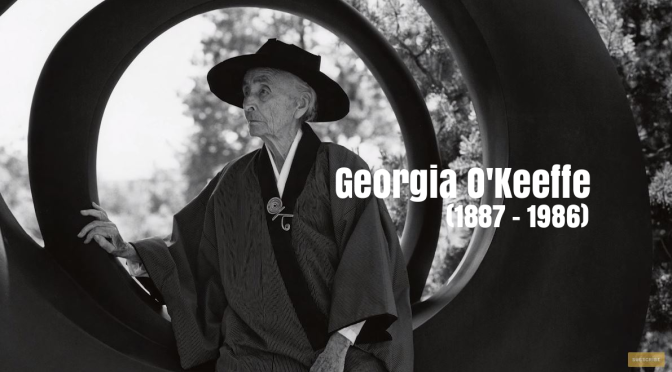
Art Videos: “Georgia O’Keeffe’s Century Of American Art” (Sotheby’s)

Sotheby's AuctionsIn the final years of Georgia O’Keeffe’s nearly century-long life, she employed and befriended the young sculptor Juan Hamilton. The two would become inseparable, and upon her death in 1986, Hamilton inherited fine art and personal affects from the artist’s estate, including rarely seen pieces from the estate of O’Keeffe’s late husband, Joseph Stieglitz.

This March, Sotheby’s is honored to present these works in Alfred Stieglitz, Georgia O’Keeffe, Juan Hamilton: Passage, a dedicated auction in New York on 5 March 2020. In this episode of Expert Voices, Head of American Art Kayla Carlsen explores the stories behind this remarkable collection while highlighting exceptional works, including O’Keeffe’s Nature Forms – Gaspé, Stieglitz’s Hand and Wheel and Hamilton’s Untitled (Red Form).

(New York | 5 March 2020)

Debates: 55 Years Since “James Baldwin – William F. Buckley” (Cambridge 1965)

It has been 55 years since civil-rights activist, James Baldwin, and founder of the conservative National Review, William F. Buckley, Jr., met for a debate on race in America. That discussion and the lives of the two cultural giants are subjects of a new book, “The Fire is Upon Us.” Zachary Green spoke with author and political scientist Nicholas Buccola about how the debate’s still resonating.

Movie Soundtracks: “James Bond Theme” For “Dr. No” By Monty Norman, Now 91 (1928, London)

Monty Norman
Monty Norman

Soundtrack/theme music from the 1962 Terence Young film “Dr. No,” with Sean Connery, Ursula Andress, Joseph Wiseman, Jack Lord, John Kitzmiller, Lois Maxwell & Bernard Lee.

Monty Norman (born 4 April 1928) is a singer and film composer best known for composing the “James Bond Theme”.

Norman is famous for writing the music to the first James Bond movie, Dr. No, including the “James Bond Theme”, the signature theme of the James Bond franchise. Norman has received royalties since 1962 for the theme. However, as the producers were dissatisfied with Norman’s arrangement, John Barry re-arranged the theme. Barry later claimed that it was actually he who wrote the theme, but Norman won two libel actions against publishers for claiming that Barry was the composer, most recently against The Sunday Times in 2001. In the made-for-DVD documentary Inside Dr. No, Norman performs a music piece which he wrote for the stage several years earlier entitled “Bad Sign, Good Sign”, that resembles the melody of the “James Bond Theme” in several places.

Norman collected around £600,000 in royalties between the years 1976 and 1999 for the use of the theme since Dr. No.

From Wikipedia

Podcast Profiles: Newly-Opened “Wild Food” Vegan Helsinki Restaurant “Villd” Chef Ossi Paloneva

Monocle 24 “The Menu” features a new Helsinki restaurant that’s pushing the boundaries in sourcing local ingredients.

Villd Restaurant Owner & Chef Ossi Paloneva

VILLD – Finland’s first vegan fine-dining restaurant. Known as Ossi Paloneva’s pop up restaurant concept and web series, VILLD opened a permanent restaurant in November 2019 in Harju, Helsinki (Helsinginkatu 21).

VILLD’s rotating five-course vegan menu is made up of wildly collected wild ingredients. In VILLD’s kitchen, roots, berries, plants, mushrooms, seeds and edible flowers are transformed into pure and strong experiences, including smoking, fermentation, drying and germination.

Website

Profiles: 71-Year Old Physicist And Author Alan Lightman’s “Creative Life”

From a New York Times online article (February 13, 2020):

“I love physics, but what was even more important to me was leading a creative life,” Dr. Lightman said. “And I knew that writers could continue doing their best work later in life.”

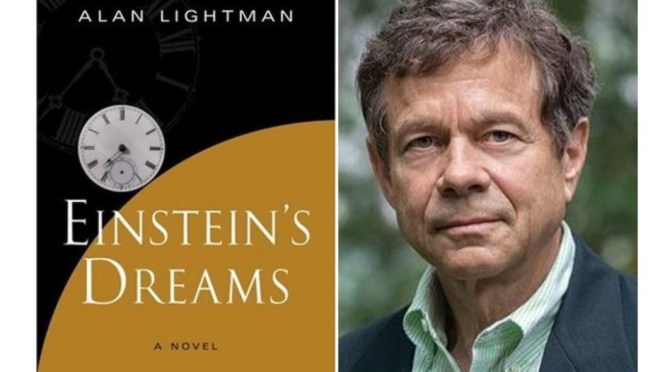
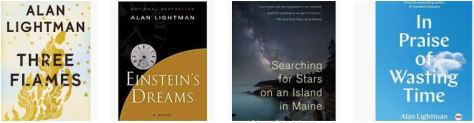
Alan Lightman Books

Lightman is best known in literary circles for his 1992 novel, “Einstein’s Dreams,” which is all about the vicissitudes – romantic, physical and otherwise – of time. It recounts the nightly visions of a young patent clerk in Bern, Switzerland, as he struggles to finish his theory of relativity.

But before that, Dr. Lightman was an astrophysicist, a card-carrying wizard of space and time, with a Ph.D. from the California Institute of Technology and subsequent posts at Cornell and Harvard In 1989, at the peak of his prowess as a physicist, he began to walk away from the world of black holes to enter the world of black ink and the uncertain, lonely life of the writer.

Recently he was in New York for the opening of “Einstein’s Dreams,” an off-Broadway play based on his book. There have been dozens of such stage adaptations over the last 30 years.

Read full article

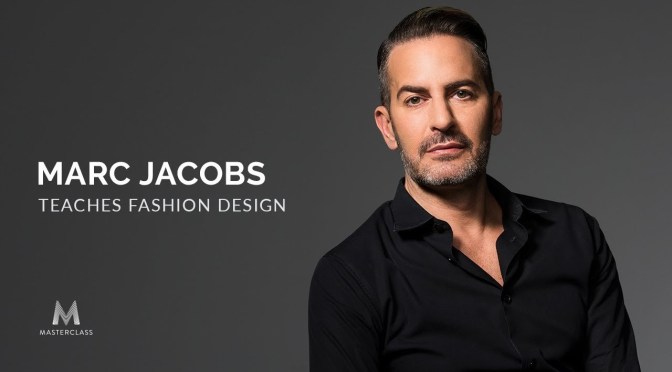
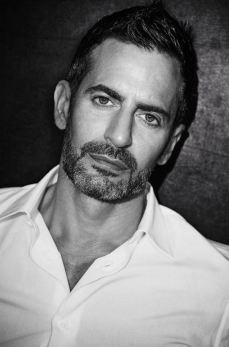
Profiles: 56-Year Old Fashion Designer Marc Jacobs’ “Protean Life”

Excerpts from a New York Times Style Magazine online article (February 10, 2020)

Marc Jacobs from MarcJacobs.com website February 10 2020
Marc Jacobs

“People want newness, and they want it from a new person. I understand that I’m not the 25-year-old who was given this incredible job at Perry Ellis, or who created the grunge collection, or who was the bad boy of the 1990s,” he said. “I am a 56-year-old man who still has the privilege of doing a collection.” But his voice was calm as he said this, full of acceptance and experience.

“THE DRIVING FORCE in my life is fear,” Marc Jacobs said.

IT WAS A bright December afternoon, a week or so before Christmas, when Jacobs and I met for the last time. I waited in the reception area of his atelier next to a sculpture of Neville, Jacobs’s bull terrier, whom I had recently begun following on Instagram (he has over 200,000 followers). I thought I could finally understand why Jacobs commands such devotion from those around him. He exudes a precariousness that is deeply affecting to anyone even dimly aware of the mysterious connection between creativity and tragedy. If he attracts protectors, it is because one cannot speak at any length to him without feeling that, as Oscar Wilde wrote about his titular character in “The Picture of Dorian Gray,” “a note of doom runs like a purple thread” through “the gold cloth” of his talent.

Read entire article

Tributes: Actor Robert Conrad Of “The Wild, Wild West” Dies At 84 (1935 -2020)

Robert Conrad, the actor best known for his role in the television show The Wild Wild West, died today in Malibu, Calif. of heart failure. He was 84 and his death was announced by a family spokesman. Born in Chicago, Illinois, Conrad moved to Los Angeles in 1958 and found almost instant success, booking a recurring role on the TV show Hawaiian Eye in 1959.


Robert Conrad (born Conrad Robert Falk; March 1, 1935 – died February 8, 2020) was an American film and television actor, singer, and stuntman. He is best known for his role in the 1965–69 television series The Wild Wild West, playing the sophisticated Secret Service agent James T. West. He portrayed World War II ace Pappy Boyington in the television series Baa Baa Black Sheep (later syndicated as Black Sheep Squadron). In addition to acting, he was a singer, and recorded several pop/rock songs in the late 1950s and early 1960s as Bob Conrad. He hosted a weekly two-hour national radio show (The PM Show with Robert Conrad) on CRN Digital Talk Radio since 2008.

From Wikipedia