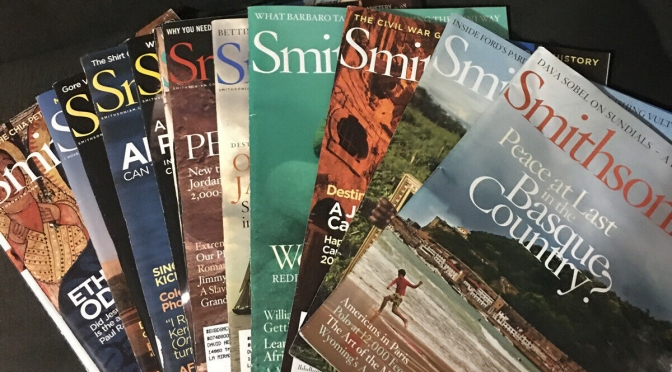
Smithsonian Magazine (June 1 , 2024) –The latest issue features ‘Inside Earth’s Newest Caves’ – Clues about early life emerge from Iceland’s active volcanoes…
Journey Into the Fiery Depths of Earth’s Youngest Caves
What Iceland’s volcanoes are revealing about early life on our planetand’s volcanoes are revealing about early life on our planet
This Doctor Pioneered Counting Calories a Century Ago, and We’re Still Dealing With the Consequences
When Lulu Hunt Peters brought Americans a new method for weighing their dinner options, she launched a century of diet fads that left us hungry for a better way to keep our bodies strong and healthy
London Review of Books (LRB) – May 29 , 2024: The latest issue features Daniel Trilling – Trouble with the Troubles Act; Primordial Black Holes; The Village Voice….
In 1968, Fidel Castro invited an American anthropologist called Oscar Lewis to interview Cubans about their lives. Lewis was famous for an oral history project, conducted in a Mexico City slum, which he had turned into a book called The Children of Sánchez (1961). By recounting a poor family’s struggles and hustles, legal and otherwise, Lewis angered the country’s ruling party, which still described itself as ‘revolutionary’. The Mexican Revolution, like the Cuban Revolution after it, wasn’t supposed to have an end date. But after major gains, including redistributing land to landless farmers, it had been ‘interrupted’, as the historian Adolfo Gilly later put it. Lewis exposed the revolution’s unfinished business, and didn’t shy away from discussing the sexual peccadilloes of the poor. The Spanish-language edition of Children of Sánchez was published in 1964, but thanks to a lawsuit claiming the material was ‘obscene and denigrating’, the book wasn’t freely available in Mexico for several years.
The Freaks Came out to Write: The Definitive History of the ‘Village Voice’, the Radical Paper That Changed American Culture by Tricia Romano.
In the mid-1960s, the Village Vanguard jazz club in Greenwich Village held Monday night speak-outs. At one of them – an evening billed as ‘Art and Politics’ – the Black poet and playwright LeRoi Jones (soon to become Amiri Baraka) held forth, along with the Black saxophonist Archie Shepp and the white painter Larry Rivers. The audience was composed almost entirely of people like me and my friends: white middle-class liberals and radicals, many of whom were veteran civil rights activists. We had trooped into the Vanguard expecting to make common cause with the speakers, but Jones did not look kindly on us. In fact, he quickly told us we weren’t wanted in the civil rights movement, that we were just an interference, only there to make ourselves feel good. Then he pointed his finger and roared: ‘Blood is going to run in the seats of the theatre of revolution, and guess who’s sitting in those seats!’
Times Literary Supplement (May 29, 2024): The latest issue features ‘Kafka’s Century’ – Karen Leeder, Becca Rothfeld, Gabriel Josipovici, Michael Hofmann et al…; Colm Toibin returns to Brooklyn; India under Modi; A Jim Crow insane asylum and Literary cricket…
As Blind Veterans UK pays its own special tribute to survivors of the D-Day operation, Octavia Pollock puts words to Richard Cannon’s poignant photographs
‘Plans are worthless, but planning is everything’
Allan Mallinson examines the key role that country houses played in preparations for D-Day, aided by well-stocked wine cellars and countesses in the canteen
‘Because it’s there’: the Mallory and Irvine mystery
Was the 1924 British Everest Expedition a success or failure? Robin Ashcroft takes a broad perspective as he sifts through a century of speculation
There’s no place like home
In the first of four articles, Annunciata Elwes investigates how flexible working has opened up the North to City commuters
Country Life International
Holly Kirkwood explores the Balearic Islands — the life and sol of the Mediterranean Sea
Growing in stature
Chelsea provides many magic moments for Tiffany Daneff, who finds inspiring gardens on Main Avenue and in the Great Pavilion
Native herbs
John Wright raises a glass to hops, that stalwart ingredient of the ale-brewing industry
The late Sir Andrew Davis’s favourite painting
Before his death last month, the celebrated conductor selected a compelling and inspiring work
Elegant and congruous
In the second of two articles, John Goodall charts the recent history of Hartland Abbey, Devon
The legacy
Kate Green reveals Thomas Darley’s role in the story of the English Thoroughbred horse
Empire protest
A Passage to India reflects the rising tensions of the British Raj. Matthew Dennison revisits the masterpiece 100 years on
‘Nature is nowhere as great as in its smallest creatures’
John Lewis-Stempel marvels at the variety of microscopic wild-life that calls tree bark home
Luxury
Hetty Lintell serves up a new tennis collection, plus Heston Blumenthal’s favourite things
Interiors
A bright, colourful drawing room and Alidad at Wow!house
Spring-fed genius
Charles Quest-Ritson reveals how springs have shaped Selehurst garden in the West Sussex Weald
Kitchen garden cook
Melanie Johnson celebrates sweet and juicy strawberries
Achilles healed
The ancient Greeks harnessed its medicinal powers, but yarrow now has a role to play in modern agriculture, discovers Ian Morton
The darling buds of May
May Morris is finally stepping out of the shadow of her famous father, William — and not before time, argues Huon Mallalieu






























 Boomers Daily