
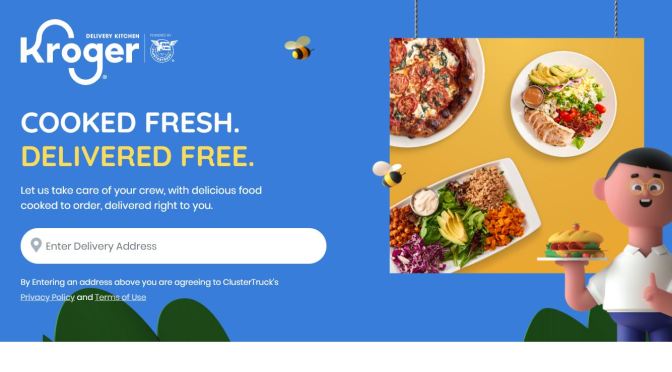
From a Kroger Press release:
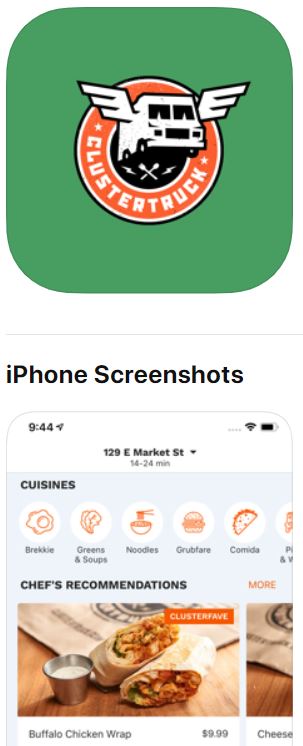 “The way our customers order and receive meals is evolving, and ClusterTruck’s innovative culinary and digital design is cracking the code for the future of profitable meal delivery,” said Yael Cosset, Kroger’s CIO. “Kroger is leveraging ClusterTruck’s advanced technology to ensure our customers don’t have to sacrifice quality and value for convenience when it comes to meal delivery. Kroger Delivery Kitchen Powered by ClusterTruck will allow our customers to access restaurant-quality fresh and delicious meals like never before and without having to pay excessive service or delivery fees.”
The Kroger Co. (NYSE: KR), America’s favorite grocer, and ClusterTruck, a software platform that powers profitable, vertically integrated delivery-only kitchens, today launched a partnership that will change the way Americans access freshly prepared meals. By offering multiple menus from one central scratch kitchen, Kroger Delivery Kitchen will deliver fresh and delicious meals on-demand without service or delivery fees.
To read more: http://ir.kroger.com/file/Index?KeyFile=401318028
 “Today, most of the seniors we serve are utilizing easy-to-use mobile phone products and connected devices that are tailored for seniors and come with a range of relevant services,” Best Buy CEO Corie Barry said during an earnings call Nov. 26, according to a transcript from
 Three-quarters of a century later, at age 97, Goodenough will become the oldest person


 “This proof of concept study demonstrates a new paradigm that measurement of blood proteins can accurately deliver health information that spans across numerous medical specialties and that should be actionable for patients and their healthcare providers,” said Peter Ganz, MD, co-leader of this study and the Maurice Eliaser distinguished professor of medicine at UCSF and director of the Center of Excellence in Vascular Research at Zuckerberg San Francisco General Hospital and Trauma Center.
 Amy Walter of the Cook Political Report and Domenico Montenaro of NPR join Yamiche Alcindor to discuss the latest political news, including shifting dynamics in the 2020 Democratic presidential primaries, how congressional Democrats and Republicans view the facts of the impeachment investigation differently, political pressure on moderates and how impeachment could affect the 2020 race.
 In a WTOP-FM interview, Health Affairs Editor-In-Chief Alan Weil assesses how consumers may (or may not) benefit from two long-anticipated rules, recently unveiled by the Trump Administration, that increase price transparency for both hospitals and insurers.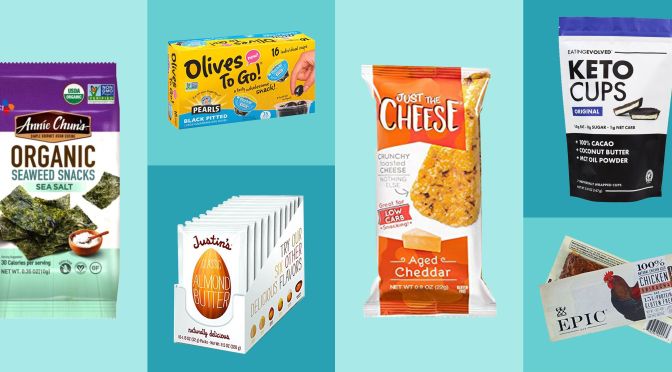
 According to a report from Innova Market Insights, snacking has already become an all-day habit in the States. While 46% of consumers eat salty snacks between-meals in the afternoon and 37% in the evening, more consumers are also replacing traditional meals with quicker bites. The numbers of consumers who are consuming salty snacks at lunchtime (23%), dinner (17%) and even breakfast (8%) are on the increase.
 Researchers are using artificial intelligence techniques to invent medicines and materials—but in the process are they upending the scientific method itself? The AI approach is a form of trial-and-error at scale, or “radical empiricism”. But does AI-driven science uncover new answers that humans cannot understand? Host Kenneth Cukier finds out with James Field of LabGenius…
 Boomers Daily