
Category Archives: History

Art & Landscape: Gardens & Grounds Of The Natural History Museum, London”

The Museum’s gardens were originally set aside for future expansion of the building, but when money ran out they became an outside space for the public. They haven’t just been for show – over the years they’ve been a burial ground for whales, they’ve hosted a secret war bunker, and they’ve been converted to a farm complete with eight Sussex pigs.

The Natural History Museum in London is home to over 80 million specimens, including meteorites, dinosaur bones and a giant squid.

Website

Art History: “Travels With A Curator – Ca’ d’Oro Museum In Venice” (Video)

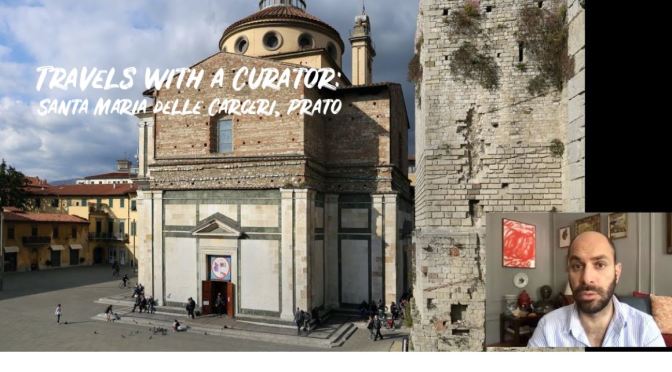
In the first episode of “Travels with a Curator,” Xavier F. Salomon, Peter Jay Sharp Chief Curator, transports us to Venice. He introduces us to the Ca’ d’Oro, a house museum which was lovingly restored around the same time that the Frick mansion was built in New York City.

The Frick Collection Logo
Website

The Art Of The Curator : “A Day In The Countryside” (National Gallery Video)

Lucy Chiswell, the Curatorial Fellow for Paintings 1600-1800, explores a day in the countryside through paintings by Rubens, Constable and Corot.

Paintings mentioned

0:50 Peter Paul Rubens ‘An Autumn Landscape with a View of Het Steen in the Early Morning’ 🎨 https://www.nationalgallery.org.uk/pa…

Find out more about Rubens the artist 🖌️ https://www.nationalgallery.org.uk/ar…


4:19 John Constable, ‘The Hay Wain’ 🎨 https://www.nationalgallery.org.uk/pa…

Find out more about Constable the artist 🖌️ https://www.nationalgallery.org.uk/ar…


8:03 Jean-Baptiste-Camille Corot ‘The Four Times of Day: Night’ 🎨 https://www.nationalgallery.org.uk/pa…

See more: the four times of day (Morning, Noon, Evening, and Night) 🎨 https://www.nationalgallery.org.uk/pa…


Art Insider: “Monet’s Groundbreaking ‘Poplar’ Series” (PhilaMuseum)

Philadelphia Museum of Art LogoIn the summer of 1891, Claude Monet began to paint a row of poplar trees that lined the river Epte near his house at Giverny. The trees were auctioned off for timber shortly thereafter, but Monet made a deal with the purchaser to delay cutting them so he could continue to paint the trees through the autumn. Using a shallow rowboat that had slots in the bottom capable of holding several canvases at once, Monet painted twenty-four pictures of the poplars from his floating studio.

The resulting pictures reflect the view at different seasons and times of day and were known as the “Poplar Series” when they were exhibited in February 1892.

Website

Paleontology: “The Battle Over Dinosaur Fossil Hunting” (WSJ Video)

Should anyone be able to dig up and sell dinosaur fossils? It’s a question that’s increasingly being asked as the commercial fossil market booms. WSJ met with fossil hunters and scientists to learn more about this niche market and the big bucks at stake.

Art: “Cocktails With A Curator – Rembrandt’s ‘Polish Rider’ ” (The Frick)

In this episode of “Cocktails with a Curator,” Xavier F. Salomon, Peter Jay Sharp Chief Curator, hosts us again for happy hour at his apartment. The subject of tonight’s presentation is the mysterious “Polish Rider ” by Rembrandt, and the complementary cocktail is the Szarlotka, a Polish drink made with Żubrówka (vodka infused with bison grass).

Art Curator: “Why Did Michelangelo Use Red Chalk?” (Getty Museum)

From The Iris (Getty Museum – April 17, 2020):

gm_374970EX1_1300To work out the details of all the figures in pen and ink would have been extremely labor-intensive, and sharpening quills and mixing inks would’ve added an additional distraction. Drawing in chalk necessitated great skill, but it also allowed Michelangelo a flexibility. He could create subtle tonal variations by applying more or less pressure onto the chalk or by wetting it. The red chalk also provided an immediate mid-tone on the paper and could be easily blended when modeling and shading forms. Being a naturally occurring material that was available to artists in sticks that could be sharpened as desired, it was also convenient and portable.

The Iris - Behind The Scenes at the Getty MuseumDuring his lifetime, Michelangelo likely produced tens of thousands of drawings. But being protective of his ideas, and to give an impression of effortless genius, he destroyed many of them. Today only about 600 drawings by the Renaissance artist survive. A Getty exhibition highlighted 28 of them, giving viewers a window into Michelangelo’s artistic process. “He used drawings to record his observations, to explore certain ideas, to further develop these ideas, to reconsider them entirely,” said Assistant Curator Edina Adam.

The exhibition included a relatively high number of drawings in red chalk, which prompted the question: Why did Michelangelo use this particular drawing material?

Website

Art History: “Toulouse-Lautrec And The Stars Of Paris” (MFA, Boston Video)

Curator Helen Burnham, Pamela and Peter Voss Curator of Prints and Drawings, introduces us to the celebrities of 19th-century Paris made famous by Henri de Toulouse-Lautrec and his contemporaries. The exhibition features the rich holdings of the MFA and its organizing partner, the Boston Public Library.