Meet Pascale Lepeu, Curator of the Cartier Collection, and see the incredible trove of historic Cartier jewellery that is held within. From elegant diamond tiaras of the Belle Époque to remarkable Art Deco tutti frutti bracelets and more, discover the enormous influence that Cartier has had on the world of high jewellery. An extract from the Christie’s Education online course, History of Jewellery Design: 1880–Now.
Valerie Hansen explores these early economic and cultural exchanges and their long-term impact in her new book “The Year 1000: When Explorers Connected the World―and Globalization Began”, which originated as a college course co-taught with Mary Miller, director of the Getty Research Institute. In this episode, Hansen and Miller discuss the state of the world around the year 1000.
From celebrated Yale professor Valerie Hansen, a groundbreaking work of history showing that bold explorations and daring trade missions connected all of the world’s great societies for the first time at the end of the first millennium.
People often believe that the years immediately prior to AD 1000 were, with just a few exceptions, lacking in any major cultural developments or geopolitical encounters, that the Europeans hadn’t yet reached North America, and that the farthest feat of sea travel was the Vikings’ invasion of Britain. But how, then, to explain the presence of blonde-haired people in Maya temple murals at Chichén Itzá, Mexico? Could it be possible that the Vikings had found their way to the Americas during the height of the Maya empire?
Valerie Hansen, an award-winning historian, argues that the year 1000 was the world’s first point of major cultural exchange and exploration. Drawing on nearly thirty years of research, she presents a compelling account of first encounters between disparate societies, which sparked conflict and collaboration eerily reminiscent of our contemporary moment.
For readers of Jared Diamond’s Guns, Germs, and Steel and Yuval Noah Harari’s Sapiens, The Year 1000 is an intellectually daring, provocative account that will make you rethink everything you thought you knew about how the modern world came to be. It will also hold up a mirror to the hopes and fears we experience today.
As Alfa Romeo celebrates its 110th anniversary in 2020, discover and relive the brand’s signature moments, from its first car in 1910 and first F1 championship in 1950 to this year’s limited-edition Giulia GTA and future Tonale concept crossover.
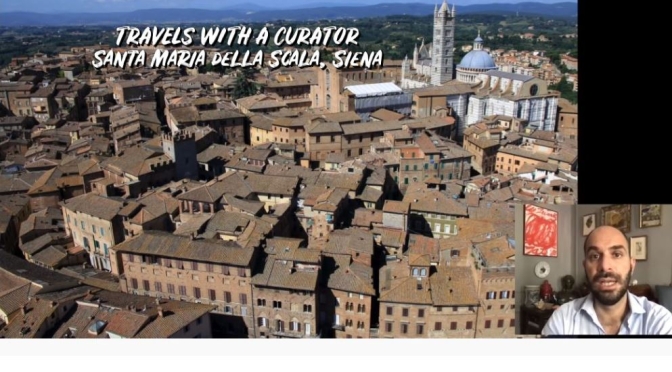
In this week’s episode of “Travels with a Curator,” travel with Xavier F. Salomon, Peter Jay Sharp Chief Curator, to Valenciennes, the birthplace of the Rococo painter Jean-Antoine Watteau. Delve into the historical events surrounding Watteau’s “Portal at Valenciennes” (ca. 1710–11), a scene of soldiers at rest near the ramparts of the town. Known for his depictions of garden frolics, Watteau seldom portrayed military life—“The Portal” is one of only three such paintings that survive today.
Valenciennes is a commune in the Nord department in northern France. It lies on the Scheldt river. Although the city and region experienced a steady population decline between 1975 and 1990, it has since rebounded.
The year 2020 marks the one-hundredth anniversary of the ratification of the 19th Amendment, which granted millions of women in the U.S. the right to vote. The Frick is celebrating with a series of videos honoring the stories of women who made, appeared in, collected, and took care of art in this collection.
Frick Curator Aimee Ng continues the series with a look at the model, actress, dancer, writer, and artist known as “Miss Manhattan”—Audrey Munson.
Audrey Marie Munson was an American artist’s model and film actress, today considered “America’s First Supermodel.” In her time, she was variously known as “Miss Manhattan”, the “Panama–Pacific Girl”, the “Exposition Girl” and “American Venus.”
Designer – Alexander Hellebaut
Animation – Luke Marsh, Alexander Hellebaut, Michael Towers + Ish Ali
Voiceover – Javier Fernandez
Music + Sound Design – Arthur Brouns
Producer – Eve Somerville
Creative Director – Giles Dill
With thanks to Fundació Gala Salvador Dalí, Shamina Knights and Danielle Hallock.
Surrealist master Salvador Dali would often be found in Catalonia’s capital Barcelona. His visits were often followed by stories as strange as his artworks. One such tale is of Dali’s magic chequebook… a story of food, drink and finances that may or may not have happened.
Vice Chairman Lucian Simmons sits down to describe one of his favorite works – Fernand Léger’s Nature Morte. After surviving World War I, Léger joined an influx of artists searching for “purity” or a so-called “return to order.” Executed in 1925, Léger’s still life is an outstanding example of the artist’s classical period, where the artist found a new stride. Nature Morte will be offered as a highlight of the Sotheby’s Impressionist and Modern Evening auction in New York.
…what perhaps absorbed him most was a suite of 10 paintings of one of the weeping willows he had planted on the shores of his pond in 1893, when he had purchased the property to construct his aquatic paradise. The tree had grown in girth and grandeur over the intervening years, its leafy arms now extending out over the dappled waters like an impassioned conductor energizing an orchestra.
The trees in Monet’s water garden are much less known than the flowers, but they were central to his vision of what that ideal space should include and thus dear to his heart. In 1912, when severe winds and rains wreaked havoc on his horticultural handiwork, what Monet mourned most was the damage to his willows.
Weeping willows, of course, evoke mourning by their very appearance no less than by their appellation, their drooping tendrils the very symbol of sorrow. It’s therefore not surprising, given Monet’s sensitivity to his nation’s plight, that he turned to this tree to express the trauma of the moment.
In this week’s episode of “Cocktails with a Curator,” Curator Aimee Ng studies Thomas Gainsborough’s scandalous portrait of Grace Dalrymple Elliott. Discover why this painting met with a negative reception when it was shown at the Royal Academy in 1782. Mrs. Elliott later moved to France, where she lived through the Reign of Terror and died in 1823 in the outskirts of Paris. This week’s complementary cocktail is the Pimm’s Cup, a traditional summer drink in Britain.
Thomas Gainsborough RA FRSA was an English portrait and landscape painter, draughtsman, and printmaker. Along with his rival Sir Joshua Reynolds, he is considered one of the most important British artists of the second half of the 18th century.
The Tokugawa dynasty would rule until 1868, and the era became known as the Edo period…It was a time of peace and prosperity, and the arts flourished. Particularly splendid were the ukiyo-e (‘woodblock prints’) — works known for their unusual viewpoints, abrupt cropping, exquisite stylisation, and patches of vivid, unshaded colour.
Katsushika Hokusai (1760-1849), Kanagawa oki nami ura (In the Well of the Great Wave off Kanagawa), from the series Fugaku sanjurokkei (Thirty-six Views of Mount Fuji).
Printing in more than one colour was tricky: it wasn’t until the 1740s that green and pink were tentatively introduced. A huge breakthrough came in 1765, when Suzuki Harunobu (1724-1770) mastered a process that accommodated an array of colours.