Category Archives: History

Museum Tours: Highlights Of The Met Cloisters, NYC

Join curators, conservators, and horticulturists as they discuss some projects they have been working on over the past year and experience the magic of The Met Cloisters.

Featuring: Griffith Mann, Michel David-Weill Curator in Charge, The Met Cloisters Carly Still, Managing Horticulturist, The Met Cloisters Lucretia Kargere, Conservator, The Met Cloisters Julia Perratore, Assistant Curator, The Met Cloisters Yvette Weaver, Assistant Horticulturist, The Met Cloisters

Featured Artwork: Book of Flower Studies, ca. 1510–1515, Made in Tours, France (acc. no. 2019.197) Altar Predella and Socle of Archbishop Don Dalmau de Mur ca. 1456–1458, Made in Saragossa, Aragon, Spain (acc. no. 09.146) Apse from San Martin at Fuentidueña, ca. 1175–1200, Made in Segovia, Castile-León, Spain (L.58.86a–f) Video by Steadfast Productions in association with The Met

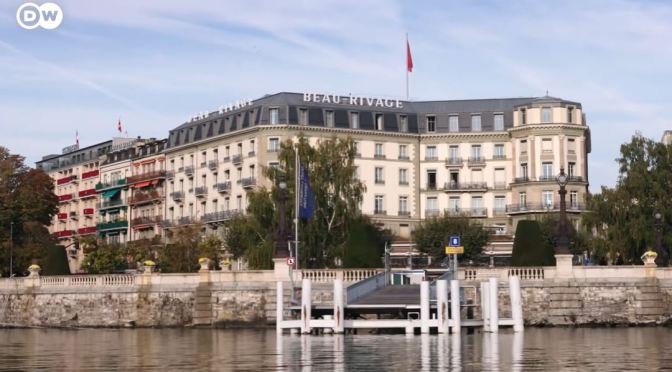
History: The Legendary Beau-Rivage Hotel In Geneva, Switzerland

With its stunning view of Lake Geneva, the Beau-Rivage, in Geneva has attracted actors from Roger Moore to Angelina Jolie, and played host to political luminaries like Kofi Annan, Charles de Gaulle and the Dalai Lama. Political history has been made here, too: In 1898, the Empress “Sisi” of Austria was stabbed to death by an anarchist at the Beau-Rivage. Nearly a hundred years later, in 1987, the German politician Uwe Barschel was discovered dead here, in a bathtub. Family-run for generations, the hotel is impressive not just for its size, but also for its discretion. Now, director Jacques Mayer uses interviews, archival film and rarely seen photographs to vividly chronicle some of the most fateful years of the Beau-Rivage.

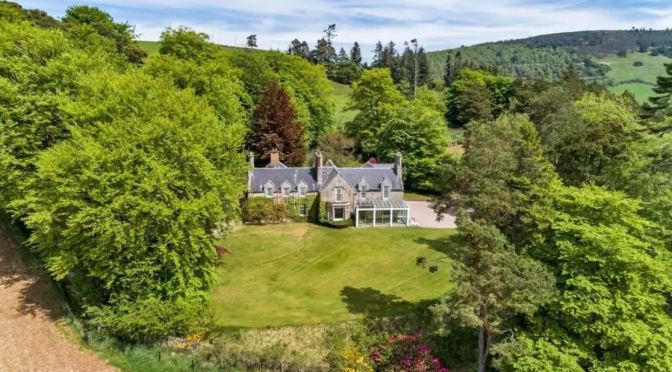
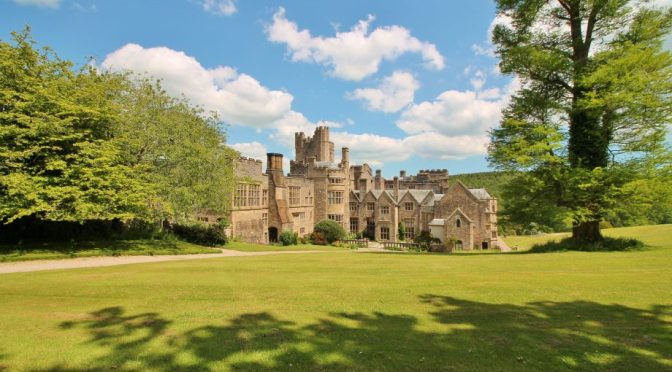
English Country Estates: Flete House In Holbeton

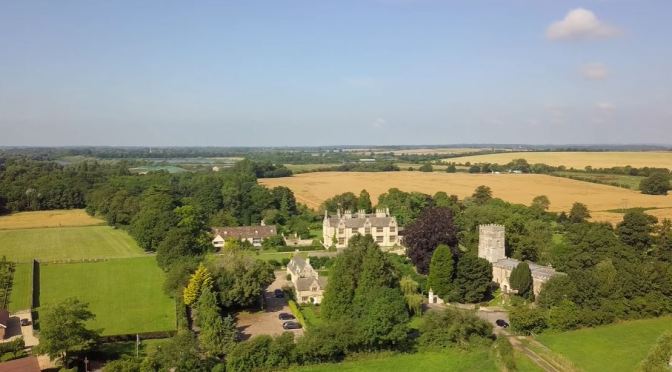
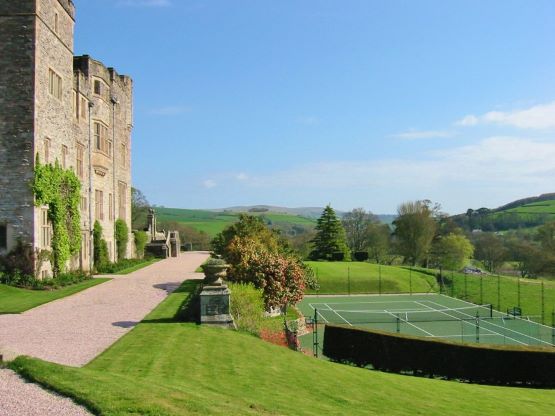
Twelve glorious acres of manicured grounds surround partly Elizabethan Flete House, former seat of the Mildmay family, which overlooks Ermington and Dartmoor, enjoying ‘probably the finest situation in Devonshire’ according to Cornish poet and historian Richard Polwhele (1797).

Lydia Stangroom, August 13, 2021

At Holbeton in the South Hams, not far from Georgian Modbury, it was used as a maternity hospital in the Second World War and has now been converted into 29 apartments, retaining the principal rooms (library, dining, drawing and billiard rooms and others) for communal use, exclusively for over 55s.

Read more

History: The Legendary ‘American Colony Hotel’ – Jerusalem (DW Video)

The elegant “American Colony Hotel” in Jerusalem is an island of tranquility in a troubled city. The grand hotel has lived through all of Jerusalem’s serious crises. Everyone is welcome here, no matter where they come from or what they believe. The name “American Colony Hotel” goes back to a group of 19th Century American pilgrims. In its early days, the grand hotel was located among olive groves outside Jerusalem’s city walls. For over a hundred years, many parties to the Palestinian-Israeli conflict have shaken hands, eaten and drunk here together. People mingle here in a way they would never do elsewhere. Behind it all is the fascinating story of Anna and Horatio Spafford, who, after several tragic events, moved from the US to the Holy Land with a community of devout Christians. With diligence, skill, and an insistence on neutrality and tolerance despite political difficulties, they created a hotel in a truly special location. Its atmosphere continues to attract illustrious guests from the worlds of politics, diplomacy, literature, art and entertainment.

English Gardens: 19th-Century Brodsworth Hall In South Yorkshire

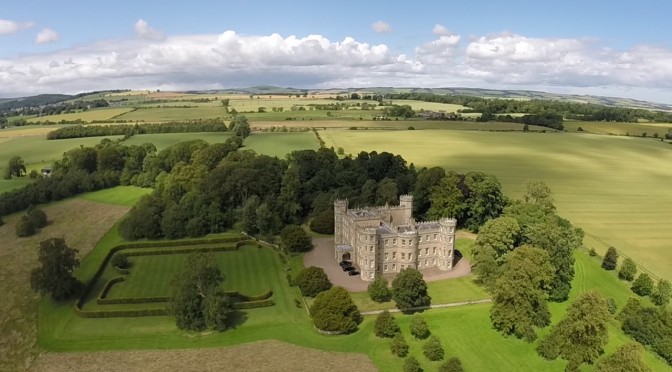
The mid-19th-century Gardens of Brodsworth Hall in South Yorkshire are striking. House and grounds are a perfect complement of Italianate green architecture and are linked by formal terraces with three staircases decorated by marble urns and recumbent — probably Italian — greyhounds acquired by the Italian sculptor Chevalier G. M. Casentini.

Tiffany Daneff, August 14, 2021

If this all feels rather unlikely in Yorkshire, that is because it reflects the taste of one man, Charles Sabine Augustus Thellusson, who came into an extraordinary inheritance in 1858 and devoted much of it to creating the hall and its gardens in his own personal style.

‘Today, he would be an oligarch,’ says Michael Klemperer, senior gardens advisor for the North and Midlands regions at English Heritage (EH), which now looks after house and gardens. ‘The money he received from the will was £700,000, which, with interest, equates to £140 million today.’ With the cash came the estate that had belonged to his great-grandfather Peter Thellusson, a Swiss financier, who had moved to London in 1760 and built up a fortune as a merchant and banker.

Charles Thellusson was an avid traveller, sailor and photographer. ‘He was a big, robust Victorian gentleman, a patrician walrus,’ notes Dr Klemperer, who sees Brodsworth as representing a transition between Continental styles and the Victorian era. ‘It is a garden that is interesting on a number of levels,’ he adds, citing influences as varied as Caspar David Friedrich (1774–1840) and Blackpool pier.

Read more

Homes & History: ‘Down House’ – Charles Darwin’s Home In Kent, England

Down House (confusingly, next to Downe village) was Darwin’s family home for nearly 40 years. In its rooms, gardens and grounds, he researched and refined the ideas for which he became famous. 

John Goodall, August 8, 2021

In origin, Down House was a plain Georgian property, a brick box with a main front five window bays wide built in about 1730. It was internally reconfigured and extended with a kitchen block by a wealthy businessman and landowner, George Butler, after he purchased the house in 1778.

At the same time, the main entrance was moved from the front to the side of the building. The house was then leased and sold again before coming into the possession of the Revd J. Drummond, vicar of Downe, in 1837. He employed the London-based architect Edward Cresy to make various improvements and also to render the house in conformity with the taste of the moment.

It was this house, with its 18 acres of land, that the Darwins occupied on September 24, 1842. Charles quickly settled into his new home, establishing a regular routine that distinguished his domestic arrangements. ‘My life goes on as clockwork,’ he wrote in 1843, ‘I am fixed in the place where I shall end it.’

Read more

Colorado Views: ‘Red Rocks’ Amphitheater

Outside of Denver is one of America’s most iconic music venues: a naturally-formed amphitheatre, millions of years in the making, that is today a stunning setting for concerts and yoga sessions. Correspondent Luke Burbank visits Red Rocks, and talks with members of the band The String Cheese Incident about the intensity and acoustics of a Red Rocks set.

New Technology: Is There Cause To Worry About It?

The covid-19 pandemic has reinforced humanity’s dependence on modern tech, but the same tools that enable remote working are also being used to spread disinformation and perpetuate cybercrime. Ambivalence towards technology is nothing new. Read more of our coverage of Science & technology: https://econ.st/3CdkVa5

New Photography Books: ‘Yachts – The Impossible Collection’ (Assouline)

Yachts: The Impossible Collection is an eclectic and carefully curated anthology of ships, from the 1851 ship for which the America’s Cup was named, to J Class racing yachts of the early 1900s, to the current high-tech megayachts, from classics with timeless silhouettes, to head-turners that broke the mold with daring design and redefined their era. 

Since time immemorial, monarchs, nobility and the aristocracy have yearned to spend their leisure time on the water. From Cleopatra’s fabled luxury barge to Her Majesty’s Royal Yacht Britannia, from elegant Jazz Age vessels such as Nahlin, once chartered by King Edward VIII and Wallis Simpson, to the swinging ’60s Hollywood royalty invited aboard Aristotle Onassis’ Christina O, the yachting scene has always attracted celebrities, high society and the top 0.1%. But with over three thousand sizable yachts currently in the global fleet, not to mention those legendary vessels that are sadly no longer in existence, how do we distinguish the crème de la crème of this exclusive breed?

And with so much focus today on the environment and the health of the oceans, the yachting world is changing quickly, increasingly pursuing sustainability. Whether impossible in sheer size, speed, luxurious features or advanced green technology, all of the vessels in this fantasy marina have transformed the yachting seascape.

As long as there are people with means and blue oceans to explore, there will always be a demand for these beautiful and impossible creatures that break the boundaries of technology, luxury and decadence—and new yachts are still yet to be built, worthy of The Impossible Collection.

Miriam Cain is a U.K.-based luxury journalist and editor, specializing in the superyacht industry for two decades, in a variety of editorial and PR roles, including editor of Elite Traveler Superyachts and SEA+I Magazine. Cain is currently the editor for the yachting and lifestyle publication Navigator, and she also contributes to a variety of international yachting publications as a freelance journalist.

Read more

Met Museum Exhibit Tour: The Medici – Portraits And Politics, 1512-1570 (Video)

Join exhibition curator Keith Christiansen and Renaissance art historians Linda Wolk-Simon and Davide Gasparatto in conversation about the exhibition “The Medici: Portraits and Politics, 1512–1570,” and the development of the Florentine identity through portraits under Cosimo I de’ Medici’s rule. Film made possible by the generous support of The Brownstein Family Foundation, a Patron Member of The Friends of the Bargello. Learn more about the exhibition “The Medici: Portraits and Politics, 1512–1570” on The Met’s website: https://www.metmuseum.org/MediciPortr…