When you’re ready to start reviewing plans, check out the Medicare plan finder tool, which will let you compare Medicare Advantage and Part D prescription drug plans available in your area. You can also get this information by calling Medicare at 800-633-4227.
If you’re looking for a Medigap plan, you can also start at medicare.gov, where you can compare the different types of coverage, as well as find the policies available in your ZIP code.
Another good resource is the State Health Insurance Assistance Program (SHIP), which provides free guidance over the phone. To find your state’s program, go to shiphelp.org or call 877-839-2675.
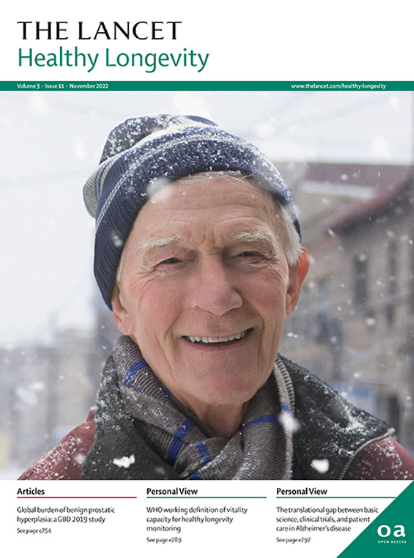
Research & review on #Alzheimers, global burden of benign prostatic hyperplasia, #WHO def of vitality capacity, IPD meta on social connection & #cognition, #oralhealth for older people & more.
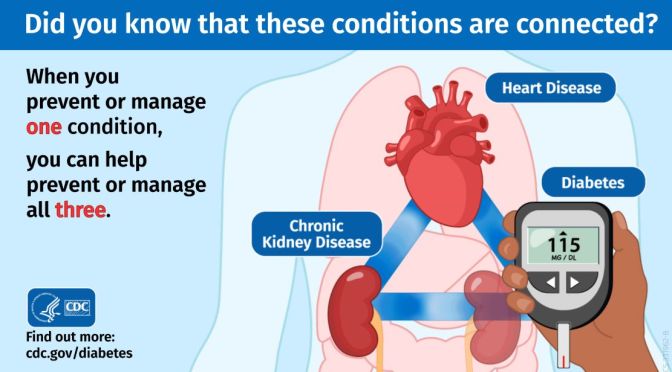
Centers for Disease Control and Prevention (CDC) – The body is complicated! While organs in your body each have a specific job to do to keep you healthy, they still rely on each other to function well. When one organ isn’t working the way it should, it can put stress on other organs, causing them to stop working properly as well.
The relationship between chronic kidney disease (CKD), diabetes, and heart disease is one example of the ways our organs are connected.
The body uses a hormone called insulin to get blood sugar into the body’s cells to be used as energy. If someone has diabetes, their pancreas either doesn’t make enough insulin or can’t use the insulin it makes as well as it should.
If someone has CKD, their kidneys are not able to filter out toxins and waste from their blood as well as they should.
Heart disease refers to several types of heart conditions. The most common condition, coronary artery disease, leads to changes in blood flow to the heart, which can cause a heart attack.
Make the Connection
So how are these three conditions connected? Risk factors for each condition are similar and include high blood sugar, high blood pressure, family history, obesity, unhealthy diet, and physical inactivity.
High blood sugar can slowly damage the kidneys, and, over time, they can stop filtering blood as well as they should, leading to CKD. Approximately 1 in 3 adults with diabetes has CKD.
When the kidneys don’t work well, more stress is put on the heart. When someone has CKD, their heart needs to pump harder to get blood to the kidneys. This can lead to heart disease, the leading cause of death in the United States. Change in blood pressure is also a CKD complication that can lead to heart disease.
Luckily, preventing or managing one condition can help you prevent and manage the others and lower the risk for more complications.
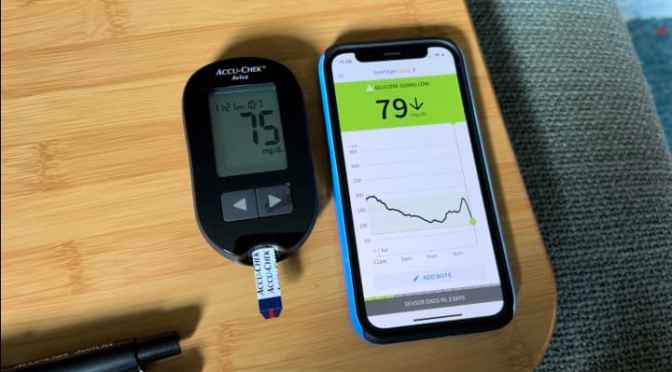
Abbott Laboratories newest continuous glucose monitor is now available at participating retail pharmacies and through durable medical equipment suppliers. The Freestyle Libre 3 was approved by the FDA in June and is a step up from previous Abbott systems.
Abbott Laboratories and Dexcom are the leaders in the CGM market, which hit $5.1 billion in revenue in 2021 and is expected to reach $13.2 billion by 2028, according to Vantage Market Research. Abbott’s CGM systems, called FreeStyle Libre, generated $3.7 billion in revenue last year, with 4 million users globally.
CNBC’s Erin Black, a type 1 diabetic, tested out the Libre 3 for over a month. Here is her review.
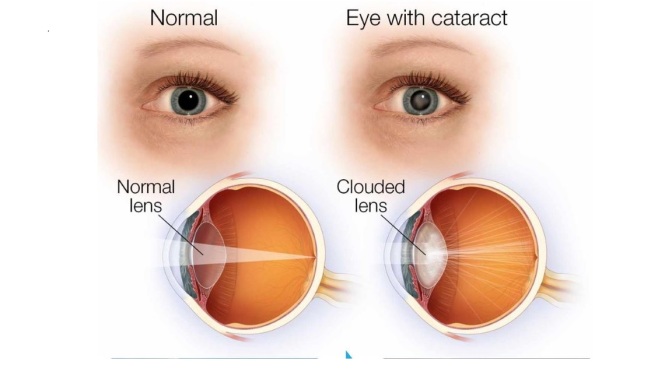
Cleveland Clinic – Cataracts in the eye lens are a later-in-life reality that leads to vision problems for many people. This video shares describes what cataracts are, how they form, and warning signs to help you detect them early.
Chapters: 0:00 Intro 0:10 What are cataracts? 0:43 What are the warning signs of cataracts? 2:44 How are cataracts diagnosed? 3:04 Talk to your eye doctor
The October 21, 2022 cover story this week steps back from the news agenda to explore the impact of living with long Covid. For millions of people worldwide who have survived initial infection with the virus, recovery is slow. Symptoms such as breathlessness, fatigue and loss of smell or taste persist for months and, as our science editor Ian Sample explains, treatments that work for some may not be successful for others.
This week delegates to the Chinese Communist party’s 20th congress are in Beijing where they are expected to rubber stamp Xi Jinping’s historic third term as leader. Our big story looks at what the president’s supremacy means for the country and its closest neighbour – Taiwan – which lives in the shadow of Xi’s avowed intention to bring the island back under China’s tutelage.
“Diverse aging populations, vulnerable to chronic disease, are at the cusp of a promising future. Indeed, growing regenerative options offer opportunities to boost innate healing, and address aging-associated decline. The outlook for an extended well-being strives to achieve health for all,”
Regenerative medicine could slow the clock on degenerative diseases that often ravage the golden years, a Mayo Clinic study finds. Life span has nearly doubled since the 1950s, but health span — the number of disease-free years — has not kept pace. According to a paper published in NPJ Regenerative Medicine., people are generally living longer, but the last decade of life is often racked with chronic, age-related diseases that diminish quality of life. These final years come with a great cost burden to society.
Researchers contend that new solutions for increasing health span lie at the intersection of regenerative medicine research, anti-senescent investigation, clinical care and societal supports. A regenerative approach offers hope of extending the longevity of good health, so a person’s final years can be lived to the fullest.
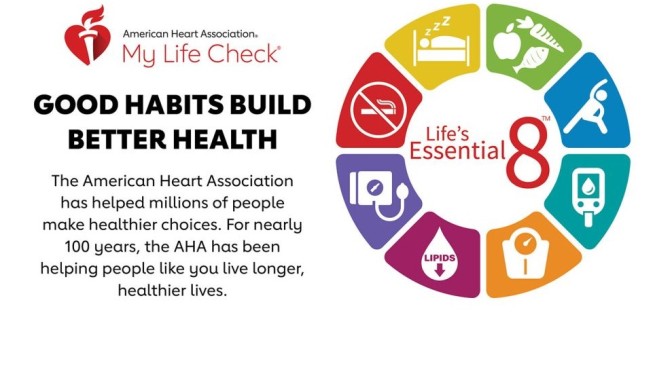
October 2022 – The American Heart Association (AHA) recently revised its checklist for achieving optimal heart health, introducing its new Life’s Essential 8. The list replaces the AHA’s decade-old Life’s Simple 7.
Sleep health is the new addition to the cardiovascular health scoring tool, which now advises that adults get seven to nine hours per night. The organization updated four of the categories:
Diet: More emphasis was given to following heart-healthy diets like the DASH and Mediterranean.
Nicotine exposure: Secondhand smoke and vaping were added as risk factors.
Blood lipids: People now can get a non-fasting blood sample that measures total, HDL, and non-HDL cholesterol. Non-HDL cholesterol can provide similar risk information as LDL cholesterol.
Blood sugar: Measurements now include hemoglobin A1c, a key component to assessing type 2 diabetes risk.
Three categories were unchanged:
Physical activity: The optimal weekly level is at least 150 minutes of moderate activity or 75 minutes of vigorous activity.
Body mass index (BMI): A BMI of 18.5 to 24.9 is ideal for heart health.
Blood pressure: Levels less than 120/80 millimeters of mercury (mm Hg) remain optimal. Stage 1 hypertension is 130 to 139 mm Hg for systolic pressure (the first number) or 80 to 89 mm Hg for diastolic pressure (the second number).
You can calculate your heart health score at mlc.heart.org. The guidelines were published online June 29, 2022, by Circulation.
Using electronic health records data from the All of Us Research Program, we show that higher daily step counts in data collected over several years of Fitbit fitness tracker use were associated with lower risk of common, chronic diseases, including diabetes, hypertension, gastroesophageal reflux disease, depression, obesity and sleep apnea.
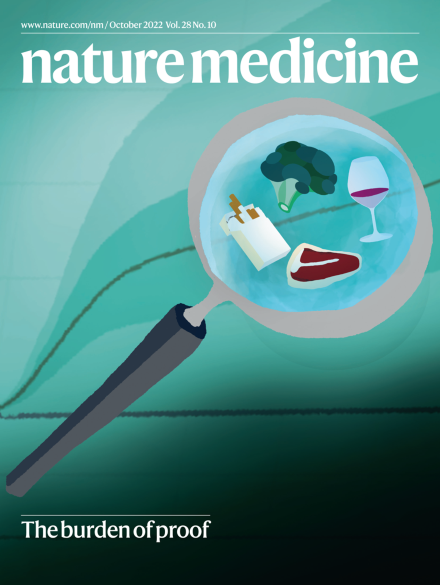
Although questions remain about several diet and disease associations, current evidence supports dietary guidelines to limit red meat and increase vegetable intake.
CRISPR–Cas9 hits its target in amyloidosis
Nature Medicine explores the latest translational and clinical research news, with an analysis of Intellia and Regeneron’s gene-editing treatment, which reduced levels of transthyretin in patients.












 Boomers Daily