

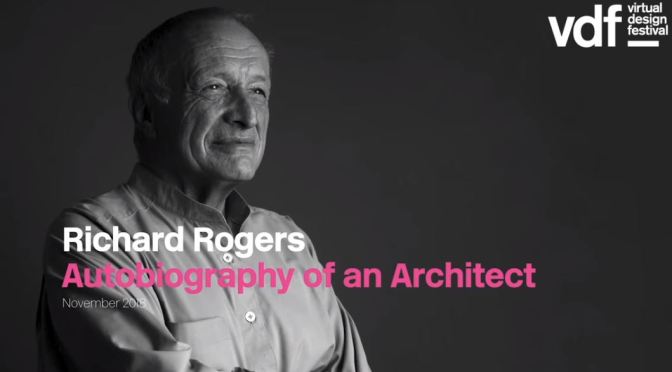
In the second talk as part of our Virtual Design Festival collaboration with Architects, not Architecture, architect Richard Rogers discusses his reluctance to enter the Centre Pompidou competition and liking the Lloyd’s building. The idea behind Architects, not Architecture is for architects to discuss their path, influences and experiences.
In his lecture in November 2017, Rogers explained that he’d been told he couldn’t use buildings for his talk, as the main rule of the series is that architects aren’t allowed to discuss their projects. “I said: That’s like saying I can’t use my two hands,” Rogers said.
“Architecture is part of me. And architecture is not just about buildings, it’s about spaces and places.” Born in Florence, Rogers moved to England with his family and studied at the Architectural Association School in London, where he founded Richard Rogers Partnership with Su Rogers, now Rogers Stirk Harbour + Partners, in 1977.
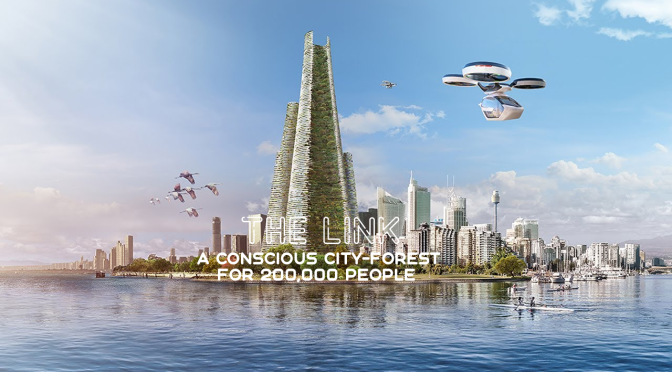
With its 300 floors THE LINK will reach the maximum height of 1200 meters. The project combines sustainability with population density, and it aims to build up a zero-energy city-building. The city-forest is made of 4 main towers, connected one each other, equipped with green areas on each level, natural light and ventilation. 100% green transport systems. The vertical city allows its residents to get into a healthier lifestyle, in connection with natural elements, re-thinking the traditional concept of community and society.
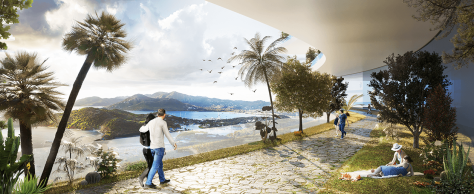
 Architecture firm Luca Curci Architects presents THE LINK, a vertical city for 200,000 people. The project aims to rise above the challenge of population density by successfully combining vertical expansion with economic innovation. A self-sustainable city-forest, that will absorb CO2, produce oxygen for cleaner air and increase urban biodiversity. With interconnected communities’ programs. No suburbs. Less poverty oriented.
Using an urban operating system with an AI (Artificial Intelligence), the vertical city will be able to manage the global city temperature, levels of CO2 and humidity, will control the global lighting system, and will storage extra energy produced by solar panels and other renewable energy resources.
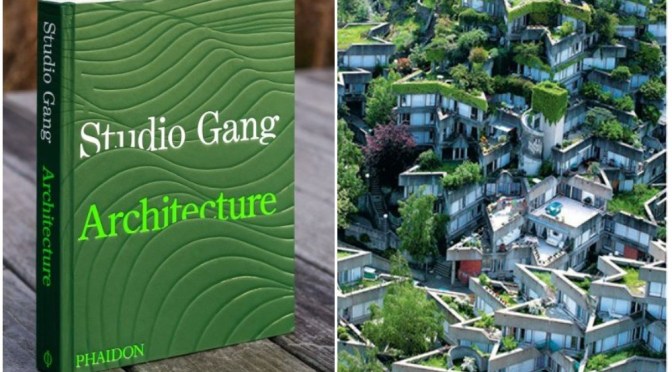
 The most in-depth exploration of one of the most important, innovative, and creative architecture practices working today.
For the last twenty years Studio Gang, led by Jeanne Gang, has created bold, visionary architecture that engages the urgent social and environmental challenges of our time. This first comprehensive monograph brings together 25 signature projects-from the award-winning Aqua Tower and Writers Theatre to highly-anticipated upcoming buildings for the American Museum of Natural History and O’Hare International Airport-to reveal the resonant concepts and design approach that connect them. With a rich variety of visual materials and short essays by Jeanne Gang, the book elegantly captures the creative sensibility and trajectory of an architecture driven by pressing twenty-first-century questions.
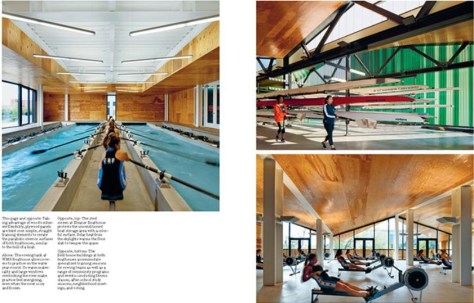
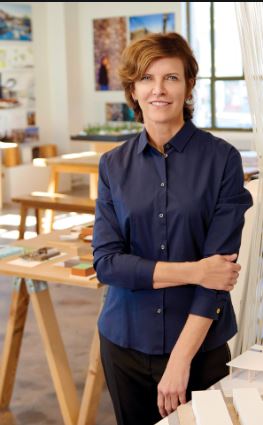
Studio Gang is an international architecture and urban design practice founded and led by Jeanne Gang. A recipient of the National Design Award in Architecture and numerous other honors, the Studio works as a collective to create projects that foster interaction and connection. Their research-based, interdisciplinary approach has produced award-winning buildings across scales and typologies as well as publications and exhibitions that push design’s ability to effect positive change.
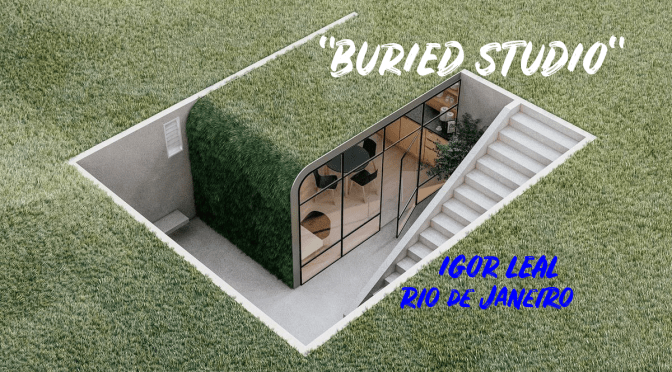
It is a project for the construction of a work environment (home office) in a backyard of a residential land. The space has approximately 47.00m² and has a work environment and meetings with a bench for pantry, bathroom and external environment.
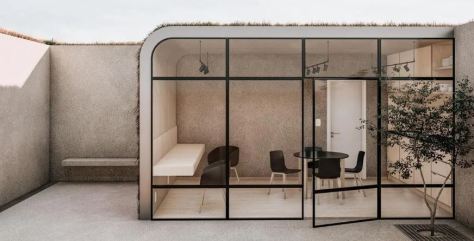
Its formal composition sought, through a solution of operative topography and the construction of a winding green roof, to integrate the new projected environment to the large existing lawn in the surroundings.
From Visual Pleasure Magazine (April 19, 2020):
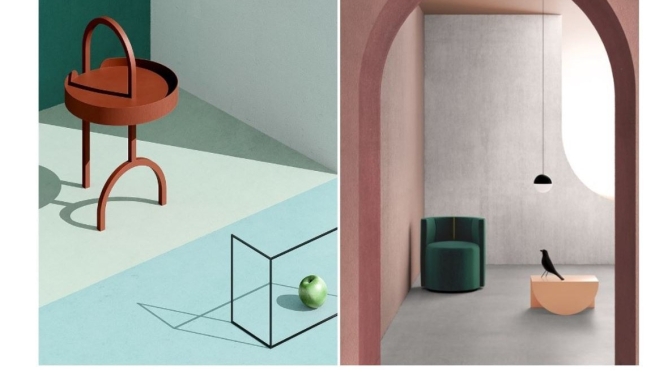
I often find myself observing classic paintings that can inspire compositions, or fashion that can inspire the choice of a color palette. At a certain point everything  is united in a very natural way in a creative concept. My artistic research is a constant blend between the worlds of architecture, painting, photography, graphic design, and fashion. At the base of my work, then, there is an artistic background very much linked to the Gestalt principles of visual perception. I try to avoid looking for inspiration only within the confines of my sector: I find that this often leads to a flattening of the creative result.
Having always been fascinated with sensational spaces, Cristina Lello now visualizes the most striking scenes that tell a clear story. As she describes herself, her studio “creates high-impact images from the intersection of interior styling, set design and 3D art.” After graduating with honors in Set Design at the Academy of Fine Arts of Venice, she also started a Master’s degree in Interactive Media for Interior Design while working for Elisa Ossino Studio.
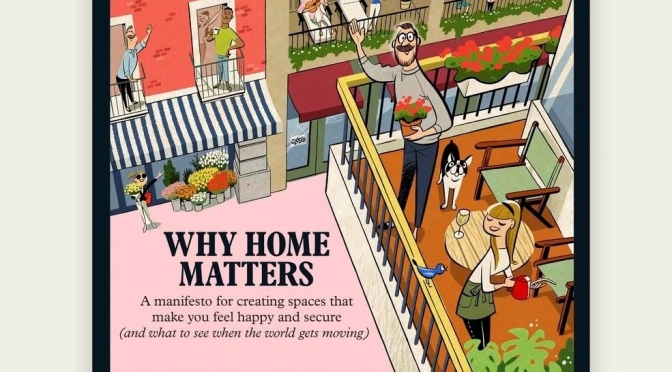
Monocle’s home-focused May issue goes beyond the dramatic headlines to look at how to create spaces that are apt to linger in.
We launch a manifesto for building better, look at the firms eyeing up the domestic market and profile a few elegant residences. Elsewhere, we examine the importance of keeping manufacturing onshore, decode the US political advertising industry and recommend the best media to hunker down with.
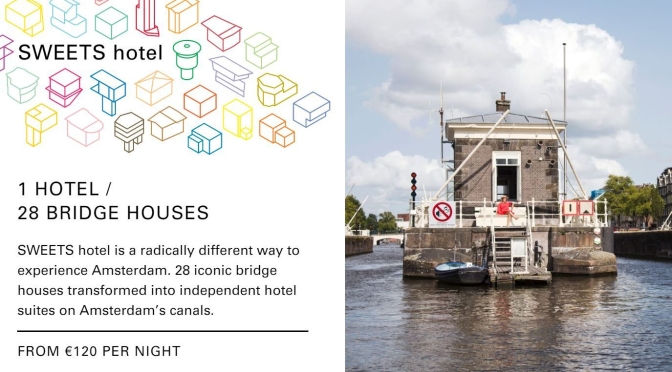
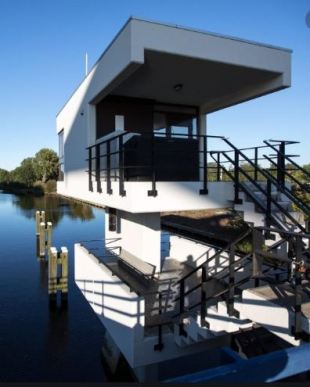 SWEETS hotel is an initiative and co-creation of the Amsterdam based architecture office Space&Matter (known for De Ceuvel in Amsterdam), project development partner Grayfield and Seven New Things (Suzanne Oxenaar, Otto Nan and Gerrit Groen, founders of Lloyd Hotel & Cultural Embassy (world’s first 1- to 5-star hotel in Amsterdam – sold in 2018), Llove Hotel (pop-up hotel in Tokyo) and Hotel The Exchange (fashion hotel in Amsterdam)).
First initiated in 2012 as an urban space project, SWEETS hotel is now 8 years in the making. 20 bridge houses are currently available for reservations, with more coming soon.
For 100 years Amsterdam’s bridge houses accommodated the city’s many bridge keepers who were responsible for opening these impressive structures for passing boat traffic. However, with the introduction of a centralised bridge control system the bridge houses became redundant.
In 2012 the initiators of SWEETS hotel presented a plan to the city of Amsterdam to transform the city’s bridge houses into tiny hotel suites. The vision: to introduce travellers to new neighbourhoods and unexpected experiences in the city.
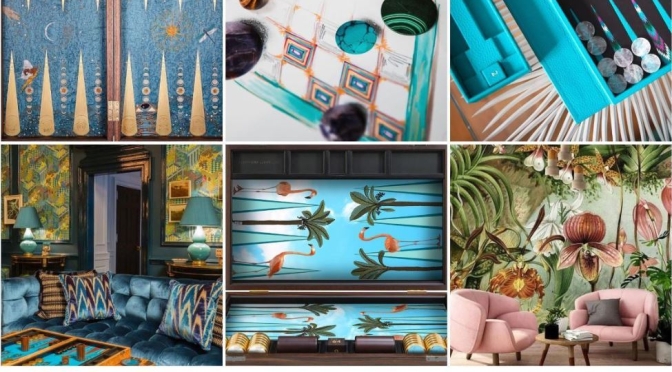
Launched in 2010, Alexandra Llewellyn is known for creating original and 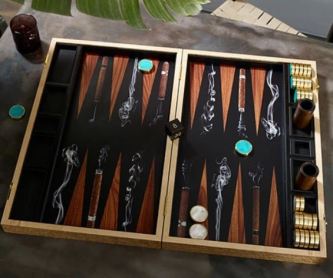 beautifully handcrafted backgammon sets, luxury games and bespoke furniture. Her designs are both games and objets d’art.
The seed was sown when Alexandra played a game of backgammon in Cairo as a child. Her opponent was ten times her age and although they had nothing in common, they were able to communicate through their shared love of the game.
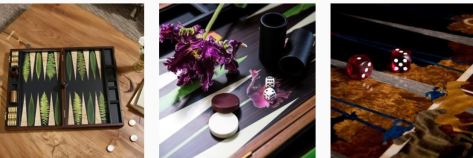
Seen in some of the most exclusive locations, Alexandra’s timeless designs are played all over the world. Her creations are owned and commissioned by Royalty and VIPs including Richard Branson, Sony Music, Elle Macpherson and American Vogue.

A collection of Alexandra’s signature handmade games are available online including some of her collaborations with icons such as Terry O’Neil, Alice Temperley and the estate of Milton H. Green. For the ultimate bespoke gift, Alexandra will work with you, guiding you through ideas and memories to create a one-of-a-kind specially commissioned game.
“I am forever inspired by how games bring us together and the conversations that ensue. Time is now our greatest luxury and games create a space in which we can enjoy time with our loved ones” says Alexandra.
Alexandra’s work has been published and talked about in publications such as Vogue, Vanity Fair, How to Spend It, Robb Report, Harper Bazaar, AD, Time Luxx, Telegraph Luxury, Tatler, Country& Town House, and Homes and Gardens.


 Boomers Daily