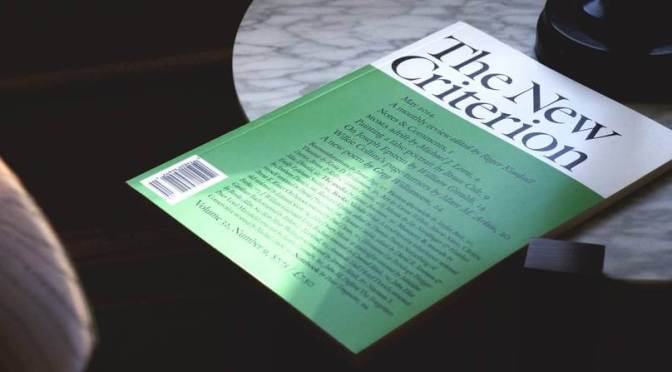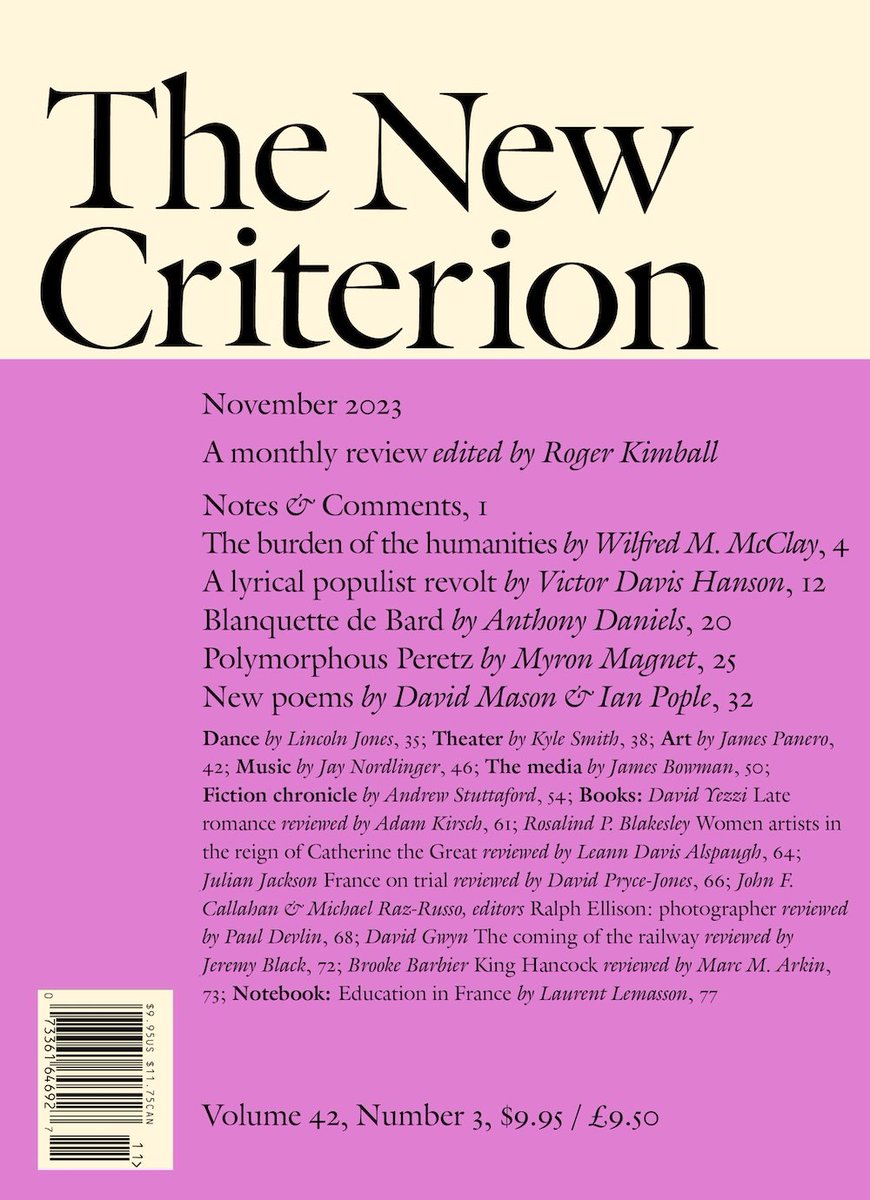


The New Criterion – September 2023 issue:
Category Archives: Culture
Arts/History: Smithsonian Magazine – Sep/Oct 2023
Smithsonian Magazine (September/October Issue) – Journey to Spain’s last Moorish Kingdom – From the magical Alhambra to desert backcountry and hidden coastal glories…welcome to Andalusia; Saving the world’s most coveted Chocolate; Mead – it’s not just for Vikings, and more…
Famed 5,300-Year-Old Alps Iceman Was a Balding Middle-Aged Man With Dark Skin and Eyes
:focal(800x602:801x603)/https://tf-cmsv2-smithsonianmag-media.s3.amazonaws.com/filer_public/de/52/de526958-55af-4faf-8b79-5b58b958e09a/iceman_web.jpg)
Genetic analysis shows that Ötzi was descended from farmers who migrated from an area that is now part of Turkey
Ötzi, the 5,300-year-old mummy found murdered high in the Alps with an arrow in his back, is a prehistoric celebrity who attracts 300,000 visitors a year to his custom cooling chamber in the South Tyrol Museum of Archaeology in Bolzano, Italy. Years of studies have revealed much about the Iceman, from his last meal—dried ibex and deer meat with einkorn wheat—to the distant Tuscan origins of his copper ax. But while the wizened mummy is extraordinarily well preserved for its age, it gives little impression of how Ötzi would have appeared in life. Now, a detailed genetic study has revealed much more about what the Iceman looked like—and traces the Copper Age corpse’s ancestral lineage back to Anatolia, an area that is now the Asian portion of Turkey.
Scientists have newly sequenced Ötzi’s genome a decade after an earlier effort, using modern techniques and comparative data to produce a much higher-quality result than ever before. The study published Wednesday in Cell Genomics reveals that Ötzi had dark eyes and skin pigmentation darker than that commonly seen among modern inhabitants of Greece or Sicily, though he’s previously been depicted with lighter skin more akin to that of Europeans living in the Alps today. And contrary to most artists’ interpretations, it also appears that he suffered from an age-old affliction still troublesome today—he was going bald.
Views: The New York Times Magazine – August 20, 2023

THE NEW YORK TIMES MAGAZINE (August 20, 2023) – In this week’s cover story, what are “forever chemicals” and what are they doing to us? Plus, inside the racism scandal that rocked an affluent town’s high school and checking in with the dancehall star Sean Paul.
‘Forever Chemicals’ Are Everywhere. What Are They Doing to Us?

PFAS lurk in so much of what we eat, drink and use. Scientists are only beginning to understand how they’re impacting our health — and what to do about them.
By Kim Tingley
The Faroe Islands, an incongruous speckling of green in the North Atlantic, are about as far away as you can hope to get on Earth from a toxic-waste dump, time zones distant from the nearest population centers (Norway to the east, Iceland to the west). Pál Weihe was born in the Faroes and has lived there for most of his life. He is a public-health authority for the nation, population around 53,000; chairman of the Faroese Medical Association and chief physician of the Department of Occupational Medicine and Public Health in the Faroese hospital system. He is also vice chairman of the Faroe Islands Art Society; a widower; a grandfather. A crumpled funeral program and half-empty juice boxes share space in the back seat of his Land Cruiser.
The ‘World’s Happiest Man’ Shares His Three Rules for Life
By David Marchese

Matthieu Ricard is an ordained Buddhist monk and an internationally best-selling author of books about altruism, animal rights, happiness and wisdom. His humanitarian efforts led to his homeland’s awarding him the French National Order of Merit. (Ricard’s primary residence is a Nepalese monastery.) He was the Dalai Lama’s French interpreter and holds a Ph.D in cellular genetics. In the early 2000s, researchers at the University of Wisconsin found that Ricard’s brain produced gamma waves — which have been linked to learning, attention and memory — at such pronounced levels that the media named him “the world’s happiest man.”
Design/Culture: Monocle Magazine – September 2023
Monocle Magazine (September 2023) – The new issue is a survey the world of transport, from the leading presidential jets and futuristic sea gliders to Europe’s bike-building capital and the appeal of the mini Microlino. Plus: Mongolia’s geopolitical balancing act, Fendi’s artisanal investment and America’s poet laureate.
- TIME FOR CHANGE – It’s easy to become stuck in a groove, doing things the same old way. Monocle’s editor in chief, Andrew Tuck, throws down the challenge: make this the month that you step back out there and do something differently – even if it is just getting a sharp, new haircut.
- THE OPENER – Monocle has a network of correspondents in cities around the world. Our brief dispatches include good news for pedestrians in Bangkok, a smart hotel in Tokyo and transformed spaces in Los Angeles.
- FREEING VERSE – The US poet laureate believes that poetry can help us to live more fully. That’s why she is bringing it into America’s national parks.
- WINGS FOR HIRE – Meet the island hoppers training the next generation of pilots.
- THE WOOL PACK – It’s a tough, lonely job and your co-workers are always bleating. So why are students flocking to Andalusia’s shepherd school?
Politics: The Guardian Weekly – August 18, 2023

The Guardian Weekly (August 18, 2023) – This issue features ‘Back to the office: Is the work from home revolution over?’; Bangladesh’s ‘lost children’; AI does architecture; Pathfinders – In Ukraine minefields and more…
‘Never again’: is Britain finally ready to return to the office?

With even the big internet firms warning staff they need to show up more often, is working from home over? Or have the attitudes and expectations of employees changed for ever?
‘My mother spent her life trying to find me’: the children who say they were wrongly taken for adoption

For years, Bibi Hasenaar felt rejected because she was adopted aged four. Then she saw a photo that described her as missing – and began to uncover an astonishing dark history
Previews: Country Life Magazine – August 16, 2023

Country Life Magazine – August 16, 2023: This week’s issue features a look at Britain’s sharks, classic posters, nightjars and dramatic wallpaper.

No fin compares to you
Far from being scary, our native sharks are friendly, sleekly swift and even bioluminescent. Helen Scales takes a dip

And all that jazz
The Roaring Twenties saw war-damaged Britain come alive in a swirl of cocktails and flapper dresses, finds Claire Jackson

A dramatic revival
The ruins of Hellifield Peel Tower, North Yorkshire, have been transformed. Jeremy Musson tours a splendid family home
Previews: The New Yorker Magazine – August 21, 2023
The New Yorker – August 21, 2023 issue: This week’s cover features Kadir Nelson’s “Rideout” – The artist discusses biking, bridges, risk, and scale.
How the Writer and Critic Jacqueline Rose Puts the World on the Couch

Enlisting Freud and feminism, she reveals the hidden currents in poetry and politics alike.
By Parul Sehgal
“Psychoanalysis brings to light everything we don’t want to think about,” she said. “If you can acknowledge the complexity of your own heart
The Ukrainians Forced to Flee to Russia

Some are brought against their will. Others are encouraged in subtler ways. But the over-all efforts seem aimed at the erasure of the Ukrainian people.
By Masha Gessen
How Carl Linnaeus Set Out to Label All of Life

He sorted and systematized and coined names for more than twelve thousand species. What do you call someone like that?
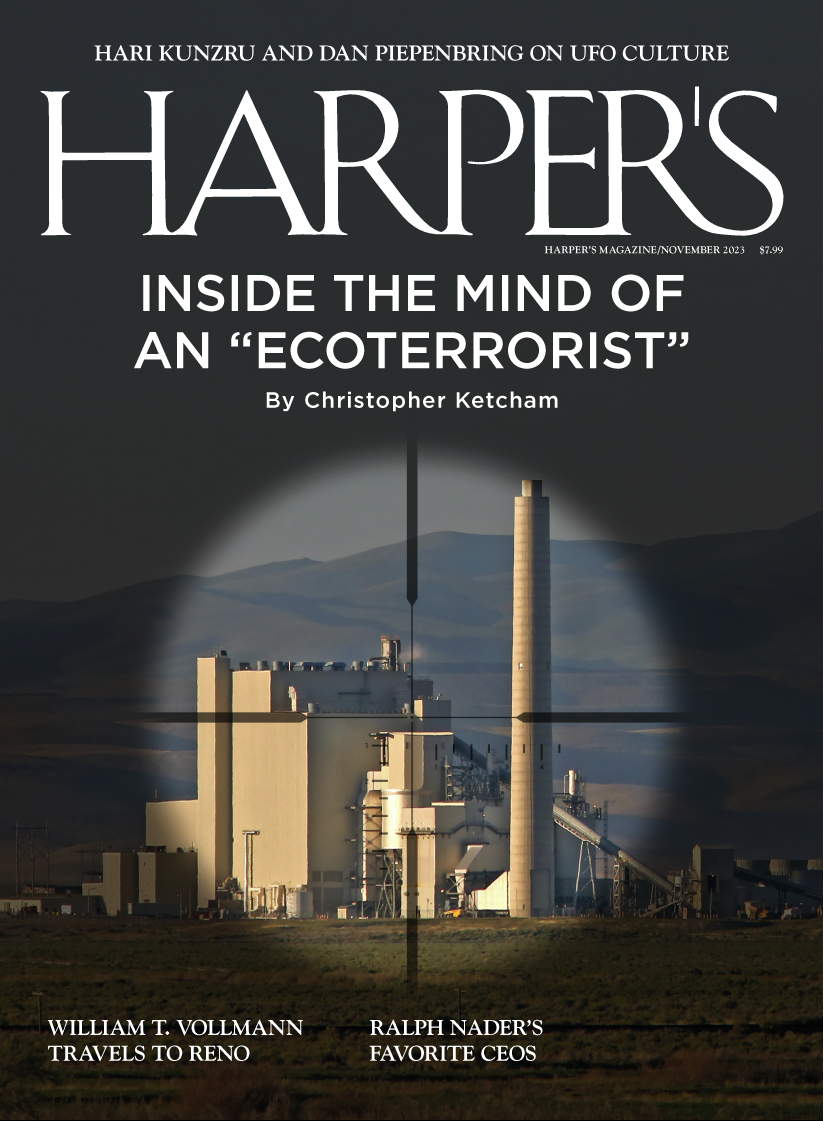
Culture/Politics: Harper’s Magazine — SEPT 2023
Harper’s Magazine – September 2023: This issue features Justin E. H. Smith’s Elegy for Gen X; Zadie Smith and the Gen X novel; The Rise and Fall of an Iranian Exile and John Jeremiah Sullivan plumbs the Depths…
My Generation
Anthem for a forgotten cohort
Man Called Fran
Plumbing, the depths
Waiting for the Lights
The life of an Iranian exile
Views: The New York Times Magazine – August 13, 2023


THE NEW YORK TIMES MAGAZINE – The 8.13.23 Issue: In this special issue, Wesley Morris on hip-hop’s 50th anniversary; Niela Orr on the ascendance of female rappers; Miles Marshall Lewis on how hip-hop changed the English language forever; Daniel Levin Becker on the history of bling; Tom Breihan on Too Short’s long career; and Danyel Smith on the rappers we lost.
How Hip-Hop Changed the English Language Forever

By MILES MARSHALL LEWIS
In just 50 years, rap has transformed the way the world speaks. Here are five words that tell the story of the genre’s linguistic power.
“I stay woke” — Erykah Badu, “Master Teacher”
HOW HIP-HOP
CONQUERED
THE WORLD

We’re celebrating hip-hop’s 50th anniversary this week. Wesley Morris traces the art form from its South Bronx origins to all-encompassing triumph.
THE FUTURE OF RAP IS FEMALE

As their male counterparts turn depressive and paranoid, it’s the women who are having all the fun.
By Niela Orr
Like American men in general, our top male rappers appear to be in crisis: overwhelmed, confused, struggling to embody so many contradictory ideals. As a result, the art is suffering, too. If the music were any more existentially morose, or stylistically comatose, mainstream hip-hop made by men might be headed the way of hair metal or disco. The narcotized indolence is everywhere; the recounting of opioid abuse is so blasé (the Percs, Xans and Oxys) that these pillbox litanies leave you wondering if the Sackler family sponsored a wing in the rap museum. And then there’s the sense of foreshortened future that’s baked into the genre but has been amplified as gangsta rap branched off into trap, drill and other grittier subgenres. Many of the male rappers are documenting social strife and commenting on the violence that comes with being young, Black, famous men. This thread can be moving and also heartbreaking. When listening to these songs, it is impossible to not ache for their makers, to be afraid right along with them. But the music bears the weight of all that anxiety and grief. Even the occasional Drake smash is not enough to disturb the disquiet.
Documentary: Culture And Diversity In Taiwan
DW Documentary (August 11, 2023) – Taiwan is a place of incredible variety. The tiny island’s natural beauty is a concentration of some of Asia’s most spectacular features. To the east, there are sheer cliffs with mountain peaks, plateaus and hot springs. To the south, you’ll find sandy beaches, coral reefs and lagoons.
Although the Taiwanese live in a high-tech world, they are still firmly anchored by ancient traditions. During the course of his life, Lin Liang-tai has created many elaborately adorned wooden boats. But they’re not built to last, as they’re destined for Taiwan’s legendary Wang Ye Festival. As part of the temple ceremony to honor the goddess of the sea, a 10-meter boat is blessed, loaded with offerings and pulled through the village down to the beach.
There, it’s set alight, burning any evil spirits that might be lurking about the place. Shrimps are all the rage in Taiwan. In large halls across the entire island, shrimps can be fished out of huge tanks and put straight on the barbecue. Zhan Jia-ming runs one of these popular shrimp halls, and tips bucketloads of fresh shrimps into the tanks every hour. Oysters are a mainstay of Taiwanese cuisine, whether boiled, fried or made into oyster sauce. On the west coast, oyster farms sustain entire village communities.
In Fangyuan, we see one oyster farmer still using traditional methods to harvest his oysters. He drives ox-drawn carts onto the tidal flats, just as it has been done for generations. In the fishing village of Dongshi, several tons of oysters are harvested, opened and processed every day. Taiwan’s relations with the mainland have often been strained since the establishment of the People’s Republic of China in 1949. Beijing regards the island as part of its territory. Tensions have been on the rise in recent times.
Tsai Jin-lu is a committed birdwatcher. For years, he’s documented his rare bird sightings in the Aogu Wetlands Forest Park on the western coast of Taiwan. But these days, his binoculars are frequently trained on something much bigger, up in the skies above. That’s because this is where the Taiwan carries out fighter jet exercises almost every day.