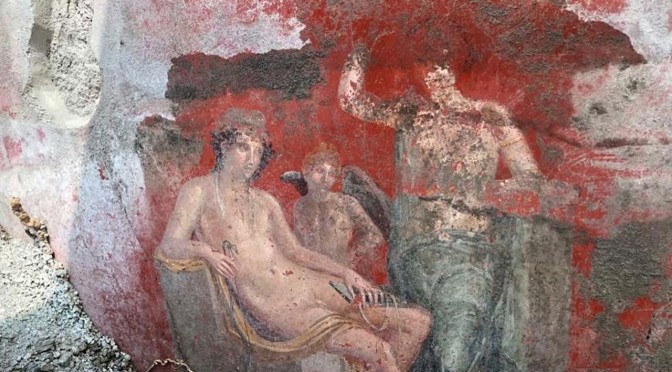
When Mount Vesuvius erupted in 79 CE, it buried Pompeii, Herculaneum, and the surrounding settlements under nearly 20 feet of volcanic ash and pumice. Pliny the Elder, a Roman writer, documented his eyewitness account of the disaster, supporting the archaeological evidence uncovered there in the last two centuries.
This Great Lecture reviews how these buried cities and their exploration have had a lasting impact on European and American culture. C. Brian Rose, Ph.D., Curator-in-Charge, Mediterranean Section, Penn Museum; Immediate Past President, Archaeological Institute of America; Trustee, American Academy in Rome
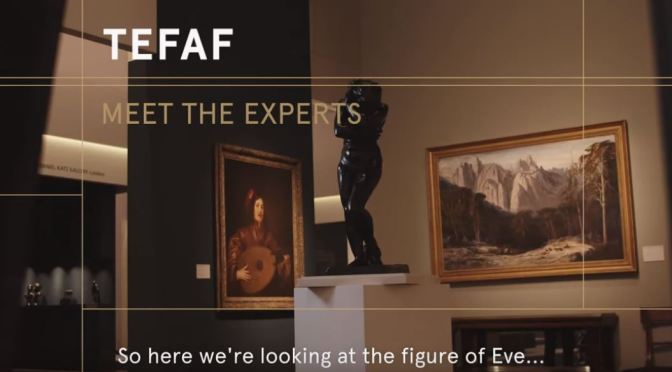
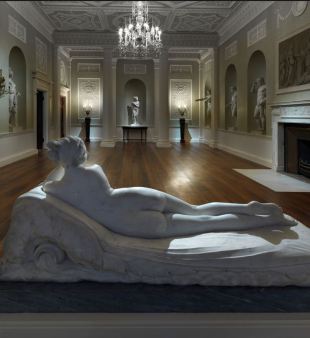
John Swarbrooke from Dickinson Gallery explains the beauty and play of light behind the cast of Auguste Rodin’s Eve.
François Auguste René Rodin (12 November 1840 – 17 November 1917) was a French sculptor. Although Rodin is generally considered the progenitor of modern sculpture, he did not set out to rebel against the past. He was schooled traditionally, took a craftsman-like approach to his work, and desired academic recognition, although he was never accepted into Paris’s foremost school of art.
Eve is a nude sculpture by the French artist Auguste Rodin. It shows Eve despairing after the Fall.
n 1880 Rodin was commissioned to produce The Gates of Hell, for which he exhibited Adam at the 1881 Paris Salon. In a sketch for Gates Rodin showed a central silhouette possibly intended as Eve (both the sketch and Gates are now in the Musée Rodin), but in October 1881 he decided to produce Eve as a pair for Adam, with the two sculptures flanking a huge high-relief bas-relief. This would be the first free-standing female sculpture he had produced since the destruction of his Bacchante in an accident between 1864 and 1870. He began Eve in 1881, later abandoning his intended colossal version of it when he realised his model, probably Adèle Abruzzesi, was pregnant. It was first exhibited to the public at the 1899 Paris Salon. It shows a strong influence from Michelangelo, picked up by Rodin in Italy in 1876.
He also produced an autograph white marble version in 1884 (now in the Museo Soumaya in Mexico City), a version in patinated plaster and a much-reproduced 71 cm high bronze version in 1883 (known as the Petite Ève or Little Eve, whose original is also in the Musée Rodin in Paris). He also reused the same figure of Eve in his marble Eve and the Serpent (1901) and his plaster Adam and Eve (1884).
Born in Lund, Sweden, von Sydow studied at Stockholm’s Royal Dramatic Theatre before getting his start in the film business through his work with mentor Ingmar Bergman. The pair’s credits included world cinema classic The Seventh Seal, in which he portrays a man who plays a chess game with Death, the Oscar-nominated Wild Strawberries, and the Oscar-winning The Virgin Spring.
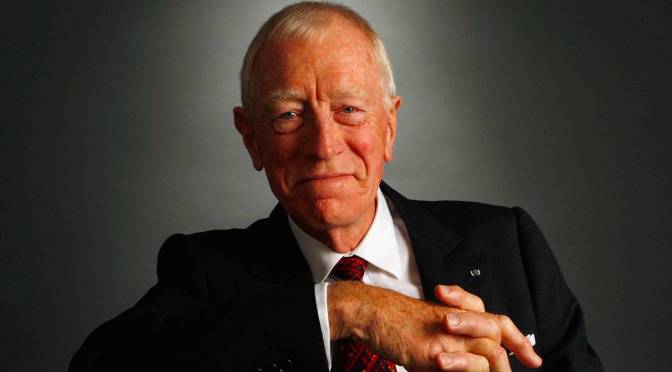
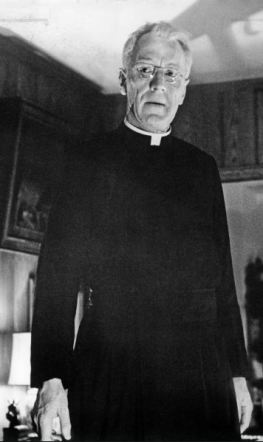
Max von Sydow, the Sweden-born French actor whose credits included Ingmar Bergman’s The Seventh Seal, William Friedkin’s The Exorcist, and the role of Emperor Ming in Flash Gordon, has died at the age of 90.
The actor’s 65-year career spanned acclaimed arthouse, Hollywood blockbusters, and television. In recent years, he played Lor San Tekka in Star Wars: The Force Awakens, the Three-Eyed Raven in Game Of Thrones, and voiced a character on The Simpsons.
The British Galleries are reopening with almost 700 works of art on view, including a large number of new acquisitions, particularly works from the 19th century that were purchased with this project in mind. This is the first complete renovation of the galleries since they were established (Josephine Mercy Heathcote Gallery in 1986, Annie Laurie Aitken Galleries in 1989). A prominent new entrance provides direct access from the galleries for medieval European art, creating a seamless transition from the Middle Ages to the Renaissance.
A highlight of The Metropolitan Museum of Art’s 150th anniversary in 2020 is the opening, on March 2, of the Museum’s newly installed Annie Laurie Aitken Galleries and Josephine Mercy Heathcote Gallery—11,000 square feet devoted to British decorative arts, design, and sculpture created between 1500 and 1900. The reimagined suite of 10 galleries (including three superb 18th-century interiors) provides a fresh perspective on the period, focusing on its bold, entrepreneurial spirit and complex history. The new narrative offers a chronological exploration of the intense commercial drive among artists, manufacturers, and retailers that shaped British design over the course of 400 years. During this period, global trade and the growth of the British Empire fueled innovation, industry, and exploitation. Works on view illuminate the emergence of a new middle class—ready consumers for luxury goods—which inspired an age of exceptional creativity and invention during a time of harsh colonialism.
From a Wall Street Journal online profile (March 3, 2020):
I had a handful of school friends, including Francis Ford Coppola, who was in the grade behind me. He was known then as Frank. He directed school plays, such as “Finian’s Rainbow.” That’s where I fell in love with the girl. She was a dancer in the cast.
Painting, music and poetry all spoke to me, especially music. I applied to the New England Conservatory of Music in Boston.
Larry Poons, 82, is an abstract painter best known for his “dot” and “throw” paintings. “Larry Poons” (Abbeville), a book-length monograph of his work from the 1950s to the present, will be published in September. He spoke with Marc Myers.
The first time I painted on canvas board, I was lovesick. I had a crush on a girl in high school and had just finished reading Irving Stone’s Van Gogh biographical novel, “Lust for Life.”
I took my easel to a nearby park and painted trees. As I worked the paint with a small brush, it helped get my feelings out.
George Wesley Bellows (August 12 or August 19, 1882 – January 8, 1925) was an American realist painter, known for his bold depictions of urban life in New York City. He became, according to the Columbus Museum of Art, “the most acclaimed American artist of his generation”.
Bellows first achieved widespread notice in 1908, when he and other pupils of Henri organized an exhibition of mostly urban studies. While many critics considered these to be crudely painted, others found them welcomely audacious, a step beyond the work of his teacher. Bellows taught at the Art Students League of New York in 1909, although he was more interested in pursuing a career as a painter. His fame grew as he contributed to other nationally recognized juried shows.
Bellows’ urban New York scenes depicted the crudity and chaos of working-class people and neighborhoods, and satirized the upper classes. From 1907 through 1915, he executed a series of paintings depicting New York City under snowfall. In these paintings Bellows developed his strong sense of light and visual texture,[14] exhibiting a stark contrast between the blue and white expanses of snow and the rough and grimy surfaces of city structures, and creating an aesthetically ironic image of the equally rough and grimy men struggling to clear away the nuisance of the pure snow. However, Bellows’ series of paintings portraying amateur boxing matches were arguably his signature contribution to art history.[11] They are characterized by dark atmospheres, through which the bright, roughly lain brushstrokes of the human figures vividly strike with a strong sense of motion and direction.
Pennsylvania Station New York City
Pennsylvania Station, also known as New York Penn Station or Penn Station, is the main intercity railroad station in New York City and the busiest in the Western Hemisphere, serving more than 600,000 passengers per weekday as of 2019.mPenn Station is in Midtown Manhattan, close to Herald Square, the Empire State Building, Koreatown, and Macy’s Herald Square. Entirely underground, the station is located in Midtown South beneath Madison Square Garden, between Seventh and Eighth Avenues, and between 31st and 33rd Streets, with additional exits to nearby streets.
Penn Station has 21 tracks fed by seven tunnels (the two North River Tunnels, the four East River Tunnels, and the single Empire Connection tunnel). It is at the center of the Northeast Corridor, a passenger rail line that connects New York City with Boston, Philadelphia, Washington, D.C., and intermediate points. Intercity trains are operated by Amtrak, which owns the station, while commuter rail services are operated by the Long Island Rail Road (LIRR) and NJ Transit (NJT). Connections are available within the complex to the New York City Subway, and buses. An underground passageway formerly provided an indoor connection with the 34th Street–Herald Square subway station and 33rd Street PATH station.[7]
Penn Station is named for the Pennsylvania Railroad (PRR), its builder and original tenant, and shares its name with several stations in other cities. The current facility is the remodeled underground remnant of the original Pennsylvania Station, a more ornate station building designed by McKim, Mead, and White and considered a masterpiece of the Beaux-Arts style. Completed in 1910, it enabled direct rail access to New York City from the south for the first time. Its head house was torn down in 1963, galvanizing the modern historic preservation movement.[8] The rest of the station was rebuilt in the following six years, while retaining most of the rail infrastructure from the original station.
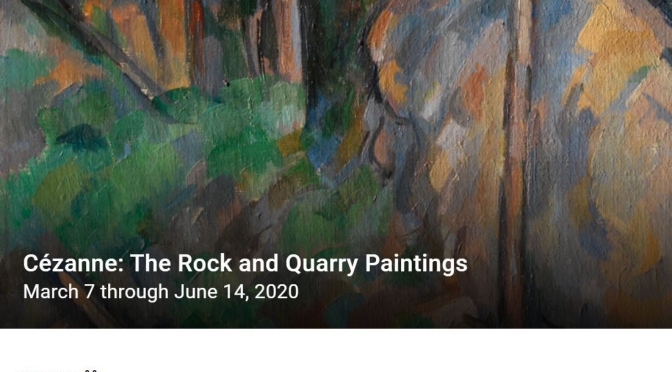
Cézanne: The Rock and Quarry Paintings is the first major exhibition to examine an essential but understudied aspect of the revolutionary French painter’s work: his profound interest in rock and geological formations.
Throughout his career, Cézanne made canvases that take rock formations as their principal subjects. Although they are among the artist’s most extraordinary landscapes, such paintings of geological forms have never before been the focus of significant scholarship.
Cézanne: The Rock and Quarry Paintingswill feature approximately 15 of the most important of these paintings, as well as selected watercolors and related documentary material. Together, they reveal the artist’s fascination with geology, which helped shape the radical innovations of his artistic practice
In this interview from the Nobel Banquet on 10 December 2019, Literature Laureate Olga Tokarczuk talks about her childhood dream of being a scientist, curiosity as motivation and the importance of translators.
Olga Tokarczuk, (born January 29, 1962, Sulechów, Poland), Polish writer who was known for her wry and complex novels that leap between centuries, places, perspectives, and mythologies. She received the 2018 Nobel Prize for Literature (awarded belatedly in 2019), lauded for her “narrative imagination that with encyclopedic passion represents the crossing of boundaries as a form of life.” A best-selling author in Poland for decades, Tokarczuk was not well known outside her homeland until she became the country’s first author to win the Man Booker International Prize in 2018 for Flights (2017)—the English translation of her sixth novel, Bieguni (2007).
What was the world like from 500 to 1500 CE? This period, often called medieval or the Middle Ages in European history, saw the rise and fall of empires and the expansion of cross-cultural exchange.
Getty curator Bryan C. Keene argues that illuminated manuscripts and decorated texts from Africa, Asia, Australasia, the Americas, and Europe are windows through which we can view the interconnected history of humanity. In this episode, he discusses his recent book Toward a Global Middle Ages: Encountering the World through Illuminated Manuscripts, highlighting the challenges and opportunities of the emerging discipline known as the Global Middle Ages.
Peer through the lens of flourishing 17th-century Dutch technological innovation to witness wondrous advancements in science, including astronomy and medicine.
Harold J. Cook, John F. Nickoll Professor of History, Brown University
News, Views and Reviews For The Intellectually Curious


 Born in Lund, Sweden, von Sydow studied at Stockholm’s Royal Dramatic Theatre before getting his start in the film business through his work with mentor Ingmar Bergman. The pair’s credits included world cinema classic
 The British Galleries are reopening with almost 700 works of art on view, including a large number of new acquisitions, particularly works from the 19th century that were purchased with this project in mind. This is the first complete renovation of the galleries since they were established (Josephine Mercy Heathcote Gallery in 1986, Annie Laurie Aitken Galleries in 1989). A prominent new entrance provides direct access from the galleries for medieval European art, creating a seamless transition from the Middle Ages to the Renaissance.
 A highlight of The Metropolitan Museum of Art’s 150th anniversary in 2020 is the opening, on March 2, of the Museum’s newly installed Annie Laurie Aitken Galleries and Josephine Mercy Heathcote Gallery—11,000 square feet devoted to British decorative arts, design, and sculpture created between 1500 and 1900. The reimagined suite of 10 galleries (including three superb 18th-century interiors) provides a fresh perspective on the period, focusing on its bold, entrepreneurial spirit and complex history. The new narrative offers a chronological exploration of the intense commercial drive among artists, manufacturers, and retailers that shaped British design over the course of 400 years. During this period, global trade and the growth of the British Empire fueled innovation, industry, and exploitation. Works on view illuminate the emergence of a new middle class—ready consumers for luxury goods—which inspired an age of exceptional creativity and invention during a time of harsh colonialism.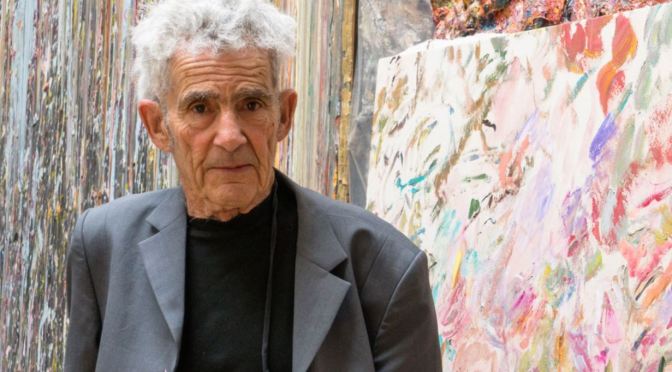

 Speakers: Dr. Margarita Karasoulas, Assistant Curator, American Art, Brooklyn Museum and Dr. Steven Zucker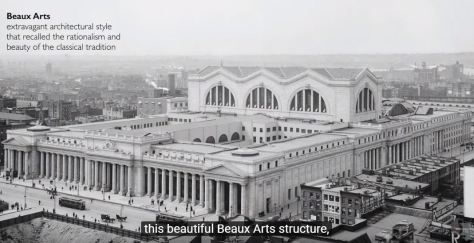
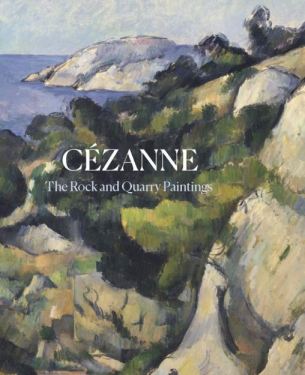 Cézanne: The Rock and Quarry Paintings is the first major exhibition to examine an essential but understudied aspect of the revolutionary French painter’s work: his profound interest in rock and geological formations.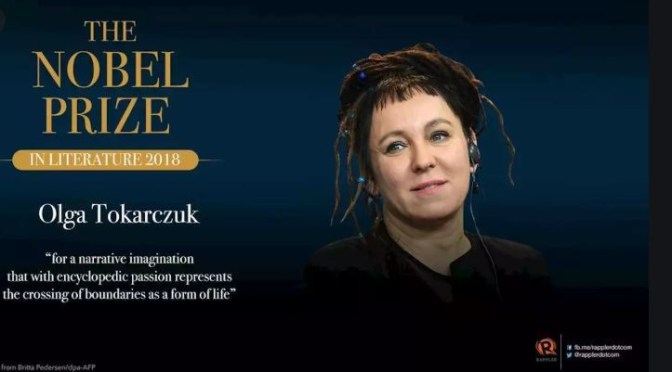
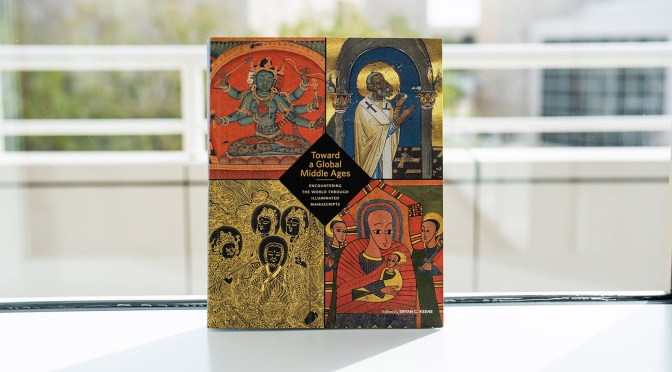
 What was the world like from 500 to 1500 CE? This period, often called medieval or the Middle Ages in European history, saw the rise and fall of empires and the expansion of cross-cultural exchange.
 Boomers Daily