Category Archives: Arts & Literature

Art: ‘Hokusai. Thirty-Six Views Of Mount Fuji’

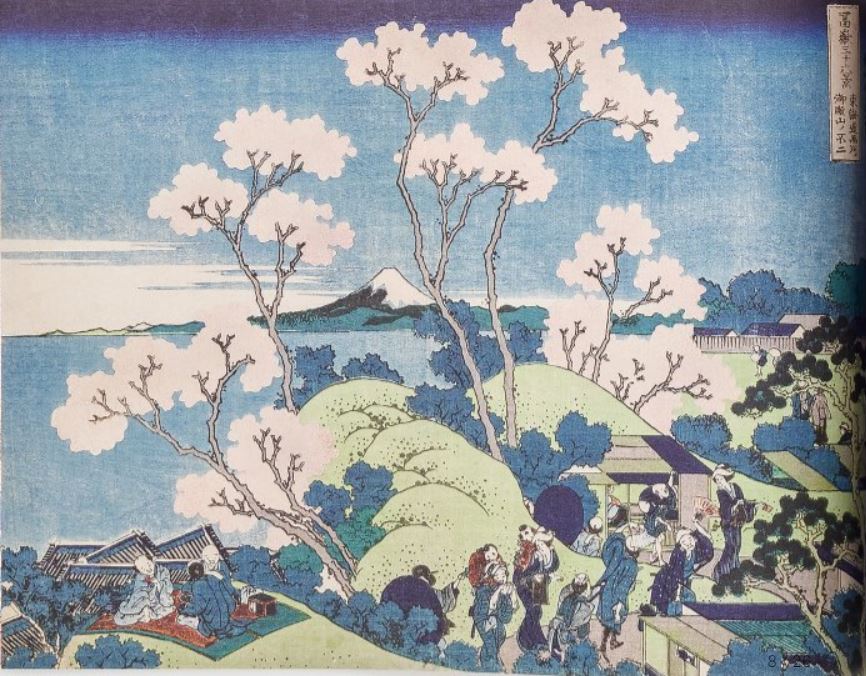
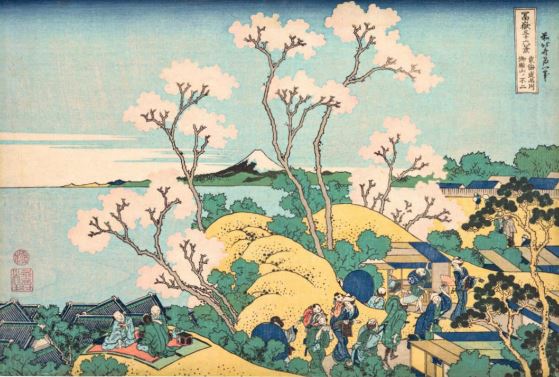
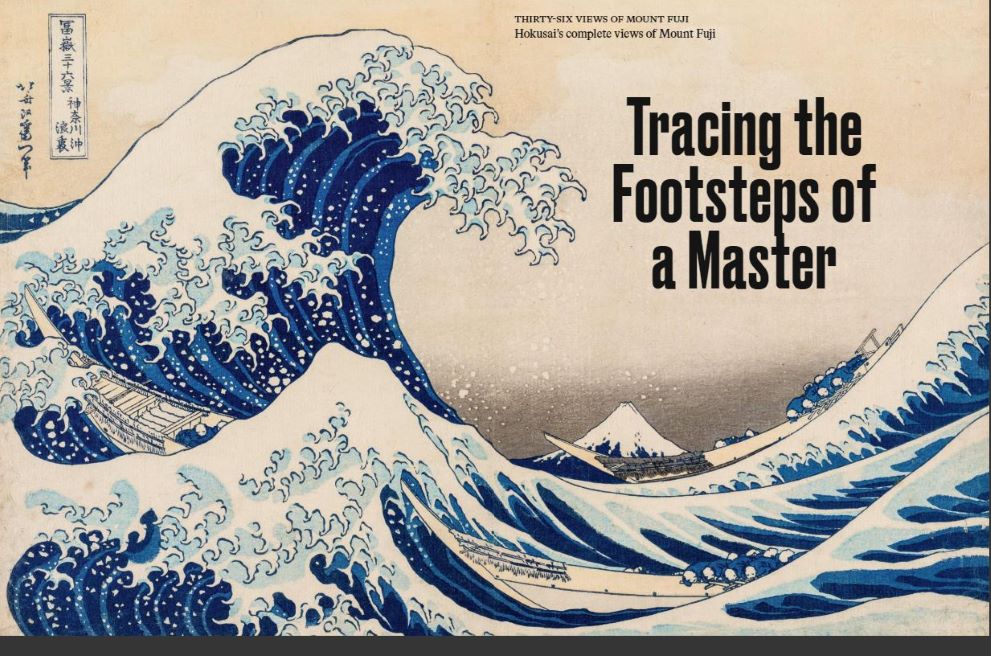
Mount Fuji has long been a centerpiece of Japanese cultural imagination, and nothing captures this with more virtuosity than the landmark woodblock print series Thirty-six Views of Mount Fuji by Katsushika Hokusai (1760–1849).
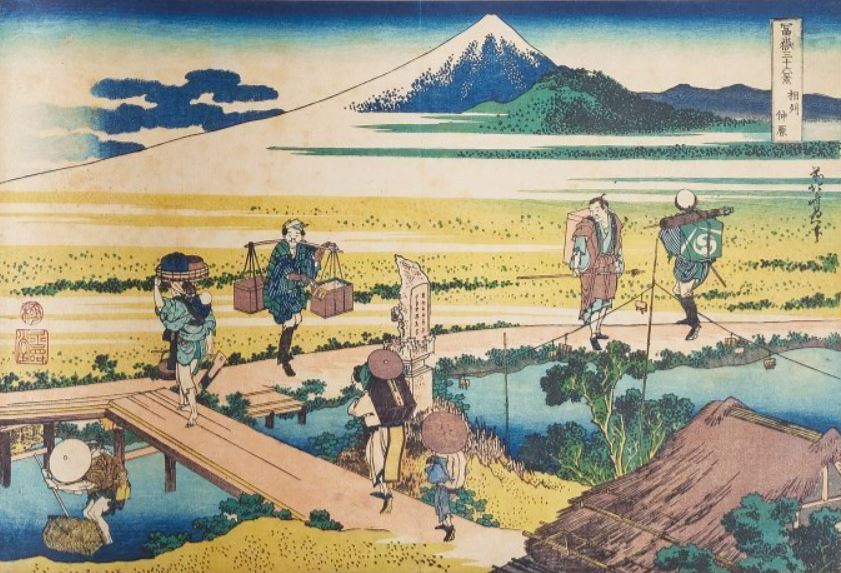
The renowned printmaker documents 19th-century Japan with exceptional artistry and adoration, celebrating its countryside, cities, people, and serene natural beauty. Produced at the peak of Hokusai’s artistic ambition, the series is a quintessential work of ukiyo-e that earned the artist world-wide recognition as a leading master of his craft.

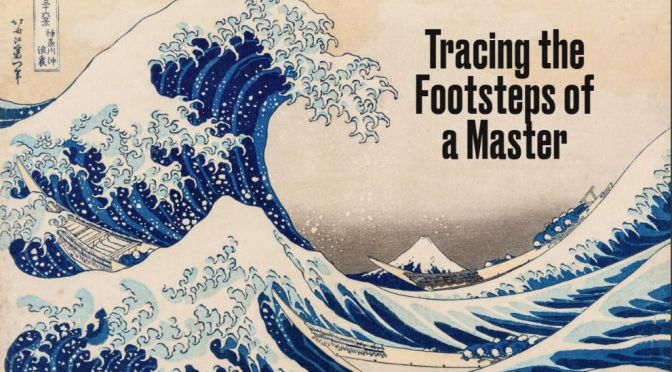
The prints illustrate Hokusai’s own obsession with Mount Fuji as well as the flourishing domestic tourism of the late Edo period. Just as the mountain was a cherished view for travelers heading to the capital Edo (now Tokyo) along the Tōkaidō road, Mount Fuji is the infallible backdrop to each of the series’ unique scenes. Hokusai captures the distinctive landscape and provincial charm of each setting with a vivid palette and exquisite detail. Including the iconic Under the Great Wave off Kanagawa (also The Great Wave), this widely celebrated series is a treasure of international art history.

Read more

Books: ‘The Tiny Bee That Hovers At The Center Of The World’ – David Searcy

An ethereal meditation on longing, loss, and time, sweeping from the highways of Texas to the canals of Mars–by the acclaimed essayist and author of Shame and Wonder

David Searcy’s writing is enchanting and peculiar, obsessed with plumbing the mysteries and wonders of our everyday world, the beauty and cruelty of time, and nothing less than what he calls “the whole idea of meaning.” In The Tiny Bee That Hovers at the Center of the World, he leads the reader across the landscapes of his extraordinary mind, moving from the decaying architectural wonder that is the town of Arcosanti, Arizona, to driving the vast, open Texas highway in his much-abused college VW Beetle, to the mysterious, canal-riddled Martian landscape that famed astronomer Percival Lowell first set eyes on, via his telescope, in 1894. Searcy does not come at his ideas directly, but rather digresses and meditates and analyzes until some essential truth has been illuminated–and it is in that journey that the beauty is found.

Read an essay by David Searcy

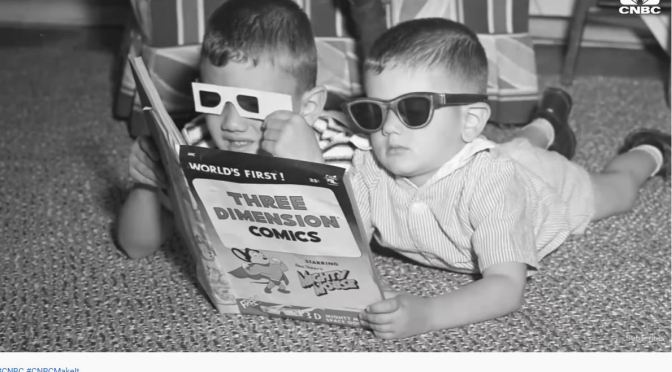
1950’s: A ‘Moral Panic’ That Targeted Comic Books

Comic books have been a staple of American pop culture for the better part of 90 years. The origin story of comics as we know them, however, is much more complicated. In the 1950s, a moral panic swept across the country — one in which parents and children burned comic books by the bushel in public gatherings — and led to the near destruction of the comic book industry. Comics were big business even by the 1940s. They reached millions of readers each week. And the superheroes created then have now become billion-dollar franchises, showcased in blockbuster films and massive conventions such as Comic-Con. Events in 1954, however, almost changed that. Laws were passed. Careers were ruined. And comics fell under a strict censorship regime that lasted for decades to come.

Views: Places Inspiring ‘Lord Of The Rings’ & ‘The Hobbit’ By J.R.R. Tolkien

The Hobbit and The Lord of the Rings – If you’ve read the British author J.R.R. Tolkien’s books before, or seen the movies, you’ll be familiar with the fantasy worlds he created. But where did the inspiration for these creations come from? To this day, this question is still widely debated. British author and Tolkien expert John Garth has embarked on a journey to find out.

Art History: Whistler’s ‘Comte Robert de Montesquiou-Fezensac’

In the final episode of “Cocktails with a Curator,” Deputy Director and Peter Jay Sharp Chief Curator Xavier F. Salomon bids audiences farewell with a discussion of “Arrangement in Black and Gold: Comte Robert de Montesquiou-Fezensac” by James McNeill Whistler, the best-represented artist at the Frick with twenty works in the collection. Whistler met the eccentric poet and aristocrat depicted in the painting in 1885, and they soon became fast friends, with Montesquiou sitting for the portrait in 1891–92, making it the most modern work on display at Frick Madison. This week’s complementary cocktail is the Black Manhattan, a spin-off of the cocktail from the very first episode of “Cocktails with a Curator.” Xavier, Aimee, and Giulio extend their thanks to all those who made this program possible and, of course, to you, the viewers—cheers! To view this painting (or object) in detail, please visit our website: https://www.frick.org/whistlerblackgold

The Arts: Rembrandt And The History Of Mahogany

In the inaugural episode of “Where in the World?,” Curator Aimee Ng explores the history of mahogany, a material hidden beneath the surface of a Rembrandt portrait and sourced oceans away from the famed artist’s homeland.

The Frick’s temporary move to Frick Madison has prompted new ways of looking at our works of art. The reframing of the collection sheds light on the fact that the Frick’s art, although predominantly European, is undeniably linked to the world beyond Europe. In this series, we’re exploring some of these stories, asking “where in the world” we can find new connections to familiar objects.

To view the Rembrandt painting in detail, please visit our website: https://www.frick.org/rembrandtruts

Profiles: British Artist Aimee Lax (V&A Museum)

Aimee Lax is an artist whose work examines the fragility and strength of the natural world, showing how it can be simultaneously threatening and beautiful. During her residency she has focussed on the question of the Anthropocene, looking at the burial of nuclear waste and the strange morphological effects on organisms in areas exposed to nuclear radiation. Creating works which convey a sense of otherworldliness and the uncanny, she uses clay to illustrate the dangers of the past, present and future. Engaging Ceramics Artist in Residence October 2019 – July 2020.

French Views: The Lasting Legacy Of King Louis XIV

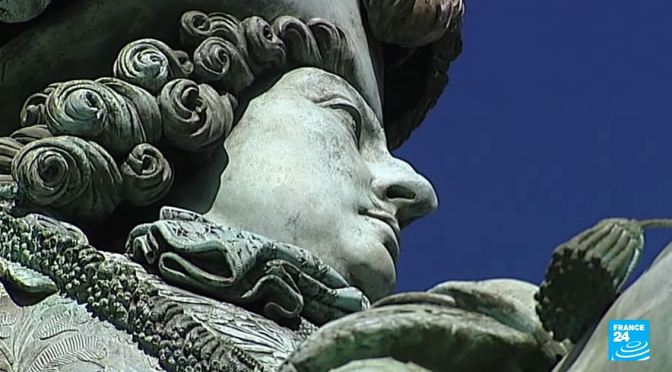
Louis XIV embodies absolute monarchy more than any other French king. The Sun King, who ruled from 1643 to 1715, left his mark on many places in France, from Versailles to Saint-Jean-de-Luz and the Gobelins tapestry factory in Paris. Even today, his legacy lives on in all of them. FRANCE 24 takes you on a tour.

Views: 74th Cannes Film Festival Returns In 2021

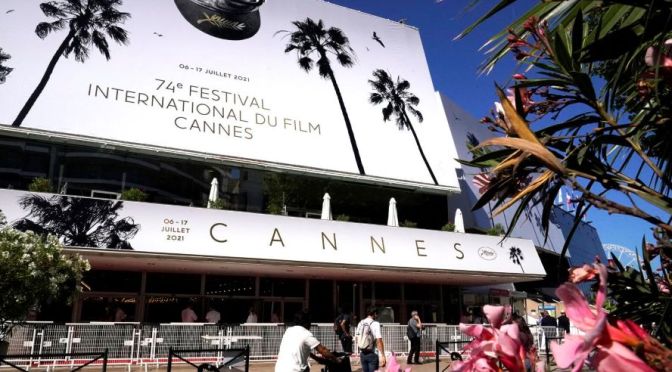
After skipping a year due to the Covid-19 pandemic, the world’s premier film festival returns to the French Riviera for a bumper edition running through July 6-17. FRANCE 24 lifts the curtain on the crucial – and trivial – things you need to know about the 74th Cannes Film Festival.