The department of European and American Art Before 1900 oversees a collection that includes more than 3,000 artworks and is composed of painting, sculpture, and works on paper, with significant strengths in early Italian Renaissance, 19th century French painting, and British art from 1400 to 1900.
The Denver Art Museum began acquiring notable examples of European art as early as the 1930s, with donations from Samuel H. Kress, Mr. and Mrs. Simon Guggenheim, and the Havemeyers, to name a few. Their generosity helped initiate a collection that grew in time through gifts and purchases.
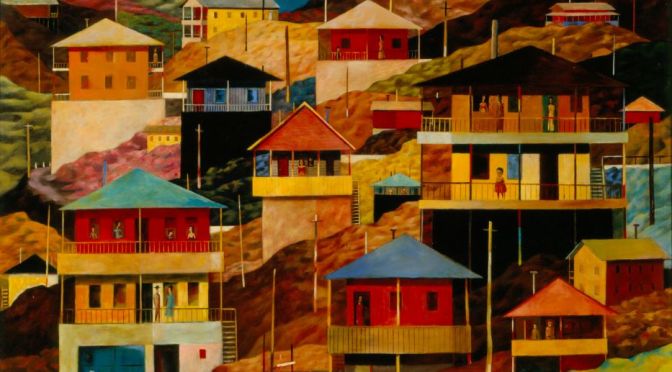
Philip C. Curtis saw the desert through a lens of magic realism.
Landscape remains one of the most popular subjects for artists visiting and residing in Arizona. Philip C. Curtis, while not known as a landscape painter, draws extensively on that subject. Curtis came to the state in 1937 to establish the Phoenix Federal Art Center under the Federal Art Project, a New Deal program. He left two years later to head a similar facility in Des Moines, Iowa, but returned to Arizona in 1947.
Settling in Scottsdale, he painted surreal compositions, with figures in Victorian costumes set in the desert. Arizona’s landscapes were a rich source of inspiration for him, and while his canvases do not portray any recognizable geological features, his work may be contextualized within the work of a broad spectrum of artists who came to the state. Curtis saw the desert through a lens of magic realism. This differed from Maxfield Parrish, Eugene Berman, and other artists who preferred more representational modes.
What was Jasper Johns’s reaction to seeing Paul Cézanne’s The Large Bathers? Curator Carlos Basualdo recalls standing in front of the painting and Johns’s fascination with the finished and unfinished aspects of the artwork.
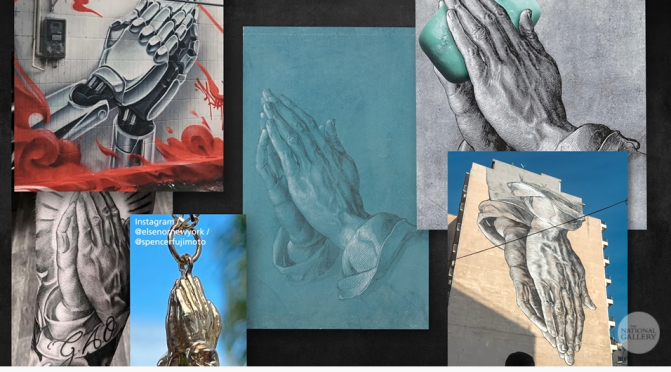
Even if you don’t know the name, chances are you’ve seen a reproduction of one of his prints. What is it about his work that has made it last? Through paintings, drawings, prints, and letters, our exhibition ‘Dürer’s Journeys: Travels of a Renaissance Artist’ brings to life this art history megastar and the people and places he visited.
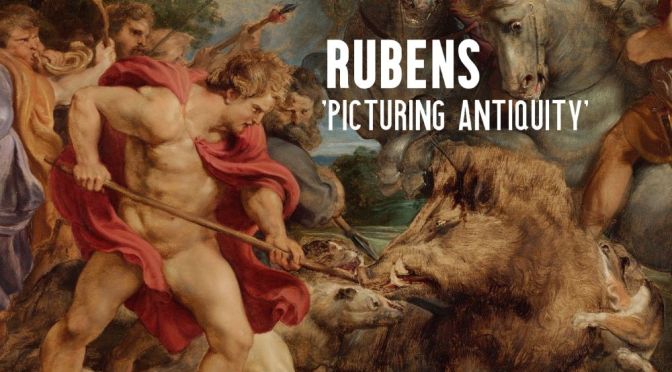
“I think it just shows very well how Rubens worked, how he got the inspiration from antiquity, but he transforms it into something completely new and very alive.”
The Flemish Baroque painter Peter Paul Rubens is most famous for his dynamic, colorful renderings of religious scenes and mythological stories. Yet Rubens’s work was also deeply inspired by the art of the past. He was a keen student of classical antiquity, engaging with ancient sculptures, coins, gems, and cameos both at home and in his travels through Italy. His friendships with antiquarians, patrons, and scholars provided a network for vibrant intellectual exchanges that informed the artist’s work.
In this episode, Getty curators Anne T. Woollett, Davide Gasparotto, and Jeffrey Spier discuss their exhibition Rubens: Picturing Antiquity, which explores how Rubens was affected by and, in turn, transformed the classical past in his paintings, drawings, and designs. The exhibition, which received major support from Jo Carole and Ronald S. Lauder and generous support from the Leonetti/O’Connell Family Foundation, is on view at the Getty Villa through January 24, 2022.
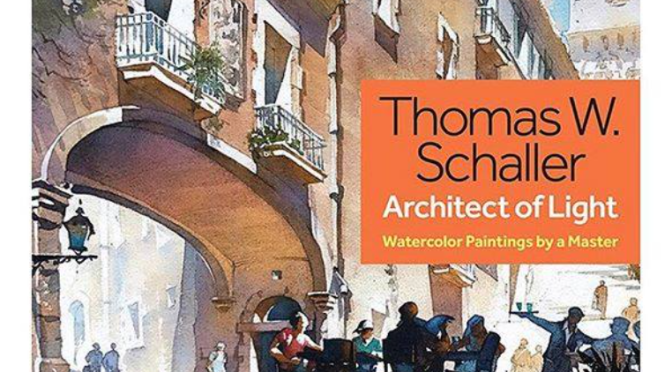
“In many ways, why we paint is more important than what or how we paint. What we create is more than just something we do, it expresses who we are.My work is a study in contrasts: light and dark, vertical and horizontal, warm and cool, the real and the imagined, and elements of the past, present, and future. I design with conflicting elements – allowing them to find balance and resolution on the surface of the paper in surprising and expressive ways, trying never to paint just what I look at, but rather how it is I see; how I react to the world I see around me and within. The results are reflections of my attempt at becoming more fully present in the process.“
Thomas W. Schaller is an award-winning artist, architect, and author based in Los Angeles. As a renowned architectural artist, he received a Graham Foundation Grant and was a two-time recipient of the Hugh Ferriss Memorial Prize. He has authored three books; the best-selling, and AIA award winner, Architecture in Watercolor (VNR – McGraw Hill) The Art of Architectural Drawing (J.Wiley and Sons), and Thomas W. Schaller, Architect of Light : Watercolor Paintings by a Master – a retrospective of his recent artwork released by North Light Books / F+W Media and now Penguin / Random House, NYC in 2018.
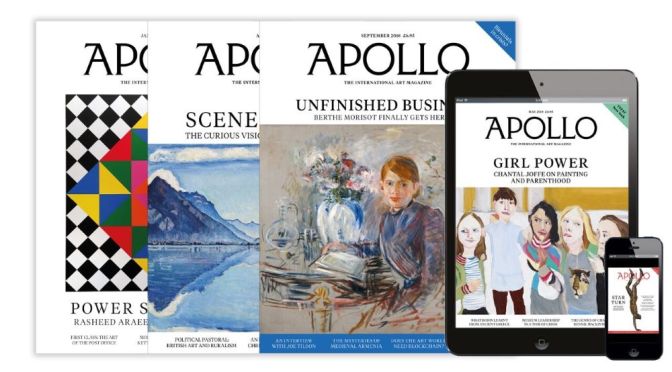
An interview with Howardena Pindell + Gainsborough’s Blue Boy and friends +The Humboldt Forum finally opens + Medieval Christian art in Georgia + Plus: Kazakh gold in Cambridge, Dürer’s wanderlust, rocks that look good enough to eat – and are New Towns old hat?
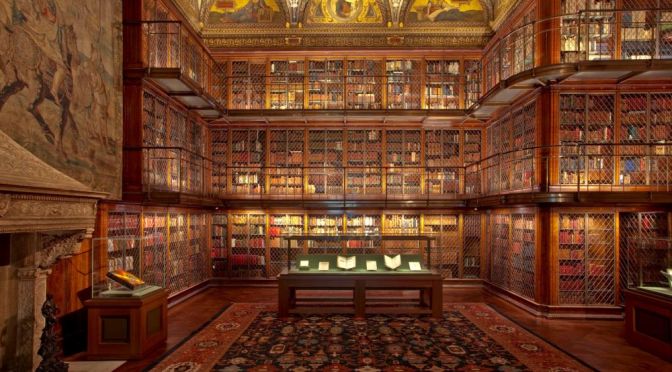
Building on the Morgan’s tradition of presenting to the American public distinguished works from outstanding institutions abroad, Van Eyck to Mondrian: 300 Years of Collecting in Dresden focuses on the exceptional drawing collection of the Kupferstich-Kabinett, Dresden.
Established by Augustus II the Strong, Elector of Saxony, in 1720, the museum is one of the oldest and finest depositories of works on paper in the world. The exhibition celebrates pivotal moments and key traditions in the history of European draftsmanship. Most remarkably, it will feature Jan van Eyck’s Portrait of an Elderly Man (ca. 1435–40)—an exceptionally rare drawing by the great Netherlandish Renaissance painter, which has never before traveled to the United States.
The Kupferstich-Kabinett’s strength in Northern Renaissance and Baroque drawings will be further showcased through works by Lucas Cranach the Elder, Hans Holbein the Younger, Rembrandt, and Rubens, while the museum’s rich holdings of Southern European works will be represented by Correggio, Bronzino, Sofonisba Anguissola, and others.
Among works produced in the nineteenth and twentieth centuries, highlights include studies by Caspar David Friedrich, Goya, Käthe Kollwitz, Gustav Klimt, Otto Dix, and Piet Mondrian.
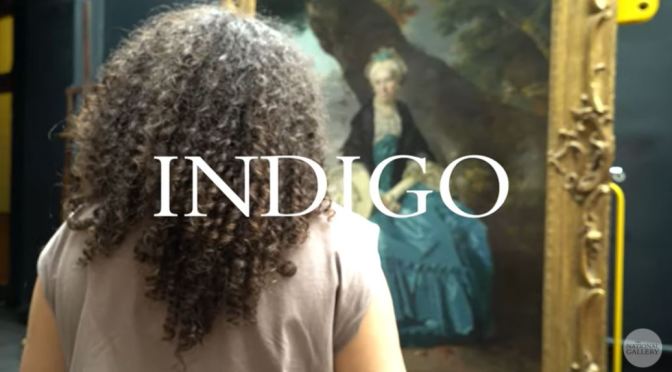
Our Conservation Fellow, Kendall Francis takes a closer look at indigo, a blue dye and pigment extracted from the leaves of plants, and how it is used and represented in paintings in our collection.
Kendall’s research reveals histories that are not explicitly portrayed in the paintings and highlights the important contributions from a wider range of people, including the enslaved people who cultivated the crops and extracted the indigo against their will. Supported using public funding by Arts Council England.
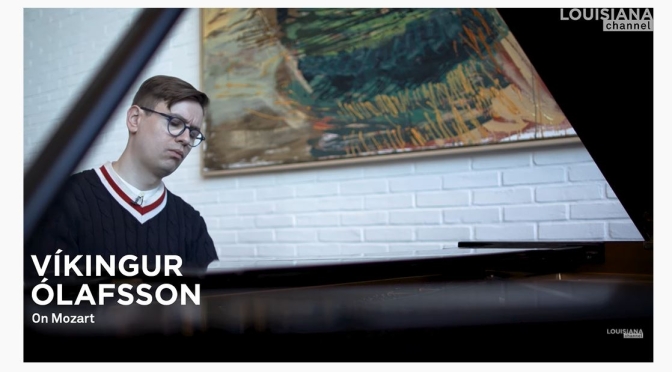
“Mozart really belonged to the 19th century”, says Icelandic star-pianist Víkingur Ólafsson about Wolfgang Amadeus Mozart “He belonged to a new area, where the artist was a free thinker. Image, if he had lived a little longer and would have had a dialogue with Ludwig van Beethoven.”
Ólafsson has no doubt that Mozart was a so-called Wunderkind. “He did have a divine gift.” But to Ólafsson another aspect of Mozart’s music is even more fascinating. According to Ólafsson Mozart wrote his best works after the age of 25, when his life was in deep crisis and the Vienna aristocracy had turned its back on him.
“The greater the music became, the less popularity he had.” To Ólafsson Mozart’s legacy must be seen in the light of the tragedy. Víkingur Ólafsson grew up in Reykjavík and started playing the piano at an early age under the tutelage of his mother, a piano teacher. He studied at the Juilliard School in New York, earning bachelor’s and master’s degrees under the supervision of Jerome Lowenthal and Robert McDonald. He also took lessons with Ann Schein.
In 2011, Ólafsson was the soloist in the opening concert of Harpa in Reykjavik, playing Edvard Grieg’s piano concerto with the Iceland Symphony Orchestra. Since he has developed into one of the most recognized and award-winning artists within classical and contemporary music.
In 2016, Víkingur signed an exclusive recording contract with the renowned label Deutsche Grammophon releasing four albums featuring the music of Philip Glass, Johann Sebastian Bach, Debussy & Rameau as well as Mozart & Contemporaries. Ólafsson has collaborated with many contemporary artists among them John Adams, Philipp Glass, Daniel Bjarnason and Icelandic singer Bjørk. He has also recorded the soundtrack of Darkest Hour, a film directed by Joe Wright, and released Bach Reworks, featuring six ‘remixed’ works by Johann Sebastian Bach from the likes of Ben Frost, Peter Gregson, Valgeir Sigurdsson as well as Ólafsson himself.
Víkingur Ólafsson was interviewed by Marc-Christoph Wagner at the Louisiana Museum of Modern Art in November 2021. Camera: Jarl Therkelsen Kaldan Edited by: Jarl Therkelsen Kaldan Produced by Marc-Christoph Wagner Copyright: Louisiana Museum of Modern Art, 2021 Louisiana Channel is supported by Den A.P. Møllerske Støttefond, Ny Carlsbergfondet and C.L. Davids Fond og Samling
News, Views and Reviews For The Intellectually Curious




 Boomers Daily