

From a Harvard Medical School release:
 Researchers matched 7,743 people with osteoarthritis with 23,229 healthy people who rarely or never took NSAIDs. People with osteoarthritis had a 42% higher risk of heart failure and a 17% higher risk of coronary artery disease compared with healthy people. After controlling for a range of factors that contribute to heart disease (including high body mass index, high blood pressure, and diabetes), they concluded that 41% of the increased risk of heart disease related to osteoarthritis was due to the use of NSAIDs.
To manage the painful joint disease known as osteoarthritis, people often take ibuprofen (Advil, Motrin) and naproxen (Aleve, Anaprox). But these and related drugs — known as NSAIDs — may account for the higher rates of heart disease seen in people with osteoarthritis, a new study suggests.
To read more: https://www.health.harvard.edu/heart-health/pain-relievers-a-cause-of-higher-heart-risk-among-people-with-arthritis
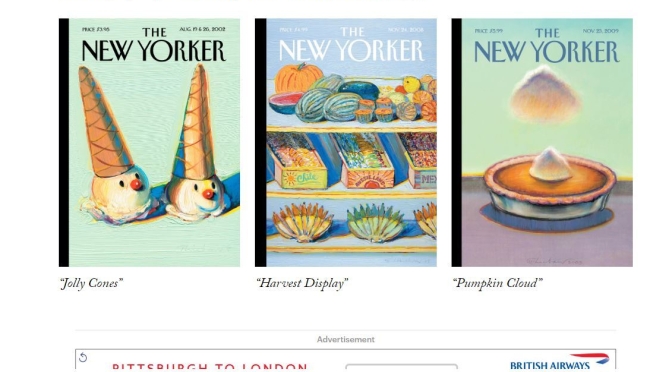
 Since all of my paintings—almost every single one except for the figure paintings—are done from memory, I rely specifically on the memory of working in restaurants, or of visiting farms on which I worked as a young person. I try to recall the look and feel and love of what I have experienced.
 Having established our Simply Sartorial collection that offers a rainbow of strong, confident colours – and which remains our best seller – we have taken a playful approach to patterns and textures. We have added jacquards, herringbones, merinos and cashmeres to the range.

 In addition to the pop-up Worn Wear store, Patagonia also has Worn Wear mobile repair stations, which visit a variety of locations, including Patagonia stores, specialty retailers, ski resorts and colleges to offer up their refurbishment capabilities. The mobile stations have been to over 135 locations so far, according to the release, and will fix products from any brand.
 Patagonia on Thursday opened its first ever physical store for Worn Wear, Patagonia’s resale business. The store is a pop-up in Boulder, Colorado, which will stay open until February 2020, according to a press release emailed to Retail Dive.
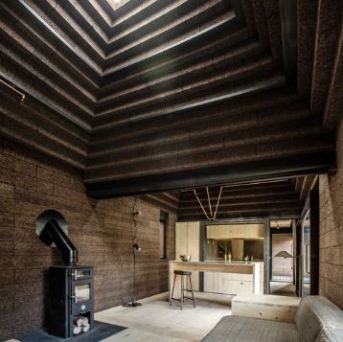 Cork House embodies a strong whole life approach to sustainability, from resource through to end-of-life. Expanded cork is a pure bio-material made with waste from cork forestry. The bark of the cork oak is harvested by hand every nine years without harming the tree or disturbing the forest.
 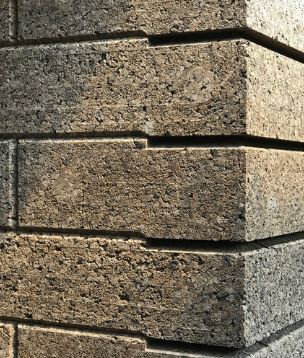 This gentle agro-industry sustains the Mediterranean cork oak landscapes, providing a rich biodiverse habitat that is widely recognised. This compelling ecological origin of expanded cork is mirrored at the opposite end of the building’s lifecycle. The construction system is dry-jointed, so that all 1,268 blocks of cork can be reclaimed at end-of-building-life for re-use, recycling, or returning to the biosphere.
 “These results show quite clearly that there’s a very specific part of the brain network that’s affected by inflammation,” noted Mazaheri. “This could explain ‘brain fog’.”
 The Crosstown Trail is a route connecting San Francisco neighborhoods, open spaces, and other major trails. It runs from Candlestick Point in the southeast corner of the city to Lands End in the northwest corner. The route is usable by both pedestrians and bicyclists, and it connects many parks, business districts, residential areas, and public transit.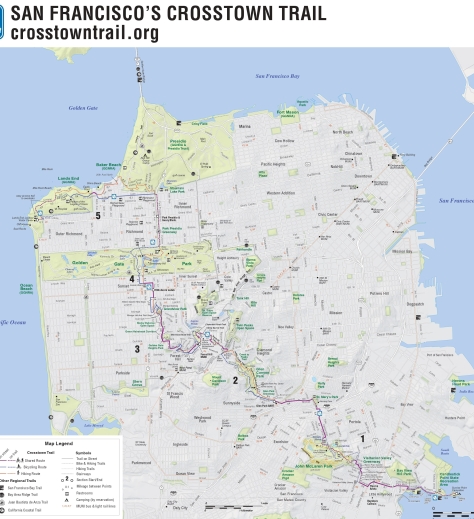

 The visuals make up most of the book’s volume, with David De Vleeschauwer’s photography magically working on various levels: on the one hand, artfully conveying the splendour and beauty of all the featured remote landscapes, and on the other, focusing on minute details that we usually pay no attention to: such details are isolated and enlarged as if to make us stop and look for a while. Each location is also paired with a hotel or guesthouse review, together with snippets of information about the area and how to actually get there.
  Above all, ‘
 The artist incorporates an array of art historical scenes such as John Martin’s English-Romantic apocalypses and Edouard Manet’s Luncheon on the Grass with ubiquitous imagery sourced from the Internet. The highly rendered areas in her paintings resemble a cascade of Google image search results where cellphone photos of skylines and gardens slide past gestural marks.
  Shulamit Nazarian is pleased to present Strange Little Beast, a solo exhibition of new works by Los Angeles-based painter Annie Lapin. This will be the artist’s first solo exhibition with the gallery.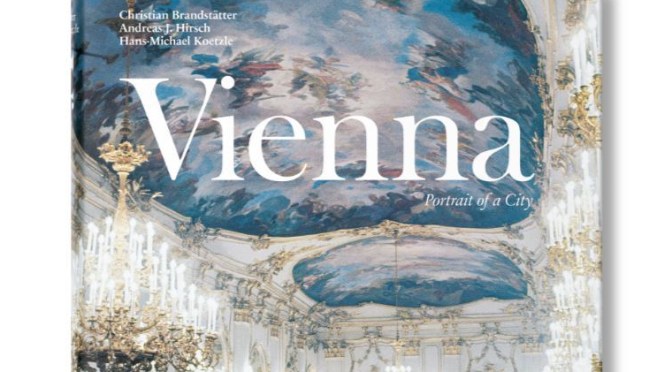
 This volume is a treasure trove of photography from the last 175 years, following the evolution of Vienna from imperial capital to modern metropolis. Like a visual walk through time and cityscape, hundreds of carefully curated pictures trace the developments in Vienna’s built environment and the cultural and historical trends they reflect, whether the urban Gesamtkunstwerk of the 19th-century Ringstrasse or the experiments of “Red Vienna” in the 1920s, when the city had a social democrat government for the first time.
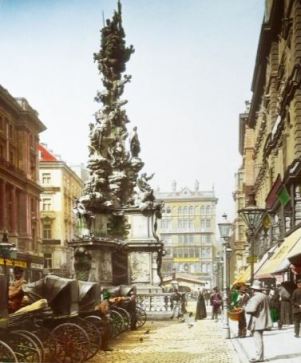 Vienna combines drama and elegance like no other. For centuries the heart of the Austro-Hungarian Empire, the stately city on the Danube, has been defined by vast palaces and imperial grandeur—but behind the Baroque opulence, Vienna is also a place of genteel coffee house culture, epicurean tradition, and a heritage of both delicate and daring music, art, and design, from Johann Strauss to
  Boomers Daily