

From a Newcastle University news release:
“When fat cannot be safely stored under the skin, it is then stored inside the liver, and over-spills to the rest of the body including the pancreas. This ‘clogs up’ the pancreas, switching off the genes which direct how insulin should effectively be produced, and this causes Type 2 diabetes.”
 This latest paper builds on previous Newcastle studies supported by Diabetes UK showing exactly why Type 2 diabetes can be reversed back to normal glucose control. Those studies led to the large DiRECT trial which showed that Primary Care staff can achieve remission of Type 2 diabetes by using a low calorie diet with support to maintain the weight loss.
A quarter of participants achieved a staggering 15 kg or more weight loss, and of these, almost nine out of 10 people put their Type 2 diabetes into remission. After two years, more than one third of the group had been free of diabetes and off all diabetes medication for at least two years.
In 2020, this approach to management of short duration Type 2 diabetes is to be piloted in the NHS in up to 5,000 people across England, and a similar programme is being rolled out in Scotland.
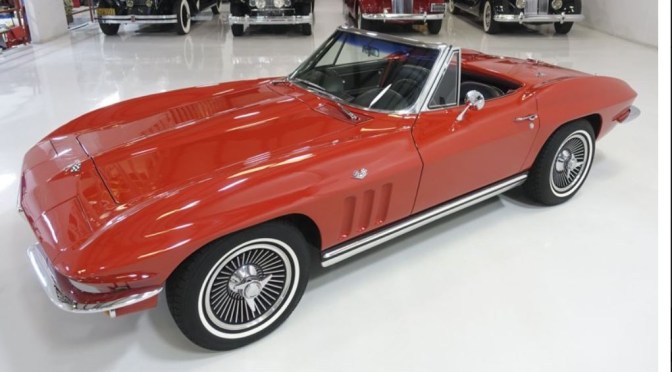
 For its third season, the 1965 Corvette Sting Ray further cleaned up style-wise and was muscled up with the addition of an all-new braking system and larger powerplants. 1965 styling alterations were subtle, confined to a smoothed-out hood now devoid of scoop indentations, a trio of working vertical exhaust vents in the front fenders that replaced the previous nonfunctional horizontal “speedlines,” restyled wheel covers and rocker-panel moldings, and minor interior trim revisions. The 1965 Corvette Sting Ray became ferocious with the mid-year debut of the
  1965 also added another 350 hp small block engine (Option L79) which used hydraulic rather than solid lifters, a milder camshaft and a modestly redesigned smaller oil pan.
 Through the prisms of behavioral neurology and cognitive neuroscience, Scott Grafton brilliantly accounts for the design and workings of the action-oriented brain in synchronicity with the body in the natural world, and he shows how physical intelligence is inherent in all of us—and always in problem-solving mode. Drawing on insights gleaned from discoveries by engineers who have learned to emulate the sophisticated solutions Mother Nature has created for managing complex behavior, Grafton also demonstrates the relevance of physical intelligence with examples that each of us might face—whether the situation is mundane, exceptional, extreme, or compromised.


 o finds himself wondering if growing old in Paris might be the perfect antidote to the drama he left behind in New York. Unflinching, witty, and urbane as ever, Louis Begley delivers a spot-on satire of the world of New York’s aging elite, and uncovers the unexpected delights a late-in-life change can offer.

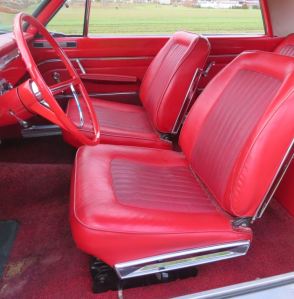 The Plymouth Valiant (first appearing in 1959 as simply the Valiant) is an
  The Valiant was totally reskinned for 1963 with a 0.5 in (13 mm) shorter wheelbase; it had a wide, flat hood and a flat square rear deck. The upper belt feature line ran from the rear body, in a gentle sweep, to the front fender tip. Here it was ‘veed’ back and down to the trailing edge of the front fender. The roofline was flatter and sharpened in profile. The grille was a variation of the inverted trapezoid shape that characterized contemporary Chryslers, with a fine mesh insert. Advances in body structure, many accessories and a new spring-staged choke were promotional highlights. The Valiant was offered as a 2-door






 Boomers Daily