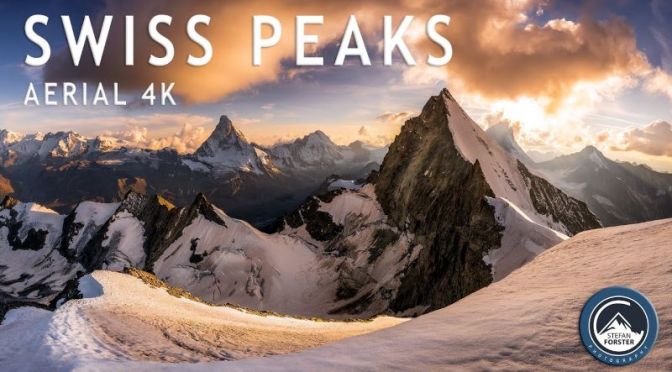
The Alpine region of Switzerland, conventionally referred to as the Swiss Alps, represents a major natural feature of the country and is, along with the Swiss Plateau and the Swiss portion of the Jura Mountains, one of its three main physiographic regions.
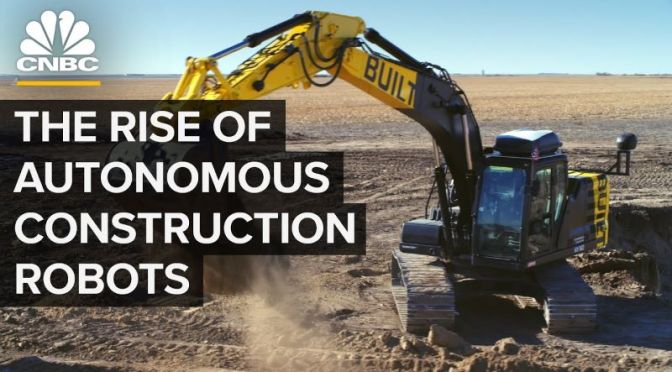
There’s a lot of buzz around self-driving cars, but autonomous-driving technology could revolutionize a different industry first — construction. That industry hasn’t changed much over the last several decades, according to some experts, making it an ideal candidate for automation.
“The way we build today is largely unchanged from the way we used to build 50 years ago,” said Gaurav Kikani, vice president of Built Robotics. “Within two years, I think we’re really going to turn the corner, and you’re going to see an explosion of robotics being used on construction sites.”
The industry is also faced with a labor shortage that the Covid-19 pandemic has further complicated. “Covid is making people step back and say, ‘hey, the way we’ve been doing things for a long time is just not sustainable,’” said Kevin Albert, founder and CEO of Canvas. “It is just a wake-up call for the industry.”
Canvas is one of several companies working on autonomous construction technology. Big players like Caterpillar and Komatsu, and start-ups like SafeAI and Built Robotics, see value in using autonomous machines to accelerate construction projects. The mining industry was one of the first to employ the use of self-driving tech.
Caterpillar began its first autonomy program more than 30 years ago. The company now has the largest fleet of autonomous haul trucks. Caterpillar says it’s hauled 2 billion metric tons in just over six years. Built Robotics is a San Francisco-based start-up founded by an ex-Google engineer that already has machinery out in the field. It’s automated several pieces of equipment, such as bulldozers and excavators.
“You can now collapse your construction timeline so you can knock out work overnight so that it’s ready for your human workers in the morning to speed them along,” Kikani said. SafeAI is another Silicon Valley start-up. It recently teamed up with Obayashi for a pilot program. It’s been retrofitting equipment like dump trucks, bulldozers and loaders. Robots are also helping inside.
San Francisco-based Canvas created an autonomous machine for finishing drywall and has worked on projects like the San Francisco International Airport and Chase Arena. Humans work alongside its robotic system. “Drywall is very hard work on the body,” Albert said. “And we’ve seen that 1 out of every 4 workers has to end their career early because of injuries. This will create longer careers for people and also enable people to join the trades that haven’t had access before.”
The construction industry is one of the largest sectors in the global economy, with about $10 trillion spent each year. That spending accounts for 13% of the world’s GDP, even though the sector’s annual productivity growth has only increased 1% over the past 20 years. According to McKinsey & Co., $1.6 trillion of additional value could be created through higher productivity, and autonomy would help the industry achieve that.
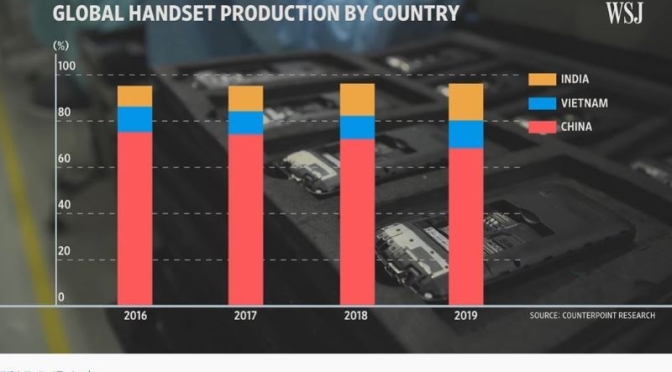
India is positioning itself as a smartphone-production hub amid a U.S.-China trade war that has disrupted global supply chains and left tech firms such as Apple and Samsung looking for alternatives to China to manufacture their products. Photo: Olivier Le Hellard for The Wall Street Journal
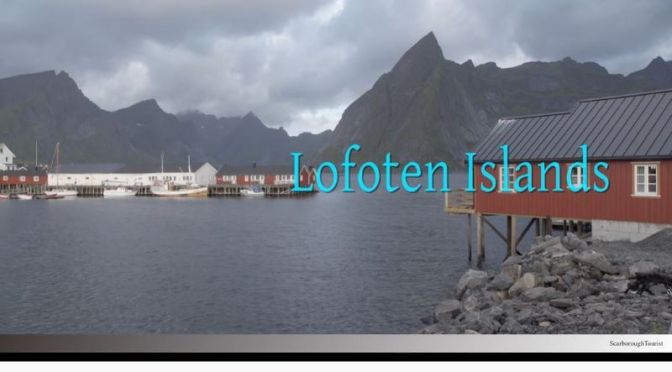
A visit to the Norwegian Lofoten Islands in the northern region. Beautiful scenery.
Lofoten is an archipelago and a traditional district in the county of Nordland, Norway. Lofoten is known for a distinctive scenery with dramatic mountains and peaks, open sea and sheltered bays, beaches and untouched lands. Its largest town, Leknes, is approximately 169 km (105 mi) inside the Arctic Circle and approximately 2,420 km (1,500 mi) away from the North Pole, making Lofoten one of the world’s northernmost populated regions. Though lying within the Arctic Circle, the archipelago experiences one of the world’s largest elevated temperature anomalies relative to its highlatitude.Lofoten (Norwegian pronunciation: [ˈlùːfuːtn̩]) is an archipelago and a traditional district in the county of Nordland, Norway. Lofoten is known for a distinctive scenery with dramatic mountains and peaks, open sea and sheltered bays, beaches and untouched lands. Its largest town, Leknes, is approximately 169 km (105 mi) inside the Arctic Circle and approximately 2,420 km (1,500 mi) away from the North Pole, making Lofoten one of the world’s northernmost populated regions. Though lying within the Arctic Circle, the archipelago experiences one of the world’s largest elevated temperature anomalies relative to its highlatitude.
The Pentagon is the headquarters building of the United States Department of Defense. As a symbol of the U.S. military, the phrase The Pentagon is also often used as a metonym for the Department of Defense and its leadership.
The Pentagon is the world’s largest office building, with about 6,500,000 square feet (150 acres; 0.60 km2) of floor space, of which 3,700,000 sq ft (85 acres; 0.34 km2) are used as offices.[7][8] Some 23,000 military and civilian employees,[8] and another 3,000 non-defense support personnel, work in the Pentagon. It has five sides, five floors above ground, two basement levels, and five ring corridors per floor with a total of 17.5 miles (28.2 km)[8] of corridors. The central five-acre (2.0 ha) pentagonal plaza is nicknamed “ground zero” on the presumption that it would be a prime target in a nuclear war.
Every legacy has a compelling origin. The soon-to-be-launched Landsat 9 is the intellectual and technical product of eight generations of Landsat missions, spanning nearly 50 years.
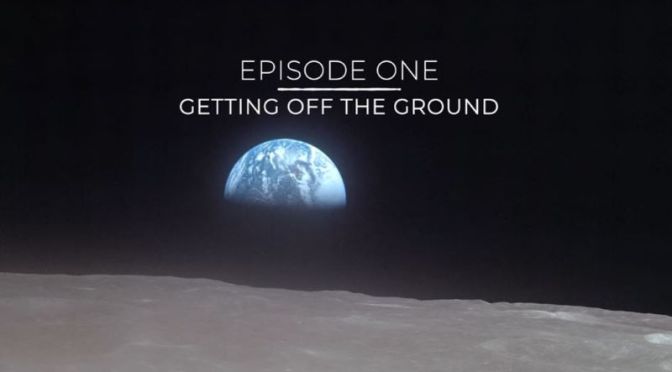
Episode One answers the question “why?” Why did the specific years between 1962 and 1972 call for a such a mission? Why did leadership across agencies commit to its fruition? Why was the knowledge it could reveal important to the advancing study of earth science?
In this episode, we’re introduced to William Pecora and Stewart Udall, two men who propelled the project into reality, as well as Virginia Norwood who breathed life into new technology. Like any worthwhile endeavor, Landsat encountered its fair share of resistance. Episode one explores how those challenges were overcome with the launch of Landsat 1, signifying a bold step into a new paradigm.
Additional footage courtesy of Gordon Wilkinson/Texas Archive of the Moving Image and the US Geological Survey. The Landsat Program is a series of Earth-observing satellite missions jointly managed by NASA and the U.S. Geological Survey (USGS). Landsat satellites have been consistently gathering data about our planet since 1972. They continue to improve and expand this unparalleled record of Earth’s changing landscapes for the benefit of all.
Music: “The Missing Star,” “Brazenly Bashful,” “Light Tense Weight,” “It’s Decision Time,” “Patisserie Pressure,” from Universal Production Music Credit: NASA’s Goddard Space Flight Center Matthew R. Radcliff (USRA): Lead Producer Ryan Fitzgibbons (USRA): Lead Producer Kate Ramsayer (USRA): Lead Producer LK Ward (USRA): Lead Writer Ryan Fitzgibbons (USRA): Lead Editor Jeffrey Masek (NASA/GSFC): Lead Scientist Marc Evan Jackson: Narrator Terry Arvidson (Lockheed Martin): Interviewee Aaron E. Lepsch (ADNET): Technical Support
Award-winning food writer Mark Riddaway travels back through the centuries to tell the fascinating, surprising and often downright bizarre stories of some of the everyday ingredients found at London’s Borough Market.
Discover how the strawberries we eat today had their roots in a clandestine trip to South America by a French spy whose surname happened to be Strawberry, why three-quarters of Britain’s late-18th-century intake of tea was sold on the black market, and what Sigmund Freud found so fascinating about eel genitalia.
From the humble apples and onions that we’ve grown on these shores for centuries, to more exotic ingredients like cinnamon and bananas that travel from across the world to finesse our food, Borough Market: Edible Histories offers a chance to digest the charming stories behind every last morsel.
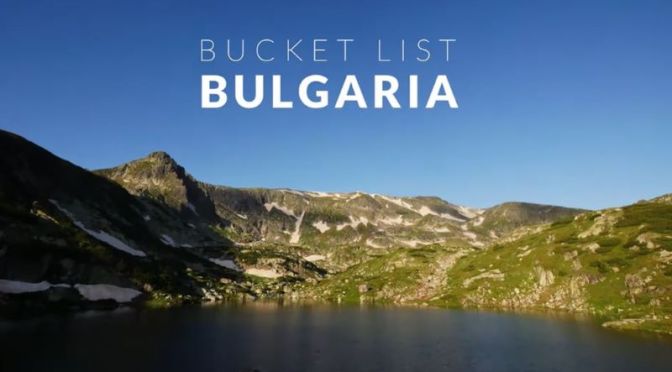
Bulgaria is an amazing county in Eastern Europe. It is probably one of the most underrated travel destinations in Europe offering everything from amazing lanscapes, beautiful mountains, splendid beaches, vibrant cities, mediveal castles, otherworldly Soviet monuments and so much more. Find out in 4 amazing minutes minutes, why it shoud be definitely on your bucket list. Unfortunately I had only about two weeks to explore this gem, but when this pandemic thingy is over someday, I will make sure to return. A seperate episode from the capital Sofia will follow shortly.
Timeline Chapters: 00:00 Rila Lakes 01:15 Boyana Waterfall Sofia 01:30 Abandoned Lift “Ledenika” 01:40 Stone Forest near Varna 01:47 Belogradchik Fortess 01:56 Buzludzha Monument 02:17 Monument to Freedom, Stoletov peak 02:19 Tsarevets Fortress – Veliko Tarnovo 02:28 Assen’s Fortress – Asenovgrad 02:33 Blach Sea Beaches 02:48 Sozopol 02:55 Rawadinowo 02:58 Sozopol 03:05 Nessebar 03:20 Somewhere on the road 03:23 Plovdiv 03:35 Veliko Tarnovo
The MICHELIN Guide makes you travel to Malta to discover the treasures of this island, their products and their producers. Following the launch of the first MICHELIN Guide Malta in February 2020, we take a closer look at this popular destination in the centre of the Mediterranean Sea.
At the crossroads of cultures, the Maltese gastronomic scene is a reflection of its rich past by marrying culinary influences from Italy, Mediterranean countries, North Africa, and also Great Britain – not to mention contemporary trends. “Malta is a very attractive cultural destination with a unique cuisine style which beautifully combines European influences and local traditions”, explained Gwendal POULLENNEC, International Director of the MICHELIN guides.
Let’s discover some quality products and producers which make the gastronomic reputation of the country! Know more about the destination: https://guide.michelin.com/mt/en/arti…
Malta is an archipelago in the central Mediterranean between Sicily and the North African coast. It’s a nation known for historic sites related to a succession of rulers including the Romans, Moors, Knights of Saint John, French and British. It has numerous fortresses, megalithic temples and the Ħal Saflieni Hypogeum, a subterranean complex of halls and burial chambers dating to circa 4000 B.C.
News, Views and Reviews For The Intellectually Curious






 Boomers Daily