Australian Architecture: ‘Fitzroy Bridge House’

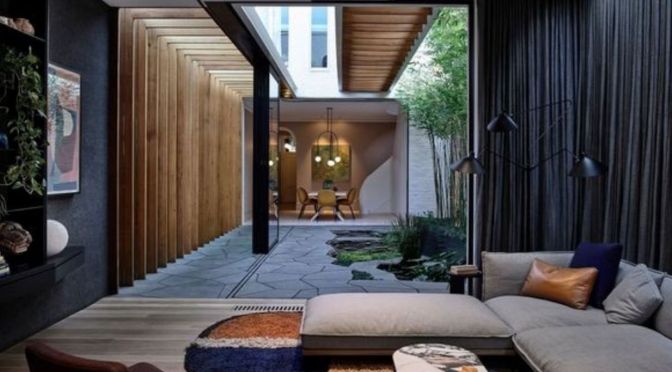
A modern house, Fitzroy Bridge House is a work of collaboration led by Matt Gibson Architecture + Design. Featuring a glass bridge – from which the project receives its name – the home emerges as a considered and personal dwelling that celebrates its older architectural elements.

Video timeline: 00:00 – The Local Project’s Print Publication 00:20 – The Name Behind Fitzroy Bridge House 00:57 – South Fitzroy Heritage Precinct 01:36 – Moving Through the Home 01:53 – Dissolution of Interior and Exterior 02:16 – The Bridge 02:40 – The Rear Retreat 03:14 – Involvement of the Clients and Their Non-Negotiables 03:57 – Key Sustainable Moves 04:51 – The Cellar

Located in the southern Fitzroy heritage precinct, Fitzroy Bridge House sits an enviable two kilometres from the Melbourne CBD. The residence occupies a long, thin site and is comprised of distinct pavilions, encapsulating both the pre-existing architecture and the work of the modern house.

As Fitzroy Bridge House is situated in a heritage overlay, the exterior of the home could not be altered in relation to the front two rooms. Entering the home, residents move through the Victorian-style environments before reaching the rear architecture of the modern house that features a refined internal courtyard settled into the dining room interior design.

Connecting two pavilions, the glass bridge forms the focal point of the modern house. The bold feature provides a view down to the manicured garden in the Japanese-inspired courtyard – a fine work of landscape architecture requested by the client and executed by Robyn Barlow. A product of collaboration, Fitzroy Bridge House is closely connected to the client. Warm, inviting and personal, the modern house expresses its own built narrative, enabling the client to retell the story of its creation for years to come.
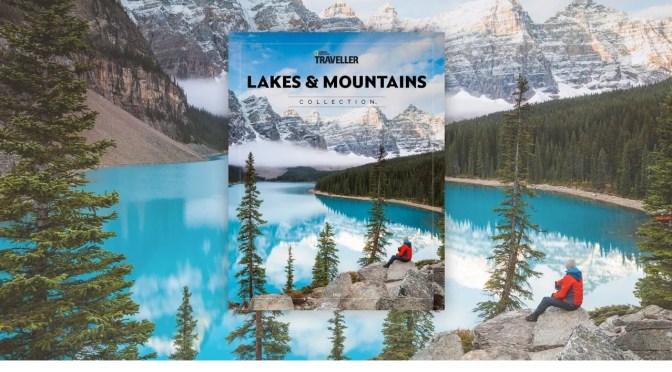
National Geographic Traveller UK ‘Lakes & Mountains’ Issue 2022

1. Alpine running in Canada

Keen runners seeking more inspirational landscapes can join a new tour by CMH Heli-Skiing & Summer Adventures to discover the wild beauty of the Bugaboos in the heart of the Canadian wilderness. Soar over verdant forest trails, rugged mountain tops and granite spires in a helicopter before being dropped on a summit. Runners will revel in the sunny skies, breathtaking panoramas and plenty of breaks, often in crystal-clear glaciated lakes. The day ends back at base camp, a spacious fly-in backcountry luxury lodge where guests can relax with a massage, sauna or a soak in a hot tub.

Where to stay: CMH Bugaboos log-hewn lodge at the base of Bugaboo Glacier offers gourmet dining, swimming and a rooftop hot tub. From $3,025 (£1,926) for three nights/four days including meals, helicopter flights, guide, equipment and local transfers. 

2. Heli-biking in New Zealand

Cycle far from the crowds in the Wanaka region past glaciers and lakes on gentle high-country trails and tricky single tracks that combine easy free-wheeling with adrenaline pumping fun. For seasoned cyclists, the four-hour Mount Burke trail is the holy grail of mountain bike trips with riders ferried to the top by chopper to avoid the uphill grind. Soak up the scenery at 4,593ft before braving the epic downhill descent through scenic valleys and farmland to the glassy waters of Lake Wanaka and Lake Hawea for a gourmet picnic. 

Where to stay: Minaret Station, an off-grid lavish four-chalet lodge accessible by only helicopter or boat, located at 7,000ft with a valley to one side and Lake Wanaka to the other. Five nights from £5,250pp, including four nights’ full-board at Minaret Station with return helicopter transfers, excluding international flights, with Black Tomato

Preparing to go heli-biking in New Zealand.

Preparing to go heli-biking in New Zealand.

PHOTOGRAPH BY FREDRIK LARSSON

3. Glacier hiking in France

Head to Saint Martin de Belleville to traverse the Glacier de Chavière and conquer not one, but three cols, or mountain paths, at altitudes of around 10,000ft. Set off at dawn, after learning how to use an ice axe and crampons, to begin an energetic climb attached by a rope to an expert guide. Enjoy incredible views of snow-covered ridges, steep couloirs and rock towers, but take care where you place your feet as some narrow paths come dangerously close to crevices with sheer drops. After reaching the three cols — Col de Thorens, Col Pierre Lory and Col du Bouchet — return to Val Thorens in the early afternoon for a leisurely lunch. 

Where to stay: The renovated four-star Hotel Lodji at the base of Saint Martin with cosy bar, restaurant, sunny terrace and spa. Rooms from €150 (£129) a night.

Read more

Walks: Lake Annecy In Haute-Savoie, France (4K)

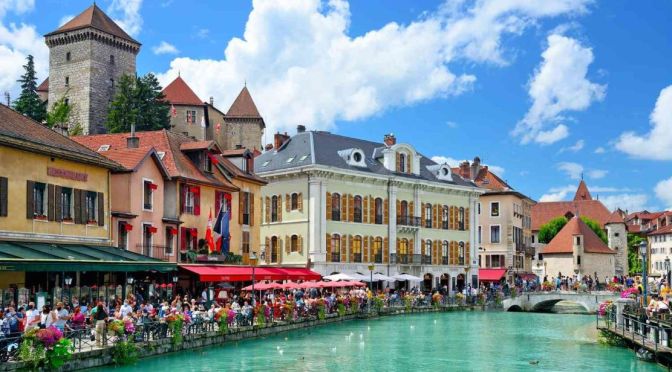
Lake Annecy (French: Lac d’Annecy) is a perialpine lake in Haute-Savoie in France. It is named after the city of Annecy, which marks the start of the Thiou, Lake Annecy’s outflow river.

It is the third-largest lake in France, after the Lac du Bourget and Lac de Grand-Lieu, if the French part of Lake Geneva, which is shared between Switzerland and France, is excluded. It is known as “Europe’s cleanest lake” because of strict environmental regulations introduced in the 1960s. It is a popular tourist destination known for its swimming and water sports.

The lake was formed about 18,000 years ago, at the time the large alpine glaciers melted. It is fed by many small rivers from the surrounding mountains (Ire, Eau morte, Laudon, Bornette and Biolon) and a powerful underwater source, the Boubioz, at a 82-metre depth (269 ft).

Headlines: China-Taiwan Tensions, Trump & Orbán Speak At CPAC Conference

We discuss the brewing crisis in Taiwan that has dominated the Asean meeting. Plus: Donald Trump and Viktor Orbán take centre stage at the Conservative Political Action Conference, a review of the papers and the latest business news.

Front Page: Wall Street Journal – August 5, 2022

Image

Cooling U.S. Labor Market Weighed by Fed Hike, Inflation

The U.S. jobs market likely cooled again in July, economists estimate, as the economy faltered under the weight of high inflation and Federal Reserve interest-rate increases to cool demand.

Pelosi Says U.S. Won’t Allow China to Isolate Taiwan

House Speaker Nancy Pelosi said the U.S. would continue engaging with Taiwan, while Japan’s prime minister called on China to immediately halt its military exercises around the island.

Cover Preview: Science Magazine – August 5, 2022

Image

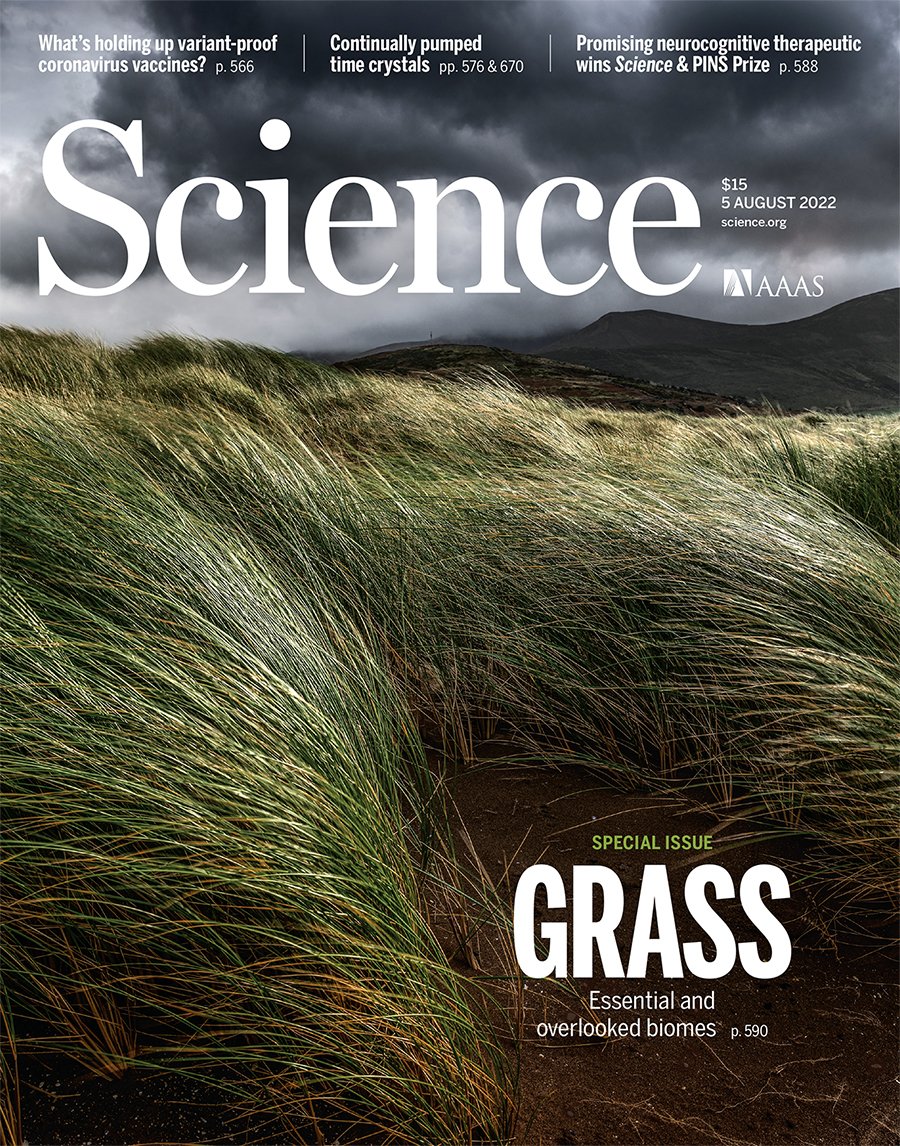
The unrecognized value of grass

Marram grass, or beachgrass, grows on and stabilizes coastal sand dunes on Ireland’s Dingle Peninsula. Grasses, whether terrestrial or submarine, tend to be undervalued but have influenced the trajectory of human history through their domestication as food staples, as well as natural ecosystems worldwide. If restored and conserved appropriately, grasslands can benefit climate change mitigation efforts. See the special section beginning on page 590.

A new special issue of Science explores the unrecognized value of grass: https://fcld.ly/bo80dpr

Documentary: Lebanon’s Historic Economic Crisis

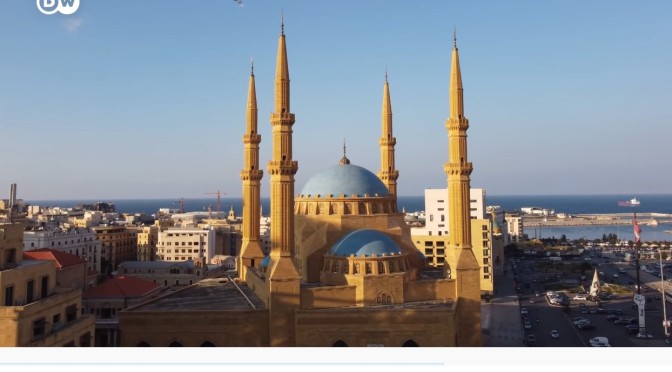
Lebanon is now going through the worst economic crisis in its history. 80 per cent of the population lives below the poverty line. In one year, food prices have jumped 500 per cent due to galloping inflation. Lebanon was long regarded as the Switzerland of the Middle East.

But those days are gone. A series of crises have plunged the nation into the abyss. And its people are suffering. For Riad, who runs a grocery store in the suburbs of Beirut, business has become hellish. Every morning, calculator in hand, he changes the labels of his products according to the day’s exchange rate. An operation made all the more complex by the fact that his store is plunged into darkness, due to a lack of electricity.

The Lebanese government no longer provides more than two hours of electricity per day in the country. It is impossible for the population to heat, light or use their refrigerators. Taking advantage of the situation, a network of private generators has emerged. The Lebanese pound, the local currency, has lost 90 per cent of its value.

The only people unaffected are those paid in dollars. The greenback, which can be exchanged for a small fortune against the local currency, has created a new privileged social class in the country. A salesman in an international pharmaceutical company, Joseph lives like a king in a ruined Lebanon. Thanks to his new purchasing power, he repaid his mortgage in two months, instead of… twenty years!

In a bankrupt state, plagued by corruption, six out of ten Lebanese now dream of leaving the country. In Tripoli, in northern Lebanon, Mohammed and his son set out for Germany by sea. Even though the trip was cut short off the Turkish coast, the young father is still ready to take all possible risks to reach the European Eldorado.

Droughts: The ‘Shrinking’ Of The Colorado River

August 2022 Cover
  • “Tier Drops,” by Lisa Owens Viani.
    Regulations and apportioning that were set up 100 years ago are under pressure as the Colorado River shrinks. As climate change accelerates and record-breaking drought worsens, cities, tribes, and industries must prepare for a future with less water. (Online  August 10)

The Coming Crisis Along the Colorado River

It’s past time to get real about the Southwest’s hardest-working river.

About 40 million people rely on the Colorado River as it flows from Wyoming to Mexico. But overuse and climate change have contributed to its reservoirs drying up at such a rapid rate that the probability of disastrous disruptions to the deliveries of water and hydroelectric power across the Southwest have become increasingly likely. Now the seven states that depend on the river must negotiate major cuts in water use by mid-August or have them imposed by the federal government.

Those cuts are merely the beginning as the region struggles to adapt to an increasingly arid West. The rules for operating the river’s shrinking reservoirs expire in 2026, and those seven states must forge a new agreement on water use for farmers, businesses and cities.

Read more at The New York Times

Cover Preview: Nature Magazine – August 4, 2022

Volume 608 Issue 7921

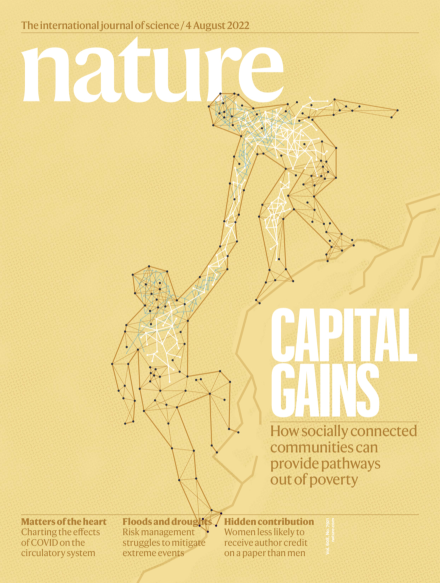
Capital gains

An individual’s social network and community — their ‘social capital’ — has been thought to influence outcomes ranging from earnings to health. But measuring social capital is challenging. In two papers in this week’s issue, Raj Chetty and his colleagues use data on 21 billion friendships from Facebook to construct a Social Capital Atlas containing measures of social capital for each ZIP code, high school and college in the United States. The researchers measure three types of social capital: connectedness between different types of people, social cohesion and civic engagement. They find that children who grow up in communities where people of low and high socio-economic status interact more have substantially greater chances of rising out of poverty. The team then examines what might limit social interactions across class lines, finding a roughly equal contribution from lack of exposure — because children in different socio-economic groups go to different schools, for example — and friending bias, the tendency for people to befriend people similar to them.