Interview of Professor Mark Post by Monocle 24 “The Bulletin with UBS” podcast aired January 6, 2020.
Marcus Johannes “Mark” Post (born 20 July 1957) is a Dutch pharmacologist who is Professor of Vascular Physiology at Maastricht University and (until 2010) Professor of Angiogenesis in Tissue Engineering at the Eindhoven University of Technology. On 5 August 2013, he was the first in the world to present a proof of concept for cultured meat.
David Remnick has appeared as the guest of Terry Gross on “Fresh Air” a number of times over the years, talking about Russia, Muhammad Ali, and other subjects. Hosting “Fresh Air” for nearly forty-five years, Gross is a defining voice of NPR, and is perhaps the most celebrated interviewer of our time.
In October, 2019, the tables turned, and Gross joined Remnick as his guest for a live interview at The New Yorker Festival. They spoke about how she first found her way to the microphone, the role of feminism in establishing NPR, the limits of her expertise, and what she has had to give up to prepare for serious conversations day after day.
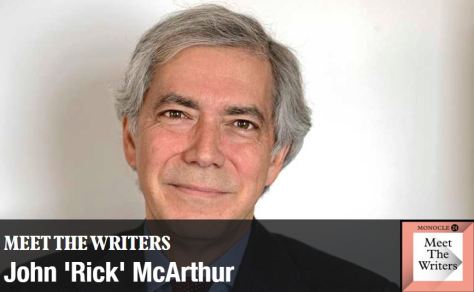
On Meet The Writers this week, Georgina Godwin talks to John ‘Rick’ MacArthur about his new book ‘Graham Greene: The Last Interview’.
Rick is the scion of a great American philanthropic family but, in his own right, a veteran journalist, author and president of ‘Harper’s Magazine’, the second oldest continuous publication in the US. We take a look at how Graham Greene traversed the space between journalism and fiction and brought truth into sharp focus through his storytelling.
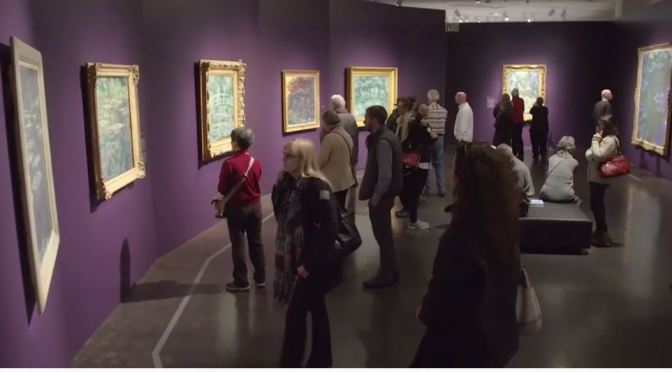
Visitors to the Denver Art Museum can currently see 120 different paintings by Claude Monet from all over the world. But how did they get there — like, literally get there?
To find out, I talked with Sarah Cucinella-McDaniel, chief registrar at the Denver Art Museum. She’s sort of like a travel agent for art — and for this exhibition she booked the itineraries for artworks from more than 70 lenders around the world: museums, as well as private collectors. (One of her recent days started unexpectedly, around 1:45 a.m., when one of her nine Monet shipments for the day arrived at the museum hours ahead of schedule.)
We start our first episode of the new year looking at future trends in policy and research with host Joel Goldberg and several Science News writers. Jeffrey Mervis discusses upcoming policy changes, Kelly Servick gives a rundown of areas to watch in the life sciences, and Ann Gibbons talks about potential advances in ancient proteins and DNA.
In research news, host Meagan Cantwell talks with Beatriz Pinto-Goncalves, a postdoctoral researcher at the John Innes Centre, about carnivorous plant traps. Through understanding the mechanisms that create these traps, Pinto-Goncalves and colleagues elucidate what this could mean for how they emerged in the evolutionary history of plants.
The podcast team share some of their highlights from the past 12 months: A sole sensation, The make up of the far side of the Moon, Growth Mindset, ‘Manferences’ and Q&A with Nobel Prize winner John Goodenough.
In this episode:
00:33 A sole sensation
A study of people who do and don’t wear shoes looks into whether calluses make feet less sensitive. Nature Podcast: 26 June 2019; Research article: Holowka et al.; News and Views: Your sensitive sole
08:56 The make up of the far side of the Moon
Initial observations from the first lander to touch down on the far side of the Moon. Nature Podcast: 15 May 2019; Research article: Li et al.
15:43 Growth Mindset
How a one hour course could improve academic achievement. Nature Podcast: 07 August 2019; Research article: Yeager et al.
We talk to John Goodenough, who was jointly awarded the 2019 Nobel Prize in Chemistry for his role in the development of the lithium-ion battery. Podcast Extra: 09 October 2019
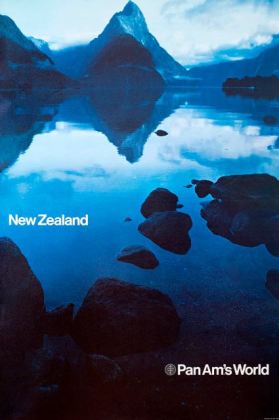
Moncocle.com spoke with Tom Geismar, founding partner of Chermayeff & Geismar, one of the top graphic design agencies in the world and the man responsible for the marketing of Pan Am in the 1950’s, 60’s and 70’s.
From the Chermayeff & Geismar website:
The most important aspect of the identity design for Pan Am was to suggest that the name of the airline be changed to “Pan Am” from the long and cumbersome “Pan American World Airways.” The Pan Am logotype in capitals and lower-case letters was also adopted with an accompanying world symbol.
In addition to the corporate identity, our firm designed comprehensive graphics for the airline, including a poster campaign and the menus for the inaugural flight of the Boeing 747.
Memory sits at the core of both literature and lives. Yet forgetting is also a part of our brains’ daily working, bringing its own human truths and a necessary path for moving forward. Lewis Hyde’s new _A Primer for Forgetting: Getting Past the Past_, provides inspiration for a deep-dive discussion of memory’s other side, with this august panel of writers and neuroscientists: poets Jane Hirshfield and Margaret Gibson, author Lewis Hyde, and UCSF neuroscientists Aimee Kao, Bruce Miller, and Virginia Sturm.
Co-hosted by Litquake, San Francisco’s Literary Festival
Jane Hirshfield’s ninth poetry collection, Ledger (Knopf), appears in 2020. Chancellor emerita of the Academy of American Poets and recently elected into the American Academy of Arts & Sciences, she works frequently at the intersection of poetry and science. Her work appears in The New Yorker, Atlantic, Poetry, et al.
Listen to Poet and Professor Margaret Gibson below:
Margaret Gibson, current Connecticut Poet Laureate, is the author of 12 books of poetry, including Not Hearing the Wood Thrush (2018) and Broken Cup (2014), centered on memory loss from Alzheimer’s disease and the gifts of sustaining presence through lament, acceptance, and love. She is Professor Emerita at the University of Connecticut.
Listen to author Lewis Hyde below:
Lewis Hyde’s recent book, A Primer for Forgetting (FSG, 2019), explores the many situations in which forgetfulness is more useful than memory—in myth, personal psychology, politics, art and spiritual life. A MacArthur Fellow, Hyde taught for many years at Kenyon College.
From a The Economist magazine article and podcast:
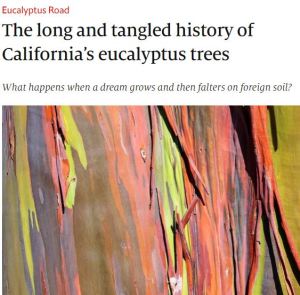
The real California, though, the California of immigrant dreams that break and get reborn, of lives as they turn out not as they are planned, is the California of the eucalyptus.
Like his friend John Muir, Lukens believed that California desperately needed more forests. Since the mid-19th century forests, and their loss, had been the principal focus of conservationist thought in America. According to Jared Farmer, who traces the history of the eucalyptus in California in “Trees in Paradise” (2013), Lukens and Muir were particularly keen on growing forests as a way to provide water—always a key to power in the state. Trees brought rain and captured fog and moisture; without forests, the men feared the state’s great cities would dry up.
“EUCALYPTUS PROMISES TO BE GREAT INDUSTRY”, announced the front page of the San Luis Obispo Daily Telegram, later claiming that what the speculators following where Lukens had led were planting “will be the largest artificial forest in the world when completed”.


 Interview of Professor Mark Post by Monocle 24 “The Bulletin with UBS” podcast aired January 6, 2020.
 David Remnick has appeared as the guest of Terry Gross on “Fresh Air” a number of times over the years, talking about Russia, Muhammad Ali, and other subjects. Hosting “Fresh Air” for nearly forty-five years, Gross is a defining voice of NPR, and is perhaps the most celebrated interviewer of our time.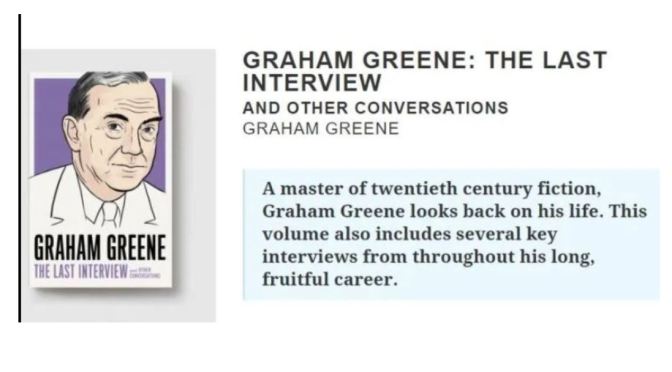
 To find out, I talked with Sarah Cucinella-McDaniel, chief registrar at the Denver Art Museum. She’s sort of like a travel agent for art — and for this exhibition she booked the itineraries for artworks from more than 70 lenders around the world: museums, as well as private collectors. (One of her recent days started unexpectedly, around 1:45 a.m., when one of her nine Monet shipments for the day arrived at the museum hours ahead of schedule.)
 We start our first episode of the new year looking at
 The podcast team share some of their highlights from the past 12 months: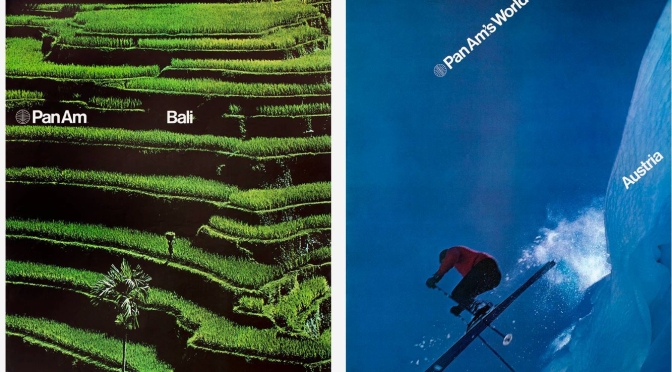
 Moncocle.com spoke with Tom Geismar, founding partner of Chermayeff & Geismar, one of the top graphic design agencies in the world and the man responsible for the marketing of Pan Am in the 1950’s, 60’s and 70’s.
 The most important aspect of the identity design for Pan Am was to suggest that the name of the airline be changed to “Pan Am” from the long and cumbersome “Pan American World Airways.” The Pan Am logotype in capitals and lower-case letters was also adopted with an accompanying world symbol.


 The real California, though, the California of immigrant dreams that break and get reborn, of lives as they turn out not as they are planned, is the California of the eucalyptus.
 Like his friend John Muir, Lukens believed that California desperately needed more forests. Since the mid-19th century forests, and their loss, had been the principal focus of conservationist thought in America. According to Jared Farmer, who traces the history of the eucalyptus in California in “Trees in Paradise” (2013), Lukens and Muir were particularly keen on growing forests as a way to provide water—always a key to power in the state. Trees brought rain and captured fog and moisture; without forests, the men feared the state’s great cities would dry up.
 Boomers Daily