Airlines were soaring towards record travel numbers at the start of this year. Then, COVID-19 hit like a lightning bolt.
The average number of passengers on a domestic flight is now about 17. That’s about a single passenger per row. And American taxpayers gave U.S. airlines a $50 billion bailout to help pull the industry out of a financial nose-dive. Will that be enough?
And what will the future of air travel look like in a post-pandemic world?
A selection of three essential articles read aloud from the latest issue of The Economist. This week, the dangerous gap between Wall Street and Main Street in America, (10:22) high-speed science—new research on the coronavirus is being released in a torrent. (21:00) And, casual sex is out, companionship is in.
British author, playwright and translator Michael Frayn is best known for his farcical comedy ‘Noises Off’ and ‘Copenhagen’, which details a 1941 meeting between Niels Bohr and Werner Heisenberg.
He is also a translator of Russian and has written several English translations of Chekhov. He spoke to us about his prolific career and his latest book, ‘Magic Mobile’.
With the whole world at the touch of your finger – why ever leave the imaginary realm of your mobile phone? This book of short comedic vignettes might give you a reason ―Magic Mobile is the latest offering of comic genius from Michael Frayn, award-winning author of the plays Noises Off and Copenhagen and novels The Tin Men, Towards the End of the Morning, and Headlong.
A conversation with the acclaimed poet and New Yorker writer Cynthia Zarin that transports us to two of her favorite cities, Venice and Rome, in a celebration of Italy as the country begins to loosen the longest coronavirus-related lockdown in Europe. The episode features evocative readings from her forthcoming book,Two Cities, which captures the meditative yet constantly surprising nature of travel from a deeply personal point of view.
From acclaimed poet and New Yorker writer Cynthia Zarin comes a deeply personal meditation on two cities, Venice and Rome—each a work of art, both a monument to the past—and on how love and loss shape places and spaces.
Here we encounter a writer deeply engaged with narrative in situ—a traveler moving through beloved streets, sometimes accompanied, sometimes solo. With her, we see, anew, the Venice Biennale, the Lagoon, and San Michele, the island of the dead; the Piazza di Spagna, the Tiber, the view from the Gianicolo; the pigeons at San Marco and the parrots in the Doria Pamphili. As a poet first and foremost, Zarin’s attention to the smallest details, the loveliest gesture, brings Venice and Rome vividly to life for the reader.
The sixteenth book in the expanding, renowned ekphrasis series, Two Cities creates space for these two historic cities to become characters themselves, their relationship to the writer as real as any love affair.
ekphrasis
Dedicated to publishing rare, out-of-print, and newly commissioned texts as accessible paperback volumes the ekphrasis series is part of David Zwirner Books’s ongoing effort to publish new and surprising pieces of writing on visual culture.
Cynthia Zarin
Cynthia Zarin is the author of five books of poetry, most recently, Orbit (2017), as well as five books for children and a collection of essays, An Enlarged Heart: A Personal History (2013). Her honors and awards include a Guggenheim Fellowship for Literature, the Ingram Merrill Award, and the Los Angeles Times Book Prize for Poetry. A longtime contributor to The New Yorker, Zarin teaches at Yale University.
Monocle 24 checks in on Switzerland’s plans to further ease coronavirus restrictions and ask whether the country is setting an example that others should follow.
Plus: the weekend’s newspapers and top stories. From Milan: Salone highlights, interviews and a daily running guide.
Rick Steves is a travel evangelist, always in motion, traversing faraway places and inspiring others to do the same. So when the world shuts down, and Rick Steves can no longer travel, then who is Rick Steves?
Sam Anderson, a writer for The Times Magazine, profiled the travel guru last year. Today, Sam asks Rick how he’s been expanding his horizons from home. Dreaming of travel, we learn, is nearly as sweet as the real thing.
Staff Writer Jon Cohen joins host Sarah Crespi to talk about using monoclonal antibodies to treat or prevent infection by SARS-CoV-2. Many companies and researchers are rushing to design and test this type of treatment, which proved effective in combating Ebola last year.
See all of our News coverage of the pandemic here, and all of our Research and Editorials here. And Karen Holl, a professor of environmental studies at the University of California, Santa Cruz, joins Sarah to discuss the proper planning of tree-planting campaigns. It turns out that just putting a tree in the ground is not enough to stop climate change and reforest the planet.
This week, a new way to study elusive subatomic particles – pions, and the story of Galileo remains relevant in a time of modern science denialism.
In this episode:
00:46 Probing pions
Pions are incredibly unstable and difficult-to-study subatomic particles. Now researchers have come up with a clever way to examine them – by sticking them into helium atoms. Research Article: Hori et al.
A new biography of Galileo Galilei examines some of the myths about his life and draws parallels with problems facing scientists today. Books and Arts: Galileo’s story is always relevant
In this two-part series, six US museum directors discuss the pandemic and its repercussions for their institutions. These candid, insightful conversations address wide-ranging topics, from the logistical challenges of when to close and how to reopen to philosophical exchanges about the role of museums in society.
This first episode features Max Hollein of The Metropolitan Museum of Art in New York, Kaywin Feldman of the National Gallery of Art in Washington, DC, and James Rondeau of the Art Institute of Chicago.
This second episode features Matthew Teitelbaum of the Museum of Fine Arts, Boston, Ann Philbin of the Hammer Museum in Los Angeles, and Timothy Potts of the J. Paul Getty Museum.
The latest episode of the Octavian Report – Rostrum coronavirus crisis podcast features Wayne Rebhorn. The latest episode of our coronavirus crisis podcast features Wayne Rebhorn of the University of Texas at Austin. Wayne is the author of an acclaimed translation of Giovanni Boccaccio’s Decameron, perhaps the paradigmatic work of pandemic literature.
The Decameron is set among a group of witty, earthy social isolators who have fled the plague ravaging Florence. We spoke with Wayne about Boccaccio and his most famous work, the conditions that helped birth it, and what we can learn from them in our current situation.

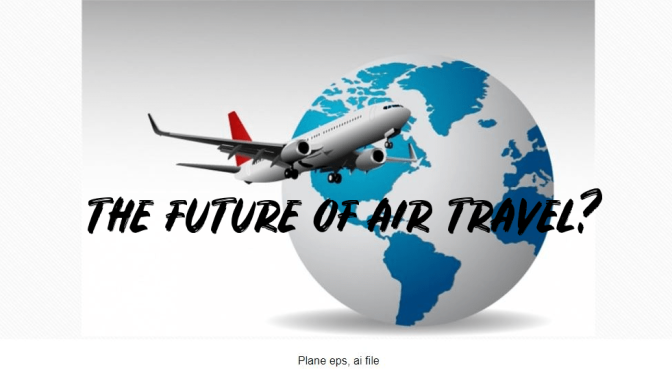
 Airlines were soaring towards record travel numbers at the start of this year. Then, COVID-19 hit like a lightning bolt.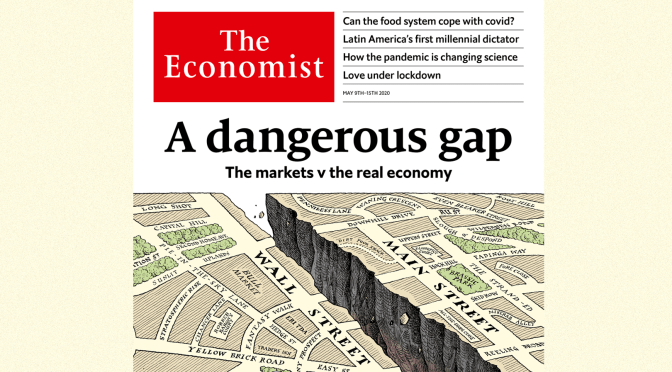
 A selection of three essential articles read aloud from the latest issue of The Economist. This week, the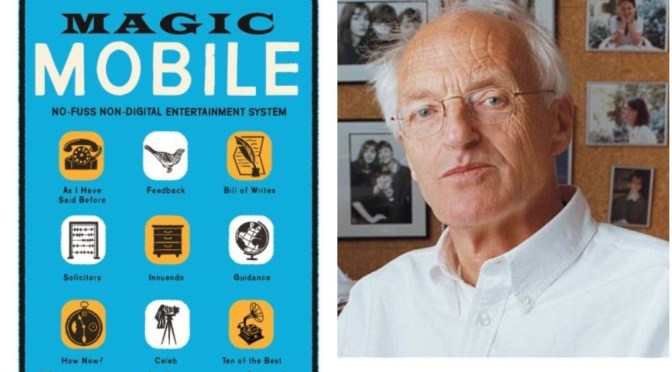
 British author, playwright and translator Michael Frayn is best known for his farcical comedy ‘Noises Off’ and ‘Copenhagen’, which details a 1941 meeting between Niels Bohr and Werner Heisenberg.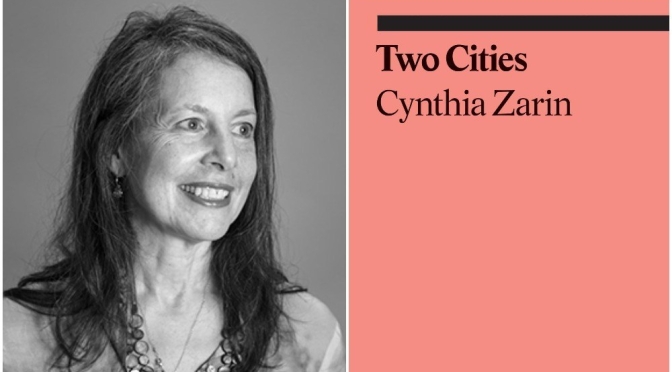
 A conversation with the acclaimed poet and New Yorker writer Cynthia Zarin that transports us to two of her favorite cities, Venice and Rome, in a celebration of Italy as the country begins to loosen the longest coronavirus-related lockdown in Europe. The episode features evocative readings from her forthcoming book,Two Cities, which captures the meditative yet constantly surprising nature of travel from a deeply personal point of view.

 Monocle 24 checks in on Switzerland’s plans to further ease coronavirus restrictions and ask whether the country is setting an example that others should follow.
 Rick Steves is a travel evangelist, always in motion, traversing faraway places and inspiring others to do the same. So when the world shuts down, and Rick Steves can no longer travel, then who is Rick Steves?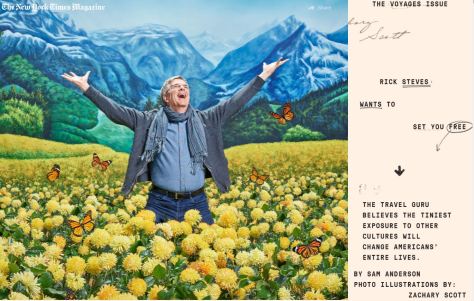
 Staff Writer Jon Cohen joins host Sarah Crespi to talk about using monoclonal antibodies to treat or prevent infection by SARS-CoV-2. Many companies and researchers are rushing to design and test this type of treatment, which proved effective in combating Ebola last year.
 This week, a new way to study elusive subatomic particles – pions, and the story of Galileo remains relevant in a time of modern science denialism.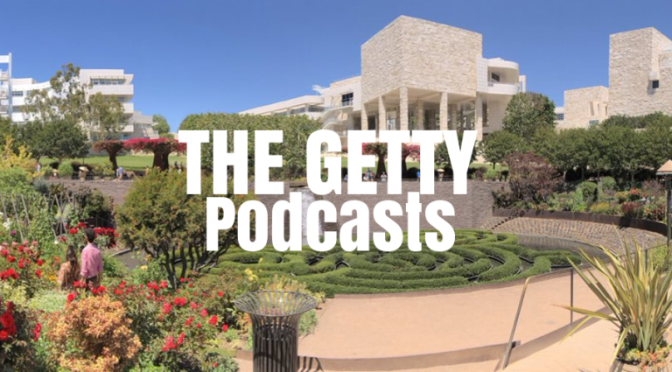
 In this two-part series, six US museum directors discuss the pandemic and its repercussions for their institutions. These candid, insightful conversations address wide-ranging topics, from the logistical challenges of when to close and how to reopen to philosophical exchanges about the role of museums in society.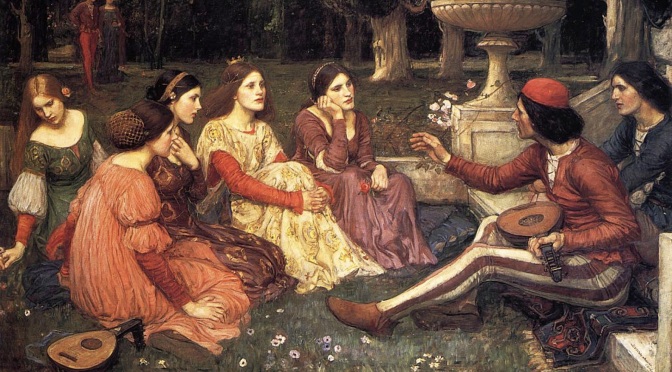
 Boomers Daily