The U.S. is holding the general election during a pandemic. Many voters are eager to vote by mail, while others remain wary of mail-in ballots. Just about everyone longs for a faster, more secure method to cast their vote without exposing themselves to SARS CoV 2, the virus that causes Covid-19.
Many wonder why, if we do everything else on our phones, including banking, we can’t vote with them. Some communities already tried blockchain assisted mobile voting but with mixed results. Many academics are stridently opposed to mobile voting. This episode will consider whether new technologies can help us find a more secure way to vote.
Lobsters, treasure hunts and really low Covid-19 numbers. This 3-day getaway up the coast of southern Maine is the ideal antidote to cabin fever.
DAY 1
Wells/Kennebunkport
From wherever you start, plan to arrive in the beach town of Wells by lunchtime. Billowy fried clams and luscious lobster rolls await at Fisherman’s Catch, via exit 19. You’ll also be greeted by wooden smiling lobsters suspended from the ceiling with rolls of paper towels dangling beneath (134 Harbor Road, fishermanscatchwells.com).
DAY 2
Kennebunkport/Wells to Camden, 108 miles
Check out of your hotel and backtrack slightly on Route 1 to Wells. Among its crucial charms is Congdon’s Doughnuts, which opens at 6 a.m. Even if you’re not the type to devour doughnuts at sunrise, you’ll want to be there early or risk missing out on the fiendishly popular maple bacon fritters (1090 Post Rd., Wells, congdons.com).
DAY 3
Camden to Bar Harbor/Acadia National Park, 77 Miles
Rent mountain bikes from Maine Sport Outfitters (mainesport.com) and drive 3.6 miles to the Camden Snow Bowl Trail head at 20 Barnestown Road for easy-to-challenging trails. During October Sundays and some Saturdays, the ski lift operates 11 a.m.-2 p.m. for prime autumn leaf-viewing.
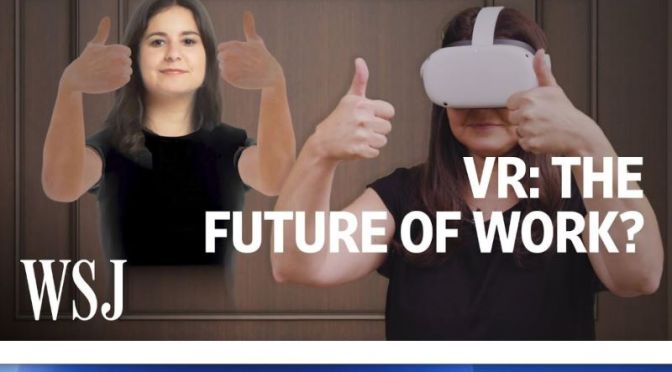
With a virtual-reality headset and a virtual meeting platform like Spatial, you can meet up and collaborate with your colleagues as if you were in a real office space. WSJ’s Joanna Stern transformed into a holographic avatar and got in a virtual elevator to test it out.
Voters will have a chance to help shape the American economy when they go to the polls in November. WSJ’s Jon Hilsenrath breaks down where President Donald Trump and Democratic presidential nominee Joe Biden stand on key economic issues.
Judge Amy Coney Barrett, President Trump’s expected Supreme Court pick, has shared — in her own words — how she thinks justices should approach hot-button social issues. WSJ’s Jason Bellini reports.
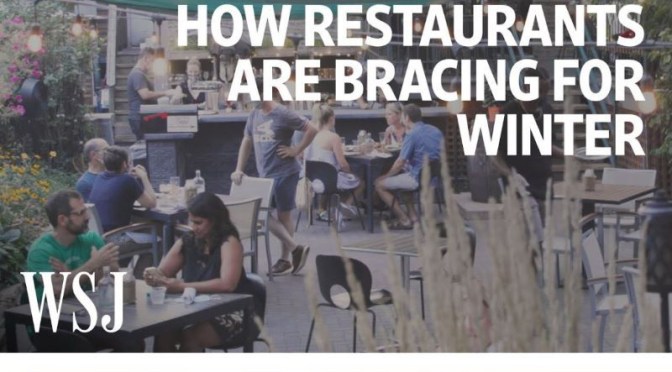
About 90% of the Duck Inn’s current revenue comes from customers enjoying socially distant table service in their outdoor seating area. Especially in places like Chicago where temperatures drop below freezing, it’s one of many restaurants grappling with how to prepare for and survive winter.
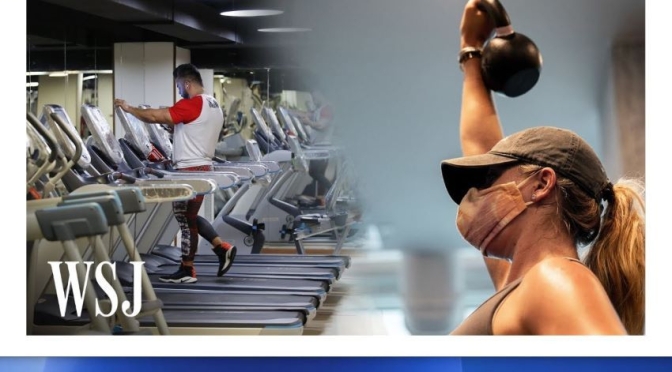
How might the coronavirus pandemic transform the fitness industry? To find out, WSJ spoke with the CEO of Planet Fitness, an independent gym owner, and an industry analyst to learn about what we can expect for the future of fitness.
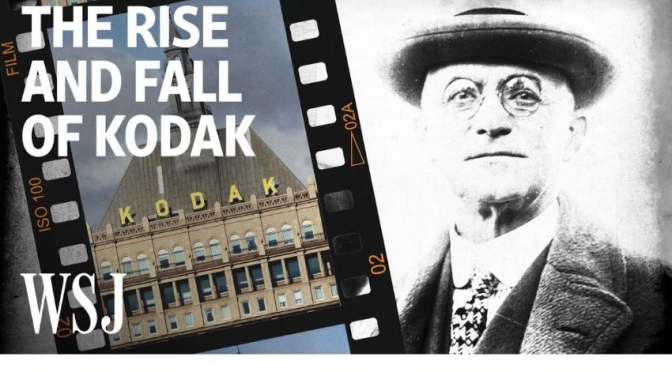
At its peak, Kodak was the early 20th century equivalent of Google or Apple, possessing a near monopoly in the film business. But those days are long gone. Here’s why the company’s glossy image failed to withstand the test of time.
Investors and big auto makers are pouring money into electric-vehicle startups in a search for the next Tesla, with the hopes of cashing in. One company is drawing more scrutiny than most. WSJ explains.
Supreme Court Justice Ruth Bader Ginsburg, a fierce advocate for women’s legal equality and the second woman to serve on the Supreme Court, has died at age 87. Watch key moments of her career and reflections by WSJ’s Gerald F. Seib and Jess Bravin.
PHOTO: Nikki Kahn/Getty Images.
News, Views and Reviews For The Intellectually Curious









 Boomers Daily