Mr. Aiona paddles with his club on Tuesday and Thursday nights and Saturday mornings for 90 minutes to two hours.They alternate between sprints and endurance paddles of up to eight miles in a six-man outrigger canoe. They also work on paddle technique and do huli drills. “Huli is Hawaiian for turn over,” he explains. “If you flip your canoe there is a very precise process for getting everyone safely and efficiently back in. We call out positions to make sure no one is underneath.
Then we work together to flip it, get all of the paddles into the canoe, bail water and get going again.”
On Sundays he paddles seven to 10 miles alone.“Flaws become more apparent as there is no one else to carry your weight,” he says. Sometimes he and another club member train together in a canoe. In winter, lights are added to the canoes for evening practices and Mr. Aiona dons boots and wetsuit -style pants.
There was something wonderful and free-wheeling about the experience. There was no air-conditioning, no seat belts, and theride was rickety, so my kids would bounce around in back. The car was built beforeinterstate highways, and it doesn’t go over40 mph. It was also among the firstgeneration of cars with an automatic transmission. The previous owner kept aninstruction manual tucked into the visor onhow to use the automatic, which is kind of funny.
Graydon Carter, the former longtime editor of Vanity Fair magazine and founder of the new digital weekly Air Mail, on his 1951 Chevrolet woodie, as told to A.J. Baime.
“After investment frauds break open, how much and how fast investors will get repaid depends in large part on the arsenal of professionals—usually lawyers or accountants—called in as trustees to pick through the wreckage.”
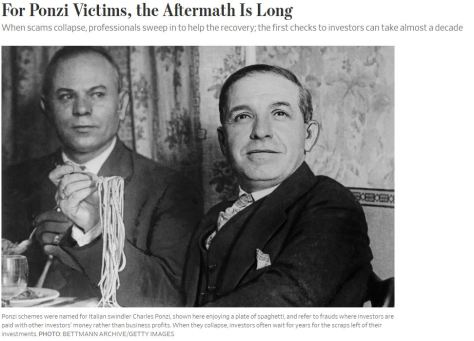
If the investment sounds to good to be true, it almost certainly is. Katy Stech Ferek of the Wall Street Journal writes a comprehensive article on the tedious and expensive work of law firms, accountants and investigators in tracking down and facilitating the repayment of funds to victims of Ponzi schemes. Click on the link below to read more in the WSJ: