The Lancet (January 2023) – For our 200th anniversary year we have identified five Spotlight subjects of particular importance. Watch as Richard Horton, Editor-in-Chief, and other Lancet Editors around the world outline these Spotlights and discuss priorities for the future of health.
This year, we draw attention to the most critical issues impacting health globally, the extraordinary people involved in tackling them, and the voices of those most impacted. For five Spotlights, we will run a programme of activities to bring these issues to life and convene the right people and resources in order to drive change in these areas.
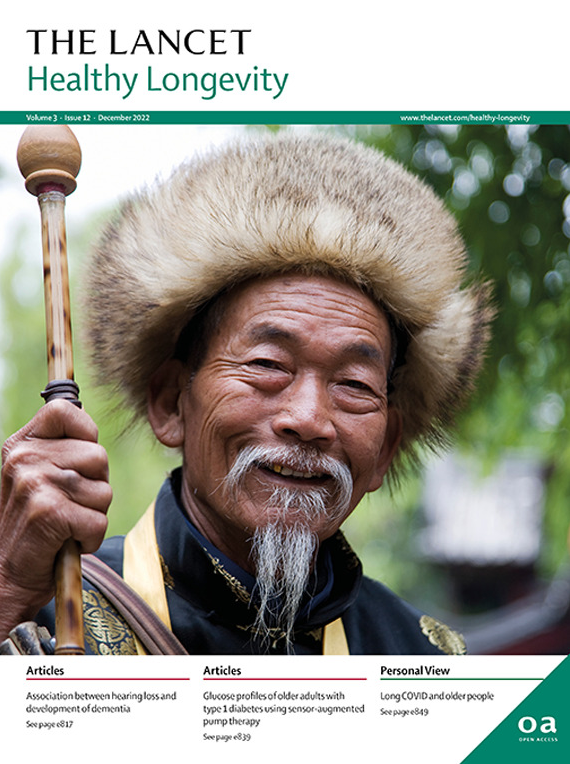
Long COVID is a poorly understood condition, with a wide spectrum of effects on multiple body systems and variable presentation in different individuals. Long COVID is of particular concern among older people (ie, aged 65 years or older), who are at greater risk than younger people of persisting symptoms associated with COVID-19. In addition, COVID-19 might trigger or exacerbate chronic conditions that occur commonly in older people, such as cardiovascular diseases, respiratory diseases, neurodegenerative conditions, and functional decline.
It is widely thought that lifespans are increasing globally. However, life expectancy has begun to stagnate in the UK, and is falling in more than 50 countries including the USA. Lifespan stagnation or decrease is a consequence of socioeconomic inequalities, lifestyle factors, and the COVID-19 pandemic. In the UK, the National Health Service spends vast sums treating chronic diseases; by some estimates, 40% of its costs go to treating preventable conditions.
The relationship of measures of age-related hearing loss such as pure-tone autiometry might not be as consistently associated with risk of dementia as previous studies have suggested. Peripheral age-related hearing loss has been posited as a midlife risk factor for dementia.
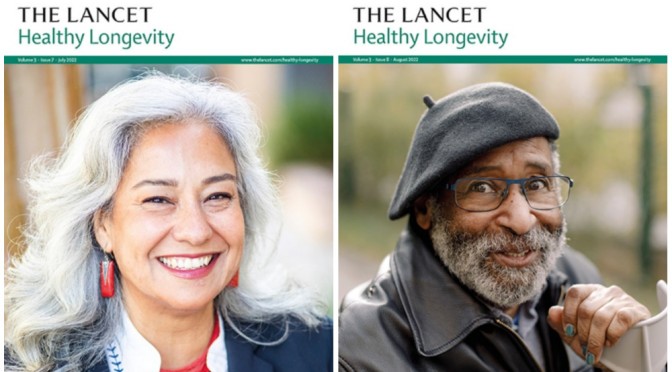
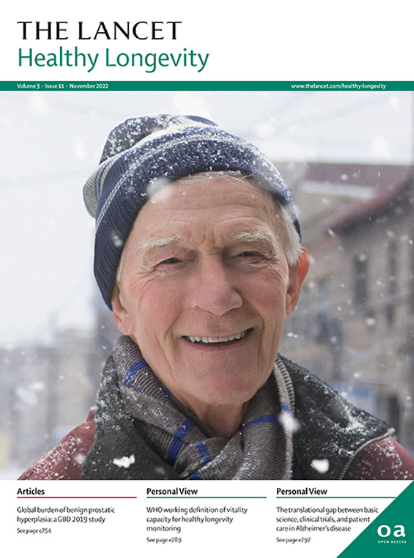
Research & review on #Alzheimers, global burden of benign prostatic hyperplasia, #WHO def of vitality capacity, IPD meta on social connection & #cognition, #oralhealth for older people & more.
The number of older people, including those living with dementia, is rising, as younger age mortality declines. However, the age-specific incidence of dementia has fallen in many countries, probably because of improvements in education, nutrition, health care, and lifestyle changes.
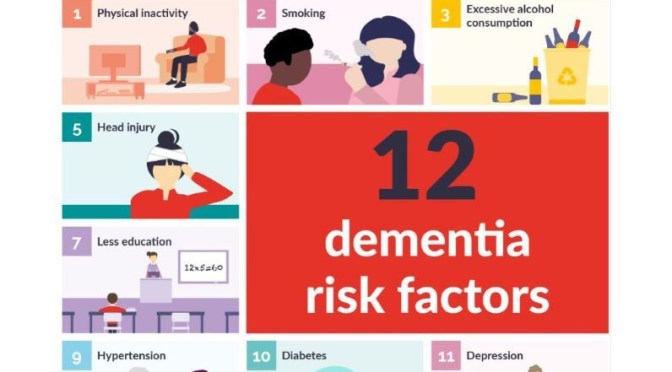
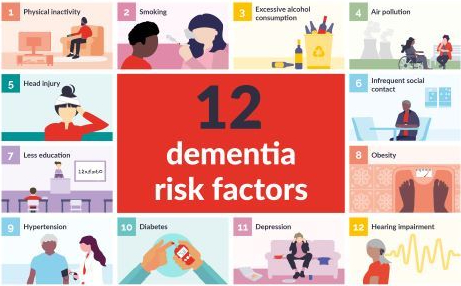
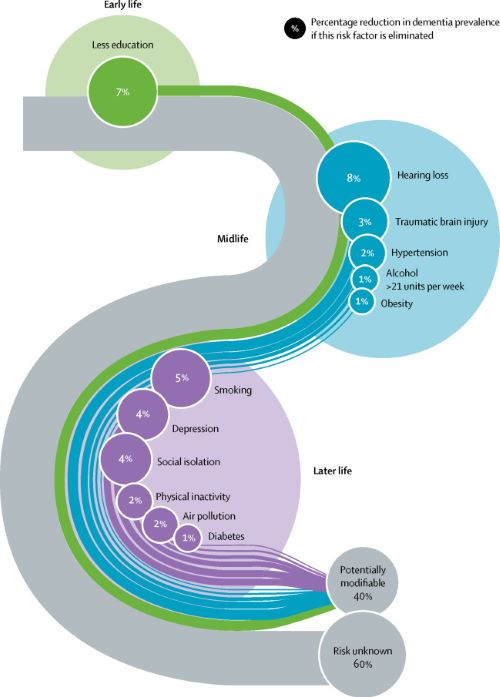
Overall, a growing body of evidence supports the nine potentially modifiable risk factors for dementia modelled by the 2017 Lancet Commission on dementia prevention, intervention, and care: less education, hypertension, hearing impairment, smoking, obesity, depression, physical inactivity, diabetes, and low social contact.
We now add three more risk factors for dementia with newer, convincing evidence. These factors are excessive alcohol consumption, traumatic brain injury, and air pollution. We have completed new reviews and meta-analyses and incorporated these into an updated 12 risk factor life-course model of dementia prevention. Together the 12 modifiable risk factors account for around 40% of worldwide dementias, which consequently could theoretically be prevented or delayed.
The potential for prevention is high and might be higher in low-income and middle-income countries (LMIC) where more dementias occur. Our new life-course model and evidence synthesis has paramount worldwide policy implications. It is never too early and never too late in the life course for dementia prevention. Early-life (younger than 45 years) risks, such as less education, affect cognitive reserve; midlife (45–65 years), and later-life (older than 65 years) risk factors influence reserve and triggering of neuropathological developments.
Culture, poverty, and inequality are key drivers of the need for change. Individuals who are most deprived need these changes the most and will derive the highest benefit.
From The Lancet Diabetes & Endocrinology (June 2020):
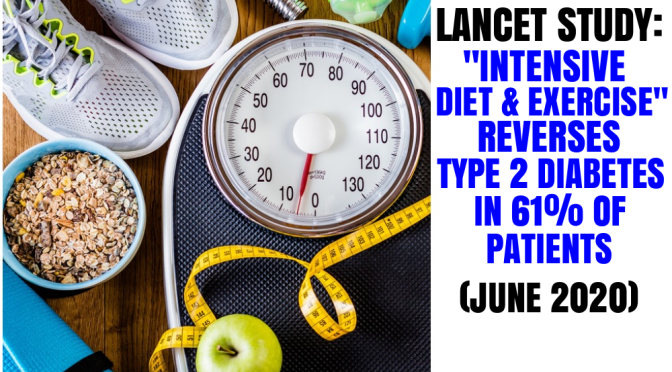
Our findings show that the intensive lifestyle intervention led to significant weight loss at 12 months, and was associated with diabetes remission in over 60% of participants and normoglycaemia in over 30% of participants. The provision of this lifestyle intervention could allow a large proportion of young individuals with early diabetes to achieve improvements in key cardiometabolic outcomes, with potential long-term benefits for health and wellbeing.
Type 2 diabetes is affecting people at an increasingly younger age, particularly in the Middle East and in north Africa. We aimed to assess whether an intensive lifestyle intervention would lead to significant weight loss and improved glycaemia in young individuals with early diabetes.
.
Between July 16, 2017, and Sept 30, 2018, we enrolled and randomly assigned 158 participants (n=79 in each group) to the study. 147 participants (70 in the intervention group and 77 in the control group) were included in the final intention-to-treat analysis population. Between baseline and 12 months, the mean bodyweight of participants in the intervention group reduced by 11·98 kg (95% CI 9·72 to 14·23) compared with 3·98 kg (2·78 to 5·18) in the control group (adjusted mean difference −6·08 kg [95% CI −8·37 to −3·79], p<0·0001). In the intervention group, 21% of participants achieved more than 15% weight loss between baseline and 12 months compared with 1% of participants in the control group (p<0·0001). Diabetes remission occurred in 61% of participants in the intervention group compared with 12% of those in the control group (odds ratio [OR] 12·03 [95% CI 5·17 to 28·03], p<0·0001). 33% of participants in the intervention group had normoglycaemia compared with 4% of participants in the control group (OR 12·07 [3·43 to 42·45], p<0·0001).
Prevention represents the most cost-effective, long-term strategy for reducing the cancer burden and associated mortality. If provided with adequate information and support to adopt a healthy lifestyle, individuals can reduce their exposure to behavioural and dietary cancer risk factors by quitting smoking, maintaining a healthy BMI, cutting down on alcohol consumption, exercising more, and eating a healthy diet rich in fruit and vegetables.
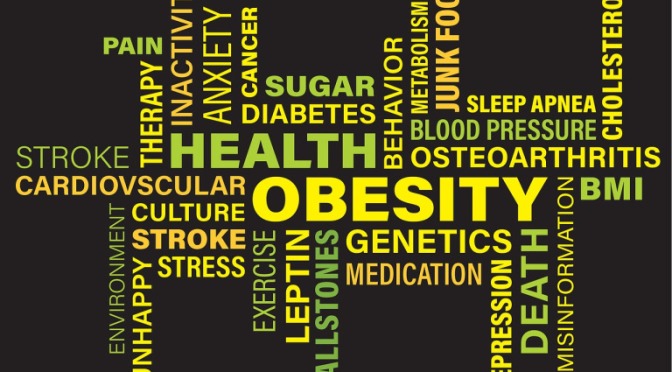
Although smoking is currently the major cause of preventable cancer cases and accounts for 22% of cancer deaths, a 2018 report from Cancer Research UK estimated that high BMI (overweight and obesity) now causes more cases of four common cancers (bowel, kidney, ovarian, and liver) in the UK than does smoking, and could overtake smoking as the biggest cause of cancer in women in the UK by 2043. According to WHO, in 2016, 1·9 billion adults around the world were overweight, of whom 650 million had obesity—triple the number in 1975. State-level projections for the USA paint an even bleaker picture going forward: by 2030, 48·9% of adults will have obesity; 24·2% of adults will have severe obesity; and severe obesity will be the most common BMI category among women, non-Hispanic black adults, and low-income adults. With such shocking statistics, the knock-on effect of the obesity epidemic for cancer prevention and control cannot be underestimated.
From a The Lancet online article (January 18, 2020):
Smartphone app-based platforms for urine testing could improve adherence to albumin creatinine ratio (ACR) testing. One study showed screening of at-risk patients almost doubled with a home urine test kit that uses a smartphone camera to easily and accurately quantify ACR from a user-performed urine dipstick. If independently validated in a large, diverse population, this low-cost strategy could change the often dim trajectory for individuals with declining kidney function.
In the outpatient setting, a Japanese team used machine learning and natural language processing to predict disease progression and need for dialysis over 6 months in patients with diabetic nephropathy. And while the increased risk of contrast-induced acute kidney injury has been long appreciated, a machine learning algorithm trained and tested on 3 million adults effectively quantified the degree of kidney injury on the basis of the volume of contrast used and individual patient-level characteristics.
Effective physicians interrogate their patients’ choice of words as well as their body language; they attend to what they leave out of their stories as well as what they put in. More than 2000 years after Hippocrates, there remains as much poetry in medicine as there is science.
WHO’s definition of health is famously “a state of complete physical, mental, and social well-being and not merely the absence of disease or infirmity”. One of the oldest medical texts we know of, The Science of Medicine attributed to Hippocrates, sets out the goal of medicine in comparable terms: “the complete removal of the distress of the sick”.
In my working life as a physician, I’ve never found the distinction between arts and sciences a particularly useful one. In the earliest ancient Greek texts, medicine is described as a techne—a word better translated as “know-how”. It conveys elements of science, art, and skill, but also of artisanal craft. The precise functions of medicine may have subtly shifted over the ages, but our need as human beings for doctors remains the same; we go to them because we wish to invoke some change in our lives, either to cure or prevent an illness or influence some unwelcome mental or bodily process. The goal of medicine is, and always has been, the relief of human suffering—the word patient, from the Latin patientem, means sufferer. And the word physician is from the Greek phusis, or nature: to be engaged in clinical work is to engage oneself with the nature of illness, the nature of recovery, the nature of humanity.
…the researchers demonstrated that the biggest drop in cognitive ability occurs at the slightest level of hearing loss — a decline from zero to the “normal” level of 25 decibels, with smaller cognitive losses occurring when hearing deficits rise from 25 to 50 decibels.
Hearing loss is now known to be the largest modifiable risk factor for developing dementia, exceeding that of smoking, high blood pressure, lack of exercise and social isolation, according to an international analysis published in The Lancet in 2017.









 Prevention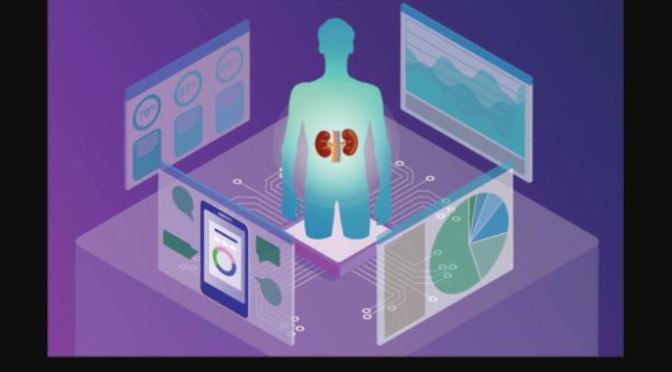
 Smartphone app-based platforms for urine testing could improve adherence to albumin creatinine ratio (ACR) testing. One study showed screening of at-risk patients almost doubled with a home urine test kit that uses a smartphone camera to easily and accurately quantify ACR from a user-performed urine dipstick. If independently validated in a large, diverse population, this low-cost strategy could change the often dim trajectory for individuals with declining kidney function.

 WHO’s definition of health is famously “a state of complete physical, mental, and social well-being and not merely the absence of disease or infirmity”. One of the oldest medical texts we know of, The Science of Medicine attributed to Hippocrates, sets out the goal of medicine in comparable terms: “the complete removal of the distress of the sick”.
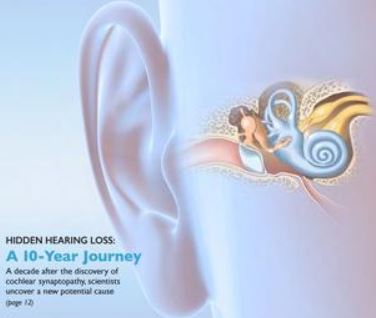 …the researchers demonstrated that the biggest drop in cognitive ability occurs at the slightest level of hearing loss — a decline from zero to the “normal” level of 25 decibels, with smaller cognitive losses occurring when hearing deficits rise from 25 to 50 decibels.
 Boomers Daily