The Globalist, April 5, 2023: Tsai Ing-wen tours the Americas and China threatens retaliation. Plus: Donald Trump hands himself in and Moncole’s editor in chief, Andrew Tuck, discusses L’Oréal’s biggest acquisition.

The Globalist, April 5, 2023: Tsai Ing-wen tours the Americas and China threatens retaliation. Plus: Donald Trump hands himself in and Moncole’s editor in chief, Andrew Tuck, discusses L’Oréal’s biggest acquisition.
The Globalist, April 4, 2023: Finland officially joins NATO. Plus Donald Trump is set to face criminal charges in court, Emmanuel Macron arrives in China to meet Xi Jingping and the latest news from the Balkans.
The Globalist, April 3, 2023: The latest from Ukraine, Donald Trump’s indictment and impending court appearance, and Antony Blinken touches down in Europe. Plus: Taiwan’s Tsai Ing-wen’s tour of Belize and Guatemala, fashion news and Parisians vote on e-scooters.
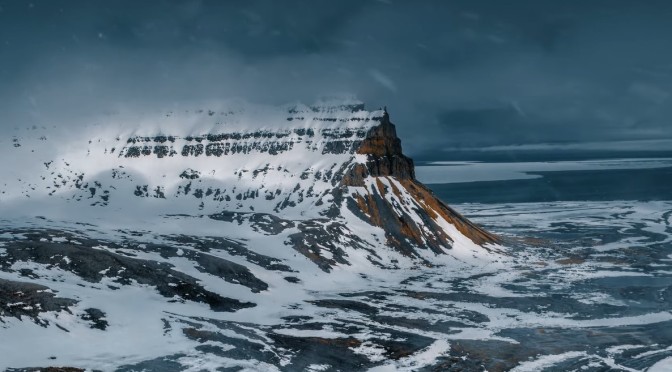
DW Documentary (April 1, 2023) – Following the rise of China’s power in Africa, are we on the verge of seeing a Chinese Arctic? Certainly, the country is seeking to expand its influence in this geopolitically important area. The US is worried, while Russia smells business.
But what are China’s plans for the region? In 2013, the “Yong Sheng” made history: It was the first Chinese cargo ship to reach Europe via the Arctic. This promising route, which Beijing soon dubbed the “Polar Silk Road,” made the “Yong Sheng” a symbol of Chinese ambitions in the far north. Increasingly self-confident, China is now expanding its sphere of influence bit by bit in the Arctic – a place of high geopolitical significance.
The country’s influence is spreading, with projects that include investments in gas resources in the Russian Arctic on the Yamal Peninsula. In January 2018, China initiated the “Polar Silk Road” project. Now, the country is pursuing a rapprochement with Iceland and Norway through businessmen. China maintains a research station on Spitsbergen and has even started to define itself publicly as a country “close to the Arctic” – a status from which China hopes to derive new rights.
The Arctic seems a long way from Beijing. But Chinese president Xi Jinping has understood how important this region is. China’s need for resources is driving Xi Jinping to negotiate with the major Arctic powers, who largely view him with suspicion. The new geopolitics of the Arctic are playing out not only in world capitals and in the media, but also on the ground: Emissaries, entrepreneurs, and mediators are traveling to the strategic region.
This group includes Chinese nationals as well as Norwegians, Icelanders, Swedes and Americans. China is expanding. After “Chinafrica,” will we now also speak of “Chinarctica”? China, it is said, has time on its side. And in the meantime it is openly dreaming of superpower status. The Americans are worried, the Europeans are hesitant and the Russians are eager for investments. But what are China’s real goals?
The Telegraph (March 29, 2023) – Following Russia’s invasion of Ukraine, Poland has been investing billions in new tanks, weaponry, cyber operations and manpower. By 2035 Poland hopes to double the size of its armed forces to 300,000 troops.
There is even talk of the country becoming a major military power in Europe. Watch The Telegraph’s Steven Edginton interview key members of the Polish military and politicians to understand why they are rearming. He also asked young Poles whether they are prepared to die for their country.
For Poland, investing in the military is no longer a luxury but a necessity. With conflict at their border (don’t forget that two Poles have already been casualties of this war, killed by a stray Ukrainian missile) Poland can no longer rely only on the United States and its Nato allies for protection.
Warsaw plans to increase military spending to 5% of its GDP, outspending its fellow European capitals relatively by a wide margin. Poland’s military expansion must be thought of within the context of the nation’s history. You don’t have to be a pensioner to remember a time when Poland was suffering under Communist rule.
Monuments to the Soviet oppressors litter cities like Warsaw, where one can wonder at Stalin’s “gift” to the Poles, the grand Palace of Culture, and despite the government’s best efforts to tear them down many statues still stand commemorating the Red Army as “liberators”.

Foreign Policy Magazine – Spring 2023
Trade and financial flows have fallen well below their peaks, and poorer countries will bear the brunt.
Not planning for the possibility of disintegration betrays a dangerous lack of imagination.
Industrial policy and subsidies are nothing new and can be useful. But shutting off from the world will have consequences.

HISTORY TODAY MAGAZINE – APRIL 2023 ISSUE

The stage has a short memory, print a long one: 400 years since its first publication, Shakespeare’s First Folio is the reason we remember him.

Americanised globalisation and the new world of Russian business in the 1990s.
In the 1990s, a version of the satirical puppet show Spitting Image arrived on Russian television. A Muscovite once told the story of his father, who took great care to record every episode on VHS.

The Guardian Weekly (March 24, 2023) – You’d be forgiven for having allowed the collapse of the tech industry lender Silicon Valley Bank, earlier this month, to pass you by. Even the news that SVB’s UK operation had been salvaged in a deal brokered by the British government might not have registered too much. But the rescue this week of Switzerland’s second-largest lender Credit Suisse had a more ominous feel to it, a sense of fiscal dominoes cascading slowly into one another.
For our big story this week, Anna Isaac and Kalyeena Makortoff report on a week that brought back anxious memories of the 2008 financial crash, while economics editor Larry Elliott argues that only the era of ultra-low interest rates that followed the previous crash has prevented a further correction happening sooner.
Chinese president Xi Jinping’s visit to Russia this week had the feel of a pivotal moment for global diplomacy. Russian affairs reporter Pjotr Sauer and senior China correspondent Amy Hawkins look at what the strengthening of the Sino-Russian alliance signifies for Moscow, Beijing and the rest of the world.
This week also saw the 20th anniversary of the US invasion of Iraq. Diplomatic editor Patrick Wintour reflects on a botched intervention that still haunts global politics to this day, while on the Opinion pages Randeep Ramesh argues that the US foreign policy debacle still serves to underline what he describes as “the capricious and self-centred nature of American global power”.
Louisiana Channel (March 21, 2023) – Meet the award-winning Danish photographer Jan Grarup, who has covered the Ukraine war from its beginning and has spent months on the frontline.
“The pictures are a documentation of the brutality within the conflict itself. It’s about civilians and civilian casualties because they are the ones hit the hardest. “
Grarup is convinced that the ongoing war in Ukraine will mark the beginning of a new area that will isolate Russia from the Western World for generations to come: “I have been covering wars and conflicts for the last 35 years – just about every conflict you can imagine. In many ways, the brutality of the genocide in Rwanda in 1994 is second to none. But the war in Ukraine comes really, really close. It’s basically a country which is desiring democracy and freedom and independence – and because of that, its people are killed.”
Grarups also reflects upon his feelings covering the war, such as his general discomfort with silence as “you can be sure that something is about to happen.” On the other hand, he sees the necessity to document the war for future generations and the possible prosecution of war crimes. “What I like about black-and-white photography is its timelessness. We think in our part of the world that the world has changed, developed, and moved far away from what we have seen historically.
But the fact is: It hasn’t. It’s still the same atrocities. It’s still the same victims.” Jan Grarup was born in Denmark in 1968 and is today regarded as one of the leading and most experienced war photographers globally. Already in 1991, the year of his graduation, he won the prestigious Danish Press Photographer of the Year Award, a prize he would receive on several further occasions. In 1993, he moved to Berlin for a year, working as a freelance photographer for Danish newspapers and magazines. Afterwards, Grarup covered many wars and conflicts worldwide, including the Gulf War, the Rwandan genocide, the siege of Sarajevo and the Palestinian uprising against Israel in 2000.
His coverage of the conflict between Palestine and Israel led to two series: The Boys of Ramallah, which earned him the Pictures of the Year International World Understanding Award in 2002, followed by The Boys from Hebron. His book, Shadowland (2006), presents his work during the 12 years he spent in Kashmir, Sierra Leone, Chechnya, Rwanda, Kosovo, Slovakia, Ramallah, Hebron, Iraq, Iran, and Darfur. In the words of Foto8’s review, it is “intensely personal, deeply felt, and immaculately composed.”
His second book, Darfur: A Silent Genocide, was published in 2009. In 2017 he released the prizewinning bestseller And Then There Was Silence. He is currently working on a follow-up called While We Bleed with Danish author Adam Holm about the war in Ukraine. Jan Grarup has won numerous prizes for his dedicated work, for example eight World Press Awards, the Pictures of the Year International World Understanding Award, the UNICEF Children Photo of the Year Award, Visa d’Or, Leica Oskar Barnack Award, to mention a few of the more prestigious ones. Jan Grarup was interviewed by Marc-Christoph Wagner in Copenhagen, Denmark.
The interview took place at the Danish War Museum in March 2023 on the occasion of Grarup’s exhibition One Year With War. Camera: Jakob Solbakken Edited by: Helle Pagter Produced by: Marc-Christoph Wagner
March 14, 2023: Following the collapse of Silicon Valley Bank and Signature Bank, is Joe Biden facing a crisis of confidence in US financial institutions?
Plus: political turbulence in Moldova, Nicaragua’s decision to suspend relations with the Vatican and a special interview with Estonia’s former president Toomas Hendrik Ilves.