

LITERARY REVIEW —- FEBRUARY 2026


THE NEW YORKER MAGAZINE: The latest issue features Nathan Heller on Gavin Newsom, Joshua Yaffa on Russia’s single-use agents, Michael Schulman on A.I. in film, and more.
California’s governor has been touted as the Democrats’ best shot in 2028. But first he’ll need to convince voters that he’s not just a slick establishment politician. By Nathan Heller
For decades, ICE and Border Patrol have operated with fewer constraints than typical law-enforcement agencies. By Jonathan Blitzer
How Russian military intelligence is recruiting young people online to carry out espionage, arson, and other attacks across the Continent. By Joshua Yaffa
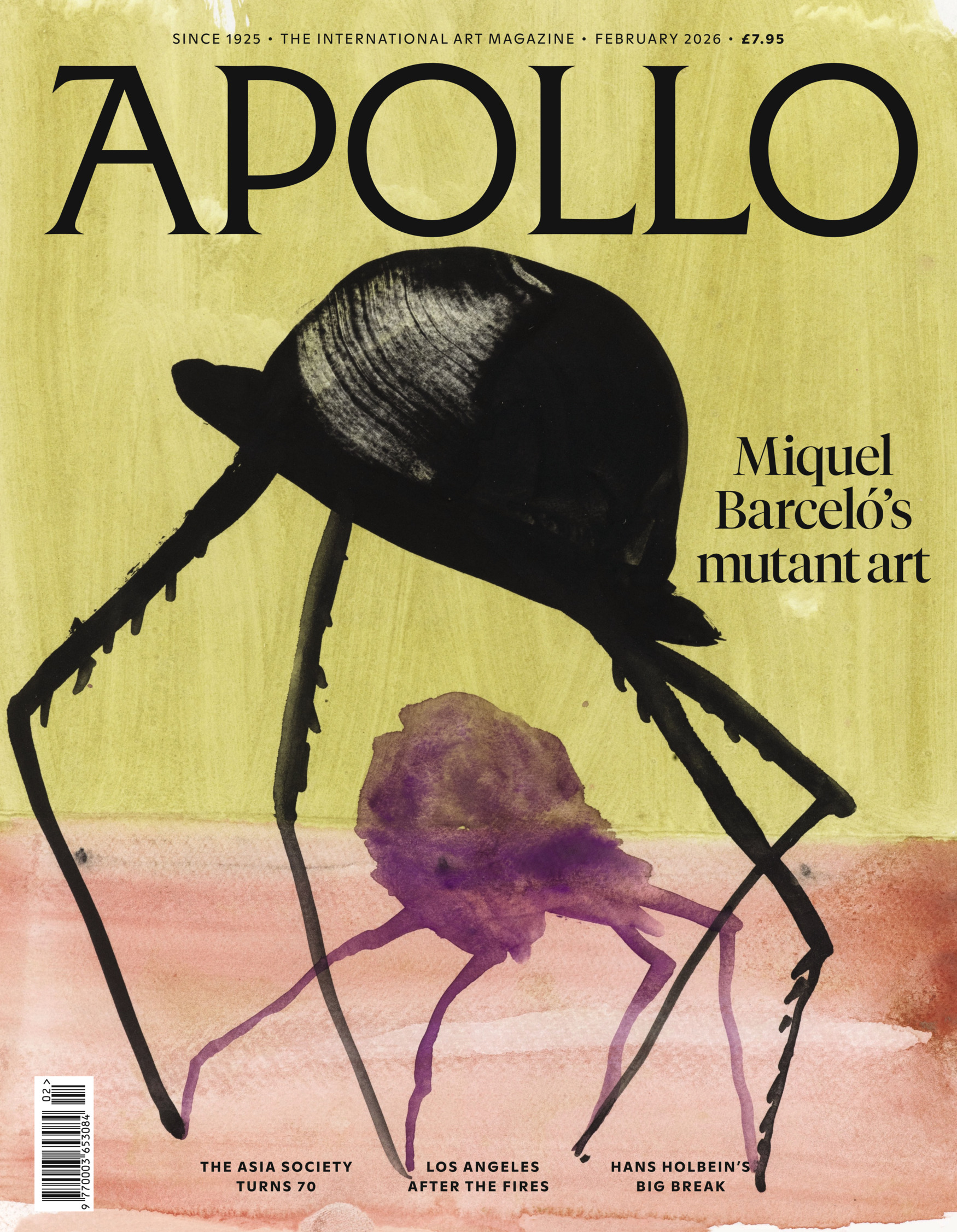
APOLLO MAGAZINE: The latest issue features ‘Miquel Barceló’s Mutant Art’….
While the architect’s approach to restoring France’s medieval buildings remains controversial, his many and varied talents are still utterly awe-inspiring by Tim Smith-Laing


Literary Review of Canada The latest issue features:
Navigating this Age of Appetite by Krzysztof Pelc
Here’s a question I often bat around with graduate students in my International Political Economy seminar: In book 12 of the Odyssey, how do the shipmates know which Ulysses to trust?
You know the story. Ulysses and his crew have been on Circe’s island for a year. They’re finally about to depart when the goddess takes Ulysses aside and warns him of the dangers that await them. The first of these is the “piercing songs” of the Sirens. “So listen,” she says, “I will give you good instructions; another god will make sure you remember.”
Circe tells Ulysses to put wax in his sailors’ ears but that he can listen to the Sirens if he wants to — as long as his shipmates bind him “hand and foot” to the mast: “So bound, you can enjoy the Sirens’ song. But if you beg your men to set you free, they have to tie you down with firmer knots.”
As their ship approaches the Sirens’ sharp rocks, the wind dies down, they pull the sails, and they begin to row. As predicted, Ulysses yells out to his men to set him free. He is still their captain. But instead of obeying his orders, Eurylochus and Perimedes stand up and “tie him down with firmer knots.” How, I ask my students, do they know to trust the first Ulysses over the second? How is it that as readers, we never question their choice?
Form follows Ford by Kelvin Browne
Albert Kahn has been called “the father of industrial architecture” and “the architect of Detroit.” His firm was certainly prolific: it was responsible for the Ford Motor Company of Canada factory in Toronto, near a laneway that bears his name, and the General Motors assembly plant in Regina, along with nearly 900 buildings in Motor City alone. Kahn’s oeuvre encompassed offices, grand homes for his industrialist clients, and libraries and fraternity houses at the University of Michigan, in Ann Arbor, not to mention a post office, a synagogue, and multiple hospitals and skyscrapers. Many of Kahn’s buildings reflect a pastiche of styles that might be considered a precursor of a postmodern eclectic. Yet this prolific architect is relatively unknown today, especially outside of Michigan.
The MIT Press / 488 pages, hardcover
The mood on the Sea Adventurer’s bridge was grim. “She’s only making eight knots,” said our expedition leader. “We need to hit at least fourteen to keep to our itinerary.” We were four days into a two-week sailing and anchored off Ilulissat, near a UNESCO World Heritage site nestled into the crenellated western coast of Greenland.
Earlier that day, I had found myself at the helm of a Zodiac, manoeuvring the rubberized craft through thick fog, near-freezing water, and growlers. The ten high-paying passengers under my care likely had no idea that this was my first trip with the tour operator or my first time north of the Arctic Circle.


The American Prospect: The latest issue features ‘The Business of Sports’…
The mastermind of the Trump regime’s descent into gangsterism is arguably more dangerous than the Orange One himself. by Maureen Tkacik
If they are not careful, Democrats could get outmaneuvered on the details of trading funding for reform. by Robert Kutt
But how long can Elon Musk keep running on air? Potentially quite a long time.
To understand the brutality in Minneapolis, look to the agency that has a history of fomenting it.

THE NEW YORK TIMES MAGAZINE: The 2.1.26 Issue features Emily Bazelon and Rachel Poser on what’s going on inside the F.B.I.; Taffy Brodesser-Akner on “Operation Mincemeat”; Michael Steinberger on the human rights lawyer Philippe Sands; and more.
Spurred by her past struggles with dissociative identity disorder, she has devoted her professional life to studying it.
The state is in a standoff with the federal government over who has the power to investigate the killing of protesters. It’s not a fair fight. By Emily Bazelon
With 300,000 employees gone and collective-bargaining rights eliminated, the administration has hobbled organized labor. Did it also start a movement? By Dan Kaufman

SCIENCE MAGAZINE: The latest issue features ‘Gone Fishing’ – Social cues inform foraging.
Beneath the South Pole, two seismometers will probe the planet’s interior and monitor movement of Antarctic ice
After Maduro, Venezuelan researchers hope to rebuild the industry that supported the country’s scientific workforce
First-time posters to arXiv now need an endorsement from an established author
Effect could lead to MRI-like diagnostics and switchable, remote-controlled drugs

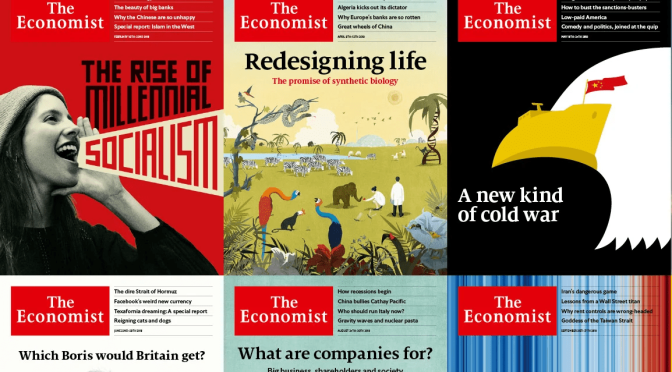
THE ECONOMIST MAGAZINE: The latest issue features ‘The ICE test‘
Is America’s president building his own paramilitary militia?
Installing his yes-men to lead the army could be dangerous for Taiwan
But neither Japan nor America should meddle with exchange rates
It’s a hub, not a hellhole. Labour should give it more love
As Nigeria and South Africa revive, the continent’s growth may outpace Asia’s in 2026
There is time to adapt. Use it wisely
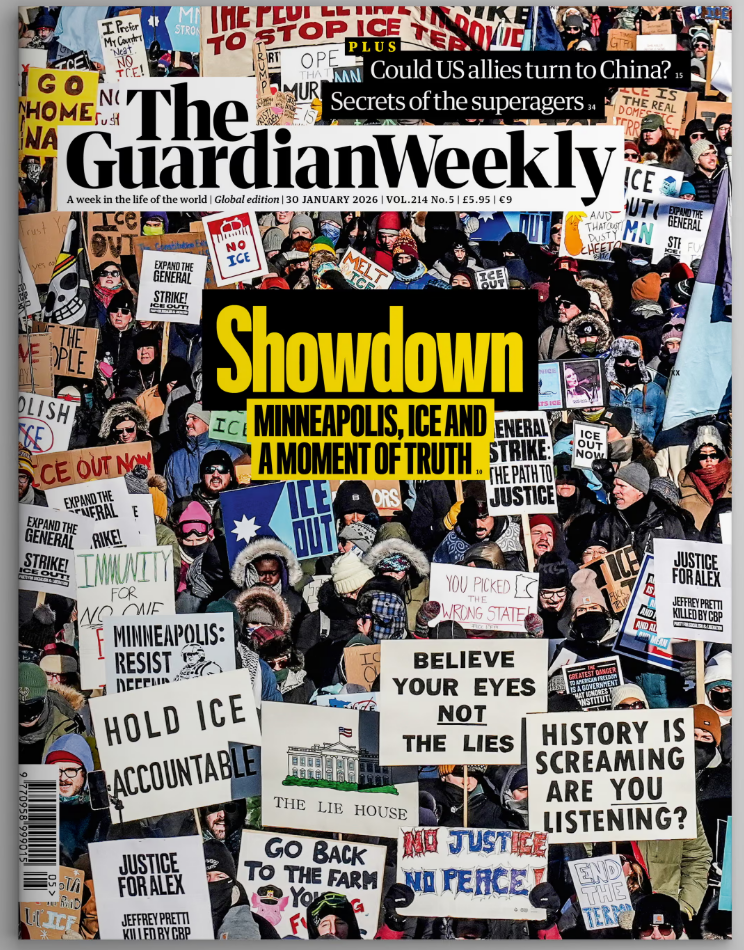
THE GUARDIAN WEEKLY: The latest issue features ‘Showdown’ – Minneapolis, Ice and A Moment of Truth.
Is the worm turning against Trump? Last week saw a concerted pushback against the US president by western allies over Greenland. This week, it is on the domestic front where the Trump administration seems to be buckling – this time under intense criticism after the killing of another American citizen by federal agents in Minneapolis.
The massive winter storm that swept across North America last weekend could not obscure from the nation video footage of an ICE agent shooting dead Alex Pretti, an intensive care nurse and father of three who was seemingly rushing to protect a woman as she was pepper-sprayed by Border Patrol personnel.
As our Washington bureau chief David Smith writes in this week’s big story, the events were seen by many as clear evidence of fascistic overreach and a potential moment of reckoning for Trump in the US. A wave of condemnation from politicians across the political spectrum led to a swift softening of tone from the White House, though not before leading administration figures had wrongly tried to pin the blame on the victim.
From Minneapolis, Rachel Leingang reports on the sense of shock and fury in the city, while in a stark commentary, Francine Prose voices her fears that the US may be on the brink of an authoritarian takeover.
Spotlight | Are Trump’s tantrums pushing America’s allies closer to China?
After a week of diplomatic turmoil, some western nations are turning to a country that many in Washington see as an existential threat. Amy Hawkins reports
Science | Fly me to the moon, again
Nasa is readying its most powerful Artemis II rocket for a new, 1.1 million km lunar circumnavigation flight – and lift-off could come as soon as next week. Science editor Ian Sample sets the scene
Feature | Secrets of the superagers
Why do some people age better than others? Five extraordinary individuals – who scientists are studying – share their tips with Isabelle Aron
Opinion | It’s now clear. Labour needs a new leader – and quickly
UK prime minister Keir Starmer’s dismal decision to block likely leadership challenger Andy Burnham from standing in a byelection has bought him time, but it won’t change his fate, says Polly Toynbee
Culture | Has Netflix killed our attention spans?
Matt Damon has got it right, argues Stuart Heritage: the streaming giant knows we all just watch TV with one hand gripping our smartphones, which is why we need plotlines explaining to us over and over again

THE NEW YORKER MAGAZINE: The latest issue features Jason Zengerle on Tucker Carlson, Joshua Yaffa on Trump and Greenland, Hermione Hoby on David Foster Wallace, and more.
The President caused a crisis in NATO and deepened European distrust toward the U.S. to end up with basically the same set of options that existed months ago. By Joshua Yaffa
Republicans have become adept at creating broad coalitions in which supporting Trump is the only requirement. Democrats get tied up with litmus tests.
A shocking act of political violence exposed the cult’s deep influence. By E. Tammy Kim





 Boomers Daily