
To read full report: https://ec.europa.eu/health/sites/health/files/state/docs/2019_companion_en.pdf


To read full report: https://ec.europa.eu/health/sites/health/files/state/docs/2019_companion_en.pdf
BOTANY AT THE BAR
From a Yanko Design online review:
Designed to universally retrofit onto most curtain rods, the SwitchBot comes with two hooks that hold it in place and a wheel that moves the bot left or right. Place the SwitchBot between the first and second loops of your curtain or blind, and the bot can now, on command, run up and down the curtain rod, maneuvering your curtains open or closed. SwitchBot runs on an app, but even supports voice commands via your phone or smart speaker, effectively allowing you to have your own “Let there be light” moment by commanding the curtains to open at will. IFTTT and shortcuts support even lets you sync SwitchBot with your alarm, or with the time of the day, thanks to the bot’s in-built light sensor.

To read more: https://www.yankodesign.com/2019/11/29/what-if-you-could-make-your-curtains-open-with-your-voice-or-better-with-your-alarm/
From Wikipedia:
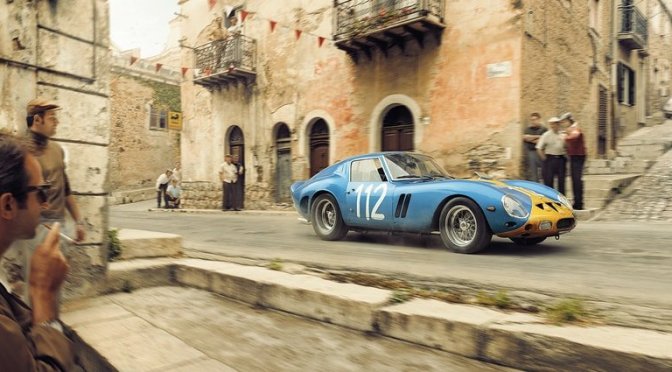
In 1961 a new 2.6-litre (2,553 cc (155.8 cu in)) straight-six ‘Ruddspeed’ option was available, adapted by Ken Rudd from the unit used in the Ford Zephyr. It used three Weber or SU carburettors and either a ‘Mays’ or an iron cast head. This setup boosted the car’s performance further, with some versions tuned to 170 bhp (127 kW), providing a top speed of 130 mph (209 km/h) and 0–60 mph (0–100 km/h) in 8.1 seconds. However, it was not long before Carroll Shelby drew AC’s attention to the Cobra, so only 37 of the 2.6 models were made. These Ford engined models had a smaller grille which was carried over to the Cobra.

AC came back to the market after the Second World War with the 2-Litre range of cars in 1947, but it was with the Ace sports car of 1953 that the company really made its reputation in the post war years. Casting around for a replacement for the ageing 2-Litre, AC took up a design by John Tojeiro that used a light ladder type tubular frame, all independent transverse leaf spring suspension, and an open two seater alloy body made using English wheeling machines, possibly inspired by the Ferrari Barchetta of the day.
Photos from Classic Driver website: https://www.classicdriver.com/en/car/ac/ace/1961/703263?utm_medium=email&utm_campaign=Classic%20Driver%20Daily%203342019&utm_content=Classic%20Driver%20Daily%203342019+CID_08b403976196024a8806d6851989b77c&utm_source=newsletter
From a Wall Street Journal online article:

Courmayeur, both a town and a ski resort, boasts nearly as many ambitious, full-service restaurants as it does lifts on the slopes. Even on bright sunny days with powdery trails, the big question tends to be, “What’s for lunch?” The village, nestled in a snug valley on the south slope (the Italian side) of Mont Blanc, Europe’s highest peak, is a typically sleepy mountain town for much of the year with around 3,000 full-time residents. But when the ski season kicks into high gear, its restaurants, bars and cafes all come roaring to life. It’s a favorite winter escape for residents of Italy’s fashion capital, Milan, a straight two-hour shot up the highway.
For the urbane crowds in from the city on winter weekends, Courmayeur is as much an epicurean as snow-sports destination, known for its mountain cheeses, wild game and cured meats, and for its increasingly serious restaurants. Top tables on and off the slopes can book up weeks in advance. The region’s minerally white and earthy red wines come from some of the highest altitude vineyards in Europe. The sparkling Cuvée des Guides is made 7,000 feet above sea level on the slopes of Mont Blanc, with a tasting room atop one of the state-of-the-art Skyway Monte Bianco cable car stations.
To read more: https://www.wsj.com/articles/an-italian-ski-town-where-the-food-rivals-the-views-11574791692
From a Classic Driver online article:
‘CUT 7’ was campaigned extensively throughout the 1962 season. With victories at Mallory Park, Silverstone, Crystal Palace and Snetterton, Protheroe had his eyes set on securing the Autosport National Championship for Production Sports Cars, and with just one retirement in 10 outings, he won the Over 3-litre class.
Former RAF pilot Dick Protheroe was no stranger to the Jaguar brand. Stationed in Egypt in 1952, Protheroe acquired his first Jaguar, an aluminium bodied XK120 which he modified and campaigned before returning to England in 1953.

Chassis Number ‘860004’, was the fourth right-hand drive fixed-head E-type produced by Jaguar at the famous Brown’s Lane factory in Coventry. Painted in Opalescent Gunmetal Grey with dark blue interior trim, it was aptly delivered to Protheroe on 13thSeptember 1961 by Jaguar Dealer, Sturgess of Leicester. Robin Sturgess had a close affinity to the marque having raced XK’s, C-type, D-type and E-types successfully for many years.
To read more: https://www.classicdriver.com/en/car/jaguar/e-type-si/1961/716497
From an Artsy.net online article:
Eakins’s ambitious painting brought Renaissance-era virtuosity to the mid–19th century United States, as American art was still struggling to find its place on the world stage. The Gross Clinic, which still hangs in Philadelphia today, is a triumph of composition, light, and shadow.

In 1875, Thomas Eakins decided to paint a picture that would glorify his hometown of Philadelphia. The first ever World’s Fair to be held in the United States, the Centennial International Exhibition, would open in the city the following year. Through his painting, Eakins hoped to honor the scientific breakthroughs that were coming out of the local Jefferson Medical College. The artist observed live procedures by the celebrated surgeon Dr. Samuel Gross, then translated them onto a large-scale canvas that he titled Dr. Gross (1875) (now known as The Gross Clinic). The work has become perhaps the most important painting in the history of American art.
To read more: https://www.artsy.net/article/artsy-editorial-thomas-eakinss-the-gross-clinic-american-painting
For the second year in a row, editors at The New York Times got together for a live taping of the podcast to discuss the Book Review’s list of the year’s 10 Best Books. “These are books that we think will endure, that will be looked at and read and consulted and referred to well after the year in which they were named,” says Pamela Paul, the editor of The New York Times Book Review, as part of her introductory remarks about what the editors look for in their selections.

In the first chapter of this assured debut novel, two young girls vanish, sending shock waves through a town perched on the edge of the remote, brooding Kamchatka Peninsula. What follows is a novel of overlapping short stories about the various women who have been affected by their disappearance. Each richly textured tale pushes the narrative forward another month and exposes the ways in which the women of Kamchatka have been shattered — personally, culturally and emotionally — by the crime.
Fiction | Alfred A. Knopf. $26.95. | Read the review | Listen: Julia Phillips on the podcast

Fiction | Farrar, Straus & Giroux. $27. | Read the review

Many of the nine deeply beautiful stories in this collection explore the material consequences of time travel. Reading them feels like sitting at dinner with a friend who explains scientific theory to you without an ounce of condescension. Each thoughtful, elegantly crafted story poses a philosophical question; Chiang curates all nine into a conversation that comes full circle, after having traversed remarkable terrain.
Fiction | Alfred A. Knopf. $25.95. | Read the review | Listen: Ted Chiang on the podcast

Fiction | Alfred A. Knopf. $27.95. | Read the review | Read our profile of Luiselli
A desolate ferry terminal on the Spanish coast isn’t a place where you’d expect to encounter sharp-edged lyricism or rueful philosophy, but thanks to the two Irish gangster antiheroes of Barry’s novel, there’s plenty of both on display, along with scabrously amusing tale-telling and much summoning of painful memories. Their lives have become so intertwined that the young woman whose arrival they await can qualify as family for either man. Will she show? How much do they care? Their banter is a shield against the dark, a witty new take on “Waiting for Godot.”
Fiction | Doubleday. $25.95. | Read the review | Listen: Kevin Barry on the podcast

Masked intruders dragged Jean McConville, a 38-year-old widow and mother of 10, from her Belfast home in 1972. In this meticulously reported book — as finely paced as a novel — Keefe uses McConville’s murder as a prism to tell the history of the Troubles in Northern Ireland. Interviewing people on both sides of the conflict, he transforms the tragic damage and waste of the era into a searing, utterly gripping saga.
Nonfiction | Doubleday. $28.95. | Read the review

The English painter Joshua Reynolds just wanted to cheer up his friend Samuel Johnson, who was feeling blue. Who knew that the Friday night gab sessions he proposed they convene at London’s Turk’s Head Tavern would end up attracting virtually all the leading lights of late-18th-century Britain? Damrosch brings the Club’s redoubtable personalities — the brilliant minds, the jousting wits, the tender camaraderie — to vivid life, delivering indelible portraits of Johnson and Reynolds, Edmund Burke, Adam Smith, the actor David Garrick, the historian Edward Gibbon and, of course, Johnson’s loyal biographer James Boswell: “a constellation of talent that has rarely if ever been equaled.”
Nonfiction | Yale University Press. $30. | Read the review

In her extraordinary, engrossing debut, Broom pushes past the baseline expectations of memoir to create an entertaining and inventive amalgamation of literary forms. Part oral history, part urban history, part celebration of a bygone way of life, “The Yellow House” is a full indictment of the greed, discrimination, indifference and poor city planning that led her family’s home to be wiped off the map. Tracing the history of a single home in New Orleans East (an area “50 times the size of the French Quarter,” yet nowhere to be found on most tourist maps, comprising scraps of real estate whites have passed over), from the ’60s to Hurricane Katrina, this is an instantly essential text, examining the past, present and possible future of the city of New Orleans, and of America writ large.
Nonfiction | Grove Press. $26. | Read the review | Listen: Sarah M. Broom on the podcast

Snyder’s thoroughly reported book covers what the World Health Organization has called “a global health problem of epidemic proportions.” In America alone, more than half of all murdered women are killed by a current or former partner; domestic violence cuts across lines of class, religion and race. Snyder debunks pervasive myths (restraining orders are the answer, abusers never change) and writes movingly about the lives (and deaths) of people on both sides of the equation. She doesn’t give easy answers but presents a wealth of information that is its own form of hope.
Nonfiction | Bloomsbury Publishing. $28. | Read the review | Listen: Rachel Louise Snyder on the podcast

Higginbotham’s superb account of the April 1986 explosion at the Chernobyl nuclear power plant is one of those rare books about science and technology that read like a tension-filled thriller. Replete with vivid detail and sharply etched personalities, this narrative of astounding incompetence moves from mistake to mistake, miscalculation to miscalculation, as it builds to the inevitable, history-changing disaster.
From a New Atlas online review:
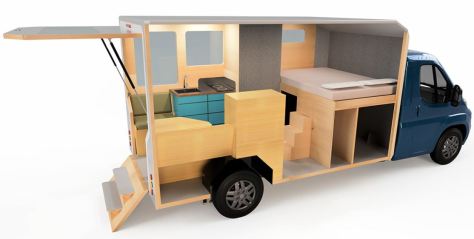
Now VanDoIt has capitalized on the launch of the 2020 Transit AWD to make its modular vans even more capable and versatile, letting owners option right up to a full-blown off-road, off-grid adventure vessel. It received a pre-production prototype from Ford and got to work rejiggering its modular conversion around the updated van, bearing fruit in the all-new LIV.
Earlier this year, Ford announced plans to launch an all-wheel-drive Transit as part of its updated 2020 US van lineup. That might seem like small product news, but it means that the US market will finally get a second factory AWD van to compete with the Mercedes Sprinter 4×4 that came over the Atlantic in 2015. It also means we can expect to see camper vans that look more like this one. The masters of modularity at VanDoIt become the first Americans to offer a camper van on the all-new Transit AWD, adding the LIV van as the second model in their lineup of super-flexible adventure vans. With a full selection of plug-and-play equipment, the LIV can flex between eight-seat, toy-hauling sleeper van and fully equipped multi-bed camper.
From an Art Review online article:
I chose to call myself a portrait photographer because labels were always being thrown on me. When I was at Rolling Stone I was a ‘rock-and-roll photographer’, at Vanity Fair I was a ‘celebrity photographer’. You know, I’m just a photographer. I realised I wasn’t really a journalist. I have a point of view and, while these photographs that I call portraits can be conceptual or illustrative, that keeps me on the straight and narrow. So I settled on this brand called ‘portraits’ because it had a lot of leeway. But I don’t think of myself that way now: I think of myself as a conceptual artist using photography.
I remember going to the Factory in 1976 and watching Andy Warhol work. I’d been there before, earlier in the 70s, photographing Joe Dallesandro and Holly Woodlawn, and then Paul Morrissey. Warhol was a fixture of New York. It was just shocking when he died, because he was everywhere. I don’t know how he did it, but he was out at everything. You felt that if he was at a place you were at, then you were at the right place.
Warhol had things everywhere in the Factory – silkscreens all over the place, and tables of artwork – and things were always going on. I think Fran Lebowitz was there for Interview magazine, and [Warhol] was photographing the sisters from Grey Gardens [1975]. I was just a fly on the wall: there were people milling around doing all kinds of things, it was a pretty active place.
To read more: https://artreview.com/features/ara_winter_2019_annie_leibovitz/