Openhouse has spent the last six years giving readers a closer look at some of the most extraordinary houses around the globe. In their first book, the editors open the doors to their highlights, including exclusive photography and rarely seen homes.
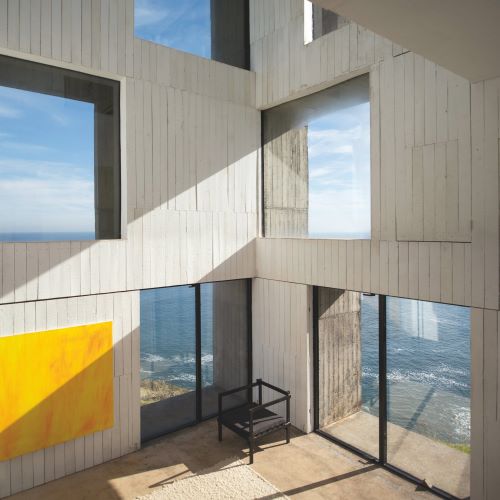
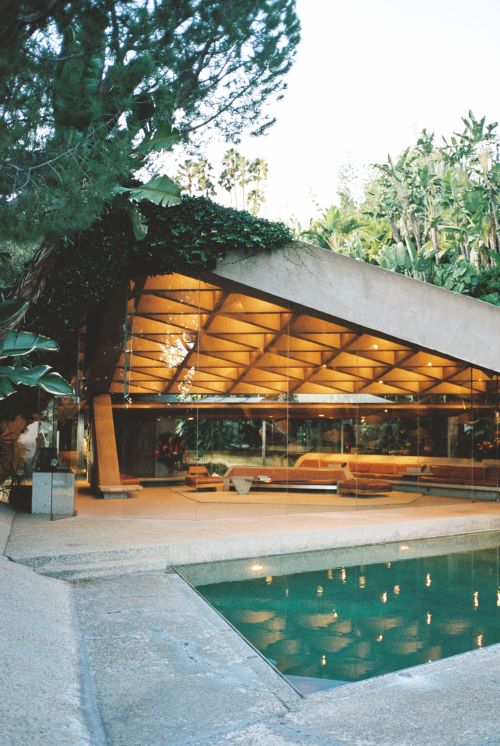
With a range of architectural styles from Brutalism to 20th-century mastery from the likes Walter Gropius and Ludwig Mies van der Rohe, this book portrays the stories of architects and residents of the most remarkable and inspiring living spaces around the world. Enter the adobe house of Georgia O’Keefe in New Mexico, step into the Modernist Casa Pedregal designed by Luis Barragán in Mexico City, and discover the sensorial architecture of George Nakashima’s house, studio, and workshop in New Hope, Pennsylvania.
From case study houses to cutting edge contemporary architecture, Living In describes what it feels like to occupy these spaces from the perspective of their owners—who themselves have become stewards of architectural history.
Finding medicines that can kill cancer cells while leaving normal tissue unscathed is a Holy Grail of oncology research. In two new papers, scientists at UC San Francisco and Princeton University present complementary strategies to crack this problem with “smart” cell therapies—living medicines that remain inert unless triggered by combinations of proteins that only ever appear together in cancer cells.
Biological aspects of this general approach have been explored for several years in the laboratory of Wendell Lim, PhD, and colleagues in the UCSF Cell Design Initiative and National Cancer Institute– sponsored Center for Synthetic Immunology. But the new work adds a powerful new dimension to this work by combining cutting-edge therapeutic cell engineering with advanced computational methods.
For one paper, published September 23, 2020 in Cell Systems, members of Lim’s lab joined forces with the research group of computer scientist Olga G. Troyanskaya, PhD, of Princeton’s Lewis-Sigler Institute for Integrative Genomics and the Simons Foundation’s Flatiron Institute.
Using a machine learning approach, the team analyzed massive databases of thousands of proteins found in both cancer and normal cells. They then combed through millions of possible protein combinations to assemble a catalog of combinations that could be used to precisely target only cancer cells while leaving normal ones alone. In another paper, published in Science on November 27, 2020, Lim and colleagues then showed how this computationally derived protein data could be put to use to drive the design of effective and highly selective cell therapies for cancer.
“Currently, most cancer treatments, including CAR T cells, are told ‘block this,’ or ‘kill this,’” said Lim, also professor and chair of cellular and molecular pharmacology and a member of the UCSF Helen Diller Family Comprehensive Cancer Center. “We want to increase the nuance and sophistication of the decisions that a therapeutic cell makes.”
Over the past decade, chimeric antigen receptor (CAR) T cells have been in the spotlight as a powerful way to treat cancer. In CAR T cell therapy, immune system cells are taken from a patient’s blood, and manipulated in the laboratory to express a specific receptor that will recognize a very particular marker, or antigen, on cancer cells. While scientists have shown that CAR T cells can be quite effective, and sometimes curative, in blood cancers such as leukemia and lymphoma, so far the method hasn’t worked well in solid tumors, such as cancers of the breast, lung, or liver.
Cells in these solid cancers often share antigens with normal cells found in other tissues, which poses the risk that CAR T cells could have off-target effects by targeting healthy organs. Also, solid tumors also often create suppressive microenvironments that limit the efficacy of CAR T cells. For Lim, cells are akin to molecular computers that can sense their environment and then integrate that information to make decisions. Since solid tumors are more complex than blood cancers, “you have to make a more complex product” to fight them, he said.
Insider’s Herrine Ro and Emily Christian visit three popular omakase restaurants in New York City to find the best one. They visit Sushi Katsuei, Sushi by M, and Sushi Lab.
Scientists have finally confirmed the existence of a CNO cycle fusion reaction in the Sun, and why women’s contraception research needs a reboot.
In this episode:
00:47 Detection of CNO neutrinos
Since the 1930s it has been theorised that stars have a specific fusion reaction known as the CNO cycle, but proof has been elusive. Now, a collaboration in Italy report detection of neutrinos that show that the CNO cycle exists.
We discuss the search for the animal origin of SARS-CoV-2, with researchers raiding their freezer draws to see if any animals carry similar viruses, and the latest vaccine results.
21:50 Getting women’s contraception research unstuck
Since the 1960s there has been little progress on research into women’s contraceptives. This week in Nature, researchers argue that this needs to change.
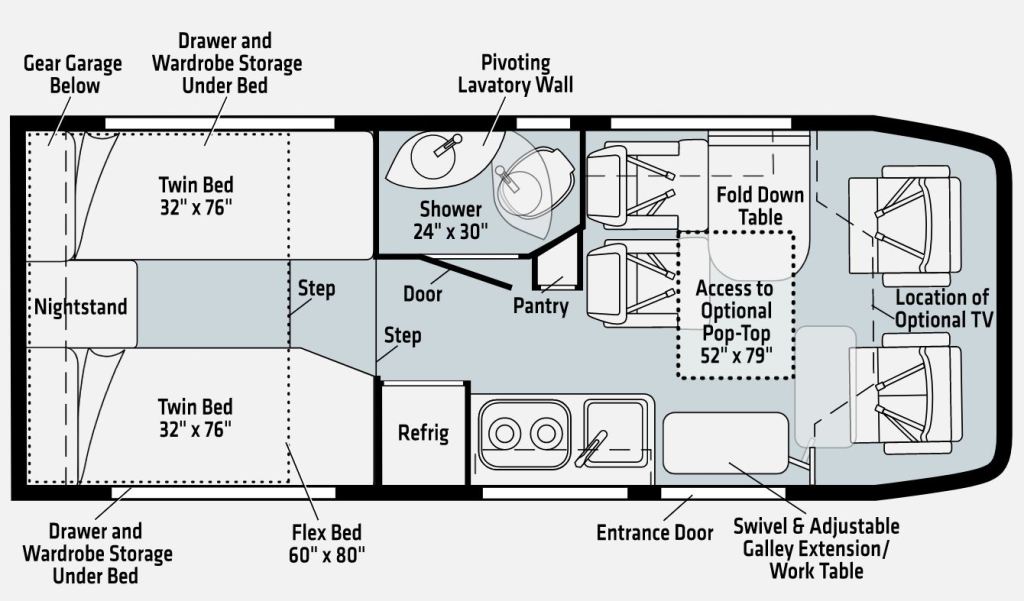
The all-new Winnebago® EKKO™ combines the efficiency of a camper van, the added capacity of a Class C coach, and the enhanced capability of AWD to create not just a new model, but an entirely new type of RV.
To get those crazy-fast 5G speeds on Apple’s iPhone 12 and iPhone 12 Pro, you have to find the 5G. So WSJ’s Joanna Stern set up on the field at MetLife Stadium to put the new phones — including their cameras and improved durable body — through the paces.
The Great Books presents: John J. Miller is joined by Missy Andrews of the Center for Literary Education to discuss Ernest Hemingway’s The Old Man and the Sea.
The Old Man and the Sea is a short novel written by the American author Ernest Hemingway in 1951 in Cuba, and published in 1952. It was the last major work of fiction written by Hemingway that was published during his lifetime. One of his most famous works, it tells the story of Santiago, an aging Cuban fisherman who struggles with a giant marlin far out in the Gulf Stream off the coast of Cuba.
Ampia Rooftop (Ampia meaning “Space” in Italian) is a sprawling 4,500 Sq. foot outdoor rooftop terrace featuring individual greenhouses for a social distance dining experience, opulent clusters of colorful flower gardens, and Italian-themed art and décor dispersed throughout. Chef Michele Iuliano offers up an authentic Italian menu of lite casual fare, along with a selection of inventive seafood paninis.
Restaurant Business (August 1, 2020) – The first step was a name change. When New York City announced that restaurants could open for outdoor dining during Phase 2, the Iulianos changed the name from Gnoccheria Rooftop to Ampia—a move that gave it a distinct identity. Then they set about redesigning the space to satisfy all the restrictions.
The entire space was sprayed with an electrostatic sanitary coating, including the tables, chairs, bar and every touchable surface. The process sanitizes for up to three months. The pair also purchased a facial recognition thermometer and all the essential PPE specified in New York Gov. Andrew Cuomo’s Phase 2 guidelines.
Next, the space was reconcepted from the original 250-seat restaurant to an outdoor dining venue with a limited bar and food menu. The beer garden in the original plan had to be scrapped; it’s impossible to enforce social distancing in that kind of setting. Instead, tables were spread out and seating areas set far apart, accommodating 60 to 65 guests.
The regulations around social distancing state that if tables cannot be arranged six feet apart, a restaurant can use plexiglass dividers between them. But the Iulianos wanted to infuse Ampia with the same stylish elements that differentiate their other restaurants.
When governor Jerry Brown signed a law that made Accessory Dwelling Units (ADUs) legal in California, it started a revolution in the ways that homeowners, builders and city planners think of small living. Homeowners’ applications for these small backyard buildings have skyrocketed after this regulatory reform in 2018.
The structural system of YB1 allows for a wide range of internal layouts. It is based on a 4’ grid that is full height, allowing the homeowner to pick full height windows, clerestory or rigid walls all around the building. This allows for shaping light, privacy and cost needs very precisely. A unique feature of YB1 is that it allows for multiple roofline options: the home can be designed with a standard 8’ ceiling height and flat roof, a 10’ ceiling with a clerestory running the entire building, or a pitched roof that provides climate adaptability, neighborhood style integration, or adds a loft addition.
The design is cost-efficient and adheres to LivingHomes’ high environmental efficient standards, using materials like wood slats paneling, concrete and stucco panels. The model options are also responsive to climate. Flat roofs that allow for solar panels can be incorporated, which work well in southern regions; likewise, the design of pitch roofs assimilate well in colder areas and mountain regions. YB1 homes offer a wide range of creative building configurations — modules for full kitchens, bathrooms, living rooms and bedrooms (or offices) will be available, and because of the flexible features, they can accommodate different sites, design interests and lifestyle preferences.













 When governor Jerry Brown signed a law that made Accessory Dwelling Units (ADUs) legal in California, it started a revolution in the ways that homeowners, builders and city planners think of small living. Homeowners’ applications for these small backyard buildings have skyrocketed after this regulatory reform in 2018.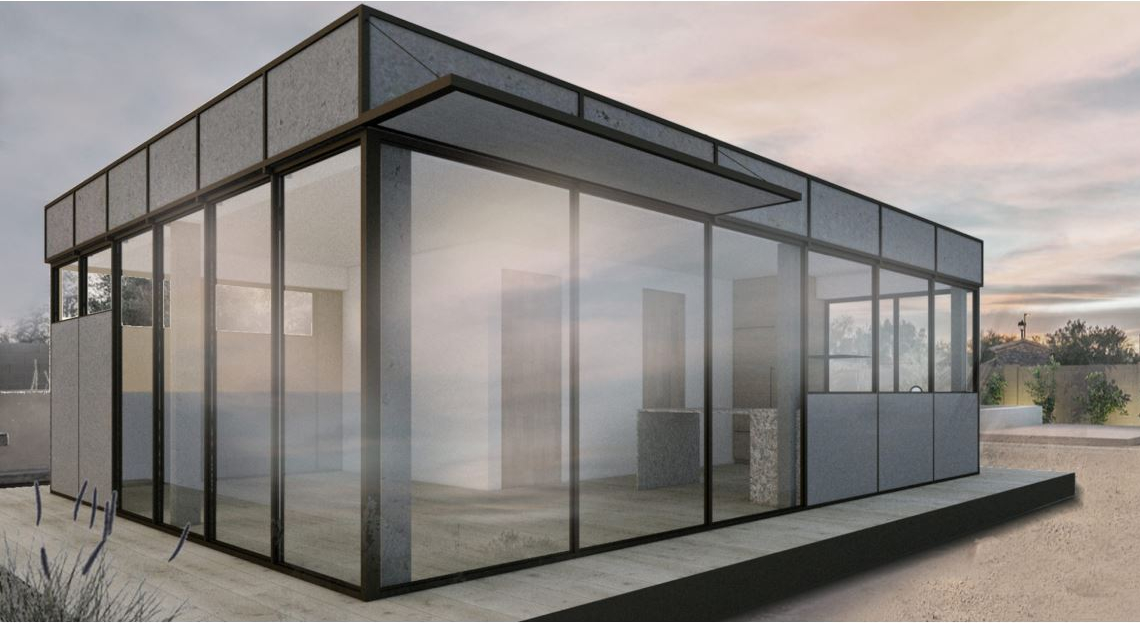
 Boomers Daily