


 “Studies with financial links to the indoor tanning industry were much more likely to discuss perceived benefits of indoor tanning and to downplay the harms,” said Eleni Linos, MD, DrPH, professor of dermatology, who sees patients at Stanford Health Care’s dermatology clinic at the Hoover Pavilion. “The association is quite striking. We need scientific data to be independent of industry influence. I am concerned that funding sources may influence the conclusions of these papers.”
 In 2012, Eleni Linos, professor of dermatology at Stanford university, published a systematic review and meta-analysis of the link between non-melanoma cancer and sun-beds. That bit of pretty standard research, and a particular rapid response to it, has kicked of years of work – and in this podcast I talk to Eleni and her colleagues Stanton…
From a CalTech news article (February 4, 2020):
 The hope, Lee says, is that ultrasound will kill cancer cells in a specific way that will also engage the immune system and arouse it to attack any cancer cells remaining after the treatment.
A new technique could offer a targeted approach to fighting cancer: low-intensity pulses of ultrasound have been shown to selectively kill cancer cells while leaving normal cells unharmed.
 Ultrasound waves—sound waves with frequencies higher than humans can hear—have been used as a cancer treatment before, albeit in a broad-brush approach: high-intensity bursts of ultrasound can heat up tissue, killing cancer and normal cells in a target area. Now, scientists and engineers are exploring the use of low-intensity pulsed ultrasound (LIPUS) in an effort to create a more selective treatment.
A study describing the effectiveness of the new approach in cell models was published in Applied Physics Letters on January 7. The researchers behind the work caution that it is still preliminary—it still has not been tested in a live animal let alone in a human, and there remain several key challenges to address—but the results so far are promising.
From the Brain Plasticity Journal (Dec 26, 2019):
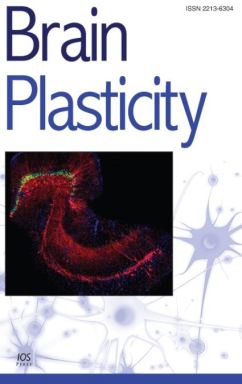 In conclusion, increased CRF (cardiorespiratory fitness) following this six-month intervention was associated with enhanced brain glucose metabolism in the PCC (posterior cingulate cortex), a region linked to AD, and cognition among late-middle-aged individuals at risk for AD. If these findings are supported by a larger-scale study, this would provide strong evidence that adults at risk for AD may enhance brain function and cognition by engaging in aerobic exercise training.
PCC glucose metabolism correlated positively with change in VO2peak (the highest value of VO2 attained upon an incremental or other high-intensity exercise test, designed to bring the sub- ject to the limit of tolerance)…Improvement in executive function correlated with increased VO2peak. Favorable CRF adaptation after 26 weeks of aerobic exercise training was associated with improvements in PCC glucose metabolism and executive function, important markers of AD.
Aerobic exercise has been associated with reduced burden of brain and cognitive changes related to Alzheimer’s disease (AD). However, it is unknown whether exercise training in asymptomatic individuals harboring risk for AD improves outcomes associated with AD. We investigated the effect of 26 weeks of supervised aerobic treadmill exercise training on brain glucose metabolism and cognition among 23 late-middle-aged adults from a cohort enriched with familial and genetic risk of AD.
From a Rush University Medical Center online article:
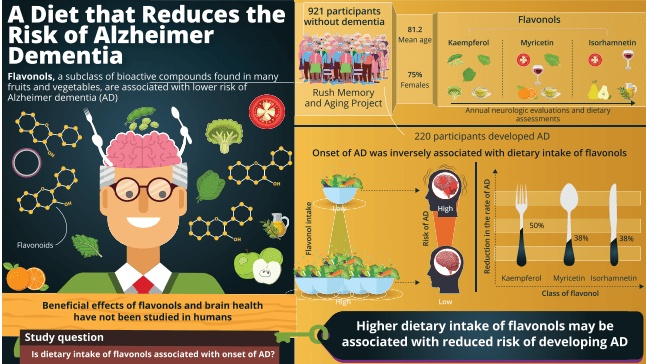
The study found that participants in the group with the highest flavonol consumption were 48% less likely to develop Alzheimer’s dementia later on in life than participants with the lowest level. Of the 186 people in the highest group, 28 people, or 15%, developed Alzheimer’s dementia, compared to 54 people, or 30%, of the 182 people in the lowest group.
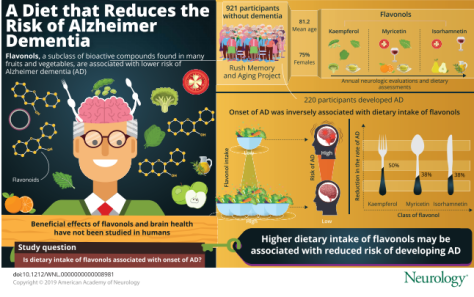
People who eat or drink more foods with flavonol, which is found in nearly all fruits and vegetables, plus tea and wine, may be less likely to develop Alzheimer’s dementia, according to the Rush researchers. They published the results of their study in the Jan. 29 online issue of Neurology.
Flavonols are a type of flavonoid, a group of phytochemicals found in plant pigments. They are known for their beneficial effects on health due to their antioxidant and anti-inflammatory properties.
A total of 921 people with an average age of 81 participated in the Neurology study. These participants did not have Alzheimer’s dementia when starting the study.
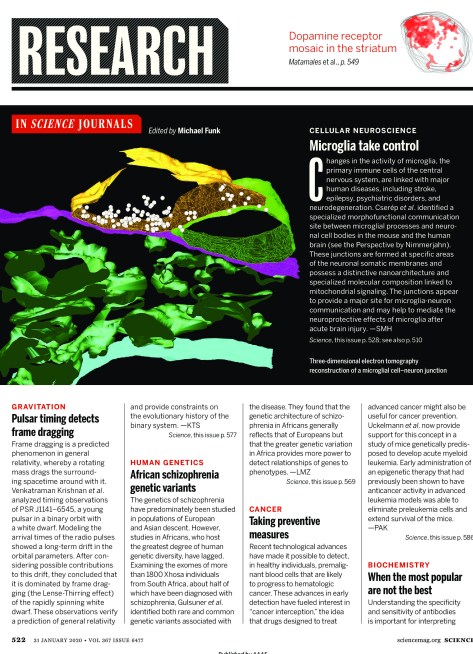
 Structural biologists rejoiced when cryo–electron microscopy, a technique to generate highly detailed models of biomolecules, emerged. But years after its release, researchers still face long queues to access these machines. Science’s European News Editor Eric Hand walks host Meagan Cantwell through the journey of a group of researchers to create a cheaper, more accessible alternative.

Also this week, host Joel Goldberg speaks with psychiatrist and researcher Goodman Sibeko, who worked with the Xhosa people of South Africa to help illuminate genetic details of schizophrenia. Though scientists have examined this subject among Western populations, much less is known about the underlying genetics of people native to Africa.









 Boomers Daily