

Tag Archives: Research
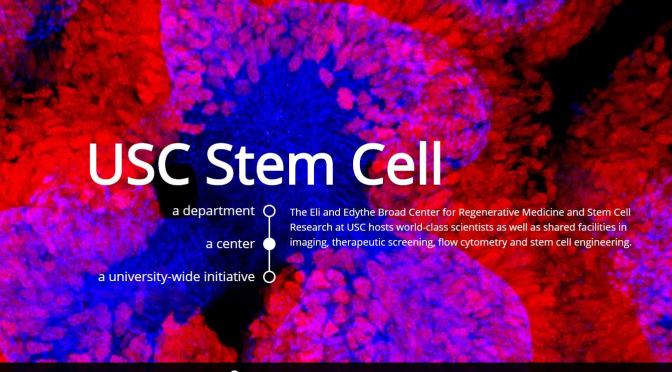
Research: USC Creates Organoids From Stem Cells To Treat Polycistic Kidney Disease (Video)
USC Stem Cell scientist Andy McMahon is using human stem cells to create mini-kidney structures known as organoids. His lab is using these organoids to study and find new drugs to treat polycystic kidney disease.
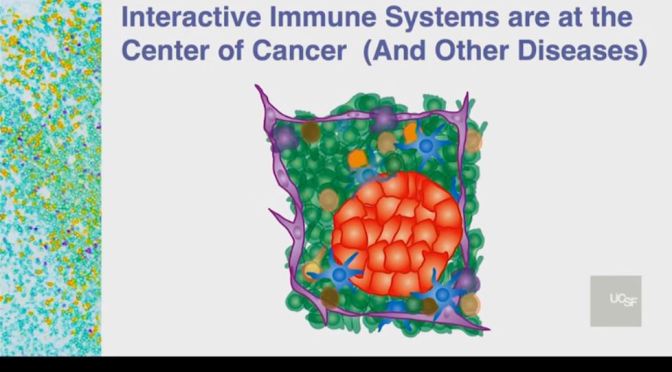
Health: “Treating Cancer And Other Diseases Through The Immune System” (UCTV Video)
Interactive immune systems are at the center of cancer and other diseases. Dr. Matthew Krummel explores how the immune system can regulate cancer progression. Recorded on 10/31/2019.
To read more: https://www.uctv.tv/shows/Understanding-and-Treating-Cancer-and-Other-Diseases-Through-the-Immune-System-35239
Health: “Understanding Parkinson’s Disease” (Nature Videos)
Parkinson’s disease is a neurological condition that affects the brain and other parts of the nervous system. The gradual loss of nerve cells leads to a suite of characteristic motor and non-motor symptoms.
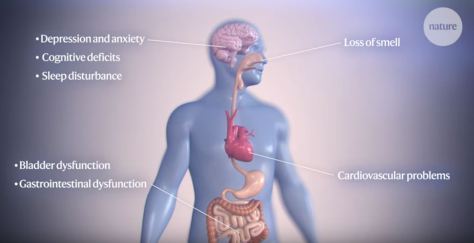
What causes these cells to die and how the pathology develops in the nervous system are not yet clear but multiple lines of investigation are being pursued to answer these questions. In this animation, we explore some of the latest in Parkinson’s disease research.

New Research Videos: “In Search Of The Amazon’s Tallest Tree” (Cambridge)
Research has discovered the tallest known tree in the Amazon, towering above the previous record holder at a whopping 88.5 metres. This giant could store as much carbon as an entire hectare of rainforest elsewhere in the Amazon. Toby Jackson, a plant scientist in the University of Cambridge, took part in an expedition to find the tree in a remote region of northern Brazil, and validate its height the old-fashioned way – by climbing it.
To read more: https://www.cam.ac.uk/research/news/expedition-finds-tallest-tree-in-the-amazon

Media: 41% Of Americans Believe News Has Become Less Reliable, 44% No Change (Rand Corp, 2019)
From a Rand.org online release:
 Many people (41 percent) indicated that they believed that news has become less reliable than in the past; a similar number (44 percent) said they believed there has been no change; and 15 percent said they thought news is more reliable now.
Different demographic groups get their news in different ways
- People whose primary news sources are social media and in-person contacts are generally younger and female, and they tend to have less education than a college degree and lower household incomes.
- People whose primary news sources are print publications and broadcast television tend to be be significantly older, and they are less likely to be married.
- People whose primary news source is radio are significantly more likely to be male, less likely to be retired, and more likely to have a college degree.
- People whose primary news sources are online platforms are significantly younger, more likely to be male and have a college degree and higher income, and less likely to be black.
Attitudes toward the reliability of news are mixed
- Overall, 44 percent reported that they believed “the news is as reliable now as in the past.”
- Nearly the same amount — 41 percent — reported a belief that the news has become less reliable.
- A minority (15 percent) said that they believed that the news is more reliable now.
- There was an association between news consumption profiles and perceptions of reliability — people who relied more heavily on online, radio, and social media/in-person platforms to obtain news were less likely to say that news is more reliable now than in the past.


To view full Rand Study: https://www.rand.org/pubs/research_reports/RR4212.html?utm_source=WhatCountsEmail&utm_medium=RAND%20Policy%20Currents+AEM:%20%20Email%20Address%20NOT%20LIKE%20DOTMIL&utm_campaign=AEM:631600804
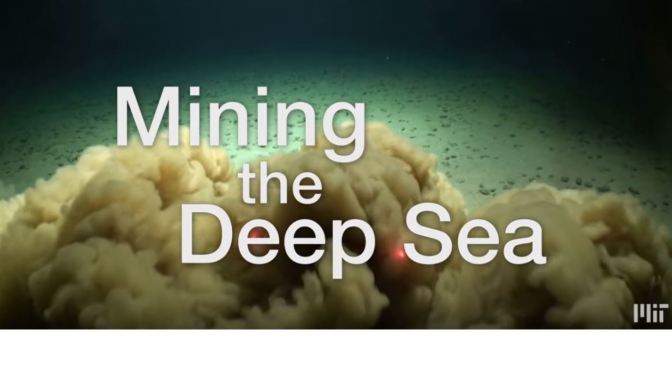
New Research Videos: “Mining The Deep Sea” (MIT)
Mining minerals found 15,000 feet below sea level could help secure a low-carbon future, but at what cost? Researchers including Thomas Peacock, professor of mechanical engineering at MIT, are racing to understand the environmental impact of deep-sea mining.
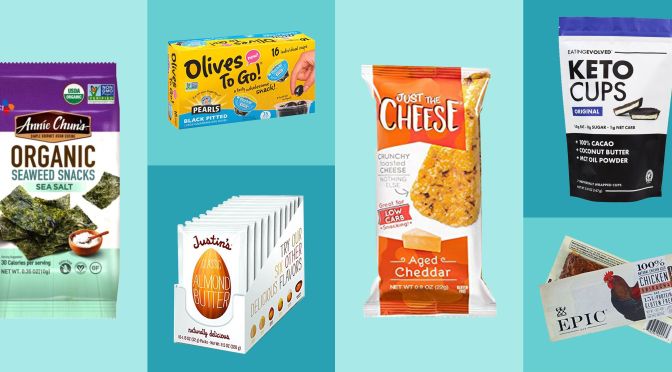
Trends In Food: Rising Number Of Consumers Eat Salty Snacks For Lunch, Dinner (Even Breakfast)
From an Innova Market Insights online release:
 According to a report from Innova Market Insights, snacking has already become an all-day habit in the States. While 46% of consumers eat salty snacks between-meals in the afternoon and 37% in the evening, more consumers are also replacing traditional meals with quicker bites. The numbers of consumers who are consuming salty snacks at lunchtime (23%), dinner (17%) and even breakfast (8%) are on the increase.
“Enjoyment is still a very strong driver behind snacks purchase,” says Lu Ann Williams, Head of Innovation at Innova Market Insights. “When asked why they buy salty snacks, 40% of Americans named taste and a further 22% said it was to treat or reward themselves, so innovators need to balance nutrition and taste to ensure that salty snacks remain competitive for all snacking occasions.”
To read more: https://www.innovamarketinsights.com/americans-want-snackable-nutrition/

Health Studies: Foods Containing Lactose Feed “Dangerous” Gut Bacteria
From Sloan Kettering Institute:
 Infections with the Enterococcus bacterium are a major threat in healthcare settings. They can lead to inflammation of the colon and serious illnesses such as bacteremia and sepsis, as well as other complications.
Now, an international team led by scientists from Memorial Sloan Kettering has shown for the first time that foods containing lactose, a sugar that’s naturally found in milk and dairy products, help Enterococcus thrive in the gut, at least in mice. They also studied changes in the bodies of people having BMTs. The study was published November 29 in Science.
 Their previous research has shown that when harmless strains of microbes are wiped out, often due to treatment with antibiotics, Enterococcus and other harmful types of bacteria can take over due to lack of competition. As part of the new study, which included analysis of microbiota samples from more than 1,300 adults having BMTs, the team confirmed the link between Enterococcus and GVHD.
To read more: https://www.mskcc.org/blog/milking-it-study-mice-suggests-lactose-diet-feeds-dangerous-gut-bacteria?_subsite=research-ski
Health Studies: Eating After Exercise Found To Burn “Twice The Fat”
From a New York Times online article:
 The riders who had pedaled on an empty stomach, however, had incinerated about twice as much fat during each ride as the men who consumed the shake first. The riders all had burned about the same number of calories while pedaling, but more of those calories came from fat when the men did not eat first.
Those riders also showed greater improvements in insulin sensitivity at the end of the study and had developed higher levels of certain proteins in their muscles that influence how well muscle cells respond to insulin and use blood sugar.
Working out on an empty stomach could amplify the health benefits of the activity, according to a well-timed new study of the interplay of meal timing, metabolic health and moving. The study, which involved sedentary men and moderate cycling, suggests that whether and when we eat may affect how exercise affects us.
To read more: https://www.nytimes.com/2019/11/27/well/move/eating-food-exercise-fasting-insulin-weight-loss-fat.html
 Boomers Daily