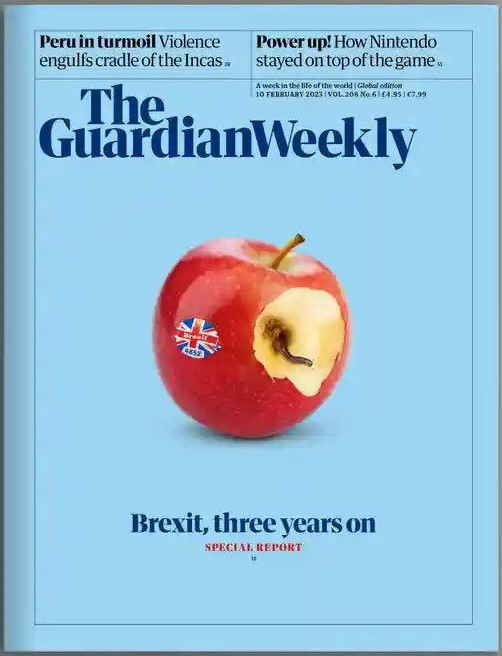
The Guardian Weekly (February 10, 2023) – Three years have passed since Britain officially left the European Union, but the country feels a long way from the “sunlit uplands” once memorably envisioned by Boris Johnson. Indeed, according to several polls released last week, more of the British population than ever are unhappy with the outcomes of Brexit – including, crucially, those who voted for it in the first place.
The Observer’s Michael Savage and Toby Helm consider what’s behind the upsurge in “Bregret” and ask what realistic hopes exist of Britain ever returning to the bloc. Then, opinion writer Nesrine Malik warns that, while many on the left may see validation in the current trends, it’s important to understand many of the UK’s structural problems stem from before the time of the Brexit referendum in 2016.
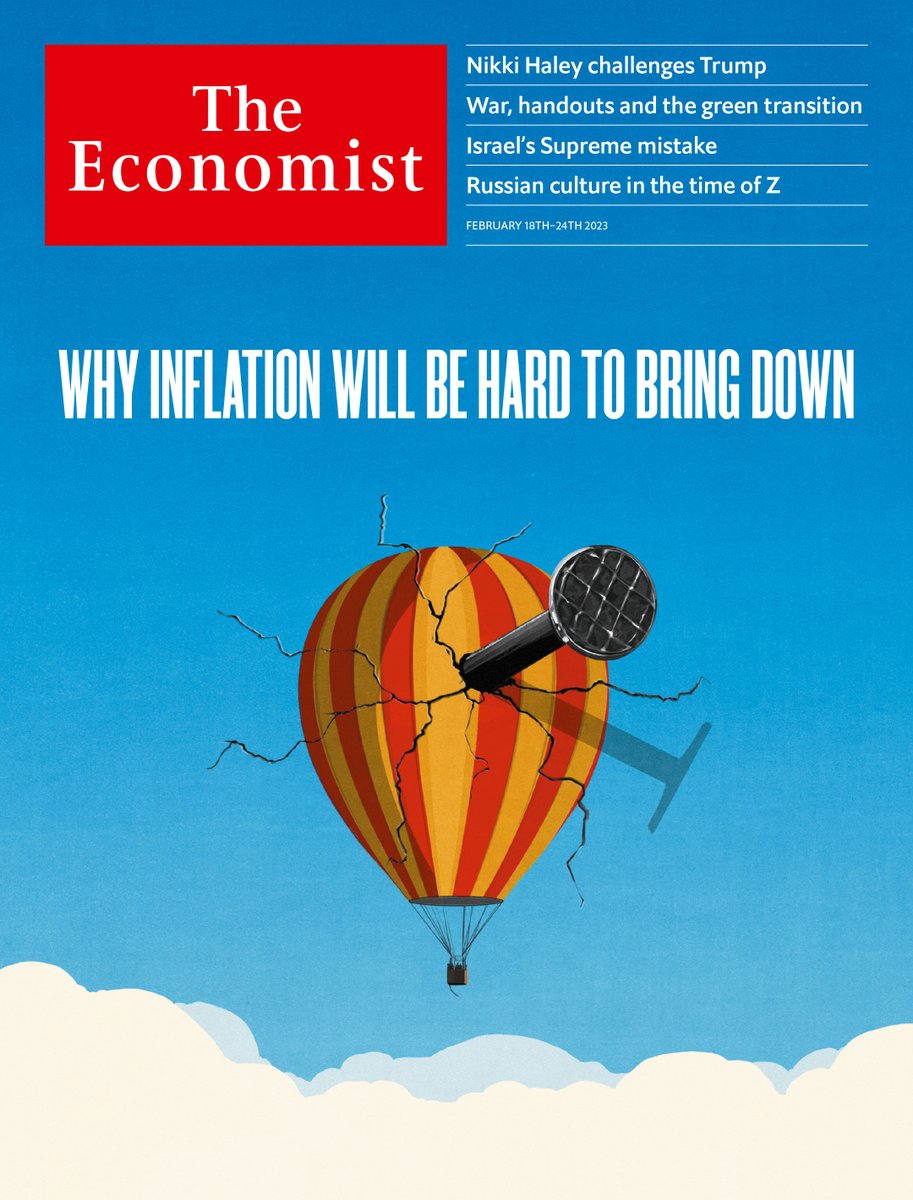
A selection of three essential articles read aloud from the latest issue of The Economist. This week, President Joe Biden’s plan to remake America’s economy, Ukraine’s troops in the east are quietly confident (11:20) and the race of the AI labs heats up (18:10).
February 3, 2023: The presidents of the European Commission and European Council, Ursula von der Leyen and Charles Michel, meet with President Volodymyr Zelensky in Kyiv.
The Guardian Weekly (February 3, 2023) – In the trenches of eastern Ukraine, much of the conflict with Russia has been frozen for several months now. But, as the northern winter moves on, that could be about to change. The initial invasion has been followed by a period of attrition, and a third phase of the war now appears imminent.
Military activity along parts of the front is increasing and it is assumed that, sooner or later, one side will try to break the deadlock. The question, as Julian Borger writes this week for the Guardian Weekly magazine’s big story, is who will strike first and where?
As Julian explains, it is likely to be “an all-out battle for decisive advantage using combined arms … to overcome fixed positions. Europe has witnessed nothing of its sort since the second world war.”
That’s not to say there aren’t signs of anxiety among Ukraine’s regional allies, though. Germany’s decision last week to send its Leopard tanks to Ukraine may yet prove critical in the coming battle, but as German journalist Jan-Philipp Hein points out, Berlin’s military support for Kyiv remains far from wholehearted.
In the UK, the sacking of Nadhim Zahawias Tory chairman over an undeclared tax dispute while he was the chancellor (and thus in charge of tax collection) kept the pressure on prime minister Rishi Sunak, political editor Pippa Crerar reports; while in Opinion, Nesrine Malik says the episode reveals much about Britain’s networks of power and influence.
It’s an age-old question: how should nations around the world adjust to their elderly societies?Japan has faced such realities for a while now, but the challenges are becoming increasingly common across the developed world where families are getting smaller, and people are living longer.
Even India – which will soon overtake China as the world’s most populous country – is now seeing an older demographic become more prevalent in some states. The countries of sub-Saharan Africa, meanwhile, look most likely to enjoy the benefits of a younger population as the century progresses. For the Guardian Weekly magazine’s big story this week, Emma Graham-Harrison and Justin McCurry assess what ageing populations hold in store for the world. And Verna Yu reports on the reasons why many young people in China seem reluctant to start families.
New York Times columnist David Brooks and Washington Post associate editor Jonathan Capehart join Geoff Bennett to discuss the week in politics, including the latest on President Biden’s classified documents investigation and the debt ceiling debate in Congress.



















 Boomers Daily