Tag Archives: Museums

History & Culture: Heard Museum Of American Indian Art In Phoenix Celebrates 90 Years

90 years ago today, Maie Bartlett Heard, curator Allie Walling BraMé along with a small group of friends and volunteers spent Christmas Day making final preparations for the opening of the Heard Museum. The next day, December 26, 1929, the Heard Museum began our now nine decade long and ongoing legacy of advancing American Indian Art.

This short video poem written, recorded and edited by longtime artist and friend of the Heard Museum, Steven J. Yazzie (Diné) is our very sincere thank you to you.

Heard Museum 90th Celebration Poem, December 2019

Heard Museum in Phoenix Celebrates 90 Years

“Home” By Steven J. Yazzie (Diné)
Voiced by: Jenn Henry
Music: Better Now, Phillip Daniel Zach

Why do we come here to these walls painted shades of off white
In search of beauty
or memory
or place
Where the sounds of children can be heard echoing in these vast
and intimate spaces
And where everyone has just arrived here from a journey
What brings us to the feet of stone
or textile
or dried paint
In the galleries of our hearts and truths
Our histories are revealed
and our humanity ensured
This place of my youth and older age
This place of beauty
stewardship
and celebration
Is home

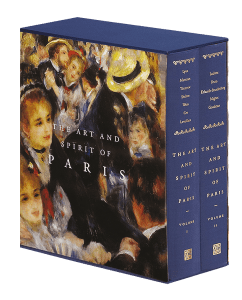
Top New Interviews: Art Historian And Louvre Director Michel Laclotte

From a BrooklynRail.org online interview:

The Art and Spirit of Paris by Michel Laclotte“…I am almost more interested in the paintings I didn’t get! I wish I could do a small photo exhibition of all the works that we failed to get. Of the early titans, we have two important ones, Giotto and Cimabue, but we don’t have Duccio, the third master of the birth of painting in Europe, if I may say. There was one in the Stoclet collection in Brussels, that we were following through dealer friends, but finally it was purchased by the Met. Also Velázquez, our biggest weakness!”

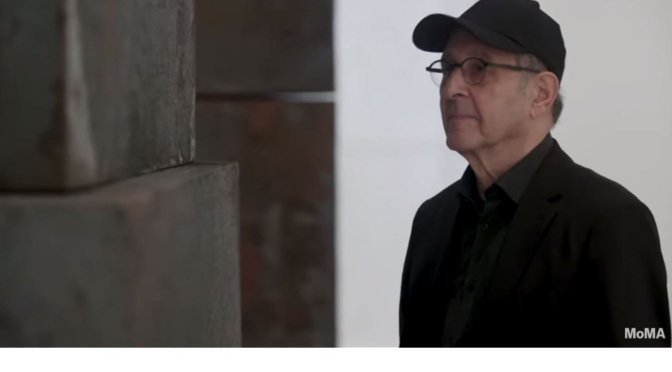
Michel Laclotte, President of the Louvre (1987 – 1995)

The Brooklyn Rail logo

Joachim Pissarro (Rail): The premise of these three interviews is that all three personalities, each one, of course, with its own personal intonation and distinctive input, took charge of this antiquated and august institution, the Louvre, and you especially, Monsieur Laclotte, accompanied it towards the 21st century, end of the 20th century to 21st century. I think this was an incredible challenge. How did you take charge of such an ancient—two-century old—institution and how did you bring it into its present and prepare its future?

To read more: https://brooklynrail.org/2019/12/art/Michel-Laclotte-with-Joachim-Pissarro

Museum Insider: How Composer Steve Reich Reads Sculpture (MoMA/BBC Video)

The Way I See It BBC MoMAIn this episode of The Way I See It, our radio collaboration with BBC, we’ve captured composer Steve Reich’s audible awe as he sees his friend Richard Serra’s monumental 2015 sculpture Equal for the first time. As Reich puts it, he and Serra are “in tune to the same frequencies,” so their meeting in Manhattan in the 1960s and subsequent friendship was both important and inevitable.
Working in sound and steel respectively, both Reich and Serra rejected traditional compositional structures—one of harmony and the other of form—to give shape to their work. Reich is the recipient of countless awards, including two Grammys, a Pulitzer, and, recently, the Golden Lion at the Venice Biennale. His works are performed in concert halls all over the world, and recently at Glastonbury Festival. Find “The Way I See It” on BBC Sounds or wherever you get your podcasts. https://www.bbc.co.uk/programmes/m000…

New Museum Openings: “Fotografiska New York” Showcasess The World’s Greatest Photographers

From a The Art Newspaper online release:

Fotografiska New York Museum Opened Dec 14 2019 Sally Mann quote“People want to see photography and right now there are not a lot of places to do that,” he says. Showing “the best photography in the world” remains Fotografiska’s core mission, Broman says.
The global expansion of Fotografiska is finally taking shape. The Stockholm-based photography hub, founded in 2010 by brothers Jan and Per Broman, will open its New York outpost on 14 December, almost two months later than previously announced.

fotografiska-new-york-museum-opening-dec-14-2019-exhibitions.jpg

https://www.fotografiska.com/nyc/

This follows a venue launched in June in Tallinn, Estonia, and anticipates the arrival in late 2020 of Fotografiska London, billed as the world’s largest photography gallery by the British Journal of Photography.

To read more: https://www.theartnewspaper.com/news/first-fotografiska-takes-manhattan

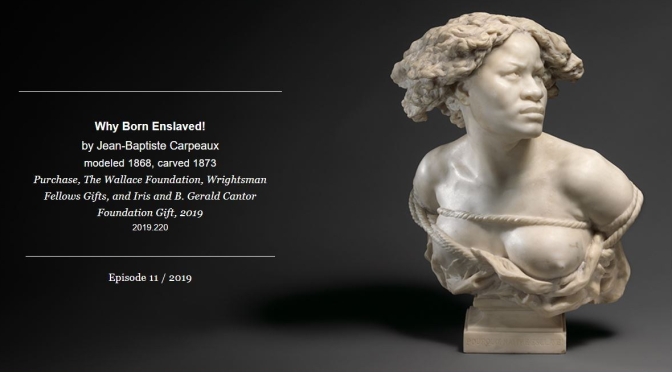
Art Criticism: “A Poet’s Response To Carpeaux’s ‘Why Born Enslaved!'” (MetCollects Video)

“It is critical to reckon with the power imbalance enacted when a white male artist transposes the body of a black woman into an emblem of enslavement.”

Why Born Enslaved! was first conceived in 1868 by Jean-Baptiste Carpeaux, one of the greatest French sculptors of the nineteenth century. The bust portrays a woman straining against a rope pulled taut around her arms, back, and breast. Her shoulders project forward and the right tendon of her neck protrudes as she twists her body in one direction and turns her head sharply in the other.

A poet's response to Carpeaux's Why Born Enslaved! MetCollects Video

In The Gallery by Wendy S. Walters

The figure’s defiant, uplifted gaze extends her spiraling movement and conveys her perseverance through pain as the work’s rhetorical title, inscribed on the sculpture’s base, proclaims, “Pourquoi Naitre Esclave!”

To read more: https://www.metmuseum.org/art/online-features/metcollects/why-born-enslaved

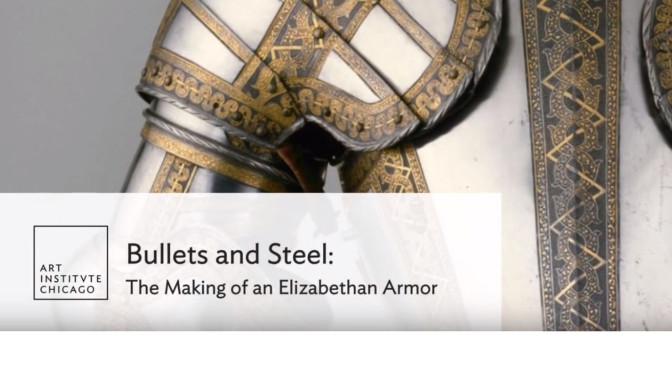
Art History: “Bullets And Steel” In Elizabethan Armor (Art Institute Of Chicago Video)

Jeffrey D. Wasson, the armorer who crafted the accurate replica of the Art Institute’s Greenwich armor, and Jonathan Tavares, the Art Institute’s associate curator of arms, armor and European decorative arts before 1700, discuss how utilizing experimental archaeology allowed them to uncover the methods used by Renaissance armorers in crafting the bulletproof protection.

To read more: https://www.artic.edu/events/4684/conversation-bullets-and-steelthe-making-of-elizabethan-armor-2

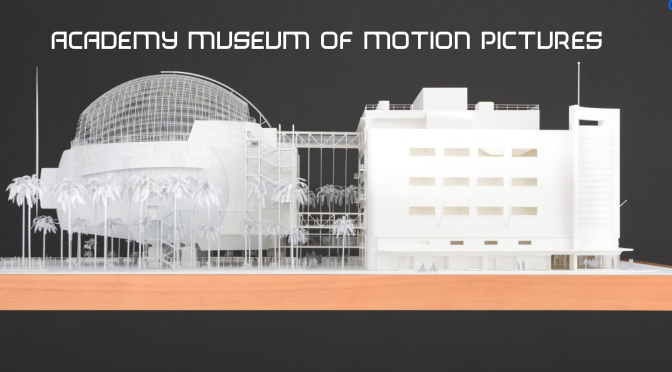
New Museums: “Academy Museum Of Motion Pictures” By Architect Renzo Piano (Opens 2020)

From the Renzo Piano Building Workshop website:

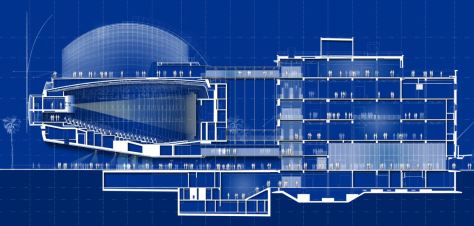
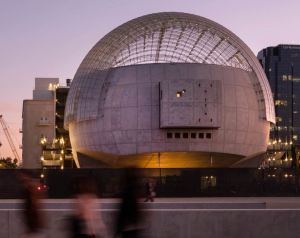
Academy Museum Renzo Piano Architect“The Academy Museum gives us the opportunity to honor the past while creating a building for the future—in fact, for the possibility of many futures. The historic Saban Building is a wonderful example of Streamline Moderne style, which preserves the way people envisioned the future in 1939. The new structure, the Sphere Building, is a form that seems to lift off the ground into the perpetual, imaginary voyage through space and time that is moviegoing. By connecting these two experiences we create something that is itself like a movie. You go from sequence to sequence, from the exhibition galleries to the film theater and the terrace, with everything blending into one experience.”
Renzo Piano, Architect

When it opens in the heart of Los Angeles, at the intersection of Wilshire Boulevard and Fairfax Avenue, the Academy Museum of Motion Pictures will be the world’s premier movie museum.

Academy Museum Renzo Piano Architect

Academy Museum Renzo Piano ArchitectSituated on the famed “Miracle Mile,” the museum will preserve and breathe new life into the former 1939 May Company department store, now re-named the Saban Building. Celebrating its history and imagining new possibilities, the additions to the building that date from 1946 have been removed and replaced with a spherical building that features the 1,000-seat David Geffen Theater and the Dolby Family Terrace with views towards Hollywood. The revitalized campus will feature more than 50,000 square feet of gallery space, two theaters, cutting-edge project spaces, an outdoor piazza, the rooftop terrace, an active education studio, a restaurant, and store.
https://www.academymuseum.org/en/

To read and see more: http://www.rpbw.com/project/academy-museum-of-motion-pictures


Culture: “Anger” In Society Explored By Artists And Writers (MoMA Video)


Anger. A word that often does the rounds in the 21st century. On a global scale, citizens are increasingly dissatisfied with their governments — from discord within the current American administration to rising hostility within France, Germany, Greece, Iraq, and Lebanon. Anger due to the persistence of racial violence, threats against the rights of women and workers, discrimination against the LGBTQ community, repression, as well as fear and instability surrounding health care systems, income inequality, the environmental crisis, and the effects of mass migration.

MoMA Research & Development

Join a nuanced conversation in this MoMA R&D Salon hosted by Paola Antonelli, Senior Curator of Architecture & Design and Director of Research & Development at MoMA, with speakers (in alphabetical order):

Shaun Leonardo: a multidisciplinary artist whose work discusses societal expectations of manhood––namely definitions surrounding black and brown masculinities––along with its notions of achievement, collective identity, and experience of failure.

Lydia Lunch: a writer, singer, poet, actress, and speaker whose career was spawned by the New York City “No Wave” scene. Widely considered one of the most influential performers originating from New York City, Lydia has worked with a range of bands and artists.

Andrew Marantz: a staff writer at The New Yorker, where he has worked since 2011. His work has also appeared in Harper’s, New York, and Mother Jones. He recently published his first book, Antisocial: Online Extremists, Techno-Utopians, and the Hijacking of the American Conversation.

Marilyn Minter: a contemporary artist whose works are in the collections of MoMA, the Solomon R. Guggenheim Museum in New York, the San Francisco Museum of Modern Art, and the Museum of Contemporary Art in Los Angeles, among others.

Pamela Sneed: a poet, writer, visual artist, and performer. She is the author of the books Imagine Being More Afraid of Freedom than Slavery (1998) and Kong and Other Works (2009), as well as the chapbooks Lincoln (2014), Gift (2015), and Sweet Dreams (2018).

Paintings: How Comedian Steve Martin Looks At Abstract Art (MoMA Video)

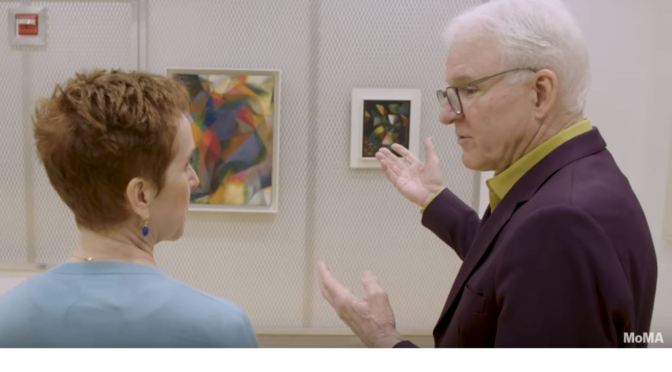
The Way I See It BBC MoMAIn this episode of “The Way I See It,” actor and comedian Steve Martin looks at paintings by two early pioneers of American abstraction and takes us on a journey of seeing—shape and color transform into mountains, sky, and water. Find “The Way I See It” on BBC Sounds or wherever you get your podcasts. https://www.bbc.co.uk/programmes/m000…

Top New Exhibits: F-117 NIGHTHAWK STEALTH FIGHTER At The Ronald Reagan Library & Museum

…the Ronald Reagan Presidential Foundation and Institute announced its “Operation Nighthawk Landing” project – a Reagan Foundation & Institute and Lockheed Martin Skunk Works® joint effort that will soon bring an F-117 Nighthawk Stealth Fighter to the Reagan Museum for permanent exhibition. Made possible by loan from the National Museum of the U.S. Air Force, the F-117 placed on display will serve as a visible reminder to the Library’s near half-million annual visitors of President Reagan’s commitment to the rebuilding of the U.S. military through his “Peace through Strength” program. The F-117 Nighthawk, Tail #803, nicknamed “Unexpected Guest,” flew more combat sorties (78) than all other F-117s combined. The aircraft entered service in May 1984, during President Reagan’s administration.

“The Reagan Library will now be one of two places in the nation where the general public can visit an F-117 Stealth Fighter on permanent display,” said John Heubusch, executive director of the Ronald Reagan Presidential Foundation and Institute. “We are deeply grateful to Lockheed Martin for their outstanding assistance in restoring the aircraft for such a meaningful display and to the U.S. Air Force for making it possible for the Reagan Library to exhibit the plane for millions of visitors to enjoy for years to come.”

The F-117 Nighthawk was the world’s first operational stealth aircraft. Between 1981 and 2008, Lockheed Martin produced 59 operational F-117s and five developmental prototypes, but the aircraft weren’t publicly acknowledged until 1988.  Known as “stealth fighters,” the F-117’s angular shape was designed to reflect radar waves and was bolstered by the use of a radar-absorbing material. Because the aircraft was only expected to operate at night, it was painted black to make it more difficult to discern against the night sky.

Website: https://www.reaganfoundation.org/library-museum/permanent-exhibitions/f-117-nighthawk-stealth-fighter/