
From a NextAvenue.org online article (01/07/20):
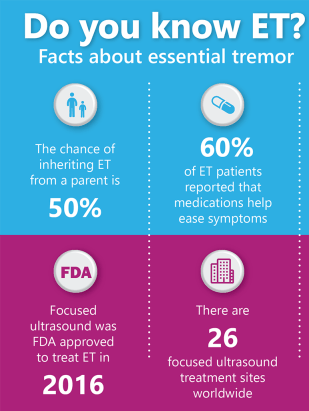 Essential tremor is a common movement disorder — more common than tremors that come with Parkinson’s disease — and the most common neurologic condition affecting people 65 and older. It is estimated that 10 million Americans live with essential tremor, according to the International Essential Tremor Foundation.
About half of people with essential tremor inherited the condition. But the severity and affected body parts can differ from generation to generation, and researchers still haven’t pinned down the gene or genes responsible.
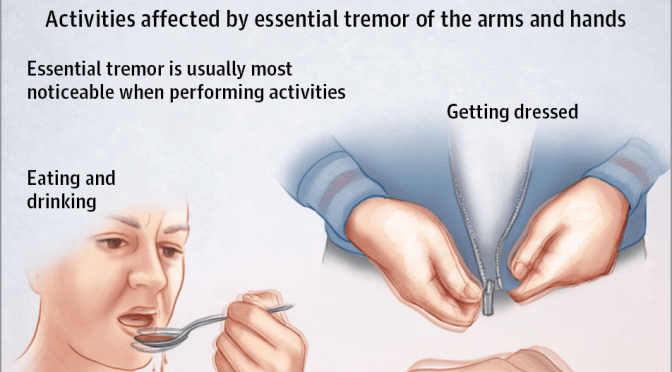
Tremors typically happen when people try to use their hands for a task. Activities such as shaving can be difficult’ people often need to use safety razors or electric razors to avoid cutting or nicking themselves. Also, difficulty holding a utensil makes eating a challenge for many people with essential tremor.



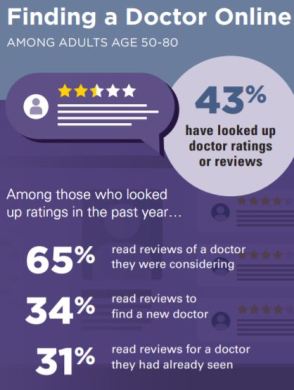 Among older adults age 50–80, 43% had ever reviewed doctor ratings; 14% had reviewed ratings more than once in the past year, 19% had done so once in the past year, and 10% had reviewed ratings more than one year ago.
 Ratings and reviews for nearly everything can be found online these days, including doctors. How are older adults using these ratings in their decisions about choosing doctors? In May 2019, the University of Michigan National Poll on Healthy Aging asked a


 cardiovascular events.


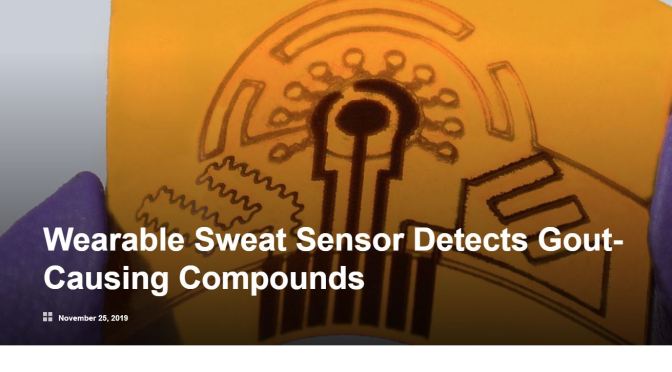
 “Such wearable sweat sensors have the potential to rapidly, continuously, and noninvasively capture changes in health at molecular levels,” Gao says. “They could enable personalized monitoring, early diagnosis, and timely intervention.”
 Gao’s work is focused on developing devices based on microfluidics, a name for technologies that manipulate tiny amounts of liquids, usually through channels less than a quarter of a millimeter in width. Microfluidics are ideal for an application of this sort because they minimize the influence of sweat evaporation and skin contamination on the sensing accuracy. As freshly supplied sweat flows through the microchannels, the device can make more accurate measurements of sweat and can capture temporal changes in concentrations.
 Boomers Daily