The Globalist Podcast (January 11, 2024) –Assessing the possibility of the International Court of Justice ordering Israel to halt its campaign in Gaza.
Plus: Taiwan’s all-important election this weekend, Poland’s political meltdown and the latest business news.
Studies of the microbes living on and in our bodies are conducted mainly in a few rich countries, squandering opportunities to improve the health of people globally.
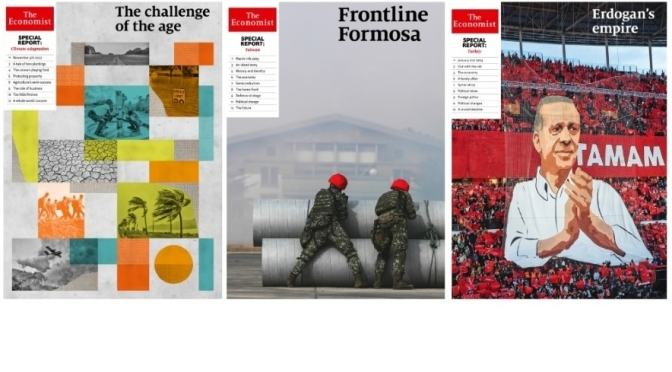
The Economist SPECIAL REPORTS (January 12, 2024): The latest issue is focused on ‘Philanthropy’ – Move fast and mend things. Charitable organizations are hoping to get money to the needy faster….
They are hoping to get money to the needy faster, says Avantika Chilkoti
A nudge is not always enough to force change within an industry. Sometimes a series of forceful shoves is required. In the rarified world of Western philanthropy, the shoves began in 2020. The covid-19 pandemic, protests for racial justice across America that summer and the outflow of refugees from Ukraine starting in early 2022 created a new urgency around charitable giving and revealed failings in how it worked. Donors began to consider how they could disburse money faster and with more impact.
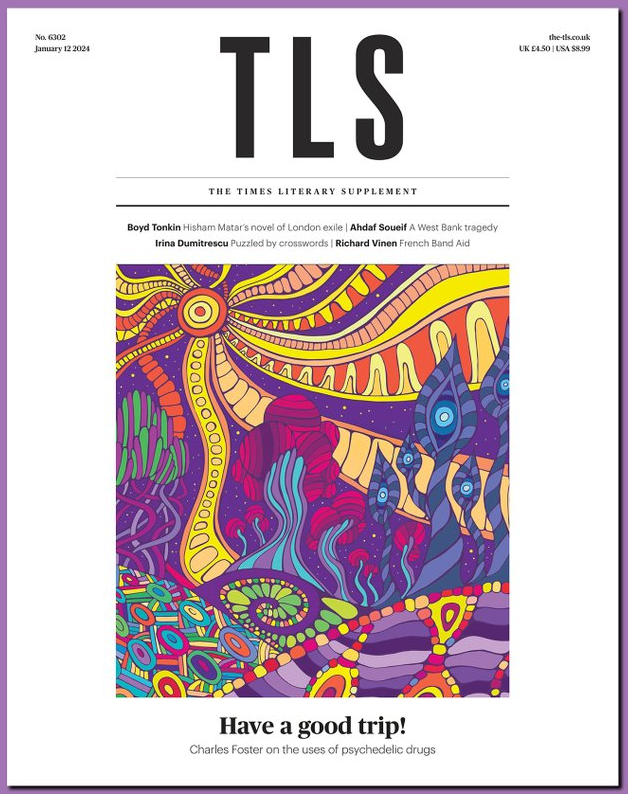
Times Literary Supplement (January 10, 2024): The latest issue features ‘Have a good trip’ – On the uses of psychedelic drugs; Hisham Matar’s novel of London exile; A West Bank tragedy; Puzzled by crosswords; French Band Aid, and more…
Country Life Magazine – January 9, 2024: The latest issue features‘Walk This Way’ – England’s secret sunken roads; Return of the curly-coated retriever; Tom Parker Bowles on the comfort of pie; Britain’s most poisonous plants, and more…
Curls, curls, curls
The intelligent, powerful curly-coated retriever was favoured by the Victorians and is still winning plaudits as a working breed, discovers Katy Birchall
Rolling in the deep
Ben Lerwill follows in the foot-steps of our ancestors to explore the history of holloways, those sunken and often secret routes criss-crossing the countryside
Little crop of horrors
From hemlock and henbane to giant hogweed, Britain is home to a host of poisonous plants. John Wright reveals how to spot the dangerous and the deadly
Why we all cry for pie
Tom Parker Bowles earns his crust with an ode to the enduring appeal of this humble, yet oh so heavenly savoury creation
Lady Violet Manners’s favourite painting
The broadcaster chooses a poignant work that speaks of absolute parental devotion
A distant horizon conquered
Fiona Reynolds explores the ancient Wiltshire Downs, with her sights set firmly on the far-off landmark of Cherhill Monument
The future as a footstool
The landmark 1980s restoration of London’s Liverpool Street Station is under threat from new proposals, argues Ptolemy Dean
The Midas touch
In the first of two articles, John Goodall investigates the early history of Madresfield Court, Worcestershire, which has been in the same family for 900 years
I can’t believe it’s British butter
Butter is making a comeback in a welcome celebration of our dairy heritage—Jenny Linford meets the artisan makers who are helping to spread the word
The good stuff
Tackle the snow in style this winter with Hetty Lintell’s pick of the best skiing accessories
Sweet dreams are made of these
The gardens at Villa Durazzo-Pallacini in Italy are Heaven on Earth for Charles Quest-Ritson
‘I have seen a very pretty thing…’
Lucien de Guise reveals how you can add a true touch of Ottoman opulence to your home
Interiors
Amelia Thorpe selects the hottest new stoves, fires and range cookers, and Giles Kime examines the growing range of options fuelled by bioethanol
Money for old rope
Deborah Nicholls-Lee looks at how hemp can help in the battle against climate change
The Local Project (January 9, 2024) – Situated in a frequently cold, wet and windy location, Ramirez Residence by Norman Millar Architects and Judith Sheine Architect is a sea ranch home that is built to complement the rugged landscape.
Video timeline:00:00 – Introduction to the Modern Ranch 01:10 – A Coastal Location and its History 02:12 – The Architectural Collaboration and Design Guidelines 04:04 – Building the Interiors into the Landscape 04:29 – The Clients Coastal Requests 05:26 – A Traditional and Natural Material Palette 06:55 – Respecting the History of Sea Ranch
Placed north of San Francisco, and positioned along miles of ocean coastline, Ramirez Residence possesses an interesting history that goes back to the community’s conception by Alfred Boeke. Transforming a sheep ranch on a degrading landscape into an ideal utopian community, Alfred Boeke implemented strict design guidelines for the architecture of the buildings and the way they sat in the landscape. As such, each of the surrounding homes were inspired by weathered barns, designed out of local timber and made to withstand the harsh climate over a long period of time.
Built into the landscape, Ramirez Residence was specifically designed to preserve local views and communal open spaces. Based on the design principles and ideas of the weathered barns with the slopping roof of a ranch, Ramirez Residence appears fairly simple in its exterior form. With no overhangs to prevent uplift from the strong winds, the house tour shows an almost box-like home clad in local timbers but, once inside, a complex and articulated interior design reveals itself. Following the house tour inside, the reveal of built-in furniture continues the idea of a home nestled into the landscape. Emphasising this idea in the bathrooms and kitchen, the architects encourage the idea that the rooms and kitchen are objects within the home.
I rode west with a childhood friend who was driving to a job in California. We passed through Tennessee, Arkansas, Oklahoma, and still there was no sign of the Commander. My friend placed a bag of chocolate-covered espresso beans on the console between us, jumble of rich dark gems, glittering like they were wet. I crunched them in my teeth without thinking. Sometimes I drove and let her sleep. When clouds clotted the sun her hair still glowed, some mix of orange and yellow and pink. Toast, or the honey for it, or the cinnamon.
After we spent a day and a night in a certain desert town, I told my friend to go on without me. I’d stay. The town was bordered by empty hills and endless sky: room to disappear. I found an unopened pack of Juicy Fruit gum on the sidewalk, which I took for a sign.
The Globalist Podcast (January 9, 2024) –Nik Gowing discusses whether the Israel-Gaza war could spark a wider conflict in the region – and beyond.
Also, Steven Borowiec updates us on South Korea’s political crisis ahead of national elections and, with less than a week to go, we look ahead to the World Economic Forum Annual Meeting in Davos.
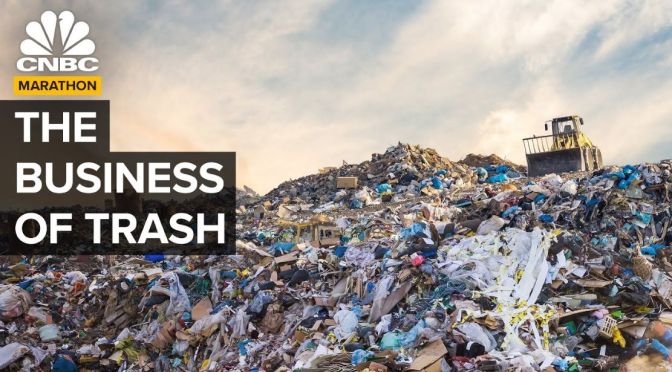
CNBC (January 8, 2024) – CNBC Marathon explores the economics of waste management and how the United States is solving its trash problem. In 2019, the North American waste management market reached $208 billion.
Chapters: 00:00 Introduction 00:48 How Trash Makes Money In The U.S. (Published July 2021) 15:59 How Amazon, American Airlines And Subaru Burn Waste To Make Energy (Published May 2022) 32:24 How To Clean Up The World’s Most Polluted Rivers (Published August 2022) 46:16 Where Do EV Batteries Go When They Die? (Published March 2023)
Thanks to advancements in modern chemistry and support from municipal governments, landfills have seen astonishing financial success in recent years. Burning waste to make energy is a $10 billion industry in the U.S., and the fastest growing part of the business is waste from big companies like Amazon, Subaru, Quest Diagnostics and American Airlines.
They’re part of a growing corporate movement toward “zero landfill” as pressure mounts to reach sustainability requirements. It’s estimated that every year, millions of tons of plastic enter the ocean through rivers, and as global waste generation increases, the problem is poised to worsen.
But a host of companies from Baltimore, Maryland to Bengaluru, India are working on the issue, developing novel methods to capture trash from rivers before it reaches the ocean. Dozens of electric vehicles are scheduled to debut in the next few years and over 300 million electric vehicles are expected to be on the world’s roads by 2030.
The lifetime for an EV battery is estimated to be 12 to 15 years in moderate climates, but that doesn’t mean the batteries end up in landfills when they die.
News, Views and Reviews For The Intellectually Curious





 The Economist SPECIAL REPORTS (January 12, 2024): The latest issue is focused on ‘Philanthropy’ – Move fast and mend things. Charitable organizations are hoping to get money to the needy faster….












 Boomers Daily