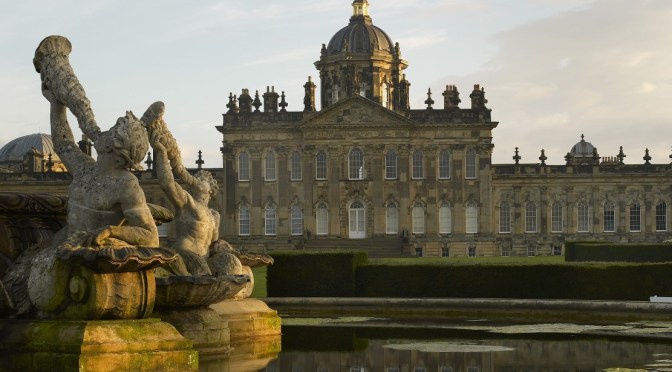
House & Garden Films (May 19, 2023) – House & Garden presents Houses with History from Castle Howard, home to Netflix’s hit series ‘Bridgerton’.
Join interior designer Remy Renzullo as we tour Castle Howard, designed by Sir John Vanbrugh and home to the Carlisle branch of the Howard family for over 300 years. Remy takes us on a tour of the castle that is featured in popular TV shows — most notably as Clyvedon castle in Bridgerton — showing us private spaces usually unseen by the public, including the beautiful Temple of the Four Winds, as well as giving us his take on the spectacular 18th-century state rooms.
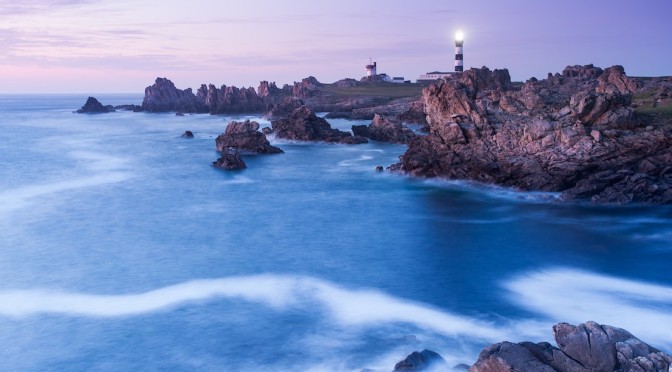
FRANCE 24 (May 18, 2023) – We take you to the westernmost point of France; the last piece of civilisation before the vastness of the Atlantic Ocean. Ouessant, located 25 kilometres off the Finistère coast in Brittany, is a rugged and fascinating island, where less than 500 people live all year round.
We meet a fisherwoman, a doctor and a photographer who appreciate its raw beauty. The island is also home to no less than five lighthouses that have guided generations of sailors along this fearsome coast. The locals call them the “heroes of Ouessant”.
Kidston Productions Films (May 12, 2023) – History was made a year ago when the 1955 Mercedes-Benz 300 SLR ‘Uhlenhaut Coupé’ – the car that would never be sold – became the most valuable car ever to change hands.
Arguably it transformed the way other collectors think about cars being “just cars”. Mercedes made two of these coupés for a race that never happened, and after press testing and high speed VIP rides chauffeured by race team boss Rudolf Uhlenhaut (that’s him in pic 7) they lived a sheltered life in the factory museum with rare appearances at historic events: ‘Red’ (nicknamed for its upholstery, as opposed to ‘Blue’) had covered just over 5,000km when it was sold.
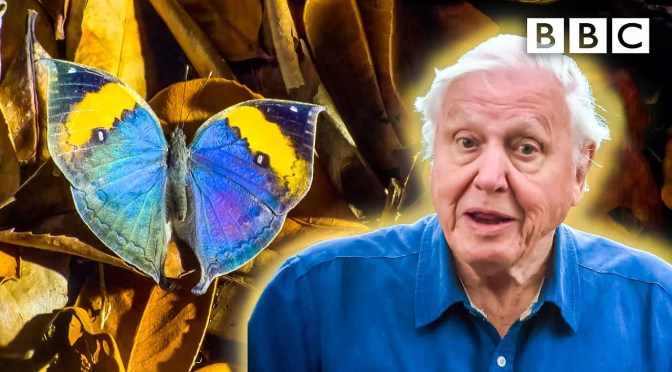
BBC (May 8, 2023) – Sir David Attenborough was born in London on May 8, 1926 and educated at Wyggeston Grammar School, Leicester, and Clare College, Cambridge where he took an honours degree in Natural Sciences. He did two years National Service in the Royal Navy and then spent some time on the editorial side of the University of London Press.
Sir David’s broadcasting career spans over 50 years. It began in 1952 when he joined BBC Television as a trainee and then became a producer working in the studios of Alexandra Palace in north London, from which the world’s first television service was broadcast.
CBS Sunday Morning (May 7, 2023) – First published in France in 1900, The Michelin Guide has been awarding stars to restaurants for about 100 years. Today, it rates the work of chefs around the world, including in the United States.
Correspondent Kelefa Sanneh talks with an anonymous Michelin restaurant inspector, and with chefs at a restaurant with a coveted Michelin star.
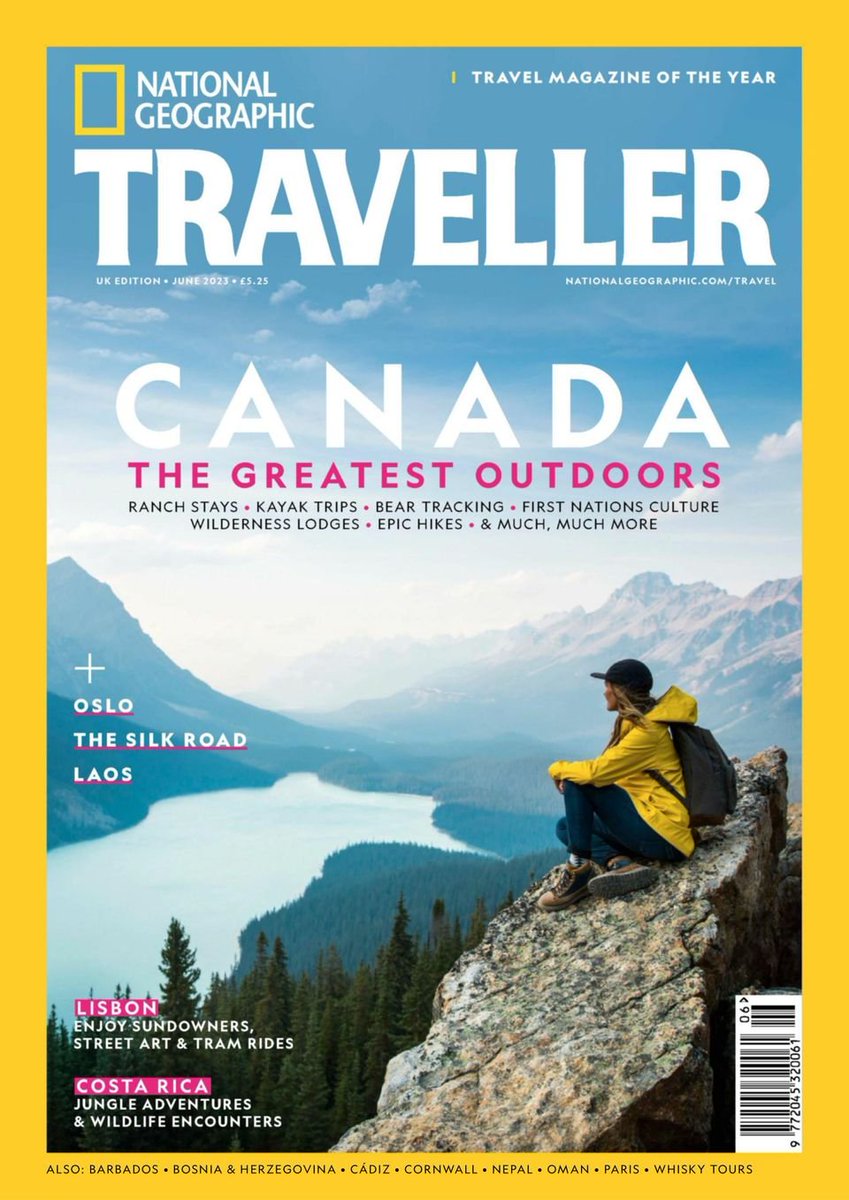
National Geographic Traveller Magazine (June 2023). The latest issue features Canada’s greatest outdoor adventures, summer guides to Oslo and Lisbon, the quetzals and rivers of Costa Rica, and explores the Silk Road route of Central Asia.
Óli and Brim the dog, on the coast close to Velbastaður.
On their farm in the Faroe Islands, where the sheep roam the hillsides and the chickens put themselves to bed, Óli and Anna Rubeksen dish up a feast of local ingredients ranging from rhubarb to lamb hearts.
Also inside this issue:
Oman: A rich history and striking landscapes, from the Arabian coast to the Hajar Mountains. Costa Rica: Explore Central America’s wildest corners, where quetzals hide and rivers lead to jungle lodges. Laos: In a corner of this Southeast Asian country, life is shaped by the flow of the Mekong River. Lisbon: Tram rides, street art and al fresco meals: Portugal’s lively capital is best explored outdoors. Oslo: Summer is the perfect time to discover Norway’s flourishing premier city. Bosnia & Herzegovina: Discover this Balkan country’s turbulent history, wild nature and surprising food scene. Barbados: Inventive food and drinks projects are redefining the Caribbean island’s culinary landscape. Paris: The French capital beckons with accommodation options to suit every pocket.
Plus, it’s the anniversary of Vienna’s World Fair; new exhibitions in London; a taste of Corfu; archaeology and Indiana Jones in Syracuse; Manila’s design-led hotels; family trips to the UK seaside; sand, sherry and Spanish history in Cádiz; a Cornish escape to Falmouth; great reads on British nature; and packing essentials.
The B1M(May 3, 2023) – DESPITE standing just 22-storeys tall on an island full of massive skyscrapers, New York’s Flatiron Building managed to endure as a cake-slice shaped icon of this city since 1902.
That unusual triangular shape has captured the eyes of photographers, tourists and directors for decades.
But in recent years, this world-famous structure has sat empty and under scaffolding only for a New York court to then order it be put up for grabs at auction in early 2023 – an auction that seems to have turned into a bit of a farce.
It’s the latest uncertain chapter in the long story of this building – a building that’s seen so much of New York’s history unfold and endured so much already.
This is how one of the city’s strangest towers came to be, how it went on to become iconic and why the current struggles around its sale will probably only make it more famous.
Architectural Digest (April 20, 2033): Today on AD, architect Robby Cangelosi leads us on an insightful walking tour of New Orleans, exploring the fascinating history of its neighborhoods and buildings from its origins to the present day.
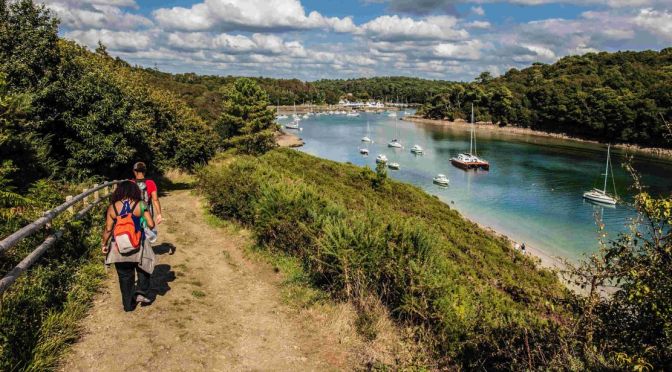
FRANCE 24 (April 20, 2023) – Of the 370 long-distance hiking paths that criss-cross the French countryside, some in particular stand out. In Finistère, on the Atlantic, the Chemin du Pouldu merges with the Brittany coast. Its contrasts of green and blue have inspired many artists, such as French painter Paul Gauguin.
Down in the Cévennes, Scottish writer Robert Louis Stevenson gave his name to the Chemin Stevenson, where you can still come across donkeys. As for the route to Santiago de Compostela, one of the oldest long-distance hiking paths in France, it contains delights for the eyes and the soul.
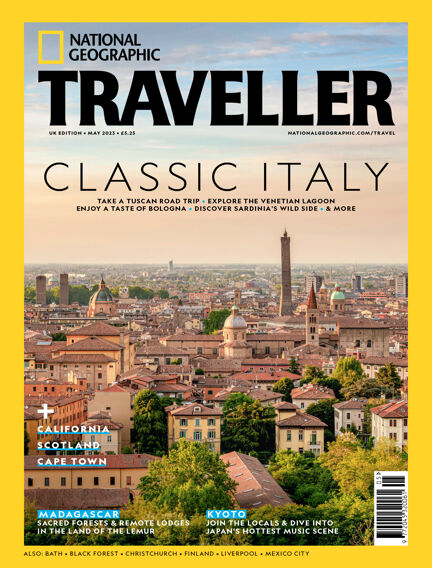
National Geographic Traveller Magazine (May 2023). The cover story this month takes a fresh look at the classic destinations of Italy, a country that offers enough for a lifetime of discoveries. From a coastal road trip through Calabria to street art tours in Turin and dining in the shadow of Mount Etna, we round up 21 experiences that cast the peninsula in a different light.
This issue also comes with a free Ecuador guide. Inside, we discover the country’s striking wildlife and landscapes, try the dishes leading its culinary renaissance and meet is creative, resilient communities.
Also inside this issue:
Madagascar: The communities and eco-lodges preserving the island’s rich, endangered habitats. Scotland: Canoe down the River Spey, the water of life for Caledonia’s malt whisky. Germany: Creativity, community and craftsmanship in the magical Black Forest. Kyoto: Turn up the volume in Japan’s cultural heart, where live music fills cafes, bars and historic houses. Cape Town: South Africa’s ‘Mother City’ is finding a new groove with edgy bars and excitinghotels. Punkaharju:Spend a weekend in the Finnish Lakeland. Napa Valley:Discover local produce and craft beers in the US’s most famous wine region. Mexico City:The Mexican capital’s hotel scene is booming in buzzing neighbourhoods.
News, Views and Reviews For The Intellectually Curious















 Boomers Daily