
Tag Archives: Health

 Monocle 24 “The Urbanist” discusses the impact that quarantines can have on cities and what lessons city planners can learn when an outbreak causes borders to close. Here is a report from the ground on the changing nature of city life in Milan.
Health: Mayo Clinic Rolls Out Its Own “Coronavirus / Covid-19” Test (Video)
Dr. Matthew Binnicker oversees Mayo Clinic’s laboratory response in developing a test to detect COVID-19 in clinical samples. A process that usually takes six months to a year, was accomplished in under a month, thanks to a dedicated team working around the clock. The test should help ease the burden currently being felt at the Centers for Disease Control & Prevention and state health labs. That will also mean faster turnaround times for results. Patients can expect results within 24 hours of when samples are collected and sent to Mayo Clinic Laboratories. Initially, Dr. Binnicker says the laboratory has the capacity to run between 200-300 tests daily. Additional equipment has been ordered to double that capacity in the coming weeks.
More health and medical news on the Mayo Clinic News Network. https://newsnetwork.mayoclinic.org/

How China And South Korea Are Containing “Coronavirus / Covid-19”
Global health officials have praised China and South Korea for the success of their efforts to contain the coronavirus. What are those countries getting right — and what can everyone else learn from them?
Guest: Donald G. McNeil Jr., a science and health reporter for The New York Times. For more information on today’s episode, visit nytimes.com/thedaily.
Background reading:
- While world leaders are finally speaking out about the gravity of the pandemic, their response lacks unity with the United States absent from its traditional conductor role in managing global crises.
- Stocks tanked again as the outbreak was officially declared a pandemic and policies to address its impact proved lacking or ineffective.
- All flights to the U.S. have been suspended from Europe. Many schools announced they would close indefinitely, some nursing homes banned visitors, and workplaces across the country have urged their employees to work from home. Here are the latest updates.

Medical: “Elbow Pain” – Diagnosis And Treatments (Cleveland Clinic Video)
When is elbow pain an emergency? Can the elbow joint be replaced? What’s that weird feeling when you hit your funny bone? Orthopedic Surgeon, William Seitz Jr., MD, sits down to answer these questions and more.

Health News Video: FDA Launches (And Explains) New Nutrition Facts Label
What’s new about the new Nutrition Facts label? Watch this Q&A with Susan T. Mayne, Ph.D., Director of FDA’s Center for Food Safety and Applied Nutrition.

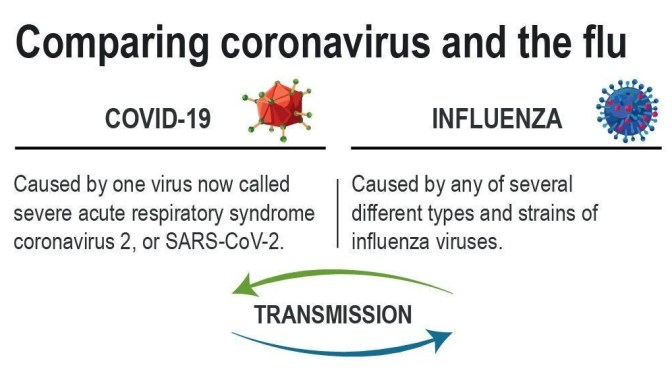
Health Update: Comparing “Coronavirus / Covid-19” And “Influenza” (W.H.O.)
From an MIT Technology Review article (March 11, 2020):
Here are six differences between coronavirus and the flu:
 Coronavirus appears to spread more slowly than the flu. This is probably the biggest difference between the two. The flu has a shorter incubation period (the time it takes for an infected person to show symptoms) and a shorter serial interval (or the time between successive cases). Coronavirus’s serial interval is around five to six days, while flu’s gap between cases is more like three days, the WHO says. So flu still spreads more quickly.
- Shedding: Viral shedding is what happens when a virus has infected a host, has reproduced, and is now being released into the environment. It is what makes a patient infectious. Some people start shedding the coronavirus within two days of contracting it, and before they show symptoms, although this probably isn’t the main way it is spreading, the WHO says.
- Secondary infections. As if contracting coronavirus wasn’t bad enough, it leads to about two more secondary infections on average. The flu can sometimes cause a secondary infection, usually pneumonia, but it’s rare for a flu patient to get two infections after the flu. The WHO warned that context is key (someone who contracts coronavirus might already have been fighting another condition, for example).
 Don’t blame snotty kids—adults are passing coronavirus around. While kids are the primary culprits for flu transmission, this coronavirus seems to be passed between adults. That also means adults are getting hit hardest—especially those who are older and have underlying medical conditions. Experts are baffled as to why kids seem protected from the worst effects of the coronavirus, according to the Washington Post. Some say they might already have some immunity from other versions of the coronavirus that appear in the common cold; another theory is that kids’ immune systems are always on high alert and might simply be faster than adults’ in battling Covid-19.
- Coronavirus is far deadlier than the flu. Thus far, the mortality rate for coronavirus (the number of reported cases divided by the number of deaths) is around 3% to 4%, although it’s likely to be lower because many cases have not yet been reported. The flu’s rate is 0.1%.
- There is no cure or vaccine for the coronavirus. Not yet, anyway, although work is under way. There is, however, a flu vaccine—and everyone should get it, not least because being vaccinated could help lessen the load on overstretched medical services in the coming weeks.
Elderly & Coronavirus: Nursing Homes Increase Guest Symptom, Travel And Exposure Reviews
From a Harvard Gazette online article (March 10, 2020):
 There’s a symptom review, there’s a travel review, and there’s an exposure review. And if the answer to any of those questions is yes, then you’re asked to not come in. And so far people have been compliant and have left. So that is a good thing.
If you have a cough and a fever, if you’ve got respiratory symptoms and you’re short of breath, if you’ve traveled to a place of concern or if you may have been exposed to someone who did — especially if you’re symptomatic — then I would definitely ask, “Do I really need to visit my grandma today? Can I wait and can I Skype her? Can I do FaceTime?”
I know that’s hard for some of our older adults who aren’t technologically savvy, but maybe now is the time to get them hooked up. It really would be heartbreaking if, in wanting to do something positive for someone’s emotional or mental health, you ended up infecting them.
Harvard-affiliated Hebrew SeniorLife offers a continuum of care for 3,000 elderly people daily, with a range of services including residential assisted living, short-term rehabilitation, outpatient services, and long-term care for those with chronic illness. In a Q&A interview aimed at understanding the challenges involved, Harvard Medical School Assistant Professor Helen Chen, Hebrew SeniorLife’s chief medical officer, discussed steps the facility has taken to combat the virus and the outlook going forward.
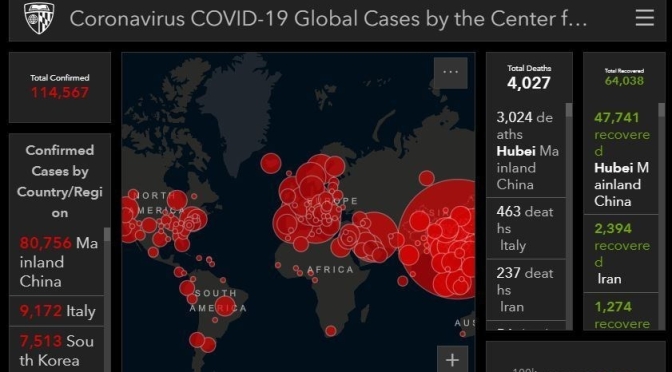
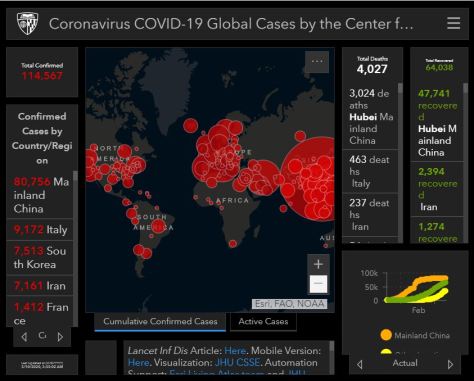
Health: 24/7 Real-Time “Coronavirus / Covid-19” Global Cases (March 10)
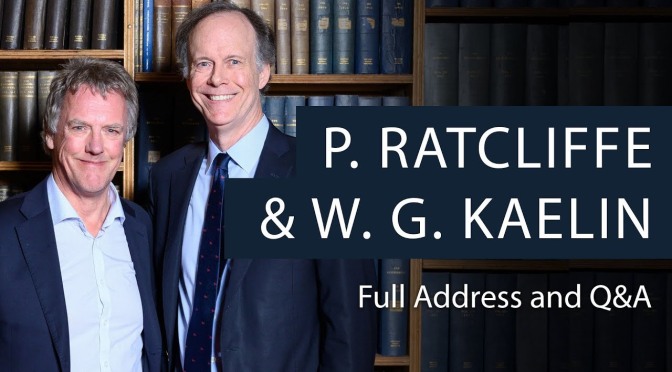
Medicine Lectures: 2019 Nobel Laureates Sir Peter Ratcliffe And Professor William Kaelin (Oxford)
Sir Peter and Prof. Kaelin were awarded the Nobel Prize in Physiology and Medicine last year by the Nobel Assembly at Karolinska Institutet, in recognition of their discoveries of how cells sense and adapt to oxygen availability, an essential adaptive process central to many significant diseases. The professors respectively work for the University of Oxford and Harvard University, and shared the Nobel Prize with Prof. Gregg Semenza, a fellow researcher.

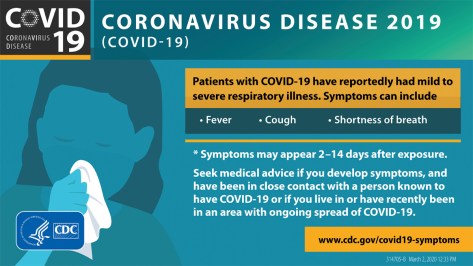
Health Infographics: “Coronavirus / Covid-19” – Symptoms And Exposure Period (CDC Update)
 Boomers Daily