Tag Archives: Health

History Videos: “1918 Flu Pandemic” – The Story And Lessons Learned (CBS)

The pandemic of H1N1 virus in 1918 infected about one-third of the world’s population, causing at least 50 million deaths, including more than a half-million in the United States. Martha Teichner reports.

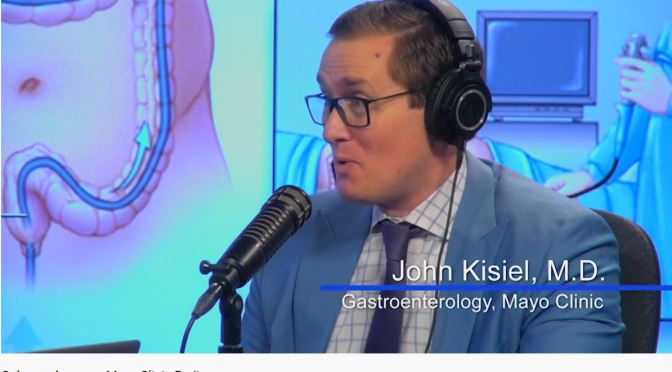
Health Talk: “Colorectal Cancer” & Importance Of Screening (Mayo Clinic)


On the Mayo Clinic Radio program, Dr. John Kisiel, a Mayo Clinic gastroenterologist, discusses colorectal cancer and the importance of recommended screening tests.

This interview originally aired March 7, 2020. Disclaimer: Mayo Clinic has a financial interest in Exact Sciences.

Among cancers that affect men and women, colorectal cancer is the second leading cause of cancer deaths in the U.S., according to the Centers for Disease Control and Prevention. Most cases of colorectal cancer begin as small, noncancerous (benign) clumps of cells called polyps. Over time, some polyps become colon cancer. Because these polyps may be small and produce few, if any, symptoms, health care providers recommend regular screening tests to prevent colon cancer. These screenings identify and remove polyps before they become cancerous. March is Colorectal Cancer Awareness month, a time to educate the public about the importance of colorectal cancer screening.

Heart Health Video: “Beta Blockers” Lower CVD Risks Of Harmful Gut Microbes

Hazen and colleagues find that gut bacteria play a central role in the conversion of dietary proteins into a compound, phenylacetylglutamine ( PAGln), which not only is associated with future cardiovascular disease risk in humans but also promotes platelet responsiveness and blood clotting potentially via adrenergic receptors, according to mouse models.

Read study

Diet Study: “Moderate Egg Consumption” Does Not Increase Cardiovascular Disease Risk (The BMJ)

From a BMJ Research online study (March 4, 2020):

BMJ Open Access logoWe found no association between egg consumption and risk of cardiovascular disease in three large US cohorts. Results from the updated meta-analysis lend further support to the overall lack of an association between moderate egg consumption (up to one egg per day) and cardiovascular disease risk. 
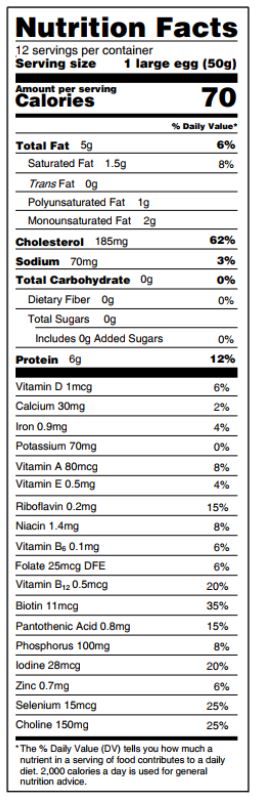
One Large Egg Nutrition factsEggs are a major source of dietary cholesterol, but they are also an affordable source of high quality protein, iron, unsaturated fatty acids, phospholipids, and carotenoids.
Introduction: In the United States, cardiovascular disease is the leading cause of death in men and women. Diet and lifestyle undisputedly play a major part in the development of cardiovascular disease. In the past, limiting dietary cholesterol intake to 300 mg per day was widely recommended to prevent cardiovascular disease. However, because of the weak association between dietary cholesterol and blood cholesterol, and considering that dietary cholesterol is no longer a nutrient of concern for overconsumption, the most recent 2015 dietary guidelines for Americans did not carry forward this recommendation.

Read full study

Health: All Adults 18-79 Should Be Screened For Hepatitis C Virus (HCV)

From a Stanford University online article (March 2, 2020):

Health Policy Stanford“The opioid epidemic has added fuel to the HCV fire, substantially increasing transmission,” said Owens. “HCV is now an enormous public health problem, affecting a much broader age range of people than before. Fortunately, we have the tools to identify people and treatment is now successful in the vast majority of patients, so screening can prevent the mortality and morbidity from HCV.”
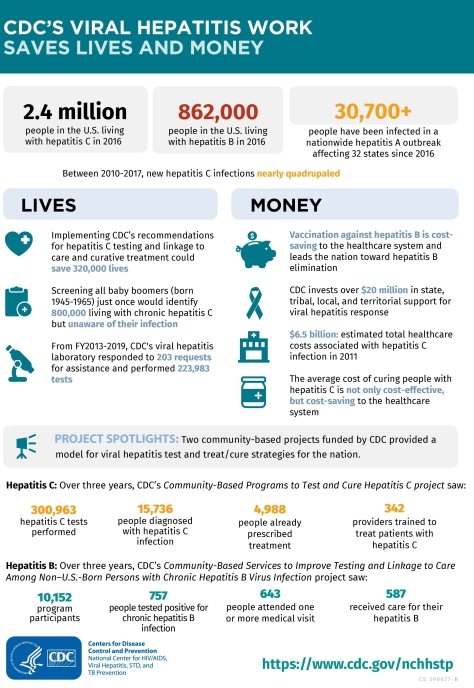
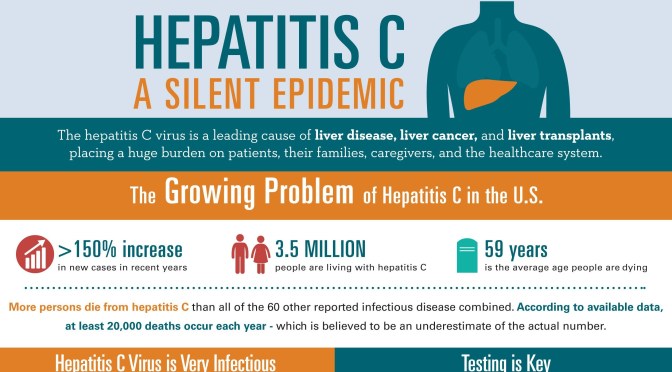
A task force of national health experts recommends clinicians screen all adults 18 to 79 for the hepatitis C virus (HCV), noting that the viral infection is now associated with more deaths in the United States than the top 60 reportable infectious diseases combined. Many people are unaware they are carrying the viral infection.

CDC-viral-hepatitis-work-P-page-0

“People with hepatitis C do not always feel sick and may not know they have it,” says chair of the U.S. Preventive Services Task Force Douglas K. Owens, M.D, M.S. “Screening is key to finding this infection early, when it’s easier to treat and cure, helping reduce illnesses and deaths.”

Owens, who is the director of Stanford Health Policy and the Henry J. Kaiser, Jr., Professor of Medicine, said the opioid epidemic now plays an important role in the prevalence of HCV. There are more than three times the number of acute HCV cases than a decade ago, particularly among young, white, injection drug users who live in rural areas. Women aged 15 to 44 have also been hit hard by the virus that is spread through contaminated blood.

Read full Article

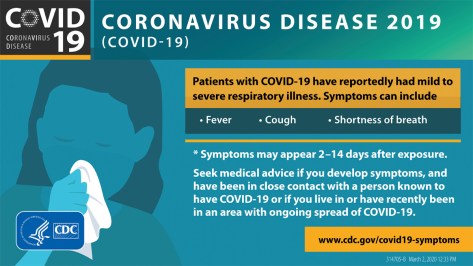
W.H.O. Update: 80% Of “Coronavirus/Covid-19” Patients – “Mild Symptoms”

Real-Time Update of Cases

Mar.03 — World Health Organization spokesman Tarik Jasarevic speaks from Geneva about the latest advice for avoiding the coronavirus. He also comments on efforts to develop a vaccine and advice for public health workers. He speaks on “Bloomberg Markets: European Open.”

“2020 Philips Sleep Survey”: 50% Of People Sleep Poorly, With Decrease In Those Trying To Improve It

From a Philips “2020 Sleep Survey” online release (Mar 2, 2020):

Philips Global Sleep Survey 2020“The decrease in people taking action to improve sleep is alarming, especially when it is clear people around the world deeply value sleep. Sleep deficit impacts people both mentally and physically, so we need to educate people on available sleep resources and empower them with the confidence that their efforts will pay off,” said Mark Aloia, PhD, Global Lead for Behavior Change, Sleep & Respiratory Care at Philips.

2020-Philips-WSD-Report-page-3

Only 49% of people are satisfied with their sleep, with worry/stress reported as the most limiting factor to a good night’s sleep (33%). Interestingly, fewer people in 2020 are taking action to improve sleep compared to 2019, with nearly all listed strategies to improve sleep lower or consistent in 2020 when compared to 2019 results. For example, reading before bed was the most popular strategy used to improve sleep in 2019 (39%), but only 28% of people report reading to improve sleep in 2020. Other notable distinctions in sleep-related behavior appeared across age and gender differences.
.

Coronavirus: Lack Of “Adequate Knowledge” Driving Public Panic (BMJ)

From a BMJ Opinion article (Feb 28, 2020):

Coronavirus Cases Confirmed March 2 2020A lack of adequate knowledge is probably the driving force for the public panic, particularly at the early stages of an outbreak—highlighting the fact that information is crucial. Misunderstandings about the information that is available, even worse exaggerating such information, may further aggravate the panic. Unfortunately, these phenomena are not uncommon. To relieve the public panic, an effective approach would be timely publication of trustworthy research evidence in a manner appropriate for the public. 

Click here for real-time update

To date, there have been a number of reports and research papers published in peer reviewed journals. However, this information is largely aimed at researchers and healthcare professionals. The study findings are often obscure for the general public. Some of the published evidence is reporting on early findings and there are some methodological limitations. If inappropriately interpreted, they could misinform the public and could potentially cause further panic or psychological stress. We believe that providing the public with timely and credible evidence and appropriate interpretation is very important. Disseminating the evidence effectively is critical to improving the public’s understanding of the outbreak.

The BMJ Coronavirus latest news and updates
Click here for Latest News and Updates

Read full article

Diet Studies: “Eat Less, Live Longer” – Calorie Restriction Delays Age-Related Diseases (Salk)

Salk Institute logoEat less, live longer- If you want to reduce levels of inflammation throughout your body, delay the onset of age-related diseases and live longer—eat less food. That’s the conclusion of a new study by scientists from the US and China that provides the most detailed report to date of the cellular effects of a calorie-restricted diet in rats.

(Salk News, February 27, 2020)

While the benefits of caloric restriction have long been known, the new results show how this restriction can protect against aging in cellular pathways, as detailed in Cell on February 27, 2020.

Aging is the highest risk factor for many human diseases, including cancer, dementia, diabetes and metabolic syndrome. Caloric restriction has been shown in animal models to be one of the most effective interventions against these age-related diseases. And although researchers know that individual cells undergo many changes as an organism ages, they have not known how caloric restriction might influence these changes.

In the new paper, Belmonte and his collaborators—including three alumni of his Salk lab who are now professors running their own research programs in China—compared rats who ate 30 percent fewer calories with rats on normal diets. The animals’ diets were controlled from age 18 months through 27 months. (In humans, this would be roughly equivalent to someone following a calorie-restricted diet from age 50 through 70.)

Read more