From Johns Hopkins Medicine:
 “The sleep environment is something that can easily be fixed,” Salas says. By giving a little thought to positioning your body and bed, you might find your slumber is even sweeter.
For young, healthy people, sleep position is less important, Salas says. “But as you get older and have more medical issues, sleep position can become positive or negative.”
Consider these factors before you switch off the light:
- Back and neck pain: When it comes to alleviating pain, sleeping on your back is a mixed bag, Salas says. For people with neck pain, sleeping face up can sometimes make the pain worse. But many people find back sleep is helpful for alleviating low-back pain. If you have soreness in your spine, experiment with different positions and pillows to find what works for you.
- Snoring and sleep apnea: Obstructive sleep apnea causes the airways to collapse during sleep, leading to pauses in breathing. It often goes hand-in-hand with snoring. Positioning yourself on your side or stomach can help the airways stay open to reduce snoring and alleviate mild apnea, Salas says.
- Reflux and heartburn: If you suffer from heartburn, sleeping on your right side can make symptoms worse, Salas says. That’s true for people who have gastroesophageal reflux disease (GERD) and for people who have heartburn for other reasons, such as pregnant women. Flip to your left side to cool the burn.
- Appearance: If you sleep on your side or stomach, you’ve probably noticed creases on your face when you wake up. “Over time, that can lead to breakouts or cause chronic changes to the skin,” Salas says. “If you’re concerned about wrinkles, it’s another reason to sleep on your back.”
Don’t underestimate the importance of optimizing your bedroom to help you get a good night’s sleep. Salas adds:
- Clean sheets: Wash sheets frequently and vacuum the mattress to rid it of dust and dander that can cause allergies and impair your sleep.
- Close the blinds: Use curtains or blinds to keep the room dim at night. But open the curtains (or head outside) in the morning to reset your internal clock.
- Location matters: Position your bed so you aren’t facing distractions such as a desk stacked with work or a blinking light.
Read more

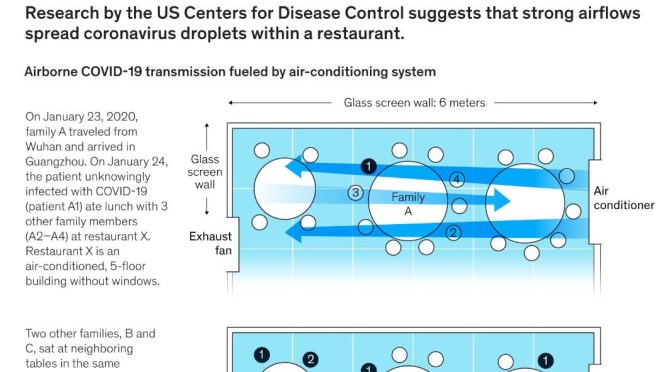
 The World Health Organization recently acknowledged that some evidence about in-room transmission is worrisome. In addition, after analyzing a transmission event at a restaurant in China, the US Centers for Disease Control and Prevention (CDC) concluded that an asymptomatic patient transmitted the virus to families at two nearby tables.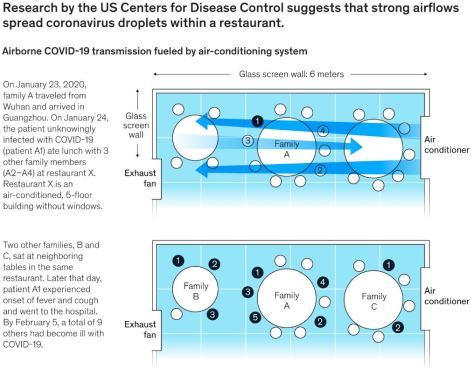




 Nature discusses the massive coronavirus outbreak that struck the iconic Californian prison after it rejected expert aid.



 Chest pain is a common chief complaint. It may be caused by either benign or life-threatening aetiologies and is usually divided into cardiac and non-cardiac causes. James E. Brown, Professor and Chair, Wright State University Boonshoft School of Medicine, Kettering, Ohio, gives us an overview of assessing chest pain in the emergency setting.



 Boomers Daily