
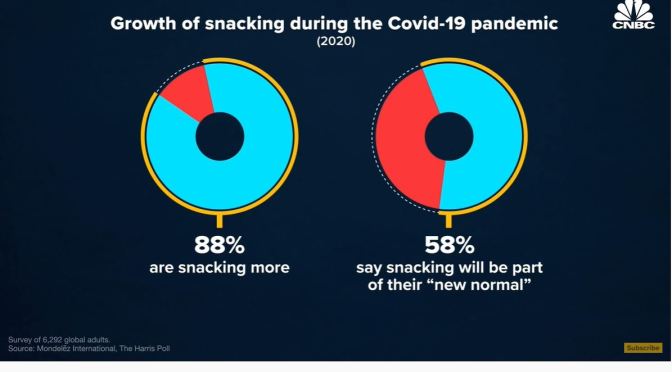
With Americans stuck at home, snack food has become a valuable commodity for the pandemic stressed consumer. North American sales of savory snacks like chips, popcorn, and pretzels climbed to $56.9 billion in 2020. In stressful times, people turn to snacking for comfort and Covid-19 has transformed kitchens across the U.S. into giant vending machines. So, has Covid-19 put an end to the shift to healthier snacks?
Tag Archives: Health
Development Disorders: ‘What Is Autism?’ (Video)
Autism affects an estimated 1 in 54 children in the United States. You’ve probably heard a lot of thoughts and ideas about autism. What better way to honor World Autism Day than by raising our own awareness about people with autistic spectrum disorders. 𝐃𝐮𝐤𝐞 𝐂𝐞𝐧𝐭𝐞𝐫 𝐟𝐨𝐫 𝐀𝐮𝐭𝐢𝐬𝐦 𝐚𝐧𝐝 𝐁𝐫𝐚𝐢𝐧 𝐃𝐞𝐯𝐞𝐥𝐨𝐩𝐦𝐞𝐧𝐭 The Duke Center for Autism and Brain Development delivers state-of-the-art interdisciplinary clinical care, conducts cutting-edge research, trains the next generation of scientists, and advocates for public policies to help ensure people with autism reach their full potential.

Science Of Aging: Social Insects May Hold Secrets
Bees, termites, and ants can teach us a lot about cooperation, communication, and the skills that keep societies together. But these so-called social insects may also hold secrets that could reshape our understanding of human aging. Many social insects exhibit surprising aging characteristics that cause their life spans to shift depending on their roles.
Following the death of a queen Indian jumping ant, for example, workers fight for the right to transform into an egg-laying ant. Much is at stake: the life expectancy of an egg-layer is five times longer than that of a worker’s. Though fruit flies, mice, and nematodes currently dominate aging research, some scientists say social insects’ aging behaviors could help dissect aging mechanisms in humans. This video will take you deep into the catacombs—er, honeycombs—of insect aging.
Read the story ($): https://scim.ag/3cFO0k0

Morning News Podcast: Covid In India, Poaching & Seeing Around Corners
Case numbers are on the rise—at a more worrying rate even than the first wave. We ask why, and what is being done to slow the spread. As revenues at wildlife-tourism spots have dried up, so has security—and now poaching is even more rampant than before.
And scientists’ increasingly audacious bids to see around corners. For full access to print, digital and audio editions of The Economist, subscribe here http://www.economist.com/intelligenceoffer
Health: ‘Gut Microbiomes – Enabler Of Longer Lives’
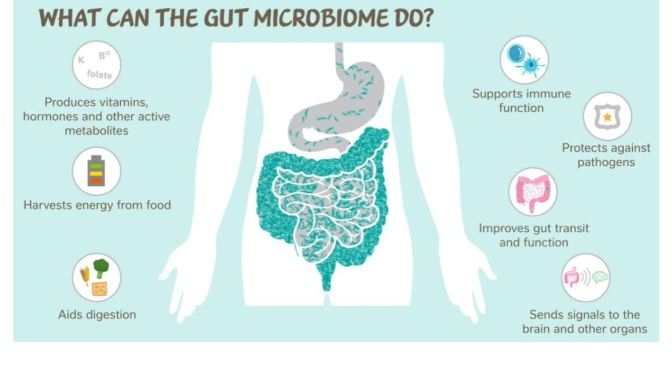
Microbiomes are complex microbial ecosystems, and amongst those found in and on human body, gut microbiome is the most complex. It performs important functions, and is increasingly recognized as a key element influencing long-life health. Specific nutritional components, such as prebiotics and probiotics, can be used to shape healthy gut microbiome. Nestlé Research has made significant contributions in this field for over 30 years.
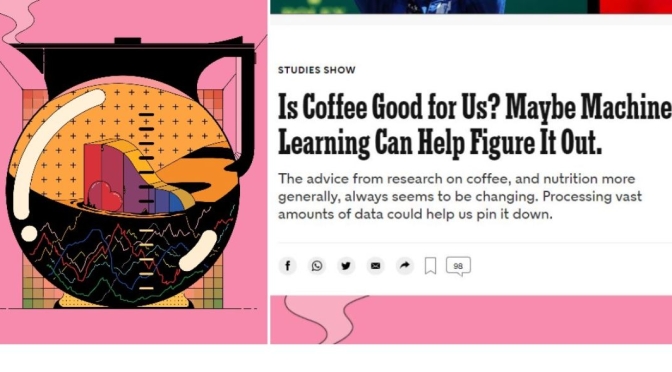
Studies: ‘Coffee’ – Machine Learning Review Shows Benefits Of Drinking It
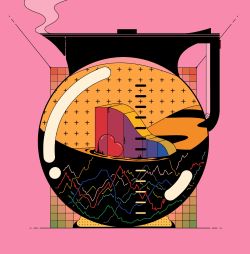
“It may be good for you,” says Dariush Mozaffarian, dean of the Friedman School of Nutrition Science and Policy at Tufts University. “I think we can say with good certainty it’s not bad for you.” (Additives are another story.)
After the link appeared between coffee intake and a reduced risk of heart failure in the Framingham data, Kao confirmed the result by using the algorithm to correctly predict the relationship between coffee intake and heart failure in two other respected data sets. Kosorok describes the approach as “thoughtful” and says that it “seems like pretty good evidence.”

Should you drink coffee? If so, how much? These seem like questions that a society able to create vaccines for a new respiratory virus within a year should have no trouble answering. And yet the scientific literature on coffee illustrates a frustration that readers, not to mention plenty of researchers, have with nutrition studies: The conclusions are always changing, and they frequently contradict one another.
Biotechnology: ‘Genome Sequencing – Unlocking The Covid Code’ (NY Times)
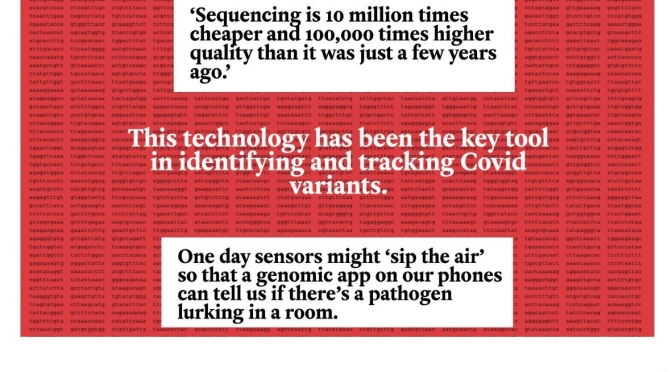
The advent of commercial genome sequencing has recently, and credibly, been compared to the invention of the microscope, a claim that led me to wonder whether this new, still relatively obscure technology, humming away in well-equipped labs around the world, would prove to be the most important innovation of the 21st century.

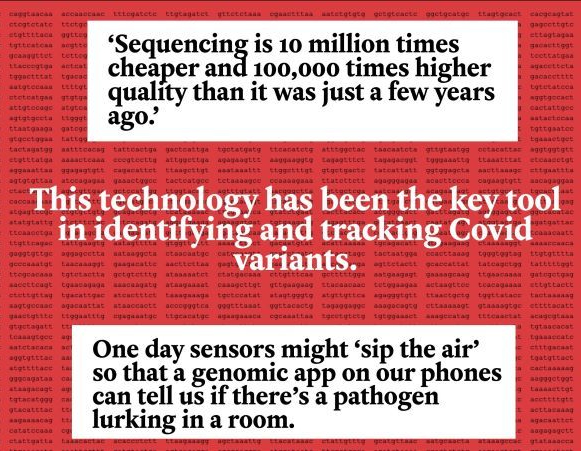
And unexpectedly, Covid-19 has proved to be the catalyst. “What the pandemic has done is accelerate the adoption of genomics into infectious disease by several years,” says deSouza, the Illumina chief executive. He also told me he believes that the pandemic has accelerated the adoption of genomics into society more broadly — suggesting that quietly, in the midst of chaos and a global catastrophe, the age of cheap, rapid sequencing has arrived.

Analysis: ‘March Madness’ Tries To Limit Covid (Video)
The NCAA has created a ‘controlled environment’ with an extensive list of protocols aimed at keeping the coronavirus from upending March Madness for a second year. The stakes are high for both the players and the NCAA. Photo: Marc Lebryk-USA TODAY Sports
Medicine: Adequate Sleep & Cardiovascular Health
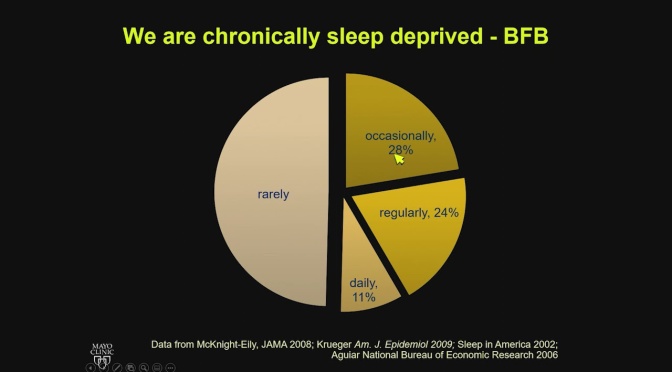
Mayo Clinic Division of Preventive Cardiology will be preparing a series of recordings focusing on Cardiovascular Disease states. This is the Sleep Series and this particular one focuses on what is adequate sleep and does it benefit Cardiovascular Health.
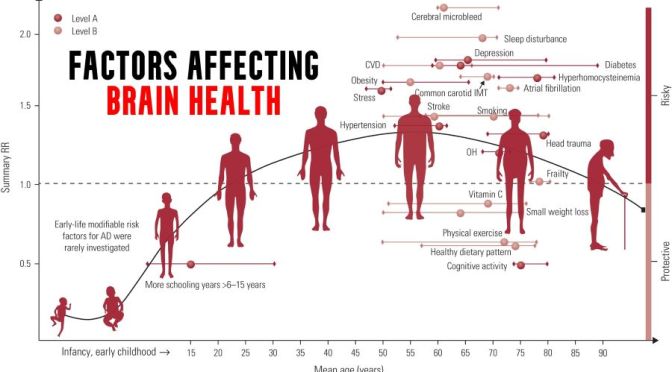
Infographic: Enhancing Brain Health Across An Individual’s Lifespan

Opportunities for enhancing brain health across the lifespan
Published online by Cambridge University Press: 22 March 2021
Summary
As we age, there are characteristic changes in our thinking, reasoning and memory skills (referred to as cognitive ageing). However, variation between people in the timing and degree of change experienced suggests that a range of factors determine individual cognitive ageing trajectories. This narrative review considers some of the lifestyle factors that might promote (or harm) cognitive health. The focus on lifestyle factors is because these are potentially modifiable by individuals or may be the targets of behavioural or societal interventions. To support that, the review briefly considers people’s beliefs and attitudes about cognitive ageing; the nature and timing of cognitive changes across the lifespan; and the genetic contributions to cognitive ability level and change. In introducing potentially modifiable determinants, a framing that draws evidence derived from epidemiological studies of dementia is provided, before an overview of lifestyle and behavioural predictors of cognitive health, including education and occupation, diet and activity.
 Boomers Daily