Tag Archives: Great Britain

Architecture: Poet Alfred Lord Tennyson’s Isle Of Wight Home ‘Farringford’

After nearly 60 years as a hotel, this former home of the poet Alfred, Lord Tennyson has been triumphantly restored as a house museum. John Goodall reports; photography by Paul Highnam.
Image

On January 21, 1884, the poet laureate Alfred Tennyson was elevated to the peerage as Baron of Aldworth, Surrey, and of Freshwater on the Isle of Wight. As the editor of The Complete Peerage (1896) primly commented when recording this exceptional accolade, ‘the assumption of two places in different counties (more especially when the estate possessed is inconsiderable), cannot be commended’. Tennyson, however, would not have cared. Indeed, he had refused the offer of baronetcy four times and was only finally persuaded to accept it by his friend, the then Prime Minister, William Gladstone.

Tennyson chose this unusual title because — unconventionally for the period — he had houses in both places that he considered to be homes. Aldworth, which he generally occupied in the summer months, was a retreat from his house at Freshwater. This latter building, known as Farringford, was sold by the family in the 1940s and thereafter became a hotel. Returned back into private ownership in 2007, it has now undergone a renaissance at the hands of a Tennyson scholar, who has turned it into both a home and a house museum to the poet.

Fig 1: The library, which was added to the house in 1871 and has been fully restored. Farringford, Isle of Wight. ©Paul Highnam for Country Life

In the years immediately following his marriage in 1850, Tennyson and his wife, Emily, actively searched for a place to live. They heard from friends about a family house at Freshwater, on the north-western extreme of the Isle of Wight. Following a slightly depressing first viewing by Tennyson — then aged 44 — the couple came back together. An account of their visit in November 1853 is given in Emily’s journal. Travelling by train to Brockenhurst — where the railway line then ended — they caught an omnibus to Lymington and crossed on a still evening from the mainland in a rowing boat.

Emily was delighted by the house, which enjoyed an expansive prospect along almost the whole Hampshire coastline, and ‘looking from the drawing-room window, thought “I must have that view”, and so I said to him when alone. So accordingly we agreed… to take the place furnished for a time on trial with the option of purchasing’.

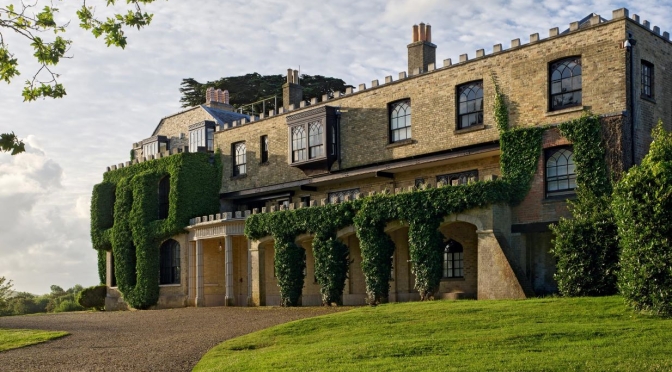
Fig 2: The north front of the house, with its Gothic porch. Farringford, Isle of Wight. ©Paul Highnam for Country Life

Read more at Country Life Magazine: https://ift.tt/l9zibWL

Opinion: Britain’s Perilous State, The Tik Tok Threat, Trumpism’s New DC Army

A selection of three essential articles read aloud from the latest issue of The Economist. This week, why Britain is in a dangerous state, why the world’s most exciting app is also its most mistrusted (10:49), and Trumpism’s new Washington army (18:38).

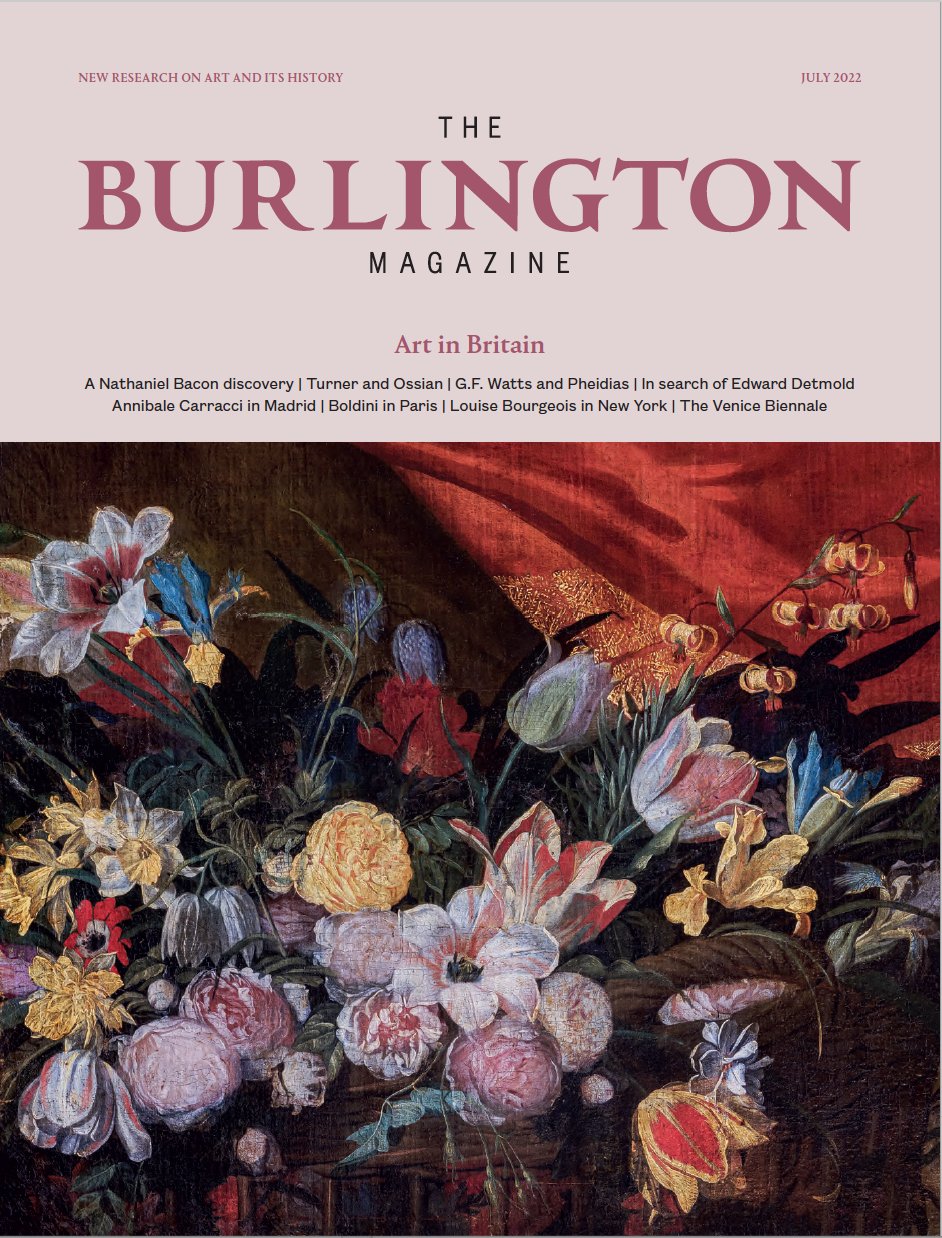
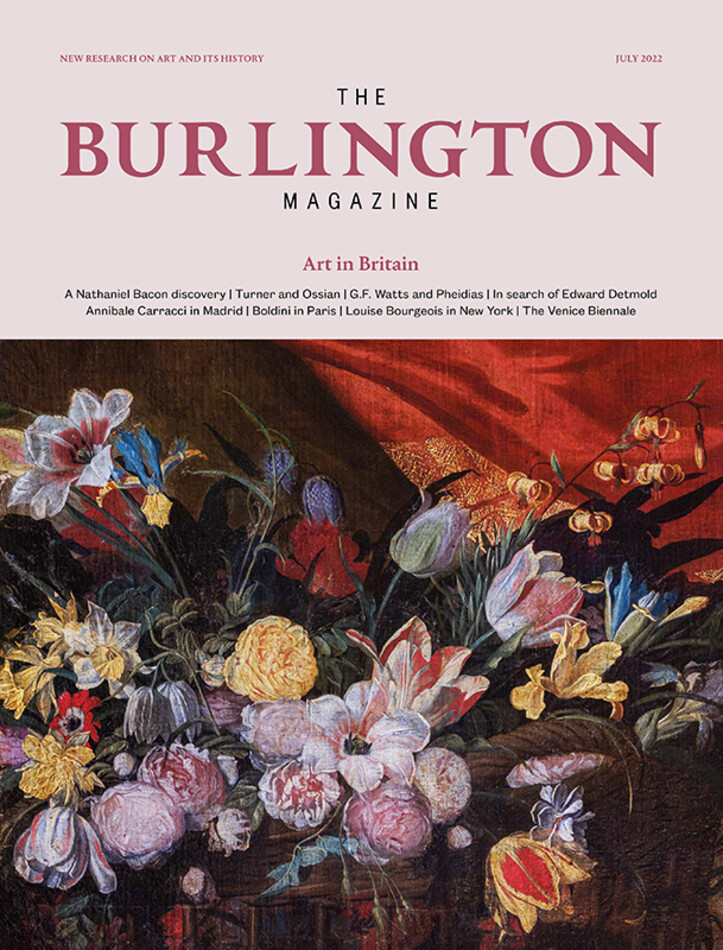
Preview: The Burlington Magazine – July 2, 2022


Image

Louise Bourgeois: Paintings Louise Bourgeois: The Woven Child

Je vois red’ raged Louise Bourgeois (1911–2010) on one of the loose sheets of paper that she made notes on, most often about herself and her work and, in this case, about the painting Natural history #2 (1944; Easton Foundation, New York), which struck her as all going wrong. Slipping between two languages, Bourgeois’s fury conforms to the themes of rage, the death drive and childhood aggression that the art historian Mignon Nixon has traced in the artist’s work in reference to the ideas of the psychoanalyst Melanie Klein.


Morning News: Britain’s Foiled Asylum Policy, Taliban Tax Collectors

The European Court of Human rights foiled Britain’s plans to send asylum-seekers to Rwanda yesterday by holding that British courts must first find the policy legal. The Taliban have proven surprisingly adept tax collectors, though they will spend much of the funds on defence rather than improving the lives of struggling Afghans. And the world is buying too few electric vehicles to meaningfully reduce carbon emissions.

Opinions: New Frontier For AI, British Stagnation, Story Scene Imagination

A selection of three essential articles read aloud from the latest issue of The Economist. This week, why foundation models are artificial intelligence’s new frontierthe stagnation nation: a chronic British disease (10:30), and why visiting the scenes of stories is an act of imagination (18:20).

Cover Previews: Britain Magazine – July/Aug 2022

A TASTE OF THE JULY/AUGUST 2022 ISSUE

Big Ben: The time machine

Credit: PjrTravel / Alamy

Big Ben, the world’s most famous clock has been under wraps for four years, its iconic bell silenced. This year, restored to its former glory, Big Ben once again shows its face.

Read more here. 

Richmond: Down by the river

Credit: Maurizio Rellini

Between Richmond and Hampton Court is a storied stretch of the River Thames, whose banks are lined with grand houses, royal parks and Henry VIII’s favourite palace.

Read more here.

King Arthur’s Cornwall: Searching for Camelot

Tintagel Castle. Credit: Matt Jessop

The timeless legends of King Arthur and his brave knights live on in the magical landscapes of North Cornwall.

Read more here. 

Cover Preview: Current Archaeology – July 2022

This year, events are taking place across the country to celebrate the 1,900th anniversary of the construction of Hadrian’s Wall (the eagle-eyed among you may have spotted that this most-famous Roman landmark has also featured, in some capacity, in every issue of CA since January).

This month our cover story considers whether the Romans too may have commemorated the Wall’s construction – and we also have an opinion piece asking how sure we can be about its date.

From monumental stonework to modern quarrying, we next head to Bedfordshire to learn about archaeological investigations at Black Cat Quarry, carried out before extraction works began on the site. There, excavations have revealed an impressive multi-period landscape, including Neolithic and Bronze Age settlements, a significant Roman farmstead, and what may be the remains of a Viking ‘fort’ referred to in the Anglo-Saxon Chronicle.

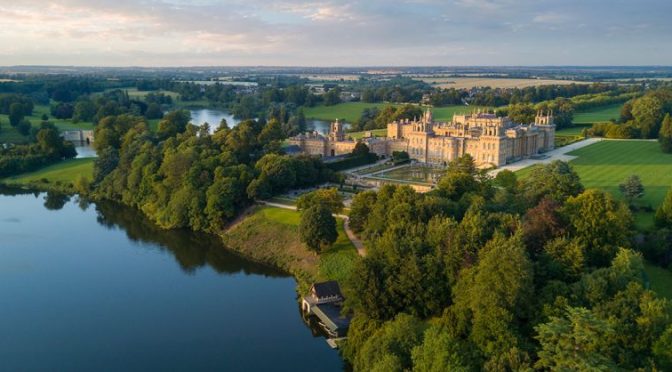
Blenheim Palace: Britain’s Answer To Versailles

Blenheim Palace, Oxfordshire — the seat of the Duke of Marlborough — is one of the outstanding palaces of Baroque Europe, and was planned as both a residence and national monument.

Towards the end of the day on August 13, 1704, John Churchill, Duke of Marlborough, exhausted by an intense day of fighting near Blindheim, a village on the Danube, famously scrawled a note to his wife on the back of a tavern bill: ‘I have not time to say more but to beg you will give my duty to the Queen and let her know her army has had a glorious victory.’ The battle of Blenheim — as the name has been anglicised — was, in fact, a confrontation between a Franco-Bavarian army and the forces of a grand alliance of European powers, including the Dutch republic, Austria and Britain, over control of Spain and its empire. It was the first major defeat inflicted on a French army in the field for 50 years and was crowned by the capture of Louis XIV’s commander-in-chief, Marshal Talleyrand, who waited in the Duke’s coach as he scribbled his hasty message.

Although the plans of the building changed considerably over time, something close to the final design was published in the first part of Colen Campbell’s Vitruvius Britannicus (1715). As described by Campbell, ‘the manner is grand, the parts noble, and the air majestick of this palace, adapted to the martial genius of the patron…’ This latter quality was celebrated both in the ornament of the building with military trophies and its original title, ‘Blenheim Castle’.

Fig 5: The Saloon is overlooked by figures representing the four Continents and the marble doorcase is ornamented with an imperial eagle. Blenheim Palace, Woodstock, Oxfordshire, photographed for Country Life Magazine by Will Pryce. ©Country Life

Both Vanbrugh and Hawksmoor were well versed in medieval castle architecture and their knowledge of it shines through the spectacular outline of this building, its great angle towers and the rugged articulation of the masonry. Yet this is really a Classical castle suitable for a general of Britain in its newly assumed character as an Imperial power and second Rome. Borrowing Hawksmoor’s description of Castle Howard, as ‘the seat of one of the chief nobles of Britain, it is both a castle and palace conjoined’.

Photo Reviews: The Sunday Times Magazine At 60 Years