In the new series “Economics For People” from the Institute for New Economic Thinking (INET), University of Cambridge economist and bestselling author Ha-Joon Chang explains key concepts in economics, empowering anyone to hold their government, society, and economy accountable.
Lecture 1.1: The Nature of Economics
Lecture 1.2: Five Reasons Why Economics Is Political
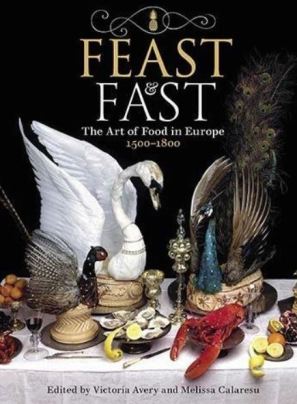
Food defines us as individuals, communities, and nations – we are what we eat and, equally, what we don’t eat. When, where, why, how and with whom we eat are crucial to our identity. Feast and Fast presents novel approaches to understanding the history and culture of food and eating in early modern Europe.
This richly illustrated book will showcase hidden and newly-conserved treasures from the Fitzwilliam Museum and other collections in and around Cambridge. It will tease out many contemporary and controversial issues – such as the origins of food and food security, overconsumption in times of austerity, and our relationship with animals and nature – through short research-led entries by some of the world’s leading cultural and food historians.
Feast and Fast explores food-related objects, images, and texts from the past in innovative ways and encourages us to rethink our evolving relationship with food.
Most notable is Toogood’s sensitive approach to materials. She offers two different, equally alluring solutions to the exterior cladding and the internal finishes. Both external cladding options, raw galvanised steel and dark charred timber, are suggestive of industrial or agricultural structures, making it something of a thrill to see them in a domestic setting. The building clad in raw galvanised steel will have a refined, cream-coloured interior, whilst the structure clad in dark charred timber will have an exposed plywood interior finish.
Faye Toogood’s beguiling design for Cube Haus Commissions proposes a sanctuary that suits both rural and urban contexts. With a simple pitched-roof, single-storey form, it evokes the sort of ordinary, often-ignored buildings that have been built across Britain for centuries. But this being the work of Toogood, a revered designer across multiple disciplines, the scheme that she has created is far from being artless.
Shortly after George Orwell’s death in 1950, his widow Sonia was visited in London by two representatives of the American film producer, Louis de Rochemont. They sought the rights to Orwell’s novel from five years earlier, Animal Farm. It’s said Sonia took some convincing but eventually agreed, on the promise that de Rochemont would introduce her to her hero, Clark Gable.
A conventional, live-action adaptation was out of the question given that the book’s main characters were farmyard animals, so an animated movie was decided upon instead. De Rochemont chose to have it made in the UK rather than the US — partly because of lower production costs, partly because he admired the work of British husband-and-wife duo John Halas and Joy Batchelor, a couple who ran their own animation studio and had produced several propaganda films for the British government during the Second World War.
Their adaptation of Animal Farm was released in 1954, to popular and critical acclaim — the first feature-length animation movie ever made in the UK.
Produced by: Simon Mulvaney & Emily Brinnand
VFX Artist: Michael Nixon
Music: Borrtex (“Snowflake”)
BEING BRITISH is a short-form documentary created independently by the filmmakers of Great Britain, to answer the question, ‘WHAT DOES IT MEAN TO BE BRITISH?’
‘CUT 7’ was campaigned extensively throughout the 1962 season. With victories at Mallory Park, Silverstone, Crystal Palace and Snetterton, Protheroe had his eyes set on securing the Autosport National Championship for Production Sports Cars, and with just one retirement in 10 outings, he won the Over 3-litre class.
Former RAF pilot Dick Protheroe was no stranger to the Jaguar brand. Stationed in Egypt in 1952, Protheroe acquired his first Jaguar, an aluminium bodied XK120 which he modified and campaigned before returning to England in 1953.
Chassis Number ‘860004’, was the fourth right-hand drive fixed-head E-type produced by Jaguar at the famous Brown’s Lane factory in Coventry. Painted in Opalescent Gunmetal Grey with dark blue interior trim, it was aptly delivered to Protheroe on 13thSeptember 1961 by Jaguar Dealer, Sturgess of Leicester. Robin Sturgess had a close affinity to the marque having raced XK’s, C-type, D-type and E-types successfully for many years.
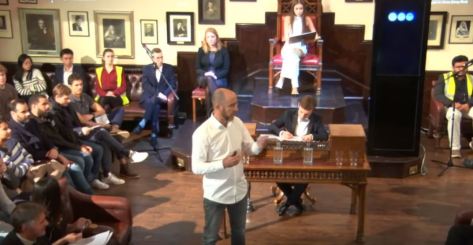
“This House Believes AI Will Bring More Harm Than Good”
This debate was run in association with IBM Research.
Proposition:
Project Debater Project Debater is designed by IBM research. It will deliver a speech based on over 1,100 arguments collected from Union members and others over the past week. It will not be taking points of information.
Sharmila Parmanand
Sharmila Parmanand is a PhD Candidate in Gender Studies at the University of Cambridge and a Gates Scholar. She has served as a debate trainer or chief judge in debating events in 45 countries. She served as a chief judge for most major global debating competitions (World Universities, World Schools, European Universities, Asian Universities, Austral-Asian Universities, North American Universities, and PanAmerican Universities).
Professor Neil Lawrence
Neil Lawrence is the DeepMind Professor of Machine Learning at the University of Cambridge and the co-host of Talking Machines. Neil’s main research interest is machine learning through probabilistic models. He focuses on both the algorithmic side of these models and their application. His recent focus has been on the deployment of machine learning technology in practice, particularly under the banner of data science.
Opposition
Project Debater
Project Debater is designed by IBM research. It will deliver a speech based on over 1,100 arguments collected from Union members and others over the past week. It will not be taking points of information.
Harish Natarajan
Harish Natarajan is a graduate of the University of Oxford and the University of Cambridge. He was a grand fnalist and 2nd best speaker at the 2016 World Debating Championships and won the European Debating Championship in 2012. Harish holds the record for most competition victories. He currently works as the Head of Economic Risk Analysis at AKE International in London.
Professor Sylvie Delacroix
Sylvie Delacroix is professor in Law and Ethics at the University of Birmingham. Her work has notably been funded by the Wellcome Trust, the NHS and the Leverhulme Trust, from whom she received the Leverhulme Prize. She has recently been appointed to the Public Policy Commission on the use of algorithms in the justice system.
Polls looking to gauge how the public intends to vote put Johnson’s Conservatives as much as 18 percentage points ahead of Labour, but the numbers can vary widely.
To try to land a decisive blow in an election campaign which few voters relish, both leaders went on the attack, with Johnson trying to portray his rival as indecisive, while Corbyn questioned whether the prime minister could be trusted.
MANCHESTER, England (Reuters) – Prime Minister Boris Johnson doubled down on his Brexit promises on Tuesday, saying only he could take Britain out of the European Union quickly in a testy leadership debate with opposition Labour’s Jeremy Corbyn.
After the hour-long debate, polls showed the public were split over who was the victor: 51% said it was Johnson while 49% backed Corbyn – a result that analysts said reflected better on the Labour leader, who is trailing in opinion polls.
Cork House embodies a strong whole life approach to sustainability, from resource through to end-of-life. Expanded cork is a pure bio-material made with waste from cork forestry. The bark of the cork oak is harvested by hand every nine years without harming the tree or disturbing the forest. This gentle agro-industry sustains the Mediterranean cork oak landscapes, providing a rich biodiverse habitat that is widely recognised. This compelling ecological origin of expanded cork is mirrored at the opposite end of the building’s lifecycle. The construction system is dry-jointed, so that all 1,268 blocks of cork can be reclaimed at end-of-building-life for re-use, recycling, or returning to the biosphere.
Completed in 2019, Cork House was designed by Matthew Barnett Howland with Dido Milne and Oliver Wilton.
Cork House is a brand new and radically simple form of plant-based construction. Monolithic walls and corbelled roofs are made almost entirely from solid load-bearing cork. This highly innovative self-build construction kit is designed for disassembly, is carbon-negative at completion and has exceptionally low whole life carbon.
From Helen of Troy’s abduction to the deception of the Trojan Horse and the fall of the city, tread the line between myth and reality in this phenomenal new exhibition.
The story of the ancient city of Troy, and of the great war that was fought over it, has been told for some 3,000 years. Spread by travelling storytellers, it was cast into powerful words by the Greek poet Homer as early as the eighth to seventh century BC – and into powerful images by ancient Greek and Roman artists. Just as it enraptured audiences in the past, it still speaks to us today and it’s easy to see why. It’s a story that has it all – love and loss, courage and passion, violence and vengeance, triumph and tragedy – on a truly epic scale.
Spanning several decades, the tale is set in Greece’s mythical past. At its heart is the powerful city of Troy on the western coast of Anatolia (modern-day Turkey), besieged for 10 years by the Greeks, who sailed across the Aegean Sea to take revenge for a grave insult – the abduction of a woman. This ancient world war features a stellar cast of characters. Even the gods are involved.

 In the new series “Economics For People” from the Institute for New Economic Thinking (INET), University of Cambridge economist and bestselling author Ha-Joon Chang explains key concepts in economics, empowering anyone to hold their government, society, and economy accountable.
 Food defines us as individuals, communities, and nations – we are what we eat and, equally, what we don’t eat. When, where, why, how and with whom we eat are crucial to our identity. Feast and Fast presents novel approaches to understanding the history and culture of food and eating in early modern Europe.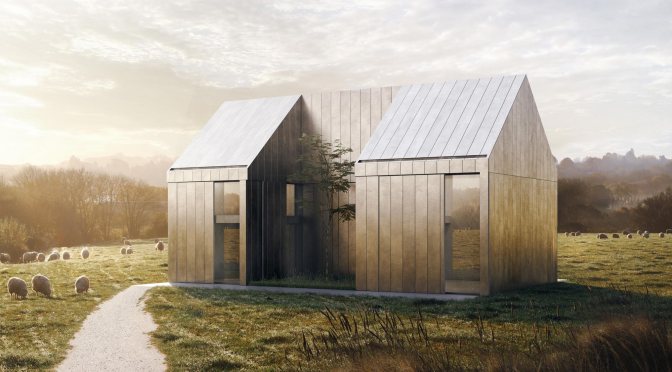
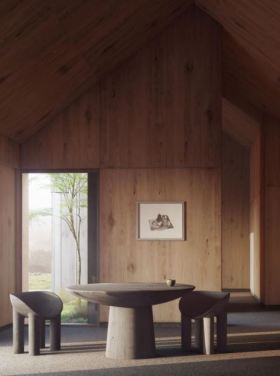 Most notable is Toogood’s sensitive approach to materials. She offers two different, equally alluring solutions to the exterior cladding and the internal finishes. Both external cladding options, raw galvanised steel and dark charred timber, are suggestive of industrial or agricultural structures, making it something of a thrill to see them in a domestic setting. The building clad in raw galvanised steel will have a refined, cream-coloured interior, whilst the structure clad in dark charred timber will have an exposed plywood interior finish.
 Shortly after George Orwell’s death in 1950, his widow Sonia was visited in London by two representatives of the American film producer, Louis de Rochemont. They sought the rights to Orwell’s novel from five years earlier, Animal Farm. It’s said Sonia took some convincing but eventually agreed, on the promise that de Rochemont would introduce her to her hero, Clark Gable.
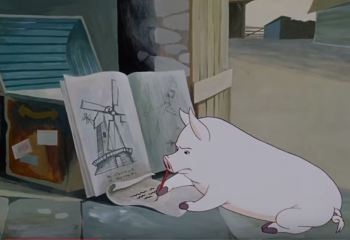 A conventional, live-action adaptation was out of the question given that the book’s main characters were farmyard animals, so an animated movie was decided upon instead. De Rochemont chose to have it made in the UK rather than the US — partly because of lower production costs, partly because he admired the work of British husband-and-wife duo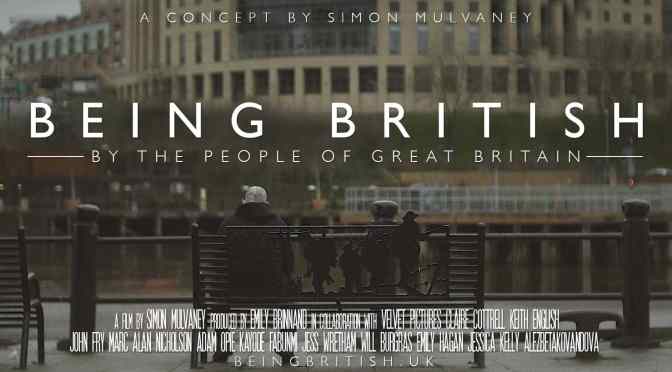




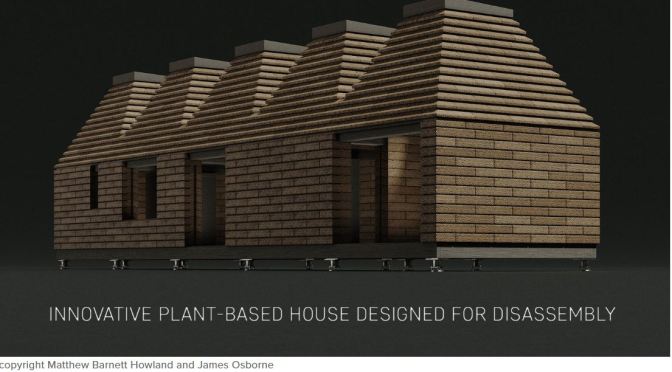
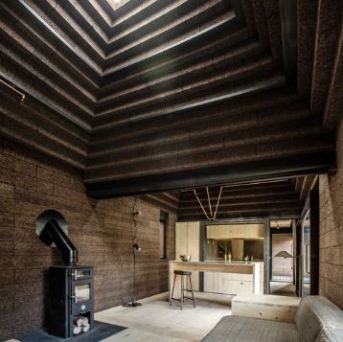 Cork House embodies a strong whole life approach to sustainability, from resource through to end-of-life. Expanded cork is a pure bio-material made with waste from cork forestry. The bark of the cork oak is harvested by hand every nine years without harming the tree or disturbing the forest.
 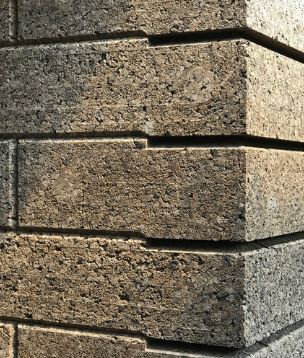 This gentle agro-industry sustains the Mediterranean cork oak landscapes, providing a rich biodiverse habitat that is widely recognised. This compelling ecological origin of expanded cork is mirrored at the opposite end of the building’s lifecycle. The construction system is dry-jointed, so that all 1,268 blocks of cork can be reclaimed at end-of-building-life for re-use, recycling, or returning to the biosphere.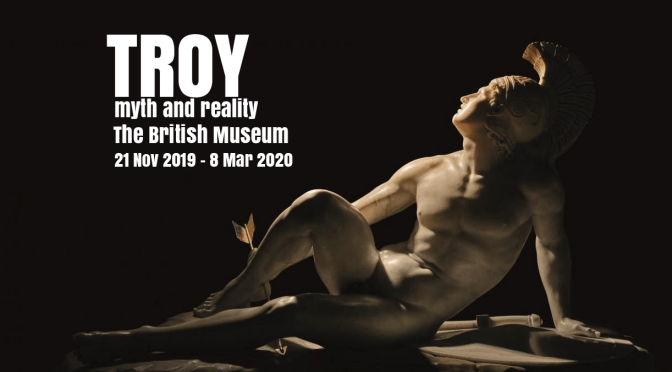
 From Helen of Troy’s abduction to the deception of the Trojan Horse and the fall of the city, tread the line between myth and reality in this phenomenal new exhibition.
 The story of the ancient city of Troy, and of the great war that was fought over it, has been told for some 3,000 years. Spread by travelling storytellers, it was cast into powerful words by the Greek poet Homer as early as the eighth to seventh century BC – and into powerful images by ancient Greek and Roman artists. Just as it enraptured audiences in the past, it still speaks to us today and it’s easy to see why. It’s a story that has it all – love and loss, courage and passion, violence and vengeance, triumph and tragedy – on a truly epic scale.
 Boomers Daily