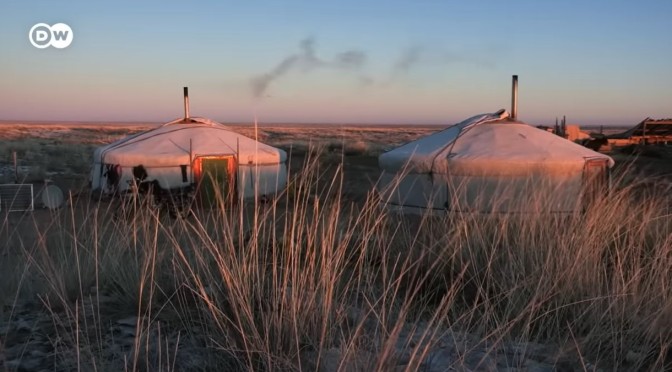
DW Documentary (February 25, 2023) – Otgo is the youngest child of a nomadic family in the Gobi desert. They make their living breeding cattle. Otgo loves their life, in harmony with nature and old traditions. Yet she dreams of becoming a dancer at the opera house in Ulan Bator.
In Mongolia, it is becoming increasingly common for the younger generation to leave traditional life behind. Otgo’s dream would take her far from her family’s yurt. She wants to become a dancer and later, a dance teacher. Her parents leave it up to her to decide how she wants to shape her life. They agree to support her, if she embarks on her great endeavor. In the meantime, Otgo has become an almost indispensable help to the family.
She gets up early in the morning to water the camels with her father, and it fills her with pride that she can help her family. The breathtaking landscape of the Gobi Desert and the strong bonds between the different nomadic families do not make it easy for Otgo to follow her dream. Otgo’s story paints a portrait of her world and of the men and women who have long passed on their culture from generation to generation, through the eyes of a child.
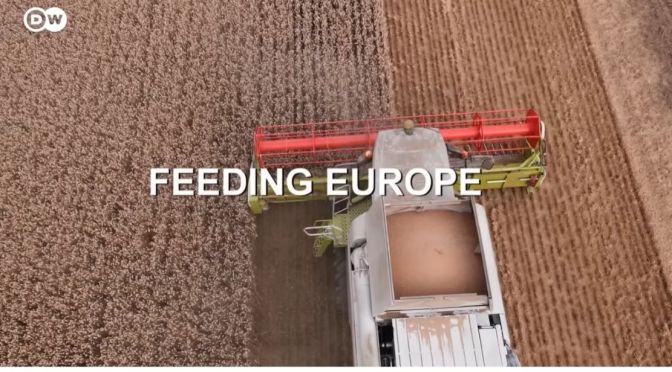
DW Documentary (December 10, 2022) – Is sustainable agriculture possible in Europe? From Spain’s “plastic sea” of greenhouses, to farmer suicides in France, the organics boom and high-tech production, it’s clear that Europe’s agricultural sector is in a period of extreme flux. And it needs to change: Agricultural landscapes are shaped by the history of our continent and inextricably bound up with its identity.
But farmers are struggling. They’re under constant pressure to produce more, at lower prices and can no longer hold out against the stiff competition. Most European farms are still family-run businesses, but it’s the large-scale enterprises that benefit from EU subsidies. These companies practice intensive farming, which we now know has a detrimental effect on biodiversity and human health.
This kind of agricultural system is also very bad for soil quality and is now seen as obsolete. With every crisis that occurs, its shortcomings become more evident. The pace of climate change now requires rapid responses to crucial questions: How to sustainably feed more than 500 million Europeans? What steps can be taken to stem the catastrophe resulting from the dramatic rise in meat consumption (up 60 per cent in 60 years) and its associated intensive production of cereal crops?
Solutions are presenting themselves, and many farmers have already seized the initiative. Throughout the European continent, they are the main drivers of a vital 21st century agricultural revolution: a return to traditional farming methods, intelligent or urban agriculture, fewer mass imports, research into in-vitro meat and meat substitutes. These are just some of the approaches being explored by European farmers in a bid to protect biodiversity, the landscape and the health of human beings.
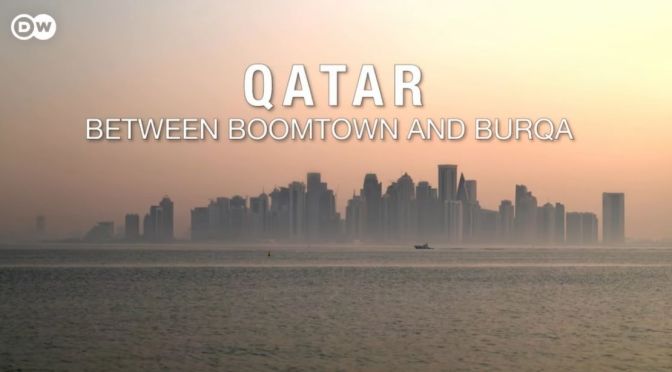
On the surface, Qatar is a dazzling and colorful Arab country, home to sheikhs and big business. But migrant workers without Qatari citizenship make up nearly 90% of Qatar’s total population – the highest such rate in the world.
Anyone traveling to Qatar arrives with plenty of prejudices: that it is a corrupt, filthy-rich emirate full of forced laborers who have no rights; that it is home to businessmen whose practices are, at best, questionable. But for the Qataris themselves, and the millions of guest workers from all over the world who live there, the picture is more nuanced.
Yes, Qatar is a dictatorship with an emir who enjoys almost unlimited power. But at the same time, Qatar is remarkably open and progressive. The emirate is tiny, and yet tremendously fascinating – with its vast desert landscapes, its bizarrely-shaped mountains and its picturesque sandy beaches.
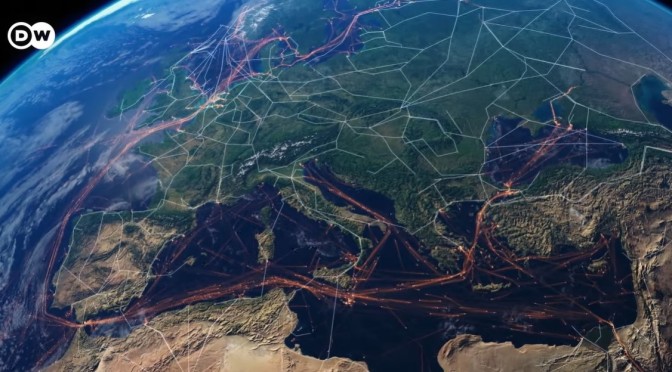
DW Documentary – Energy is life – these days, Europeans are experiencing that first-hand. For far too long, Europe has depended on coal, oil and gas imports from around the world. Not only have these fuels been driving the climate catastrophe, but they also serve as a dangerous bargaining chip for geopolitical interests.
Energy is essential — and it is a major problem. The war in Ukraine has shown just how dependent Europe is on fossil fuels. This has weakened Europe and given export countries – frequently governed by authoritarian rule – a geopolitical means of leverage. Now, war on the European continent has eclipsed concerns over the climate Crisis. The increased consumption of harmful fuels is creating economic and political problems.
Yet, against the odds, decarbonizing Europe remains a widespread priority, and alternative solutions are already available. In France, Denmark and Ukraine, civil initiatives are taking energy supplies into their own hands and investing in the joint production of their own solar energy. In some cases, privately produced solar energy has proven much cheaper than what national solar energy providers offer.
These initiatives show that decentralizing energy production could be the key to transforming our energy supply. Poland still depends heavily on coal, but is offering re-training programs for employees in the mining business to help them transition to green jobs. An estimated one million such green jobs are expected to be created in Europe by 2030. Green hydrogen, currently still in the development stages, could be a sustainable and profitable alternative for industries in the future.
Across the continent, workable alternatives are emerging. The current quick succession of political crises has now joined the ongoing climate crisis to show just how important it is to act now.
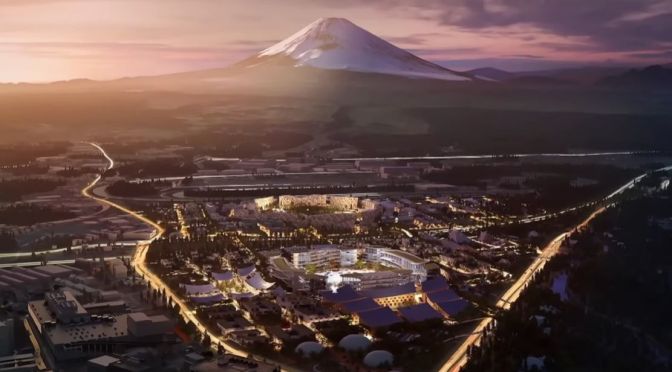
Will the cities of the future be climate neutral? Might they also be able to actively filter carbon dioxide out of the air? Futurologist Vincente Guallarte thinks so. In fact, he says, our cities will soon be able to absorb CO2, just like trees do.
To accomplish this, Guallarte wants to bring sustainable industries and agriculture to our urban centers, with greenhouses atop every building. But in order for Guallarte’s proposal to work, he says, cities will have learn to submit to the laws and principles of nature. Urban planners also have big plans for our energy supply. In the future, countries like Germany could become energy producers.
In Esslingen am Neckar, residents are working on producing green hydrogen in homes, to be used as fuel for trucks. It’s a project that‘s breaking new ground, says investor Manfred Norbert. Our future cities will be all about redefining a new normal. Architects and urban planners are expecting to see entirely new approaches to communal living, as well as new urban concepts for autonomous supply chains. The repurposing of old buildings, and the generation of food as well as energy, are other important topics.
The architect Arno Brandhuber thinks the current building stock available, and the possibilities it offers, have been underestimated. His spectacular business headquarters are located in an old silo in Berlin’s Lichtenberg district. His most provocative project, something he calls his “Anti-villa,” is a repurposed East German factory for cotton knitwear. It‘s a prime example of sustainable design.
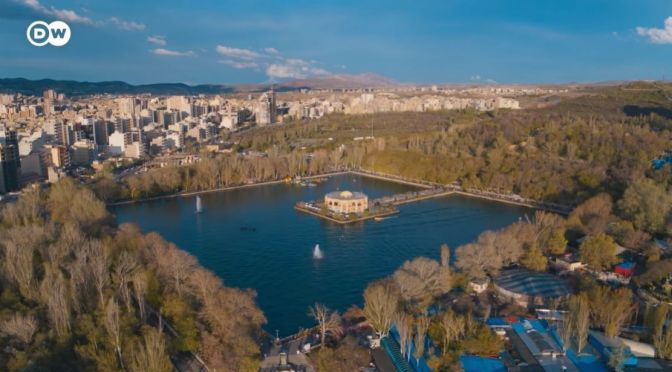
Iran’s mountainous terrain has always been an important part of people’s lives. Years ago, these mountains were populated by legendary horsemen. Today, they are the subject of scientific investigation. This film provides the viewer with stunning arial views of these mountains. It unfurls the rich tapestry of Iran’s history, from the legendary Order of the Assassins to the Mongol invasions. We also get to know Iran by meeting some of the fascinating people who live there. Take Ali, a world champion of mounted archery. Despite its waning popularity, the sport has endured in Iran due the importance of horses throughout Iranian history. We get to explore the historic Tabiz bazaar, which is still a bustling market and kaleidoscope of cultures today. There, we meet Dschebrael, a stall owner who speaks Azeri, the official language of Azerbaijan. In fact, Azeri can be heard throughout the market, which serves as a meeting place for Iran’s many ethnic groups, and thus as a microcosm of the country’s cultural diversity. The film introduces us to beekeepers and violinmakers, as well as young people living in Iran who want to travel and express themselves freely on social media — even though it is forbidden.
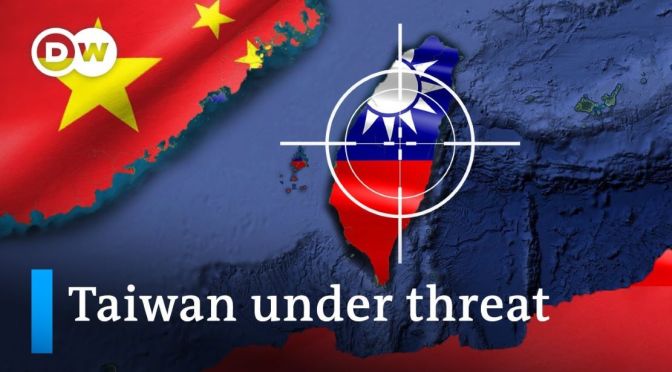
Taiwan is a democracy with a strong human rights record and a high standard of living. But despite the country’s economic strength and elected government, the island state struggles to receive international recognition. Even in terms of corruption, Taiwan’s track record is better than that of some European states.
The problem is that Beijing regards democratic Taiwan, which seceded from the mainland in 1949, as a renegade province rather than an independent state. China is trying to isolate it internationally. Many fear that China has plans to attack Taiwan in the near future: The President of the People’s Republic of China, Xi Jinping, has made it clear that his country is prepared to claim the island by military means. Beijing has been adopting this threatening stance for decades.
Thus far, the goal has been to annex the island to the mainland at some undefined point in the future. China’s historically questionable worldview would see this as reunification; from Taiwan’s perspective, it would be annexation. Both countries are highly armed – a war would inevitably cost many people their lives.
The film throws open a window on a nation that has been in a state of existential threat for decades; a country that is home to people who will defend their freedom at all costs – and also those who yearn for an imminent annexation with China.
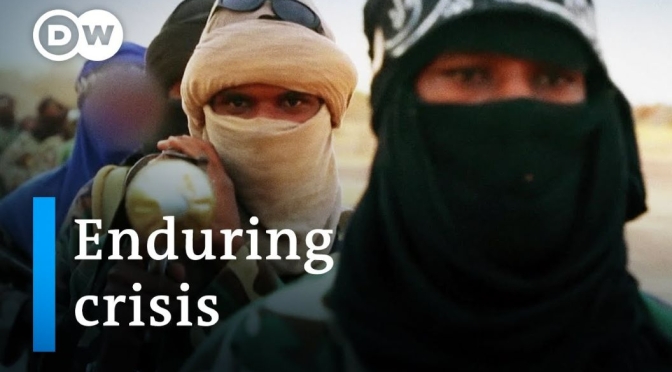
Northern Mali fell into the hands of armed jihadists in 2012. This resulted in the launch of the French-led “Operation Serval,” designed to liberate the occupied territory. But the crisis only worsened. The crisis in Mali is a story of failure.
The failure of a state, as well as the failure of the international community. This failure created a breeding ground for jihadists. How did it come to this? The crisis began in the early 2000s with the arrival of Algerian jihadists in Mali. At the time, their arrival did not worry those in power, who believed they would be safe if they left the jihadists alone.
As problems arose, the international community looked the other way, continuing to view Mali as an example of democracy at work in Africa. When the jihadists finally took control in the north and introduced Sharia law, France sent in the army. But without a political solution, the army was stymied. Aid money was embezzled and corruption was pervasive.
As France looked for an off-ramp, the crisis in Mali crossed the border into both Burkina Faso and Niger. In all of this, civilians are the forgotten victims. The violence in the Sahel has created more than two million refugees – a number that has quadrupled in less than two years. These refugees are settling wherever they can, as they struggle just to survive.
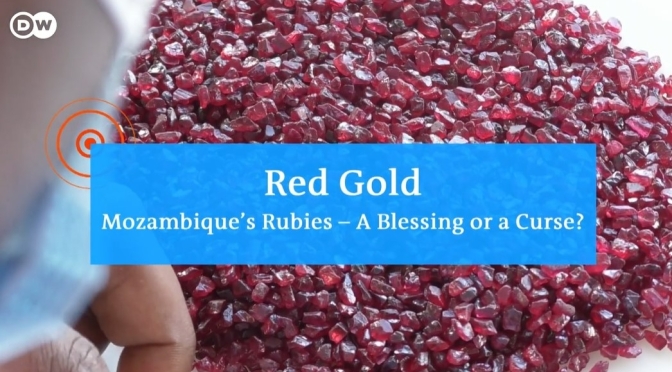
Rubies are increasingly prized on the international gemstone market. The world’s largest ruby mine is in northern Mozambique, where thousands of people are fleeing extremist militias. Can the lucrative business improve the lives of the people there?
The mine’s executives have a clear-cut position: They say they pay the taxes they owe, and Mozambique’s government should use the money to build schools in the region, ensure security and fight poverty. They say the mine alone can’t provide a livelihood to the entire region. Meanwhile, some residents regularly attempt to enter and mine rubies themselves. In the past, there have been reports of violent confrontations with the mine’s security personnel. Are the rubies a blessing or a curse? A report by Adrian Kriesch.
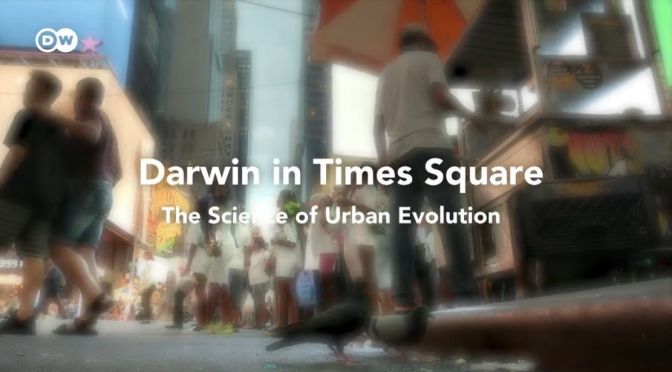
It’s a new and surprising chapter in the theory of evolution. According to recent studies, it’s in our cities, of all places, that animals and plants adapt particularly quickly to changing living conditions.
Nature’s response to the spread of cities is astonishing: Why do catfish in the river of a French city systematically prey on urban pigeons on the banks? Why do female birds on a university campus in California suddenly change their mating behavior? How do mice in New York’s Central Park cope with an altered diet of human food waste? How have killifish in the Atlantic built up resistance to deadly chemical waste?
And, is it possible for moths to adapt to nighttime light pollution? New research provides surprising new insights into Darwin’s theory of evolution. Nowhere else do animals and plants adapt so quickly to new living conditions as in cities. Biologists have long known that animals and plants occupy new habitats in the vicinity of humans.
But now, new genetic analyses show that these adaptations are accompanied by significant changes in DNA. Even more surprising: these evolutionary changes have not occurred over periods of millennia, but within just a few decades. The process has amazed scientists, who watch as nature transforms even our most hostile man-made interventions — pollution, light pollution, noise, garbage and dense development — into creative energy for new adaptations. Some researchers believe that our cities may soon develop their own, brand-new life forms. What are the implications of these developments for the balance between humans and nature on our planet?
News, Views and Reviews For The Intellectually Curious



 Boomers Daily