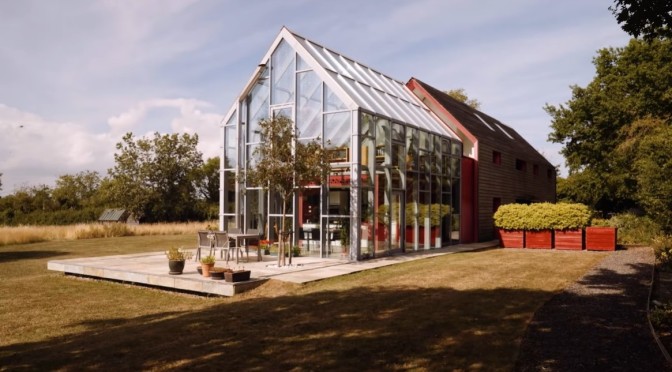
Having spent his formative years working as an actuary, Ross Russell knows a thing or two about calculated risks. As such, there was no better client to commission an experimental house with a 20-tonne sliding shell that can be removed to reveal roofless rooms and a behemoth conservatory-like structure beneath it. Here Ross takes a deep dive into the house’s design and reflects on life in truly versatile living spaces.
The house has been described by drMM as one for all seasons. During the warmer months, the structure can slide over the terrace to give shade to alfresco diners, while in winter it provides as extra insulation. Then there are the adaptable rooms inside the house, designed so they can either be sheltered or open to the sky, depending on the weather. One of the highlights is the bathroom, where people can soak under directly the sun or stars. When guests come to stay the first thing they typically ask, Ross says, is: “Can we have a bath?”
Balancing a striking southern perspective with a warm internal character, Grandview House overcomes the limitations of its former self. Created by Ian Bennett Design Studio, the contemporary home undergoes the tactful renovation of a pre-existing family dwelling.
Video timeline: 00:00 – Introduction to Grandview House 00:40 – A Walkthrough The Contemporary Home 01:16 – Altering The Existing House 01:42 – An Introduction to The Owners 02:14 – A Collaboration of Architect and Owner 02:50 – A Floor Plan Designed for Family Living 03:31 – Family Conscious Design 03:57 – Utilising Durable Materials 04:55 – The Architect’s Favourite Part of The Home
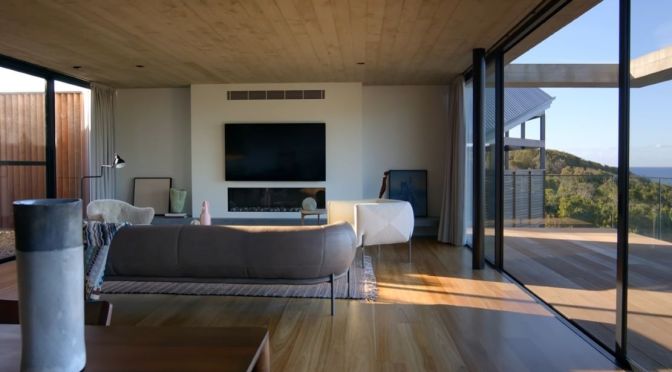
Situated on the southern side of the Mona Vale headland, Grandview House once existed as a cold and uninviting residence with only minimal access to sunlight. The collaboration between Ian Bennett Design Studio and the clients – one of whom heads Northern Beaches Constructions – sees the house transformed into a warm and contemporary home, capitalising on views of Mona Vale Beach, Long Reef and Manly.
Entering the contemporary home, a walkway bridge sits above the ground floor, delineating two voids which allow sunlight to stream into the home. Further into the residence, the kitchen-living-dining area flows towards the external southern aspect. Upstairs, two children’s bedrooms branch off from the bridge, whilst the southern side of the house encloses a master suite, ensuite and an additional children’s bedroom.
An open plan format expands the visual field, softening the sense of transition between spaces and encouraging residents to explore the contemporary home. Voids crafted to the east and west draw natural light into the residence – as do apertures inserted into the awning – with louvre windows maximising cross-ventilation. Crafting authoritatively in a maritime location, Ian Bennett Design Studio nods towards its working history in the Northern Beaches region. Grandview House stands as an intuitive response to its site; a contemporary home that effortlessly captures natural light and inspiring southern views. 00:00 – Introduction to Grandview House 00:40 – A Walkthrough The Contemporary Home 01:16 – Altering The Existing House 01:42 – An Introduction to The Owners 02:14 – A Collaboration of Architect and Owner 02:50 – A Floor Plan Designed for Family Living 03:31 – Family Conscious Design 03:57 – Utilising Durable Materials 04:55 – The Architect’s Favourite Part of The Home
As students all over the world head back to school this month, this issue maps the different sites for learning – both inside and outside academic institutions. From rainforests to classrooms to disused water basins, spaces for education come in all different forms, but face similar challenges and are subjected to the same damaging forces: of marketisation, racism and colonialism, and asymmetries of power. Architecture schools are no exception, as this issue lays bare.
Embodying a specific set of client stipulations, Wyoming is a modernist-inspired home with innate flexibility. Crafted by Inarc Architects, the open plan residence exceeds expectations for a house of its kind. Located in the Victorian suburb of Kew, in close proximity to the Yarra River,
Video Timeline:00:00 – The Local Project’s Print Publication 00:14 – Introduction to Wyoming 00:55 – A Walkthrough Wyoming 01:11 – Melbourne and Metropolitan Board of Works Plan from 1911 01:29 – Sticking to A Strict Brief 02:14 – Matching Old to New 02:50 – Interior Lighting 03:21 – Creating A Gallery Space 04:12 – Adopting Modernist Principles 04:50 – Inarc’s Favourite Aspects of Wyoming 05:42 – Subscribe to The Local Project’s Print Publication
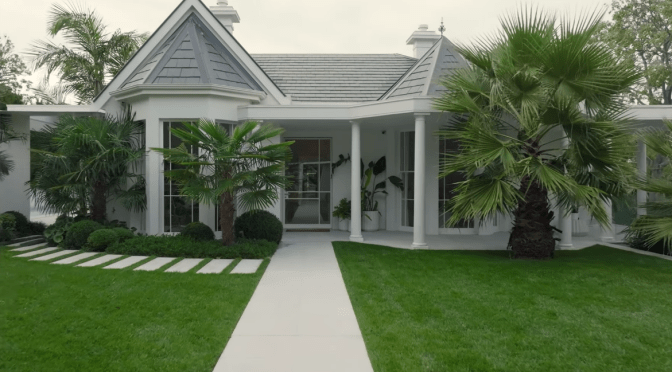
Wyoming stands as a rejuvenated dwelling. Originally built in 1911, the settlement of the modernist-inspired home proposes the unique experience of feeling close to the city whilst accessing the countryside lifestyle. The clients requested that the modernist-inspired home include areas for entertaining. To this end, Inarc Architects reimagines the original front rooms of the house as entertainment spaces which flow to the modern addition. In response to the clients’ passion for the outdoors,
Inarc Architects reinforces the sense of privacy attached to the garden space. An old hedge on the northern boundary is replaced by one of a similar style, exuding a sense of visual protection. Aesthetically, the modernist-inspired home champions white, as per the client’s request. White honed granite floors combine with classic Italian carrara to establish the limited colour palette.
Benefitting from meticulous spatial planning – both indoors and out – Wyoming offers a flowing, effortless living experience. Inarc Architects answers the clients’ requests with rigour, resulting in a highly-personal, modernist-inspired home.
For 1960, Ferrari built 46 of these race-prepared, aluminum-bodied Competizione SWBs, a model that is now commonly referred to as the Comp/60.
While many variations existed with regards to aesthetic and mechanical features, most Comp/60s can be identified by a few key visual characteristics: the more elegant front grille and side windows of the original design, a prominent external fuel filler on the rear deck, and a cockpit air vent at the top of the rear window.
The car presented here is a fascinating example of the 250 SWB Comp/60 Berlinetta; it claims a fantastic period-competition history, well-documented provenance, and recent, show-quality restoration.
Hey, batter batter! Michael Wyetzner of Michielli + Wyetzner Architects returns to AD, this time breaking down the architectural details found in baseball stadiums around North America. From some of the earliest homes of the national pastime to current multi-billion dollar behemoths, Michael offers up expert insight on what makes each of them distinct.
Approached with experience and discernment, Toorak Residence is an architectural dwelling with a considered interiority. Designed by Architecton, the luxury home embraces its context, enabling seamless transitions between indoor and outdoor space.
Video Timeline: 00:00 – The Local Project Print Publication 00:15 – Introduction to Architectural Toorak Residence 01:02 – The Levels and Layers of the Home 01:46 – Blurring the Lines Between Living and Landscape 02:30 – The Material Palette of the Architectural Home 03:15 – A Sculptural Champagne Cork 03:28 – Lighting Considerations 04:08 – A Range of Versatile Living Areas 04:44 – Ageing Like a Fine Champagne 05:13 – Subscribe to The Local Project Print Publication
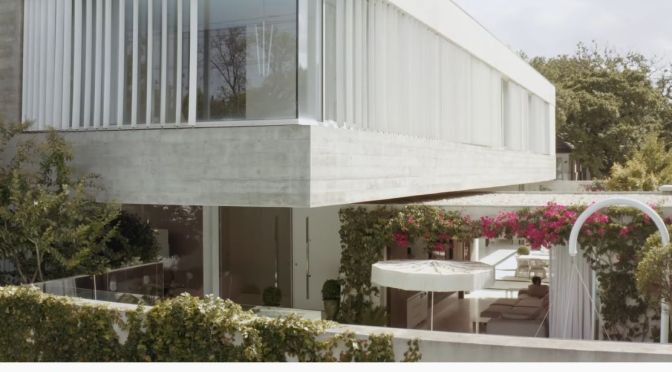
Located in the affluent suburb of Toorak in close proximity to the Melbourne CBD, Toorak Residence is strong element in the impressive architectural environment. Marked externally by a bold sculpture, the home sits at over 1000 square metres and features three spacious levels. Arriving at Toorak Residence, the process of entry is elongated by carefully layered experiential details. Beyond the front gate lies an informal garden space – a tactile composition of pleasant greenery – which effortlessly navigates residents towards the main entrance. Stepping inside the architectural home, the material palette is intentionally restrained. Architecton champions concrete, natural stone, timber and glass as the ideal canvases for light and bases for architectural detail. Flowing out towards the landscape whilst internally welcoming sunlight, Toorak Residence does justice to the rigour of Artchitecton. A house tour reveals the architectural residence to be a peaceful dwelling, encouraging intuitive patterns of movement for superior living.
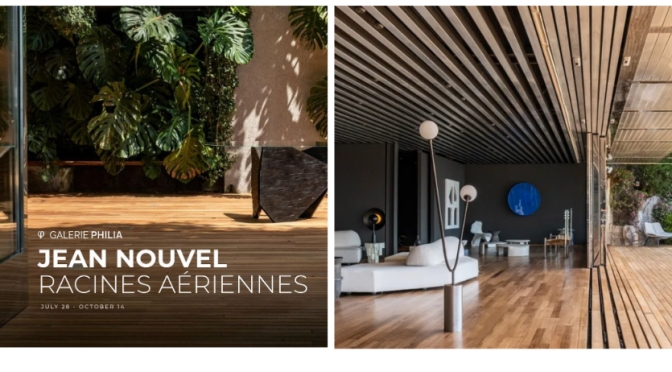
Galerie Philia is proud to announce its summer exhibition taking place in two villas designed by Jean Nouvel and commissioned by Rivere Group on the luxurious Cote d’Azur. Villa Maeterlinck in Nice and villa in St Jean Cap Ferrat, both are perfectly integrated into the landscape and boast terrace gardens in front of wide private sea views on the Mediterranean.
Tillandsias in Saint Jean Cap Ferrat and Monsteras in Nice were planted by Jean Nouvel as an ode to their aerian roots. This specific fauna is in complete harmony with the asesthetic of the influential architect whose innovative aerian principle transforms buildings into dematerialized natural environments. Set in a mesmerizing atmosphere, between the breath-taking coast and the unassuming minimalism of Nouvel, Galerie Philia enhances this dialogue between the aesthetic of the architecture and its natural surroundings.
The concept of aerian roots is in the heart of the scenography of Galerie Philia as transcultural art and design works were selected for the plural and complex aesthetic and national identities they convey. Completed in 2015 and placed right by the famous Maeterlinck Palace, Villa Maeterlink is carved into the rock. Situated just by the waterfront, all of the rooms in the villa have a full view of the sea, with a living room spanning 40m2 without posts (cantilevered).
Set in a grand plot of 8600 m2, the entire house is made to measure including the stainless steel ceilings, light fixtures, and inox surfaces along with a multitude of special details that make this a truly unique place. The space breaths at all times thanks to the sliding partitions that were built in a studied way to dissipate the boundary between interior and exterior in this house that opens to the sea, and the stainless steel ceiling of the house allows one to see the sea at all times.
Blending with the unique and entirely customized architecture of Jean Nouvel, Galerie Philia’s elegant collection of sculptural design and art dresses these villas in a new look and create stunning vistas, transforming them into a living and breathing homes. The gardens and the interior of both villas are united by a harmonious scenography and become a reflection of the lightness of Nouvel’s aesthetic. The exhibition features unique pieces by Frederic Saulou, Andrés Monnier, Arno Declercq, Jojo Corväiá, Rick Owens, Elsa Foulon, Jan Ernst and many more designers represented by Galerie Philia.
The hand-carved stone firepit of Andres Monnier creates a radiant atmosphere in the patio with the ravishing views of plants as Gerard Kuijpers’ Dancing Stones move with the breeze from the mediterranean. Arno Declercq’s unique daybed accommodates a relaxing environment in the cozy living space and Jörg Pietschmann’s solid oak unique bench invites one to enjoy the monstera haven. The Revue Eclipse collaborated with Galerie Philia on the fine art selection, and internationally known artists will be exhibited such as Sam Szafran, Flora Temnouche, Edgar Sarin, Manuel Merida, Francisco Salazar, Jörg Kratz and Mateo Revillo.
Offering a playful rendition of the familiar sustainable narrative, Casa Mia enables residents to experience life inside a dream house. Crafted by Iredale Pedersen Hook Architects in collaboration with Caroline Di Costa Architect, the residence uses brickwork to convey a liberating message.
Video timeline: 00:00 – Introduction to Casa Mia 00:28 – High-Density Living 01:11 – A Playful Space 01:53 – Providing a Presence and Privacy 02:13 – Sustainable Brickwork 03:08 – Love and Appreciation for Brickworks 03:39 – Historic and Ancient Japanese Architecture 04:25 – Utilising Unfinished Materials 05:00 – Sustainable Design 05:47 – The Architect’s Favourite Aspects of the House
Located on the Ocean Mia Estate in City Beach, Casa Mia is an architect’s own home, sitting in contrast to the built context. Constructed from carefully positioned brickwork with spaces between bricks at its edge, the dream house juxtaposes the rectilinear forms of the surrounding buildings, presenting a dynamic profile of surprising lightness.
Liaising with Brickworks, Iredale Pedersen Hook Architects both inheres the project with a sense of sustainability and makes the concept legible as a prominent feature of the architect’s own home. Brickworks enables its products to be applied to the dream house in their uncut state – an atypical usage – in order to minimise waste. Every brick of the dream house is locally sourced and exhibits colours reminiscent of the earthy natural landscape. Inspired by Japanese architecture, Iredale Pedersen Hook Architects employs fully-glazed bricks around particular openings.
The bricks bounce sunlight into the depths of the home, allowing the residents to save energy where possible. Although Casa Mia represents the weight of responsibility architects have towards the environment, it also presents this responsibility as beneficial. Iredale Pederson Hook Architects and Caroline Di Costa Architect craft a dream house that rejoices in its sustainability, utilising the colour and texture of brick to suggest a playful variation of an architect’s own home.
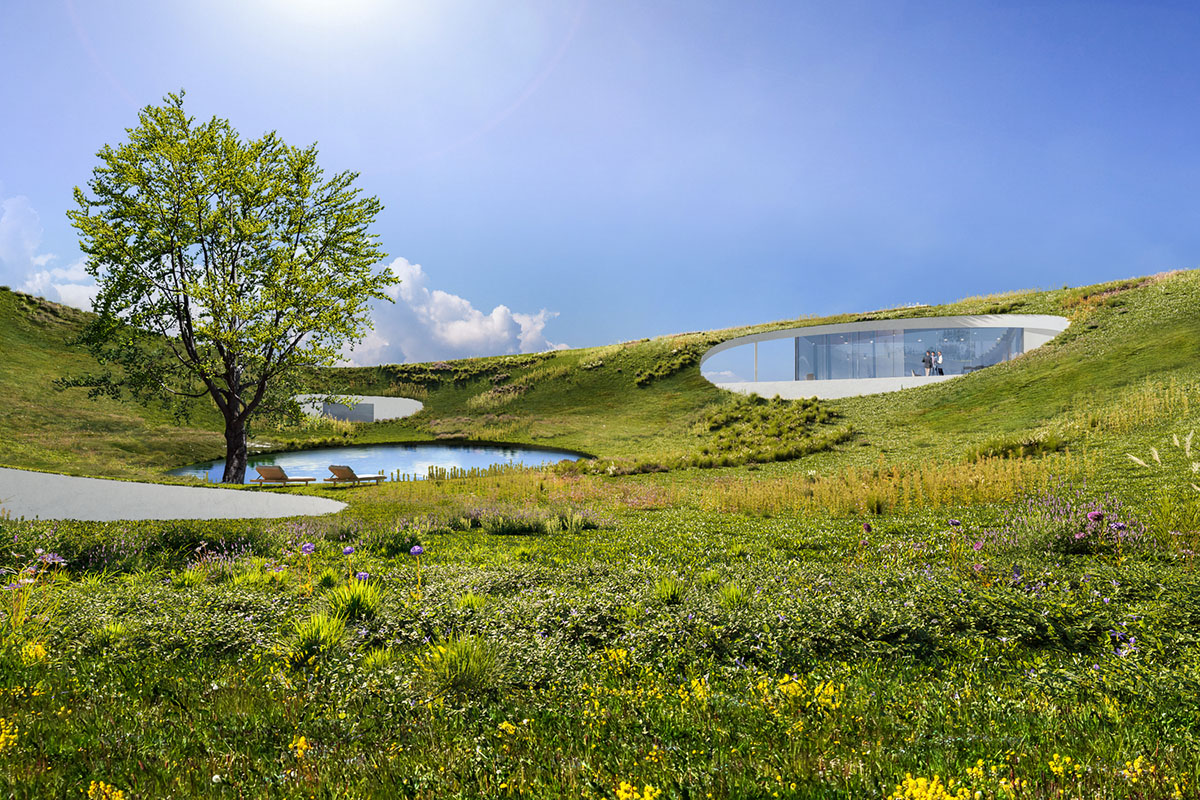
Japanese architecture practice Sou Fujimoto Architects has revealed design for a villa hotel that features an undulating green roof, offering sweeping views on Japan’s Ishigaki Island.
Designed for a Japanese hospitality brand Not A Hotel, the brand’s new vacation homes are set to be built to offer various rentable holiday homes in multiple locations across Japan.
Fujimoto’s holiday home is located on a tranquil Ishigaki Island, which is 11 minutes by car from New Ishigaki Airport. The vacation home, which gently connects to the earth, is offered visitors who want to spend a quiet time on the island.
Sou Fujimoto Architects‘ design, made of a circular-shaped structure and a bowl-shaped hilly courtyard, is envisioned like “a small paradise, offering a revelatory experience of earth.”
The circular holiday home on the vast grounds was designed without a front and back façade to be able to offer an uninterrupted views towards its surrounding.
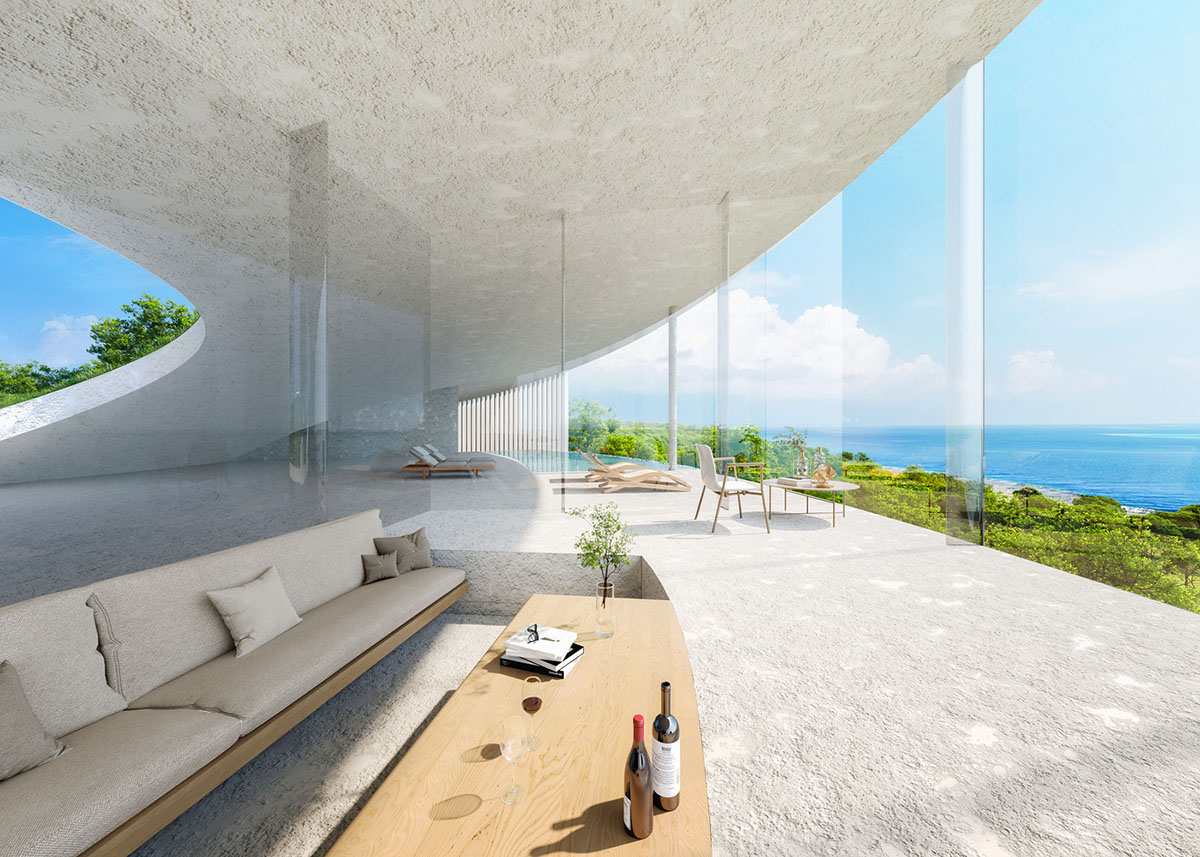
“The architecture, which has a vague boundary between the inside and outside and is connected to the earth, is equipped with a living-dining room overlooking the sea and four separate bedrooms that can accommodate up to 10 people,” stated the project’s website.







 Boomers Daily