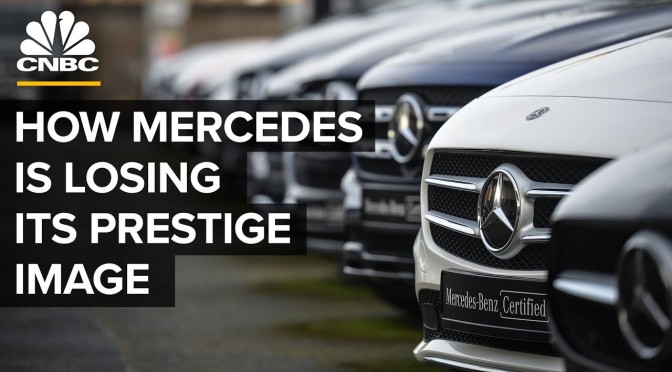
Mercedes-Benz is perhaps the biggest name in luxury cars globally, and for countless buyers around the world, it is a car brand to aspire to own. The German automaker has a reputation for superb build quality, excellent engineering, and the bragging rights that its founder Carl Benz invented the first production automobile.
Today, Mercedes-Benz faces a new class of challenges as Tesla has become the aspirational brand for younger consumers. There is a slew of other EV hopefuls vying for the next generation’s aspirational vehicle’s mantle. Automakers have had to sink billions into new technologies and contend with a new crop of competitors in the critical Chinese market and around the world.
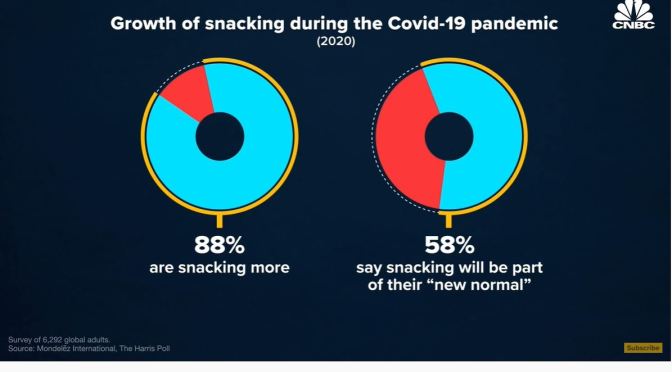
With Americans stuck at home, snack food has become a valuable commodity for the pandemic stressed consumer. North American sales of savory snacks like chips, popcorn, and pretzels climbed to $56.9 billion in 2020. In stressful times, people turn to snacking for comfort and Covid-19 has transformed kitchens across the U.S. into giant vending machines. So, has Covid-19 put an end to the shift to healthier snacks?
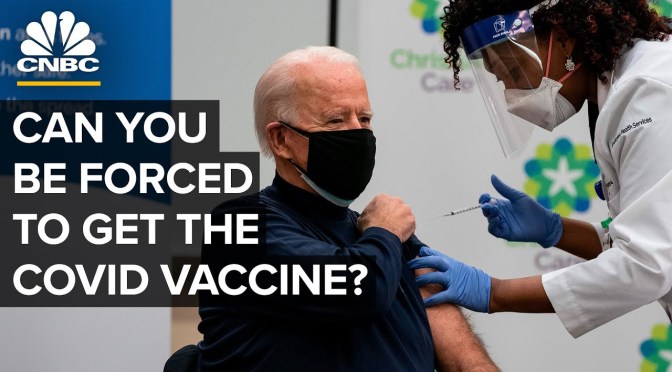
A large portion of the U.S. population still doesn’t want to get the new Covid vaccine, but they might not have a choice. Powers at the federal and state level, not to mention the legal rights granted to employers under U.S. labor law, may make it impossible for Americans to escape inoculation against the coronavirus.
Mass unemployment, colossal bankruptcies, and a shattered tourism industry have ravaged New York City during the coronavirus pandemic. In January 2021, Governor Andrew Cuomo proposed raising taxes on the wealthy, while cutting Medicaid and school spending to balance the multi-billion dollar budget deficit. Opponents say tax hikes could lead to a mass exodus of the wealthy New Yorkers who fund a large portion of the city’s revenue. Others say that the crisis has exasperated existing inequalities and cutting social services will only hurt those most affected.
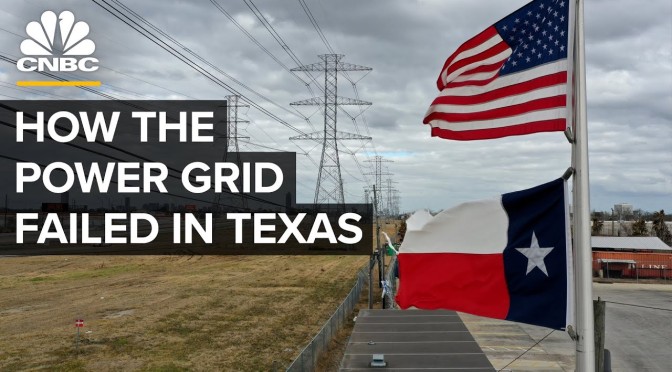
Texas had a rough winter in 2021. In mid-February, with temperatures dropping to the single digits, demand for electricity hit a record high throughout Texas. Supply ran short, causing the state’s electric grid operator to implement rolling power outages.
At the height of the crisis, more than 4.5 million customers lost power. The freak winter storm caused neighboring states such as Louisiana, Oklahoma, Arkansas and Kansas to also impose rolling blackouts. Texas residents shivered in the cold, as outages lasted for days at a time. They lost access to water. Some resorted to turning on their cars in their garages to keep warm then died due to carbon monoxide poisoning.
The historic breakdown was a wake-up call — if the power grid in Texas was so fragile, what about the rest of the United States? The U.S. has faced a 67% increase in weather-related power outages since 2000, according to data from Climate Central. Part of the problem is an aging infrastructure. Most of today’s power grid was built in the 1950s and ’60s, with the hopes that it would last for 50 years.
Tesla’s gigafactory and Apple’s second-largest campus aren’t the only big businesses coming to Texas. From Oracle to Hewlett Packard Enterprise, Elon Musk to Joe Rogan, Texas has lured an increasing number of big businesses and billionaires away from California since the pandemic began. While California’s population and job growth both slowed to a trickle, Texas added more residents than any other state in 2020. CNBC talks to those moving and longtime Texans about the reasons behind the trend and what it could mean for the future of the Lone Star State.
Subaru started as a small scrappy Japanese brand, brought to the states by a couple of American businessmen in the 1960s, and was quickly met with ridicule. But it persisted, and over the decades has gone from being a small niche player to one of the most successful brands in America.
Subaru has weathered economic recessions far better than much larger competitors, and it is positioned near the top of consumer satisfaction surveys. But the ever-changing auto market presents some challenges for them, and they need to adapt to keep up.
When Subaru entered the United States in the 1960s it was panned by critics, and actually advertised its own cheap ugliness. Over the next several decades it would become a highly successful brand through a combination of offbeat but practical cars and a relentless focus on understanding its own customers.
The scrappy brand enjoyed a 93-month sales increase streak that ended in 2019, and it has found ways to survive during the coronavirus pandemic. But it is not without challenges. The intense demand for its vehicles has at times brought growing pains — quality issues and recalls gave led to an unusual quarterly loss in 2018.
There is also pressure on the company, like all automakers, to develop some kind of electrification strategy. Subaru does have a partnership with the much larger Japanese automaker Toyota, which is expected to soon produce an electric vehicle jointly made by the two companies.
Gum lines the pockets of most Americans and has been a staple in American culture for centuries. For some, gum is all about flavor, and for others, it’s about fear of bad breath, curbing hunger, or alleviating anxiety. For nearly 130 years, the brand Wrigley’s has become synonymous with chewing gum.
Since its start, the gum maker has dominated the chewing gum market, spawning brands from Juicy Fruit to Orbit to 5 Gum. But it hasn’t always been smooth sailing for the William Wriglely Jr. Co.; over its storied past, the brand has faced turbulent years. Since the early 2000s, the chewing gum market has seen a decline in public sentiment, which hurt significant players. In 2006, the company ended its long-standing tradition of being a family run business with William Wrigley Jr. stepping down as CEO.
By 2008, Wrigley’s faced increasing global competition and was acquired by Mars along with Warren Buffett’s Berkshire Hathaway. According to Euromonitor International, the gum industry’s market value hit $18.6 billion in 2020. Since 2015, Mars Wrigley has held 25% of the global brand share for chewing gum and a 40% portion in the U.S. The Covid-19 pandemic since it began in March 2020 has negatively impacted gum’s most prominent players and could negatively affect Mars Wrigley gum brands’ future.
Along with the pandemic, big tire brands are facing unique challenges. While trends have increasingly shifted online due to Covid, the tire market has been more hesitant to growing its e-commerce presence. Trade tariffs and the growing popularity of SUV’s and electric vehicles are also driving up the price of tires, posing an issue with attracting focus-savings consumers. Existing in a competitive market, many of the world’s biggest tire brands are focused on standing out to customers.
In the past decade, wind power capacity has tripled, and it’s projected to double in the decades to come. Wind is now America’s top renewable source of electricity generation, and the domestic offshore industry is finally taking off, as major manufacturers debut ever larger and more powerful turbines. While the industry faces some challenges with permitting, public opposition from various interest groups, and the obvious intermittency issues, there’s no doubt that wind is poised to play a major role in the energy transition. The question is just how fast it will grow.
News, Views and Reviews For The Intellectually Curious




 Boomers Daily