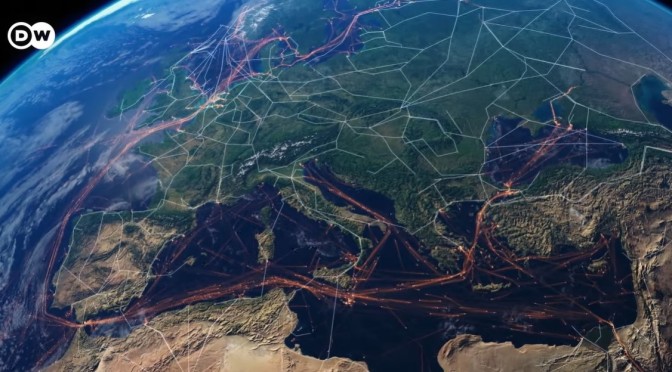
DW Documentary – Energy is life – these days, Europeans are experiencing that first-hand. For far too long, Europe has depended on coal, oil and gas imports from around the world. Not only have these fuels been driving the climate catastrophe, but they also serve as a dangerous bargaining chip for geopolitical interests.
Energy is essential — and it is a major problem. The war in Ukraine has shown just how dependent Europe is on fossil fuels. This has weakened Europe and given export countries – frequently governed by authoritarian rule – a geopolitical means of leverage. Now, war on the European continent has eclipsed concerns over the climate Crisis. The increased consumption of harmful fuels is creating economic and political problems.
Yet, against the odds, decarbonizing Europe remains a widespread priority, and alternative solutions are already available. In France, Denmark and Ukraine, civil initiatives are taking energy supplies into their own hands and investing in the joint production of their own solar energy. In some cases, privately produced solar energy has proven much cheaper than what national solar energy providers offer.
These initiatives show that decentralizing energy production could be the key to transforming our energy supply. Poland still depends heavily on coal, but is offering re-training programs for employees in the mining business to help them transition to green jobs. An estimated one million such green jobs are expected to be created in Europe by 2030. Green hydrogen, currently still in the development stages, could be a sustainable and profitable alternative for industries in the future.
Across the continent, workable alternatives are emerging. The current quick succession of political crises has now joined the ongoing climate crisis to show just how important it is to act now.
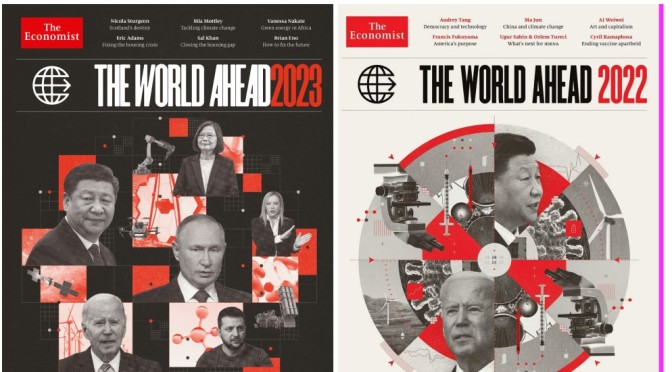
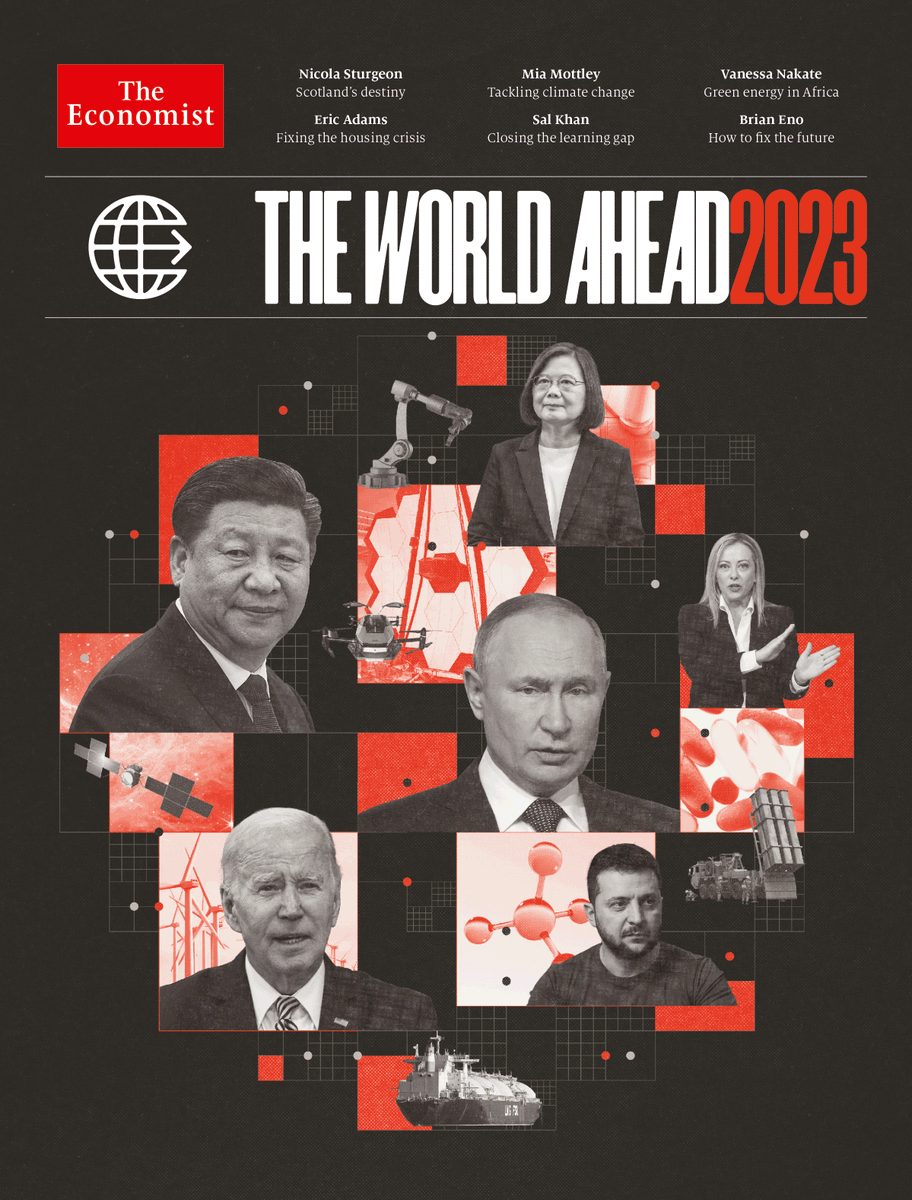
A letter from Tom Standage, editor of “The World Ahead 2023”
1. All eyes on Ukraine. Energy prices, inflation, interest rates, economic growth, food shortages—all depend on how the conflict plays out in the coming months. Rapid progress by Ukraine could threaten Vladimir Putin, but a grinding stalemate seems the most likely outcome. Russia will try to string out the conflict in the hope that energy shortages, and political shifts in America, will undermine Western support for Ukraine.
2. Recessions loom. Major economies will go into recession as central banks raise interest rates to stifle inflation, an after-effect of the pandemic since inflamed by high energy prices. America’s recession should be relatively mild; Europe’s will be more brutal. The pain will be global as the strong dollar hurts poor countries already hit by soaring food prices.
3. Climate silver lining. As countries rush to secure their energy supplies, they are turning back to dirty fossil fuels. But in the medium term the war will accelerate the switch to renewables as a safer alternative to hydrocarbons supplied by autocrats. As well as wind and solar, nuclear and hydrogen will benefit too.
4. Peak China? Some time in April China’s population will be overtaken by India’s, at around 1.43bn. With China’s population in decline, and its economy facing headwinds, expect much discussion of whether China has peaked. Slower growth means its economy may never overtake America’s in size.
5. Divided America. Although Republicans did worse than expected in the midterm elections, social and cultural divides on abortion, guns and other hot-button issues continue to widen after a string of contentious Supreme Court rulings. Donald Trump’s formal entry into the 2024 presidential race will pour fuel on the fire.
6. Flashpoints to watch. The intense focus on the war in Ukraine heightens the risk of conflict elsewhere. With Russia distracted, conflicts are breaking out in its backyard. China may decide that there will never be a better time to make a move on Taiwan. India-China tensions could flare in the Himalayas. And might Turkey try to nab a Greek island in the Aegean?
7. Shifting alliances. Amid geopolitical shifts, alliances are responding. nato, revitalised by the war in Ukraine, will welcome two new members. Will Saudi Arabia join the Abraham accords, an emerging bloc? Other groupings of growing importance include the Quad and aukus (two American-led clubs intended to deal with China’s rise) and i2u2—not a rock band, but a sustainability forum linking India, Israel, the United Arab Emirates and the United States.
8. Revenge tourism. Take that, covid! As travellers engage in post-lockdown “revenge” tourism, traveller spending will almost regain its 2019 level of $1.4trn, but only because inflation has pushed up prices. The actual number of international tourist trips, at 1.6bn, will still be below the pre-pandemic level of 1.8bn in 2019. Business travel will remain weak as firms cut costs.
9. Metaverse reality check. Will the idea of working and playing in virtual worlds catch on beyond video games? 2023 will provide some answers as Apple launches its first headset and Meta decides whether to change its strategy as its share price languishes. Meanwhile, a less complicated and more immediately useful shift may be the rise of “passkeys” to replace passwords.
10. New year, new jargon. Never heard of a passkey? Fear not! Turn to our special section, “Understand This”, which rounds up the vital vocabulary that will be useful to know in 2023. nimbys are out and yimbys are in; cryptocurrencies are uncool and post-quantum cryptography is hot; but can you define a frozen conflict, or synfuel? We’ve got you covered.
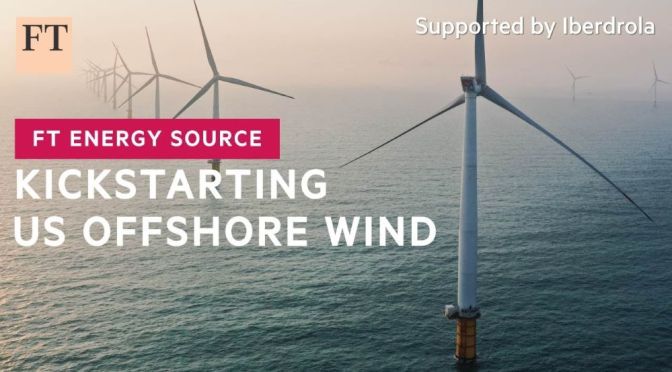
Financial Times – Wind power is the number one source of renewable energy in the US, but nearly all this stems from onshore wind. The US offshore wind industry is underdeveloped and, with only two small offshore operations to date, it lags far behind Europe and China by comparison. The FT’s Derek Brower looks at why progress is slow, and what the White House is trying to do about it.
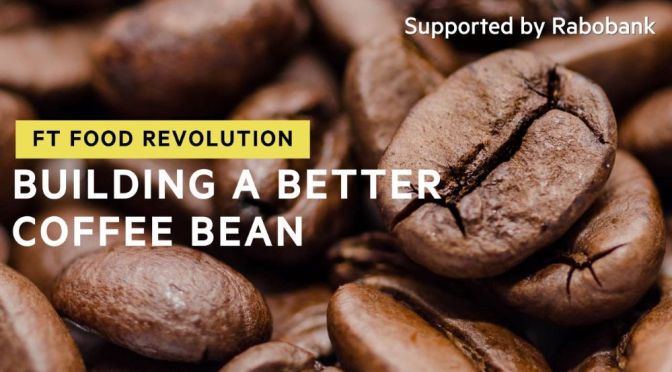
Financial Times – One of world’s favorite drinks is under threat from global warming. The world’s top coffee producing nations all lie at similar tropical latitudes, where even small rises in temperature are forecast to have severe consequences for people and agriculture. But as the FT’s Nic Fildes reports, in Australia, scientists are tackling the problem by trying to develop a better, hardier coffee bean.
Miami’s skyscraper boom is happening on the frontlines of the climate crisis.
Miami, city, seat (1844) of Miami-Dade county, southeastern Florida, U.S. A major transportation and business hub, Miami is a leading resort and Atlantic Ocean port situated on Biscayne Bay at the mouth of the Miami River. The Everglades area is a short distance to the west. Greater Miami, the state’s largest urban concentration, comprises all of the county, which includes the cities of Miami Beach (across the bay), Coral Gables, Hialeah, North Miami, and many smaller municipalities and unincorporated areas; together, these make up the southern section of Florida’s “Gold Coast.”
Frozen Planet II (2022): This six-part series – narrated by Sir David Attenborough – explores the wildlife found in the world’s coldest regions: the Arctic and Antarctic, high mountains, frozen deserts, snowbound forests, and ice-cold oceans. From polar bears to penguins, and from snow monkeys to Siberian tigers, each species must overcome a unique set of challenges to endure its extreme environment.
Phoenix, Arizona is coming up with innovative ways to beat the heat.
Phoenix, the capital of Arizona, is accustomed to a hot desert climate, but day and night temperatures have been rising due to global heating and the city’s unchecked development, which has created a sprawling urban heat island.
Scorching temperatures have made summers increasingly perilous for the city’s 1.4 million people, with mortality and morbidity rates creeping up over the past two decades, but 2020 was a gamechanger when heat related deaths jumped by about 60%.
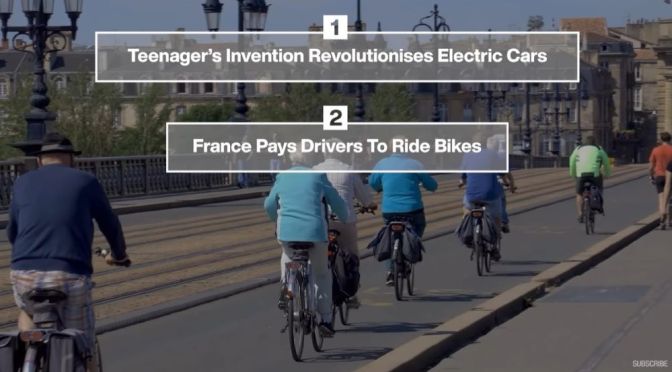
This week’s top stories of the week include: 0:16 This teenager’s invention could change the world of electric cars 02:59 France is paying it’s drivers to get on their bikes 04:22 The psychological phenomenon that is hampering our response to climate change 05:33 Paris’s Riverside Booksellers are thriving once more
The World Economic Forum is the International Organization for Public-Private Cooperation. The Forum engages the foremost political, business, cultural and other leaders of society to shape global, regional and industry agendas. We believe that progress happens by bringing together people from all walks of life who have the drive and the influence to make positive change.
“Tier Drops,” by Lisa Owens Viani. Regulations and apportioning that were set up 100 years ago are under pressure as the Colorado River shrinks. As climate change accelerates and record-breaking drought worsens, cities, tribes, and industries must prepare for a future with less water. (Online August 10)
It’s past time to get real about the Southwest’s hardest-working river.
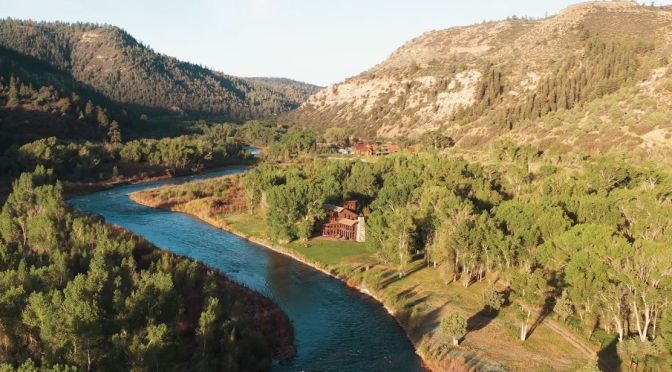
About 40 million people rely on the Colorado River as it flows from Wyoming to Mexico. But overuse and climate change have contributed to its reservoirs drying up at such a rapid rate that the probability of disastrous disruptions to the deliveries of water and hydroelectric power across the Southwest have become increasingly likely. Now the seven states that depend on the river must negotiate major cuts in water use by mid-August or have them imposed by the federal government.
Those cuts are merely the beginning as the region struggles to adapt to an increasingly arid West. The rules for operating the river’s shrinking reservoirs expire in 2026, and those seven states must forge a new agreement on water use for farmers, businesses and cities.











 Boomers Daily