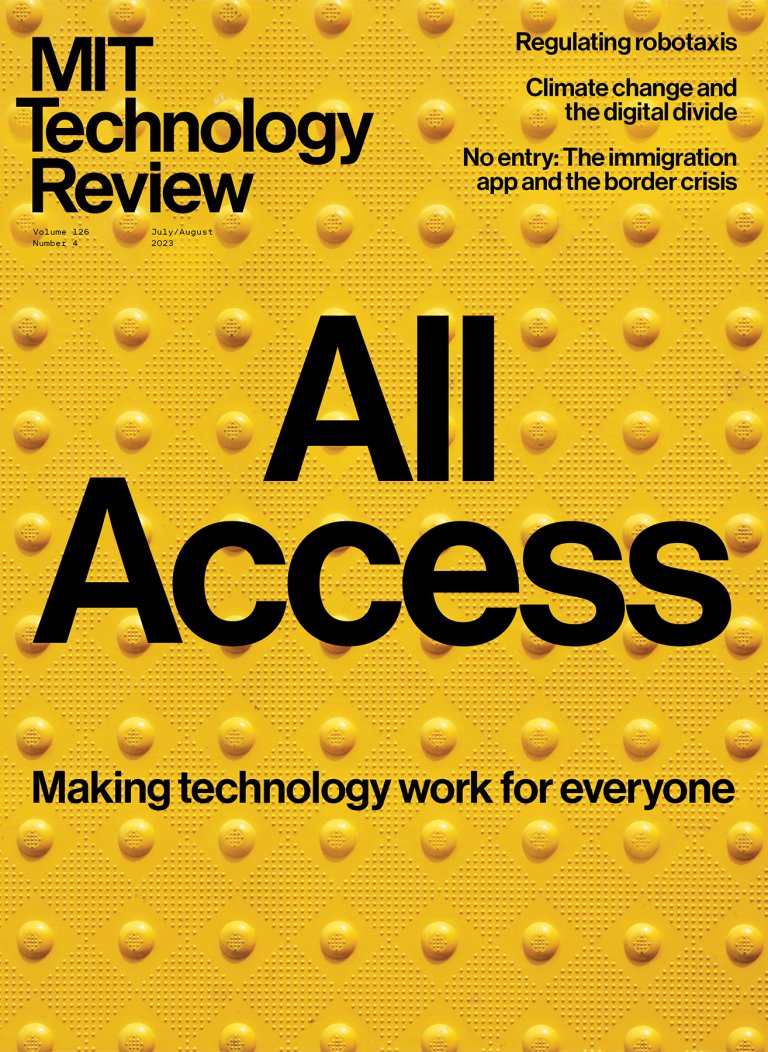
MIT Technology Review – July/August 2023: ‘The Accessibility issue’ features Connecting climate change and the digital divide. A blind educator working to make images accessible to everyone. How the app meant to streamline immigration at the border may be making things worse. Plus regulating robotaxis, Metaverse attorneys, and the forgotten history of highway photologs.
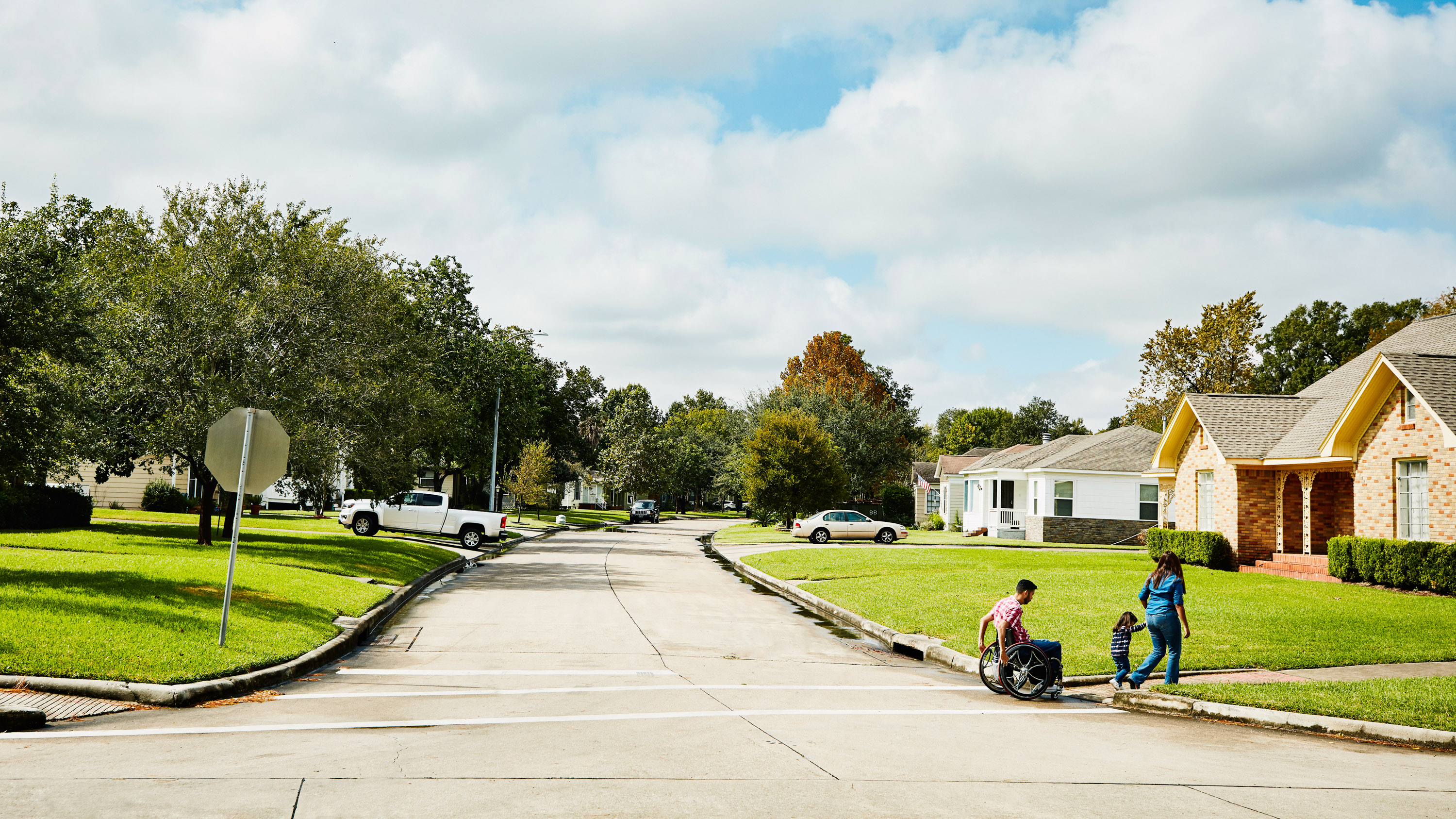
We need to take steps toward a more inclusive future—one that we all can inhabit.
“Technology,” wrote the late historian of technology Melvin Kranzberg Jr., “is neither good nor bad, nor is it neutral.” It’s an observation that often doesn’t stick with people as they think about technologies related to accessibility.
For people who can’t speak, there has been depressingly little innovation in technology that helps them communicate.
A piece of hardware, however impressively designed and engineered, is only as valuable as what a person can do with it. After the iPad’s release, the flood of new, easy-to-use AAC apps that LoStracco, Shevchenko, and their clients wanted never came.
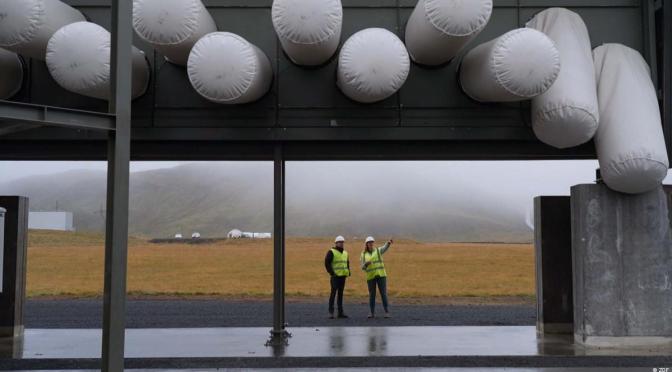
DW Documentary (June 13, 2023) – Can high-tech solutions help protect the climate? What would be the side effects of further human intervention in nature?
Attempts are being made to reduce the CO2 in the atmosphere with technical solutions. For example, new carbon capture technology that can extract CO2 from air and water, even if the amount currently captured is minimal and not enough to prevent the climate crisis and its consequences. Still, there is no shortage of ideas. Adding basalt rock dust to agricultural fields not only binds carbon dioxide but keeps the soil fertile.
Biochar, made from organic waste, has a similar effect. Some ideas are bolder: A protective screen of particles in the upper layers of the atmosphere could filter sunlight, as seen with the eruption of the Pinatubo volcano in the Philippines in 1991. The millions of tons of sulfur dioxide spewed into the stratosphere cooled the earth significantly.
Theoretically, aircraft could be used to deliver the particles. But experts warn that the consequences for humans and the weather would be felt worldwide and could never be fully controlled.
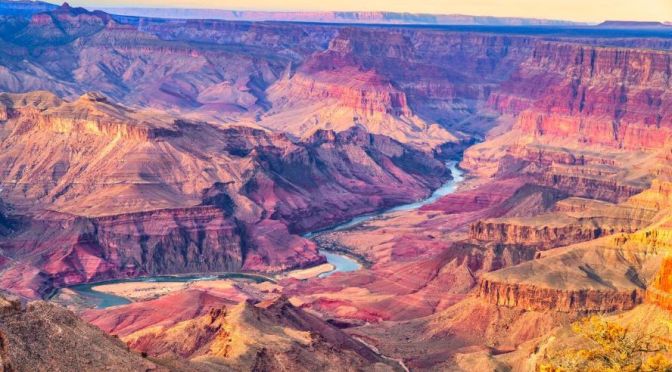
The New York Times (June 6, 2023) – Down beneath the tourist lodges and shops selling keychains and incense, past windswept arroyos and brown valleys speckled with agave, juniper and sagebrush, the rocks of the Grand Canyon seem untethered from time. The oldest ones date back 1.8 billion years, not just eons before humans laid eyes on them, but eons before evolution endowed any organism on this planet with eyes.
Written and photographed by Raymond Zhong, who joined scientists on a 90-mile raft expedition through the canyon.
Since 1963, the Glen Canyon Dam has been backing up the Colorado for nearly 200 miles, in the form of America’s second-largest reservoir, Lake Powell. Engineers constantly evaluate water and electricity needs to decide how much of the river to let through the dam’s works and out the other end, first into the Grand Canyon, then into Lake Mead and, eventually, into fields and homes in Arizona, California, Nevada and Mexico.
Spend long enough in the canyon, and you might start feeling a little unmoored from time yourself.
North Canyon, and a spring at Vasey’s Paradise.
The immense walls form a kind of cocoon, sealing you off from the modern world, with its cell signal and light pollution and disappointments. They draw your eyes relentlessly upward, as in a cathedral.
You might think you are seeing all the way to the top. But up and above are more walls, and above them even more, out of sight except for the occasional glimpse. For the canyon is not just deep. It is broad, too — 18 miles, rim to rim, at its widest. This is no mere cathedral of stone. It is a kingdom: sprawling, self-contained, an alternate reality existing magnificently outside of our own.
And yet, the Grand Canyon remains yoked to the present in one key respect. The Colorado River, whose wild energy incised the canyon over millions of years, is in crisis.
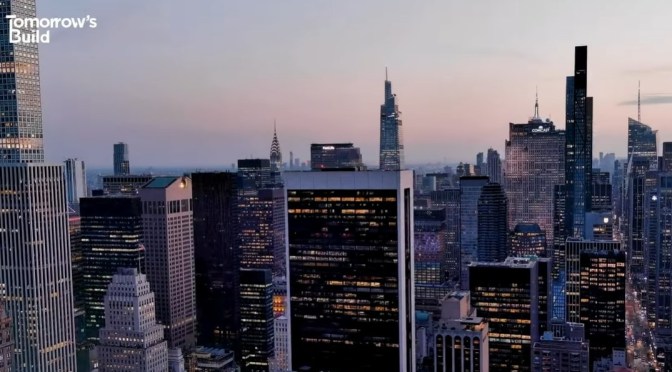
Buildings account for approximately two-thirds of greenhouse gas emissions in New York City and Mayor de Blasio has pledged to address these emissions as part of his plan to make the city carbon neutral by 2050.
Local Law 97 is one of the most ambitious plans for reducing emissions in the nation. Local Law 97 was included in the Climate Mobilization Act, passed by the City Council in April 2019 as part of the Mayor’s New York City Green New Deal.
Under this groundbreaking law, most buildings over 25,000 square feet will be required to meet new energy efficiency and greenhouse gas emissions limits by 2024, with stricter limits coming into effect in 2030. The goal is to reduce the emissions produced by the city’s largest buildings 40 percent by 2030 and 80 percent by 2050. The law also established the Local Law 97 Advisory Board and Climate Working Groups to advise the city on how best to meet these aggressive sustainability goals.
Local Law 97 generally covers, with some exceptions:
Buildings that exceed 25,000 gross square feet;
Two or more buildings on the same tax lot that together exceed 50,000 square feet;
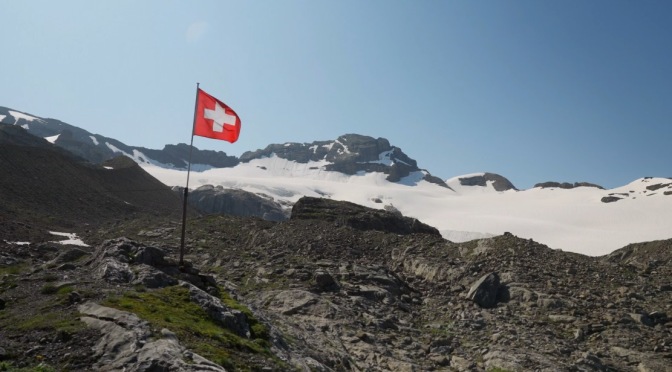
Alessandro Rovere Films (May 3, 2023) – The Last Ice showcases two cultures, laying on the same longitude on opposite sides of our planet, who have for generations relied on their deep connection with nature to sustain their way of life.
However, the devastating effects of climate change have begun to threaten the future of a Swiss mountain village and the Yupik people, on a small island in the Bering Sea, Alaska.
The film was created in collaboration with, and exhibited at, the German Climate Museum, Klimahaus Bremerhaven, as a reminder of the common ground and concerns shared by communities worldwide in the face of climate change and humanity’s heavy dependence on nature.
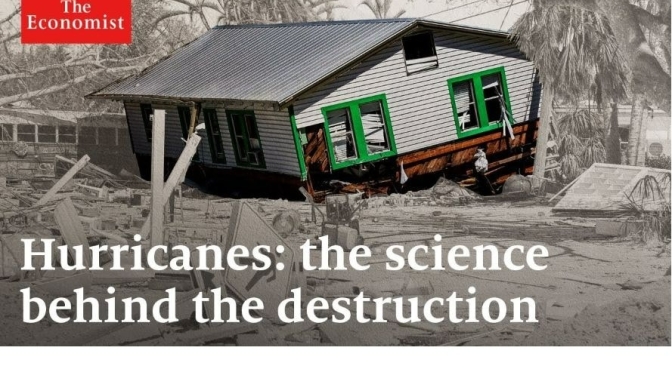
The Economist (May 5, 2023) – Hurricanes are among the most dangerous natural phenomena on earth, causing billions of dollars of damage and destroying lives every year. But what turns a peaceful patch of ocean into the planet’s most destructive force, and how is this process being affected by climate change?
Video timeline:00:00 – What are tropical cyclones? 00:46 – The history of tropical cyclones 02:06 – How do they form? 04:33 – What happens when they reach land? 07:13 – What is the impact of climate change?
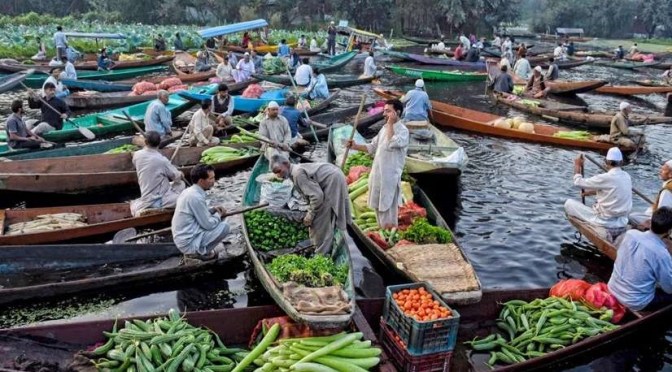
Insider Business (April 21, 2023) – For generations, farmers in Indian-administered Jammu and Kashmir have been selling their crops on the Dal Lake in a floating market. The lake is an economic hub for people living there – with many working in agriculture, fishing, and tourism. But decades of pollution have threatened their livelihoods.
The floating vegetable market on Dal Lake is in Srinagar, Kashmir, where locals trade out of their canoes. The produce sold here is grown in floating gardens.. The rich ecosystem of this wetland produces plenty of tomatoes, cucumbers, water chestnuts and the famous nadru (lotus roots, a delicacy in the Kashmir Valley).
They gather in the centre of the lake at dawn, and disappear just as sunlight hits the waters.
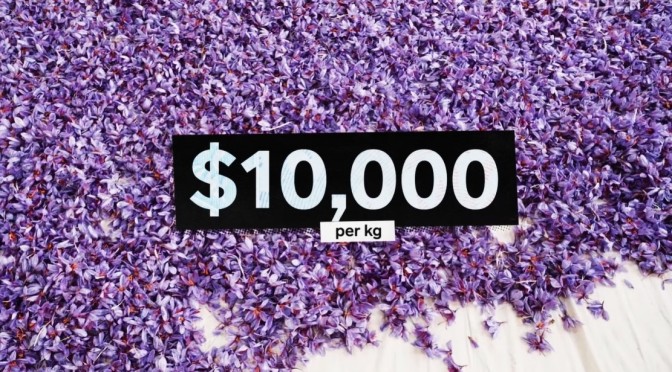
Insider Business (April 4, 2023) – Purple flowers in Kashmir produce the world’s most expensive spice — saffron. While it can sell for $10,000 per kilogram, climate change is making it even more expensive. Because of lower-than-usual rainfall over the last few years, production has dropped significantly.
And fields that once yielded this delicate spice have become sites for new housing construction. Climate change is threatening the production of all kinds of foods from cloves in India to eels in Japan and Spain. Here are 10 expensive, and vulnerable, foods and why climate change is making them so much more expensive.
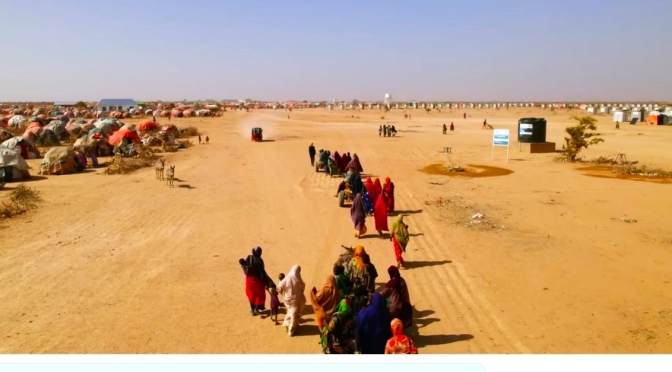
ABC News In-depth (March 23, 2023) – Somalia is one of the most dangerous places on earth. Almost two decades of conflict with the al-Qaeda backed terrorist group al-Shabaab has taken a huge toll on the country. Now Somalia is experiencing its worst drought in 40 years.
“People say that this is the worst drought in 40 years, but that’s wrong,” says Adam Abdelmoula, the UN humanitarian coordinator for Somalia. “This is the worst drought in Somalia’s history, period.”
With the world distracted by the war in Ukraine, the crisis is escalating away from the public gaze. This week on Foreign Correspondent reporter Stephanie March and producer/cinematographer Matt Davis travel to Somalia where makeshift camps have become home to more than a million hungry children and their families.
There, they meet mothers with babies who have walked for days without food and very little water. They hear incredible stories of courage and survival in a landscape that is unforgiving and unsafe. And they also face their own safety problems when their security team worries al-Shabaab has been told of their whereabouts.
As the Somali government fights back against al-Shabaab, another threat, which they have no control over, is driving the extreme weather: climate change. In the midst of this turmoil, the Foreign Correspondent team meets extraordinary people who are determined to make their story one of survival.
World Economic Forum (March 11, 2023) – This week’s top stories of the week include:
0:15These ‘robo-boots’ may improve balance – They provide a super-quick blast of assistance to your muscles helping you to stay upright. Scientists asked a healthy participant to stand on a moving floor wearing the exo-boots. Then ‘pulled the rug’ out from under them. They programmed the boots to work using the same delay as human reflexes or artificially faster than humanly possible. The exo-boots only improved balance when they worked faster than our natural response. It means that, one day, wearable exoskeletons could deploy lightning-quick reflexes to help people with balance impairment.
1:35This new telescope could help explain dark energy – A new space telescope is being launched by the European Space Agency to help scientists build a 3D map of the universe by photographing billions of galaxies up to 10 billion light years away – across more than a third of the sky. Around 95% of the universe is ‘dark matter’ or ‘dark energy’ which doesn’t fit into our cosmological models. The super-sensitive telescope will effectively enable us to look back in time to how distant galaxies looked 10 billion years ago and to see how dark energy accelerated the expansion of the universe.
3:10How to build earthquake proof buildings – When an earthquake strikes, it creates horizontal forces that shake the building from left to right. Concrete is very strong when compressed, but it has little flexibility, and when stretched, as it is during an earthquake, it’s liable to crack. So to create earthquake resistant buildings, designers add a flexible steel skeleton known as rebar. The steel is elastic and springs the building back into shape. Sometimes, when tension is too high, the steel may warp permanently. This is advantageous, though, because it keeps the building upright, enabling people to escape. There are other ways to make earthquake resistant buildings. Watch the video to learn more.
4:34Climate doom is a dangerous myth – It’s the most common false claim about climate change, especially among young people. Some experts believe it’s more damaging than climate denialism. In fact, scientists say, it’s not too late to arrest global warming. Global temperatures will stabilize a few years after we reach net zero and the belief that it’s pointless trying to stop climate change only leads to inaction. Making it as unhelpful as denying climate change altogether.
_____________________________________________
The World Economic Forum is the International Organization for Public-Private Cooperation. The Forum engages the foremost political, business, cultural and other leaders of society to shape global, regional and industry agendas. We believe that progress happens by bringing together people from all walks of life who have the drive and the influence to make positive change.
News, Views and Reviews For The Intellectually Curious













 Boomers Daily