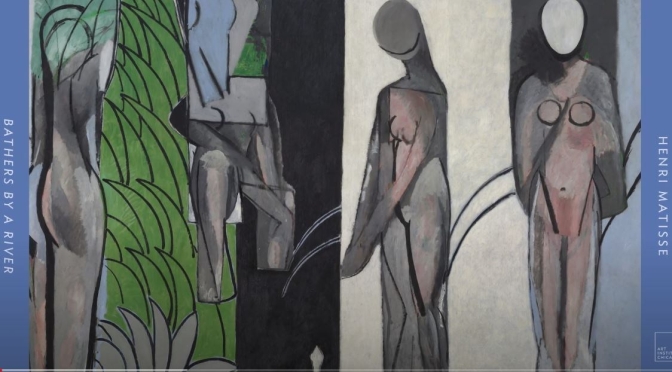
On this episode of Art Institute Essentials Tour, take a closer look at Bathers by a River, started by Henri Matisse in 1909 and completed in 1917. Henri Matisse originally painted this work as a pastoral scene, but over the next decade he transformed it into the cubist-inflected composition seen today. When the painting was acquired by the Art Institute in 1953, Matisse told the museum’s director that he viewed the painting as one of his five most pivotal works.
Henri Émile Benoît Matisse (1869 -1954) was a French artist, known for both his use of colour and his fluid and original draughtsmanship. He was a draughtsman, printmaker, and sculptor, but is known primarily as a painter.
Japanese artist Maori Sakai creates humorous drawings with pen on paper, that are often animated. Each gif is rendered largely in pastels and captures simple movements: a record spinning on a turntable, rain falling outside a window, and butterflies hovering around hydrangeas. Many of Sakai’s short animations, in addition to glimpses into her process, can be found on Instagram and Tumblr.
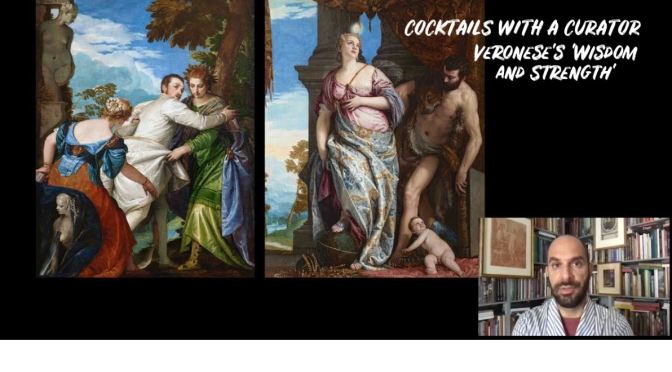
In this week’s episode of “Cocktails with a Curator,” enjoy a traditional Negroni with Deputy Director and Peter Jay Sharp Chief Curator Xavier F. Salomon as he discusses “Wisdom and Strength,” one of two large allegorical paintings by Paolo Veronese that hang in the West Gallery at the Frick. Discover the hidden message behind the two principal figures in this picture: a bearded brute clad in a lion skin and a woman of noble bearing with a miniature sun above her forehead. Tune in next week for a discussion of the painting’s companion work, “Choice Between Virtue and Vice.”
Yes! in the sea of life enisled, With echoing straits between us thrown, Dotting the shoreless watery wild, We mortal millions live alone.
—Matthew Arnold, To Marguerite: Continued
This slideshow requires JavaScript.
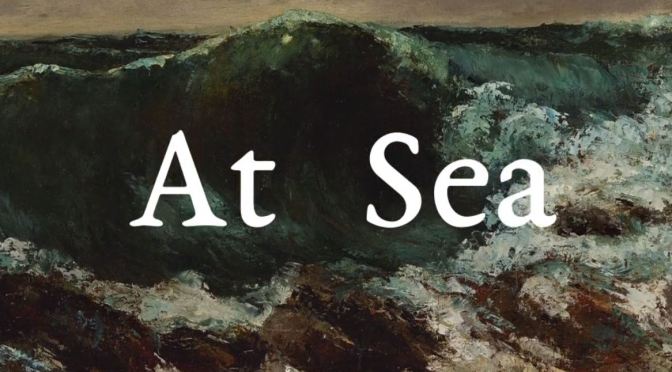
Whether in the awesome forms of the legendary floods in Gilgamesh and Genesis, or via the more delightful but ultimately crueler torment of Homer’s Mediterranean, the sea is among art’s oldest subjects. For millennia humans have been fascinated and horrified in equal measure by mystery, eternity, and danger of which the sea seems to be a mirror: sometimes enigmatically placid, sometimes jagged with sudden storms.
This slideshow requires JavaScript.
Dating from the nineteenth century to the present, these works differ in media and approach, but together, they ask social, political, and environmental questions that resonate forcefully today.
Unseen since 1949 and set to appear at auction for the first time, this beautiful work is a quintessential example of Henri Matisse’s sensuous odalisques. The elegant model is Italian countess Carla Avogadro, reclining on an extravagant Venetian Rococo armchair that Matisse bought on a whim and, in his own words, became “obsessed” with. ‘Danseuse dans un intérieur, carrelage vert et noir’
Henri Émile Benoît Matisse was a French artist, known for both his use of colour and his fluid and original draughtsmanship. He was a draughtsman, printmaker, and sculptor, but is known primarily as a painter.
On this episode of Art Institute Essentials Tour, take a closer look at The Old Guitarist, painted by Pablo Picasso between late 1903 and early 1904. In the paintings of Picasso’s Blue Period (1901-04), the artist restricted himself to a cold, monochromatic blue palette, flattened forms, and emotional, psychological themes of human misery and alienation. This painting reflects the then twenty-two-year-old Picasso’s personal struggle and sympathy for the plight of the downtrodden.
Sotheby’s upcoming cross-category Evening Auction ‘Rembrandt to Richter’ (28 July | London), features many of the key British avant-garde movers and shakers of their day.
In this video, discover titans of British Modernism such as Ben Nicholson and Barbara Hepworth; artists such as Christopher Wood and Marlow Moss who found their inspiration amongst the belle monde of Paris; Stanley Spencer and Cedric Morris whose inspiration remained resolutely closer to home; and a bold new generation of artists including Frank Auerbach who forged their careers in London in the aftermath of the Second World War.
Lyonel Feininger combined influences from different art movements to find a style all his own. In this video, discover how Feininger’s work combines elements of Cubism and Italian Futurism, abstract form and function from the Bauhaus, and an expressive use of colour from his involvement with Die Brucke and Die Blaue Vier. Feininger’s instantly recognisable style is clearly visible in the dramatic interplay of light and shadow displayed in ‘Zottelstedt II’ from 1927.
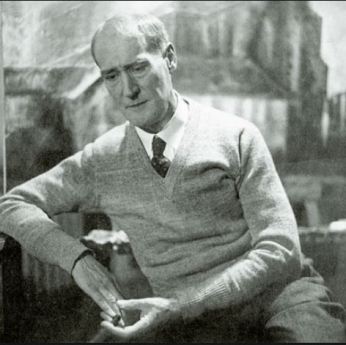
Lyonel Charles Feininger (1871 – 1956) was a German-American painter, and a leading exponent of Expressionism. He also worked as a caricaturist and comic strip artist. He was born and grew up in New York City, traveling to Germany at 16 to study and perfect his art.
This magnificent watercolour by J.M.W. Turner exquisitely captures the romantic painter’s love for the North of England. Discover how the “painter of light” depicted the sheer essence of time and atmosphere in this sumptuous watercolour of “God’s Own Country”.
Gledhow Hall, in Leeds, is still standing sentinel and today houses several luxury flats. Yet few are aware that the Hall and the Gledhow area itself is intrinsically linked with the family of Kate Middleton, the Duchess of Cambridge.
Gledhow Hall is on Gledhow Lane at its junction with Gledhow Wood Road. The land was originally monastic and was purchased from Queen Elizabeth I by the Thwaites family. Several notable Yorkshire families have owned the Hall, including the Becketts, the Benyons, the Dixons and the Coopers. The Hall, as seen today, was completed shortly after 1766, by York architect John Carr who had been responsible for Harewood House – the home of Princess Mary, Countess of Harewood, whose niece is Queen Elizabeth II.
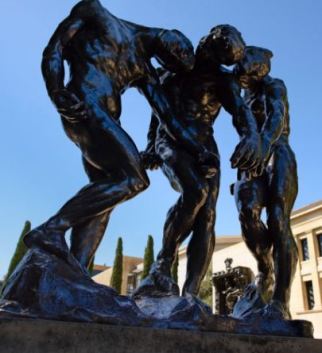
The Three Shades is among the works in the Rodin Sculpture Garden, adjacent to the Cantor Arts Center. The sculpture uses three separate casts of the same figure that has been rotated into different positions. (Image credit: L.A. Cicero)
The enduring appeal of Rodin, the modernity of his work, has to do with the way in which he makes visible an aesthetic of process – how, in other words, he takes traditional sculpture apart and puts it back together again in new and daring ways. Strategies of multiplication, scalability, fragmentation and recombinatory modes of assembly and display constitute some of the hallmarks of Rodin’s artistic practice.
Works by Rodin on view at the Cantor are often utilized by students and scholars from a range of disciplines, including medicine. In this moment, with outbreak of disease across the globe, what can Rodin’s works teach us about the relationship between art and nature?
It’s interesting that Rodin attracts so much attention from medical experts, especially here at Stanford, who have used his hands for diagnostic purposes. It’s true that Rodin was intensely interested in exploring pathologies of the body, especially now-discredited understandings of female hysteria. But there is also the irony that Rodin became furious after a critic accused him of making his first life-size figure through life casting, rather than modeling it himself. It should go without saying, but Rodin’s hands are not hands – not real ones, anyway – and their expressive forms don’t align neatly with the anatomical reality of hands in flesh and blood or even their more naturalistic counterparts. But the very fact that they elicit such responses demonstrates the power of art to provoke challenging questions that drive innovative paths of research that cut across disciplines, particularly in a university setting.


 Japanese artist



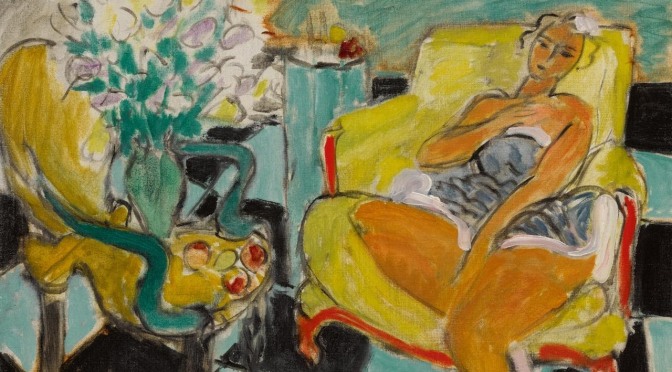
 Unseen since 1949 and set to appear at auction for the first time, this beautiful work is a quintessential example of Henri Matisse’s sensuous odalisques. The elegant model is Italian countess Carla Avogadro, reclining on an extravagant Venetian Rococo armchair that Matisse bought on a whim and, in his own words, became “obsessed” with. ‘Danseuse dans un intérieur, carrelage vert et noir’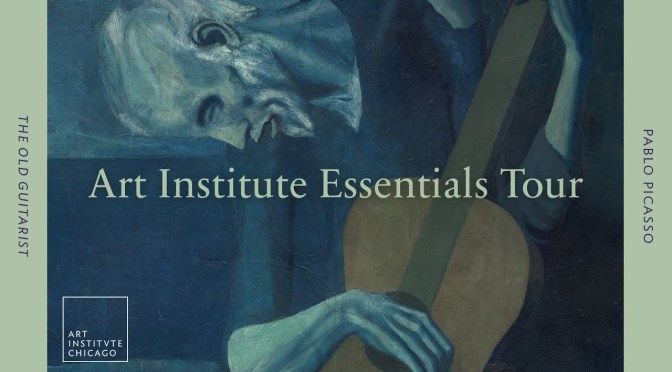

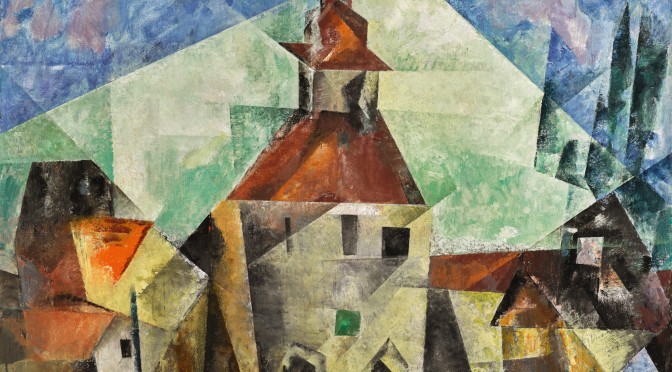
 Italian Futurism, abstract form and function from the Bauhaus, and an expressive use of colour from his involvement with Die Brucke and Die Blaue Vier. Feininger’s instantly recognisable style is clearly visible in the dramatic interplay of light and shadow displayed in ‘Zottelstedt II’ from 1927.
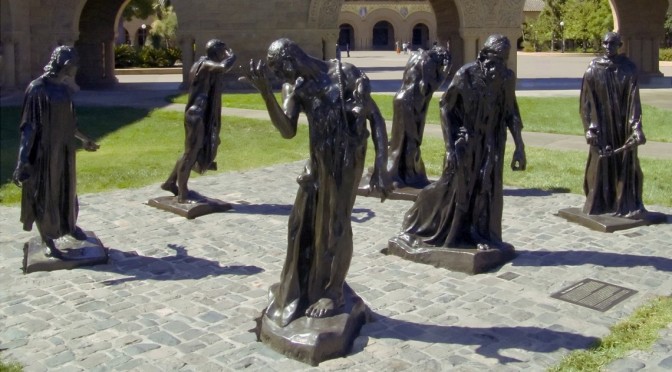
 It’s interesting that Rodin attracts so much attention from medical experts, especially here at Stanford, who have used his hands for diagnostic purposes. It’s true that Rodin was intensely interested in exploring pathologies of the body, especially now-discredited understandings of female hysteria. But there is also the irony that Rodin became furious after a critic accused him of making his first life-size figure through life casting, rather than modeling it himself. It should go without saying, but Rodin’s hands are not hands – not real ones, anyway – and their expressive forms don’t align neatly with the anatomical reality of hands in flesh and blood or even their more naturalistic counterparts. But the very fact that they elicit such responses demonstrates the power of art to provoke challenging questions that drive innovative paths of research that cut across disciplines, particularly in a university setting.
 Boomers Daily