This fascinating Japanese armour was part of the first diplomatic gift between Japan and Britain. It is over 400 years old and one of the first documented Japanese armours to have been seen on British soil.
Learn more about this amazing object in this short film. See the armour in our exhibition Japan: Courts and Culture at The Queen’s Gallery, London from 8 April 2022 – 26 February 2023.
We talk to Max Hollein, director of the Metropolitan Museum of Art, about the new plans for the museum’s wing of modern and contemporary art, including the appointment of the architect Frida Escobedo in place of David Chipperfield.
As The Art Newspaper is about to publish its annual museum attendance survey, showing that visitors are beginning slowly to return to museums after the height of the pandemic, we ask Hollein how the vision for the museum has changed following the events of the past two years. Plus, Aimee Dawson talks to the curator Sam Bardaouil about the exhibition Beirut and the Golden Sixties: A Manifesto of Fragility at the Gropius Bau in Berlin. And in this episode’s Work of the Week, as the Menil Collection in Houston, Texas, opens a major Meret Oppenheim survey, the show’s curator Natalie Dupecher discusses Oppenheim’s Surrealist object Ma gouvernante – My Nurse – Mein Kindermädchen (1936): a pair of white heels on a silver platter, trussed like a chicken.
The Art Newspaper’s visitor attendance survey is in the April print edition, and online next week at theartnewspaper.com, or on our app for iOS and Android, which you can get from the App Store or Google Play.
Beirut and the Golden Sixties: A Manifesto of Fragility, Gropius Bau, Berlin, until 12 June.
Meret Oppenheim: My Exhibition, Menil Collection, Houston, until 18 September; Museum of Modern Art, New York, 30 October-4 March 2023
“One of the hopes of this exhibition was really to try to enlist visitors’ bodily experience in their understanding of these works of art that can sometimes seem a little bit like they live entirely in our heads, a little bit intellectualized.”
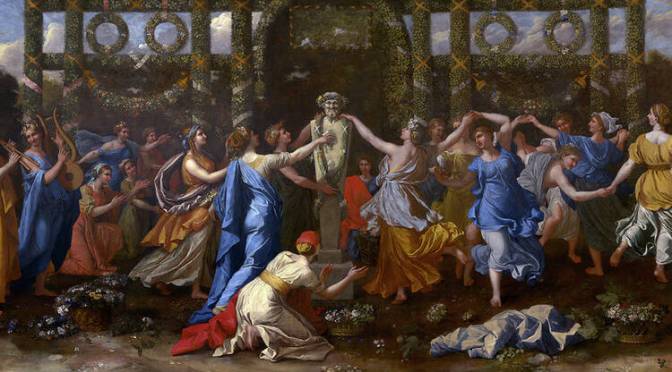
Although Nicolas Poussin is widely regarded as the most influential painter of the 17th century—the father of French classicism—he is not as well-known as many of his contemporaries, such as Rembrandt, Rubens, and Caravaggio. This is due, in part, to Poussin’s austere painting style and erudite subject matter, which often came from Roman history or the Bible. As a result, his work can sometimes feel a bit cold or remote to today’s audiences.
But earlier in his career, Poussin was inspired by dance. His paintings of wild revelry, filled with dancing satyrs and nymphs, emerged as his signature genre from that time. Poussin and the Dance, organized by the Getty Museum and the National Gallery in London, is the first exhibition to explore the theme of dance in Poussin’s work. By supplementing his delightful dancing pictures with new dance films by Los Angeles–based choreographers—this unique exhibition invites viewers into the world of Poussin in a fresh, relatable way.
In this episode, Emily Beeny, curator in charge of European paintings at the Fine Arts Museums of San Francisco and curator of Poussin and the Dance, joins Sarah Cooper, public programs specialist at the Getty, to delve into Poussin’s process and love of dance.
The exhibition, which received generous support from the Leonetti/O’Connell Family Foundation and is sponsored by City National Bank, is on view at the Getty Center through May 8, 2022.
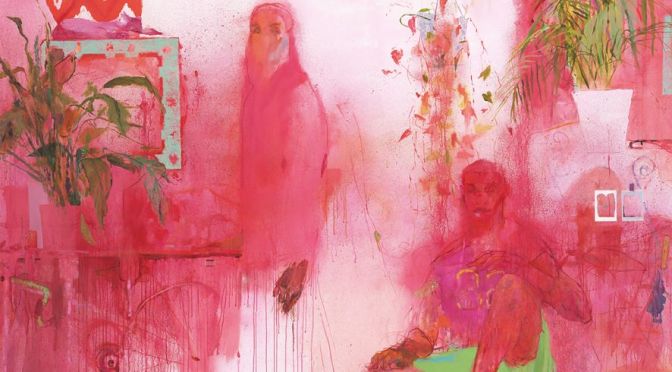
Join Jane Panetta, the Nancy and Fred Poses Curator and Director of the Collection, as she discusses key works from Jennifer Packer’s exhibition of paintings and drawings.
Jennifer Packer is an American painter living and working in New York City. In 2020, she won the Hermitage Greenfield Prize and the Rome Prize. Packer won the Rome Prize at the American Academy in Rome 2020-2021.
Jennifer Packer: The Eye Is Not Satisfied With Seeing was initiated by Serpentine and curated by Melissa Blanchflower, Curator, Exhibitions and Public Art with Natalia Grabowska, Assistant Curator. The presentation at the Whitney is organized by Rujeko Hockley, Arnhold Associate Curator, and Jane Panetta, Nancy and Fred Poses Curator and Director of the Collection, with Ambika Trasi, Curatorial Assistant.
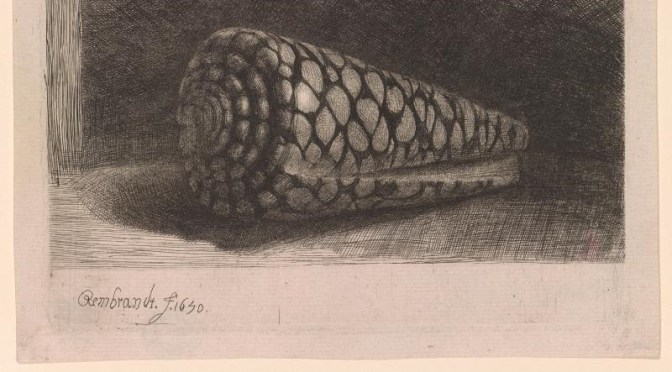
Take a closer look at three touching, humanist drawings by Rembrandt (1606 –1669) in the Morgan’s collection. John Pierpont Morgan loved Rembrandt. He owned 500 prints by Rembrandt, and in 1909 acquired his first drawings by the artist. Today, the Morgan has about 23 drawings in the collection by Rembrandt. A master of the European Baroque, Rembrandt’s paintings are often of grand themes. In his drawings, there is an intimacy and affection that has endeared him to generations of viewers. Listen to Colin B. Bailey, Director of the Morgan, as he shares his perspective on Rembrandt’s facility, creativity, and mastery.
Step inside the studio of artist Thao Nguyen Phan and discover her mesmerising, poetic work. Through video, paintings and sculpture, Phan explores the historical and ecological issues facing her homeland Vietnam, while speaking to broader ideas around tradition, ideology, ritual and environmental change.
Her recent projects have expanded on ‘the beauty and suffering’ of the Mekong River, which runs through Tibet, China, Myanmar, Thailand, Laos and Cambodia before meeting the sea on the coast of Vietnam. Phan’s latest moving image work First Rain, Brise Soleil continues this exploration of the Mekong, proposing a new way of being that draws on indigenous knowledge and respect for the ecosystem.
‘Van Gogh and the Olive Groves’ (11 March 2022 – 12 June 2022).
Van Gogh made fifteen paintings of olive groves, constantly experimenting with various approaches. Fascinated by the gnarly shapes of the olive trees and their ever-changing colours, he painted them over and over. He painted at different times of the day and used colours inspired by the season. Vincent himself considered his paintings of olive trees to number amongst the best he had made in the South of France.
This exhibition reunites Van Gogh’s paintings of olive groves and exhibits them together for the first time, thanks to unique loans from museums in Europe and the United States.
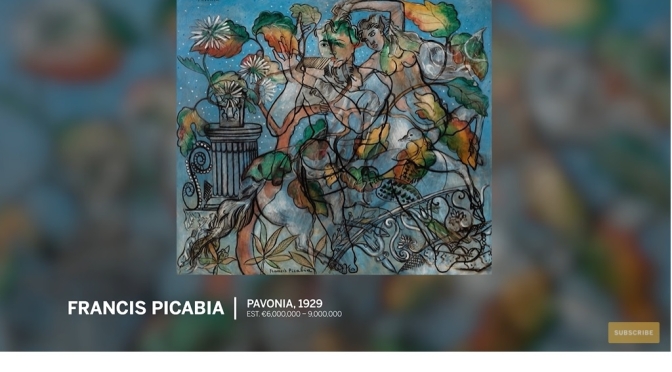
Sotheby’s explores two Picabia masterpieces: ‘Pavonia’, a cinematic example from his ‘Transparencies’ series, and ‘Nu de Dos’, a striking and controversial female nude.
Francis Picabia, (born January 22, 1879, Paris, France—died November 30, 1953, Paris), French painter, illustrator, designer, writer, and editor, who was successively involved with the art movements Cubism, Dada, and Surrealism.
Picabia was the son of a Cuban diplomat father and a French mother. After studying at the École des Arts Décoratifs (1895–97), he painted for nearly six years in an Impressionist mode akin to that of Alfred Sisley. In 1909 he adopted a Cubist style, and, along with Marcel Duchamp, he helped found in 1911 the Section d’Or, a group of Cubist artists. Picabia went on to combine the Cubist style with its more lyrical variation known as Orphism in such paintings as I See Again in Memory My Dear Udnie (1913–14) and Edtaonisl (1913). In these early paintings he portrayed assemblages of closely fitted, metallic-looking abstract shapes. As Picabia moved away from Cubism to Orphism, his colours and shapes became softer.
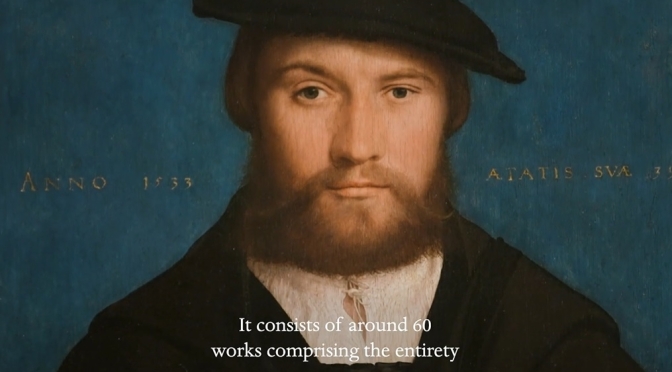
Hans Holbein the Younger (1497/98–1543) was among the most skilled, versatile, and inventive artists of the early 1500s. He created captivating portraits of courtiers, merchants, scholars, and statesmen in Basel, Switzerland, and later in England, and served as a court painter to Tudor King Henry VIII (1491–1547). Enriched by inscriptions, insignia, and evocative attributes, his portraits comprise eloquent visual statements of personal identity and illuminate the Renaissance culture of erudition, self-fashioning, luxury, and wit. February 11 through May 15, 2022
News, Views and Reviews For The Intellectually Curious




 Boomers Daily